
Paul Chadwick (1) (1957–)
Author of Y: The Last Man Vol. 03: One Small Step
For other authors named Paul Chadwick, see the disambiguation page.
About the Author
Image credit: Stumptown Comics Fest 2006, photo by Joshin Yamada
Series
Works by Paul Chadwick
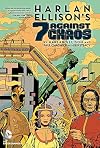
Harlan Ellison's 7 Against Chaos (2013) — Illustrator; Cover artist, some editions — 103 copies, 4 reviews
Concrete, odd jobs: A special edition of Concrete's days as a rock star's bodyguard and his time on the farm, with added (1990) 11 copies
Y: The Last Man #16 — Illustrator — 7 copies
Concrete # 7 4 copies
Concrete: The Human Dilemma #6 3 copies
Star Wars: Empire (2002-2006) #8 2 copies
Concrete (Portfolio collection of six Plates, Celebrating the First year of Concrete) (1989) 2 copies
The Thing That Killed 2 copies
The Corpse Carnival 2 copies
Skyscraper Horror 1 copy
Murder By Minutes 1 copy
Concrete - Earth Day 1990 1 copy
Satan?s Shrine 1 copy
Concrete - Eclectica 1 1 copy
Concrete - Eclectica 2 1 copy
Shrouds of Horror 1 copy
Steel Corpse 1 copy
Concerte 1 copy
Doctor Zero 1 copy
Concrete Portfolio Set # 01 1 copy
The Grinning Ghoul 1 copy
Murder Bride 1 copy
Star Wars #041 (Dino) 1 copy
Tarantula Bait 1 copy
Concrete, Hero Special 1 copy
The Murder In the Mist 1 copy
Murder Bait 1 copy
Tentacles of Doom 1 copy
Fangs of Death 1 copy
Dark Horse presents 1 copy
The Murder Monster 1 copy
Concrete: Strange armor # 3 1 copy
Cross Words For Crooks 1 copy
Mistress Of Snarling Death 1 copy
Concrete: Strange armor # 2 1 copy
The Day They Landed 1 copy
Concrete: Strange armor # 1 1 copy
Corpse Cheaters 1 copy
The Skeleton Scourge 1 copy
Starchild Awakenings 1 copy
Trance of Terror 1 copy
Ghost Fingers 1 copy
Associated Works
The Magazine of Fantasy and Science Fiction November 1990, Vol. 79, No. 5 (1990) — Cover artist — 17 copies
The Magazine of Fantasy and Science Fiction August 1982, Vol. 63, No. 2 (1982) — Cover artist, some editions — 15 copies
The Magazine of Fantasy and Science Fiction August 1984, Vol. 67, No. 2 (1984) — Cover artist — 15 copies
Godzilla Portfolio — Illustrator — 2 copies
Tagged
Common Knowledge
- Legal name
- Chadwick, Paul Halsey
- Other names
- Chadwick, Paul H.
- Birthdate
- 1957
- Gender
- male
- Education
- Art Center College of Design
- Organizations
- Apa-5
Disney Studios - Nationality
- USA
- Birthplace
- Seattle, Washington, USA
- Places of residence
- Medina, Washington, USA
- Associated Place (for map)
- Washington, USA
Members
Discussions
Short Story: Susan Pevensie (of the Narnia Chronicles) as an old woman in Name that Book (July 2008)
Reviews

Access a version of the below that includes illustrations on my blog.
In her excellent book, Postapocalyptic Fiction and the Social Contract: "We'll Not Go Home Again", Claire P. Curtis defines postapocalyptic fiction as "any account that takes up how humans start over after the end of life on earth as we understand it" (5). Apocalyptic fiction depicts the end, but postapocalyptic fiction foregrounds what comes after the end; she argues that it's a combination of apocalyptic fiction and the show more pioneer novel, in that it "take[s] the social criticism inherent in the apocalyptic text and the utopian impulse of the pioneer novel and outline[s] an origin story ironically appropriate for our time when the frontier is absent and the possibility of catastrophe seems imminent. [...] End of the world accounts serve multiple purposes. They are both didactic and cathartic. They provide both the voyeuristic satisfaction of terrible violence and the Robinson Crusoe excitement of starting over again" (6).
We can't tell stories of people living spare lives on the frontier because there is no frontier anymore; this is arguably the same impulse that gives us The Walking Dead, for example. I taught both Y: The Last Man and The Walking Dead in the same summer course on the apocalypse. And indeed, Y: The Last Man provides the "Robinson Crusoe excitement of starting over": we see in this volume how the women left after the "gendercide" have to do things like fill the gap left when popular entertainment is all gone, or how they even have women who fake being men with facial hair in order to provide sexual experiences to straight women.
Curtis is a political theorist, so what's most interesting to her are the ways the postapocalyptic fiction explores the return to the "state of nature" and the creation of a new "social contract": when we can go back to an imagined beginning, we can figure out what was natural and what was social, and try to build a new and better society: the state of nature "offers a mechanism for seeing humans are they really are, absent the conventions of an artificially constructed rule bound society; and it gives a moment for humans to consider what kind of government they would actually choose to live under" (10). If this is the purpose of Brian K. Vaughan and Pia Guerra in Y: The Last Man, it's mildly depressing. It's easy to imagine an all-the-men-are-dead novel where a feminist utopia is created-- if men are the source of all violence, then their elimination should usher in a new and better world. This does not happen in Y: The Last Man; women are perfectly capable of perpetuating conflict on their own, as we see in One Small Step where the United States and Israel battle over the recovery of what might be the last men left alive. Of course, this might simply point to the fact that the values of the "manned world" haven't been completely eradicated in the "unmanned" one. Maybe there is no real way to get back to the state of nature.
The second story collected in this volume, where we look in on a community of women visiting by a traveling theatre troupe trying to create art for the unmanned world, seems to be engaging with the idea of Curtis that "[u]topian postapocalyptic fiction uses the destruction of one world to usher in a new and potentially better one. […] These accounts can also analyze the very idea of the state of nature and the kind of contract that emerges from that state: what do we fear, what do we desire, how do we plan to allay those fears and realize those desires, how can human community help us to accomplish these ends" (7). The playwright wants to usher in a new and better world, and is doing her part by writing art that functions within that world, trying to shape the fears and desires of her postapocalyptic audience. But the audience turns out to not want that: they just want the old world back, and they just want art that tells them it's just going to be okay. They reject the promise of the postapocalypse to bring in a utopia, because to them the old world was utopian enough.
On the other hand, you can also imagine a book where a woman-run world turns out to be a dystopia, and Y: The Last Man doesn't give us that, either. A fun adventure book, of course, but I also found it was very teachable and has a lot of interesting ideas going on. show less
In her excellent book, Postapocalyptic Fiction and the Social Contract: "We'll Not Go Home Again", Claire P. Curtis defines postapocalyptic fiction as "any account that takes up how humans start over after the end of life on earth as we understand it" (5). Apocalyptic fiction depicts the end, but postapocalyptic fiction foregrounds what comes after the end; she argues that it's a combination of apocalyptic fiction and the show more pioneer novel, in that it "take[s] the social criticism inherent in the apocalyptic text and the utopian impulse of the pioneer novel and outline[s] an origin story ironically appropriate for our time when the frontier is absent and the possibility of catastrophe seems imminent. [...] End of the world accounts serve multiple purposes. They are both didactic and cathartic. They provide both the voyeuristic satisfaction of terrible violence and the Robinson Crusoe excitement of starting over again" (6).
We can't tell stories of people living spare lives on the frontier because there is no frontier anymore; this is arguably the same impulse that gives us The Walking Dead, for example. I taught both Y: The Last Man and The Walking Dead in the same summer course on the apocalypse. And indeed, Y: The Last Man provides the "Robinson Crusoe excitement of starting over": we see in this volume how the women left after the "gendercide" have to do things like fill the gap left when popular entertainment is all gone, or how they even have women who fake being men with facial hair in order to provide sexual experiences to straight women.
Curtis is a political theorist, so what's most interesting to her are the ways the postapocalyptic fiction explores the return to the "state of nature" and the creation of a new "social contract": when we can go back to an imagined beginning, we can figure out what was natural and what was social, and try to build a new and better society: the state of nature "offers a mechanism for seeing humans are they really are, absent the conventions of an artificially constructed rule bound society; and it gives a moment for humans to consider what kind of government they would actually choose to live under" (10). If this is the purpose of Brian K. Vaughan and Pia Guerra in Y: The Last Man, it's mildly depressing. It's easy to imagine an all-the-men-are-dead novel where a feminist utopia is created-- if men are the source of all violence, then their elimination should usher in a new and better world. This does not happen in Y: The Last Man; women are perfectly capable of perpetuating conflict on their own, as we see in One Small Step where the United States and Israel battle over the recovery of what might be the last men left alive. Of course, this might simply point to the fact that the values of the "manned world" haven't been completely eradicated in the "unmanned" one. Maybe there is no real way to get back to the state of nature.
The second story collected in this volume, where we look in on a community of women visiting by a traveling theatre troupe trying to create art for the unmanned world, seems to be engaging with the idea of Curtis that "[u]topian postapocalyptic fiction uses the destruction of one world to usher in a new and potentially better one. […] These accounts can also analyze the very idea of the state of nature and the kind of contract that emerges from that state: what do we fear, what do we desire, how do we plan to allay those fears and realize those desires, how can human community help us to accomplish these ends" (7). The playwright wants to usher in a new and better world, and is doing her part by writing art that functions within that world, trying to shape the fears and desires of her postapocalyptic audience. But the audience turns out to not want that: they just want the old world back, and they just want art that tells them it's just going to be okay. They reject the promise of the postapocalypse to bring in a utopia, because to them the old world was utopian enough.
On the other hand, you can also imagine a book where a woman-run world turns out to be a dystopia, and Y: The Last Man doesn't give us that, either. A fun adventure book, of course, but I also found it was very teachable and has a lot of interesting ideas going on. show less
Well shit.
How disappointing was this?
So, you've got Paul Chadwick, who's Concrete series still holds a near and dear place in my heart, illustrating a story by Harlan freaking Ellison, an absolute legend in the writing field, the man who became the embodiment of the term "curmudgeon" and, overall, is a hero of mine. So...what could go wrong?
Apparently damn near everything.
Chadwick provided exceptionally average art, never ever rising to any level that could be termed inspired. In fact, I show more got a sense, at times, that he struggled to illustrate some of the things that the story required of him, instead lazily stealing designs (the smaller, round ship they traveled in is straight out of 2001: A Space Odyssey) or just provided run-of-the-mill stuff. A spacecraft that looks like a hypodermic needle. A woman with metal pincers that look like they were designed by a 3-year-old...and on and on and on.
And then there's Ellison's story. The thought I had, as I read through this waste of 200 pages, was that this literally could have been Ellison and Chadwick's [b:Watchmen|472331|Watchmen|Alan Moore|https://i.gr-assets.com/images/S/compressed.photo.goodreads.com/books/1442239711l/472331._SY75_.jpg|4358649]. Honestly. With the characters and the scope of the story? Hell yes, it could have been.
Instead, we're treated with incredibly abbreviated introductions to the seven principle characters that focus more on the situation they're currently in than building any motivation or relationship with them. When they're brought on board the ship by a guy who literally refuses to show his face to them, they all seem to just shrug and accept it.
And because of the sloppy setup of the story, we're treated to a couple of repetitions of facts (the destruction of New York, etc.) that, had some time and care been applied, could simply have come up at the right time to devastating effect. And then there's the villain of the piece, who isn't brought in until we're at least halfway through the story, leaving the reader to not really care exactly why these seven are even being assembled. There's no clear and present danger, only the hint of a far off one.
And the characters are so generic and under-personalized (yeah, I know, not a real word, oh well, it fits) that when they die, the reader simply shrugs and trundles on, hoping something of interest or import will occur before the page count runs out.
But it never does.
This is the story Ellison settled to write? The guy who punched his writing teacher when the teacher told him he'd never make it? The guy that wrote I Have No Mouth And I Must Scream? The guy who, despite all the interference, still managed to pen one of the best Star Trek episodes in The City On The Edge Of Forever?
I gotta go back and read something good from him, just to wash this bad taste from my mouth. show less
How disappointing was this?
So, you've got Paul Chadwick, who's Concrete series still holds a near and dear place in my heart, illustrating a story by Harlan freaking Ellison, an absolute legend in the writing field, the man who became the embodiment of the term "curmudgeon" and, overall, is a hero of mine. So...what could go wrong?
Apparently damn near everything.
Chadwick provided exceptionally average art, never ever rising to any level that could be termed inspired. In fact, I show more got a sense, at times, that he struggled to illustrate some of the things that the story required of him, instead lazily stealing designs (the smaller, round ship they traveled in is straight out of 2001: A Space Odyssey) or just provided run-of-the-mill stuff. A spacecraft that looks like a hypodermic needle. A woman with metal pincers that look like they were designed by a 3-year-old...and on and on and on.
And then there's Ellison's story. The thought I had, as I read through this waste of 200 pages, was that this literally could have been Ellison and Chadwick's [b:Watchmen|472331|Watchmen|Alan Moore|https://i.gr-assets.com/images/S/compressed.photo.goodreads.com/books/1442239711l/472331._SY75_.jpg|4358649]. Honestly. With the characters and the scope of the story? Hell yes, it could have been.
Instead, we're treated with incredibly abbreviated introductions to the seven principle characters that focus more on the situation they're currently in than building any motivation or relationship with them. When they're brought on board the ship by a guy who literally refuses to show his face to them, they all seem to just shrug and accept it.
And because of the sloppy setup of the story, we're treated to a couple of repetitions of facts (the destruction of New York, etc.) that, had some time and care been applied, could simply have come up at the right time to devastating effect. And then there's the villain of the piece, who isn't brought in until we're at least halfway through the story, leaving the reader to not really care exactly why these seven are even being assembled. There's no clear and present danger, only the hint of a far off one.
And the characters are so generic and under-personalized (yeah, I know, not a real word, oh well, it fits) that when they die, the reader simply shrugs and trundles on, hoping something of interest or import will occur before the page count runs out.
But it never does.
This is the story Ellison settled to write? The guy who punched his writing teacher when the teacher told him he'd never make it? The guy that wrote I Have No Mouth And I Must Scream? The guy who, despite all the interference, still managed to pen one of the best Star Trek episodes in The City On The Edge Of Forever?
I gotta go back and read something good from him, just to wash this bad taste from my mouth. show less
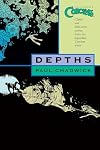
Paul Chadwick, according to his introduction, is a normal Joe who feels set apart and judged by his fellow humans. So, when he created a comic book character, he decided to make said guy an ordinary speechwriter who remained ordinary even when he underwent a monstrous transformation. Ron Lithgow became Concrete when space aliens abducted him and placed his brain into a powerful cyborg body that appeared like a man covered in concrete. He didn’t become a superhero. He became a celebrity. show more His adventures are those of a good, brave, modest man who struggles when he tries to act like a celebrity or a hero. I found the stories interesting once I accepted that they were about personal alienation and celebrity culture rather than bad guys getting punched. show less

The Problem of Susan collects four graphic adaptations of Neil Gaiman fantasy stories. The first two are illustrated by P. Craig Russell, who also did the scripting and layouts for the third. The title story--a sequel/critique for the Narnia stories of C.S. Lewis--is the longest of the four, and it's one I had read some years back. Russell's adaptation is magnificent, with repeated visual motives and a really glorious concluding panel.
The second story "Locks" is a very short one built show more around Goldilocks and the Three Bears and again bringing adult reflection to bear on children's literature. In the third tale "October in the Chair," personified months of the year have assembled around a fire in the woods for what seems to be a recurring convocation in which they exchange stories. October's contribution is the centerpiece, and it's suitably autumnal and spooky. The final piece in the book is hardly a story at all, more of a short poem really, called "The Day the Saucers Came." Paul Chadwick's art for this one is entirely in full-page illustrations, just seven of them. show less
The second story "Locks" is a very short one built show more around Goldilocks and the Three Bears and again bringing adult reflection to bear on children's literature. In the third tale "October in the Chair," personified months of the year have assembled around a fire in the woods for what seems to be a recurring convocation in which they exchange stories. October's contribution is the centerpiece, and it's suitably autumnal and spooky. The final piece in the book is hardly a story at all, more of a short poem really, called "The Day the Saucers Came." Paul Chadwick's art for this one is entirely in full-page illustrations, just seven of them. show less
Lists
Five star books (4)
1990s (2)
Awards


You May Also Like


Associated Authors
Statistics
- Works
- 153
- Also by
- 32
- Members
- 4,400
- Popularity
- #5,690
- Rating
- 4.0
- Reviews
- 73
- ISBNs
- 96
- Languages
- 11
- Favorited
- 3
