
David Park (2) (1953–)
Author of The Light of Amsterdam
For other authors named David Park, see the disambiguation page.
Works by David Park
Associated Works
Tagged
Common Knowledge
- Birthdate
- 1953
- Gender
- male
- Education
- Queens University, Belfast
- Birthplace
- Belfast, Northern Ireland, UK
- Places of residence
- Downpatrick, County Down, Northern Ireland, UK
- Associated Place (for map)
- Northern Ireland, UK
Members
Reviews
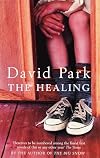
Twelve-year-old Samuel Anderson is baling hay with his father on their farm in Northern Ireland when two masked gunmen appear. They repeatedly shoot Mr. Anderson as his son looks on. The boy gets away, but he is never free from the murderers. Their mocking laughter continues to ring out in his mind. He is hypervigilant, believes he is being watched and followed. He flees into hedgerows and grain fields when he sees a car on the dusty rural roads near the farm. He cannot sleep. The wallpaper show more pattern in his bedroom morphs into distorted hostile faces.
Thomas, Samuel’s father, was a member of the Ulster Defence Regiment (UDR), an infantry unit of the British Army, and the reader knows that this is why he was targeted, even if Samuel does not. The time period is not specified, but there’s a reference to the Bellevue Zoo, which was only in operation until 1992, and the UDR was also disbanded that year, so we know the story is likely set in the 1980s. The Healing is one of David Park’s earlier works, his first published novel. I suppose one could now consider it historical fiction.
Elizabeth, Samuel’s mother, cannot manage the farm. She thinks a fresh start in Belfast, where she grew up, might help her and her traumatized son, who has become entirely mute. They move to a house in the southeast part of the city, a traditionally Protestant area, near the Belfast Hills. They are strangers in a strange land: shaken, devastated, and isolated.
They do not know that their elderly neighbour, Henry Ellison, a former parks and cemeteries gardener, equally isolated and apparently suffering from religious mania, has been anticipating Samuel’s arrival. Mr. Ellison, whose point of view gets almost as much attention as the boy’s, has for years been collecting newspaper obituaries and articles about the victims of sectarian violence and targeted killings. He has recently clipped out a photograph of Samuel and his mother at the military funeral for Thomas—a ceremony which Elizabeth only reluctantly agreed to. (She would’ve much preferred a private service and burial.) Since pasting the picture into one of his many ledgers, Mr. Ellison has become fixated on Samuel as the helpmate being sent to him by God to assist with “the healing” he believes he’s been assigned to perform. The old man was certain that the boy would be moving into the house next door, and in this he is correct. The nature and timing of Ellison’s divine mission to address the deep and spreading sickness of his society are not yet clear, but he is confident that the voice of God will direct him.
The hope had been that his son, William (Billy), would be Ellison’s helpmate, but the forces of evil seem to have claimed the young man. The relationship between the two is deeply fraught. Billy’s father meted out harsh corporal punishment to him in childhood, and the long, painful death of Billy’s mother from cancer was the last straw for the youth. He has no belief in the God of his father, a God that allowed his mother to suffer intractable pain. Mr. Ellison understands he has “failed with the boy, failed in every way”; he cannot “shirk from that knowledge or escape from its wounding pain.” He also knows his son has dark secrets, but these are much harder to confront.There’s a handgun hidden in the garage, which Ellison is aware of and ritualistically checks on. A policeman friend of the family, John, also stops by after work one day to warn him that Billy’s name has come up at the station. He’s apparently keeping company with “people that are dangerous to be around,” says John. “Some with records, and some clever enough to get others to do their dirty work. But all of them bad news and the boy would be best far away from them [. . . ] before it’s too late.” In time, it becomes impossible for the man to deny what that gun is being used for or his son’s involvement with loyalist paramilitaries.
Mr. Ellison earns the trust of Samuel and his mother when he offers to clean up their neglected garden. (In fact, Elizabeth is convinced enough of the man’s benevolence and so desperate for her son to have some kind of enjoyment that she allows Samuel to go for drives with Ellison’s son. Little does she know where Billy takes the boy.) For days on end, Samuel digs and weeds in the yard alongside the old man, and although the boy still doesn’t speak, it’s evident the work does him good. He can’t understand all the rambling about God, healing, and being a helpmate. In fact, given what happened to his father, Samuel hates God. However, Henry Ellison, in his delusional state, believes that the boy not only comprehends the task before them, but actually silently communicates with and guides him. He cannot bear to parted from the child and often stalks him and his mother.
This is an intense and claustrophobic novel. Park insightfully portrays trauma in a sensitive, introverted child and credibly presents psychiatric dysfunction and religious delusion. I don’t think I’ve ever before encountered a book that so well captures the devastation that follows a tragedy. Deirdre Madden’s One By One in the Darkness comes to mind, but it’s quite a different book dealing with adult sisters in a Catholic family (not a child) coming to terms with their father’s murder by loyalist paramilitary members. It also doesn’t wrestle, as Park’s novel does, with matters of guilt and complicity.
I will end by saying that healing does occur for Samuel, but it comes in an unexpected way, and Mr. Ellison’s ledgers have something to do with it. show less
Thomas, Samuel’s father, was a member of the Ulster Defence Regiment (UDR), an infantry unit of the British Army, and the reader knows that this is why he was targeted, even if Samuel does not. The time period is not specified, but there’s a reference to the Bellevue Zoo, which was only in operation until 1992, and the UDR was also disbanded that year, so we know the story is likely set in the 1980s. The Healing is one of David Park’s earlier works, his first published novel. I suppose one could now consider it historical fiction.
Elizabeth, Samuel’s mother, cannot manage the farm. She thinks a fresh start in Belfast, where she grew up, might help her and her traumatized son, who has become entirely mute. They move to a house in the southeast part of the city, a traditionally Protestant area, near the Belfast Hills. They are strangers in a strange land: shaken, devastated, and isolated.
They do not know that their elderly neighbour, Henry Ellison, a former parks and cemeteries gardener, equally isolated and apparently suffering from religious mania, has been anticipating Samuel’s arrival. Mr. Ellison, whose point of view gets almost as much attention as the boy’s, has for years been collecting newspaper obituaries and articles about the victims of sectarian violence and targeted killings. He has recently clipped out a photograph of Samuel and his mother at the military funeral for Thomas—a ceremony which Elizabeth only reluctantly agreed to. (She would’ve much preferred a private service and burial.) Since pasting the picture into one of his many ledgers, Mr. Ellison has become fixated on Samuel as the helpmate being sent to him by God to assist with “the healing” he believes he’s been assigned to perform. The old man was certain that the boy would be moving into the house next door, and in this he is correct. The nature and timing of Ellison’s divine mission to address the deep and spreading sickness of his society are not yet clear, but he is confident that the voice of God will direct him.
The hope had been that his son, William (Billy), would be Ellison’s helpmate, but the forces of evil seem to have claimed the young man. The relationship between the two is deeply fraught. Billy’s father meted out harsh corporal punishment to him in childhood, and the long, painful death of Billy’s mother from cancer was the last straw for the youth. He has no belief in the God of his father, a God that allowed his mother to suffer intractable pain. Mr. Ellison understands he has “failed with the boy, failed in every way”; he cannot “shirk from that knowledge or escape from its wounding pain.” He also knows his son has dark secrets, but these are much harder to confront.
Mr. Ellison earns the trust of Samuel and his mother when he offers to clean up their neglected garden. (In fact, Elizabeth is convinced enough of the man’s benevolence and so desperate for her son to have some kind of enjoyment that she allows Samuel to go for drives with Ellison’s son. Little does she know where Billy takes the boy.) For days on end, Samuel digs and weeds in the yard alongside the old man, and although the boy still doesn’t speak, it’s evident the work does him good. He can’t understand all the rambling about God, healing, and being a helpmate. In fact, given what happened to his father, Samuel hates God. However, Henry Ellison, in his delusional state, believes that the boy not only comprehends the task before them, but actually silently communicates with and guides him. He cannot bear to parted from the child and often stalks him and his mother.
This is an intense and claustrophobic novel. Park insightfully portrays trauma in a sensitive, introverted child and credibly presents psychiatric dysfunction and religious delusion. I don’t think I’ve ever before encountered a book that so well captures the devastation that follows a tragedy. Deirdre Madden’s One By One in the Darkness comes to mind, but it’s quite a different book dealing with adult sisters in a Catholic family (not a child) coming to terms with their father’s murder by loyalist paramilitary members. It also doesn’t wrestle, as Park’s novel does, with matters of guilt and complicity.
I will end by saying that healing does occur for Samuel, but it comes in an unexpected way, and Mr. Ellison’s ledgers have something to do with it. show less

Martin Waring is a curator at the Ulster Museum in Belfast where he enjoys the peace and solitude of history. His own history is a brutal childhood, the memories of which are now eclipsed by the accomplishments of his academically gifted daughter. After a tragic event, he is unable to recover and resorts to searching for those responsible among the former paramilitary associates of his youth, who have moved on to organized crime.
What might have been a lengthy meandering in misery was instead show more a story of the emotions resulting indirectly from his father’s cruelty. Park’s brooding novel shows a sensitive insight into the long-lasting effects of trauma and of the depths of heartache. The ending is unexpected and appropriate.
The title comes from the ancient Egyptians belief that the sun was swallowed.
The longer I think about this book the more I like it. Don't be surprised if my rating is increased. show less
What might have been a lengthy meandering in misery was instead show more a story of the emotions resulting indirectly from his father’s cruelty. Park’s brooding novel shows a sensitive insight into the long-lasting effects of trauma and of the depths of heartache. The ending is unexpected and appropriate.
The title comes from the ancient Egyptians belief that the sun was swallowed.
The longer I think about this book the more I like it. Don't be surprised if my rating is increased. show less

Park's book is made up of five stories loosely related by an unprecedented snowfall that happened in Northern Ireland in 1963.
A gently deceiving book, the shorter stories would be of little consequence without the snow that transfigured surroundings so much as to make it a different world, and making inconsequential events momentous. Snow muffles and silences, forming an insulation that reduces the world to a microcosm.
My favourite quote is from Snow Trails involving a young man who falls show more for an older woman. His father, the owner of a general store, also handles funerals and is arranging one for the woman of the previous story. The snow complicates matters and with the help of his son they use a sled to transport the coffin to the cemetery with as much dignity as possible.
"But if it gets any deeper it'll be no laughing matter driving over there to collect the body and then up to the church. The roads'll be mustard, and I bet you there won't be a snow plough to be seen for love or money".
"This country's not cut out for snow. Now if this was Canada they'd laugh at this - it'd be a spit in the ocean to them."
Park has a talent in invoking the reader's empathy. The title story is a police procedural featuring an old-school hard-line detective and a young detective learning the ropes and trying to do his job using newer methods. Possibly less subtle than the others but with the same moody undercurrent.
I can remember this specific memorable snowfall in 1963 and can attest to the atmosphere it created and which Park invokes so well. It was a nostalgic look back on a small segment of my youth when having to help my parents through the difficulty of being cut off from the world made me feel very grown up. I enjoyed this and will be looking for more by Park. show less
A gently deceiving book, the shorter stories would be of little consequence without the snow that transfigured surroundings so much as to make it a different world, and making inconsequential events momentous. Snow muffles and silences, forming an insulation that reduces the world to a microcosm.
My favourite quote is from Snow Trails involving a young man who falls show more for an older woman. His father, the owner of a general store, also handles funerals and is arranging one for the woman of the previous story. The snow complicates matters and with the help of his son they use a sled to transport the coffin to the cemetery with as much dignity as possible.
"But if it gets any deeper it'll be no laughing matter driving over there to collect the body and then up to the church. The roads'll be mustard, and I bet you there won't be a snow plough to be seen for love or money".
"This country's not cut out for snow. Now if this was Canada they'd laugh at this - it'd be a spit in the ocean to them."
Park has a talent in invoking the reader's empathy. The title story is a police procedural featuring an old-school hard-line detective and a young detective learning the ropes and trying to do his job using newer methods. Possibly less subtle than the others but with the same moody undercurrent.
I can remember this specific memorable snowfall in 1963 and can attest to the atmosphere it created and which Park invokes so well. It was a nostalgic look back on a small segment of my youth when having to help my parents through the difficulty of being cut off from the world made me feel very grown up. I enjoyed this and will be looking for more by Park. show less

It doesn't matter who you are, becoming a parent is like travelling in a strange land. Tom and Lorna worry about their son Luke, a student at university in England. Luke has been stranded by a snowstorm cancelling travel plans, the only person left in his student digs at Christmas. Tom sets out to bring him home to Northern Ireland for the holidays. This novel records Tom's journey as he reflects on another son, Daniel and where he went wrong. Interrupting his thoughts the satnav voice show more regularly advises him to stay on the route. At one point he turns off the satnav in case the woman can hear his thoughts.
Park's intriguing, quiet story is beautifully written, where each apparently trivial thought and event has significance. show less
Park's intriguing, quiet story is beautifully written, where each apparently trivial thought and event has significance. show less
Lists
Awards


You May Also Like


Associated Authors
Statistics
- Works
- 11
- Also by
- 2
- Members
- 527
- Popularity
- #47,212
- Rating
- 3.6
- Reviews
- 28
- ISBNs
- 108
- Languages
- 4
- Favorited
- 1