
Peter Davison (2) (1951–)
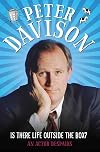
Author of Is There Life Outside the Box?: An Actor Despairs
For other authors named Peter Davison, see the disambiguation page.
About the Author
Image credit: wikimedia.org
Series
Works by Peter Davison
Doctor Who - The Black Guardian Trilogy: Mawdryn Undead / Terminus / Enlightenment [DVD] (2009) — Actor — 25 copies, 1 review
Doctor Who: Season 20 15 copies
Dr.Who: The Caves of Androzani 2 copies
Mystery!: Campion 1 copy
Associated Works
Dirk Gently's Holistic Detective Agency (1987) — Narrator, some editions — 15,003 copies, 254 reviews
Doctor Who : A Celebration—Two Decades Through Time and Space (1983) — "I Thought I Was Too Young to Play the Doctor!" — 283 copies, 2 reviews
Campion: The Complete Series — Actor — 15 copies
At Home With the Braithwaites: The Complete Series — Actor — 3 copies
Harnessing Peacocks [1993 TV movie] — Actor — 1 copy
Doctor Who: The Monsters Collection: Five Complete Classic Novelisations — Narrator, some editions — 1 copy
Tagged
Common Knowledge
- Other names
- Moffett, Peter M. G. (born)
- Birthdate
- 1951-04-13
- Gender
- male
- Education
- Central School of Speech and Drama
- Relationships
- Tennant, Georgia (daughter)
- Nationality
- UK
- Birthplace
- Streatham, London, England, UK
- Associated Place (for map)
- England, UK
Members
Reviews
https://nwhyte.livejournal.com/3279791.html
I met Peter Davison and his wife Elizabeth Morton at Loncon in 2014, and was just a bit starstruck. This was at the pre-Hugo reception, where he was attending in case The Five(ish) Doctors Reboot won (I had voted for it, mainly because it is very enjoyable but partly because I am briefly visible in it at about 08:03, but it didn't win). I chatted to them for a few minutes, and then Elizabeth's phone rang; it was David and Georgia, who had been show more dropped at the wrong end of the ExCel building, so I went off to get them.
I've read a lot of celebrity memoirs, including Doctor Who memoirs, by now, and this really is one of the most entertaining of them. There are some major surprises as well, of which the first is that his father was black - or anyway, mixed-race, from Guyana (then British Guiana). Obviously his English mother's genes won out in terms of skin and hair colour, but you can clearly see the resemblance from the pictures in the book.
The book is told as a series of flashbacks in chronological order, as seen from a tour in 2015-2016. Young Peter Moffett did appallingly badly at school - “Perhaps my greatest triumph was managing to fail CSE woodwork. As my teacher, Mr Bidgood, said in his state of shock: ‘All you have to do is recognise wood.’” He studied at Central, but it took a long time for his career to get going; a brief appearance in The Tomorrow People was followed by a dry spell, and then suddenly in 1978 he hit the big time as junior vet Tristan Farnon in All Creatures Great and Small. The extent to which this was cult family viewing in the late 1970s and early 1980s cannot be exaggerated; as the world around us appeared to be going to hell, here was a lovely nostalgic visit to a gentler past, where young Tristan was frequently brought up short by his older brother Siegfried (as played by Robert Hardy), genially observed by James Herriot (Christopher Timothy).
When he was named as the fifth Doctor in November 1980, it was the first item on the BBC news that evening, ahead of some bloke called Reagan being elected to something or other. It did not last; after Doctor Who, and the subsequent successes of A Very Peculiar Practice and Campion, he had a very slack decade and a second divorce, and his personal life and career only really picked up again around 2000. But now, particularly with the renewal of fannish interest in his earlier years, it sounds like things are on track again.
The anecdotes are great fun, told with a combination of acute observation (mostly sympathetic) of his fellow actors, and self-deprecation (sometimes brutal). When we met in 2014, I asked if he had written anything other than The Five(ish) Doctors Reboot, and he said that the only other script he had done was for his video message to Gallifrey 22 in 2011. I don't know if that was completely true then, or if it's still true now, but based on those dramas and this book, I hope he tries some more writing. It's good stuff. show less
I met Peter Davison and his wife Elizabeth Morton at Loncon in 2014, and was just a bit starstruck. This was at the pre-Hugo reception, where he was attending in case The Five(ish) Doctors Reboot won (I had voted for it, mainly because it is very enjoyable but partly because I am briefly visible in it at about 08:03, but it didn't win). I chatted to them for a few minutes, and then Elizabeth's phone rang; it was David and Georgia, who had been show more dropped at the wrong end of the ExCel building, so I went off to get them.
I've read a lot of celebrity memoirs, including Doctor Who memoirs, by now, and this really is one of the most entertaining of them. There are some major surprises as well, of which the first is that his father was black - or anyway, mixed-race, from Guyana (then British Guiana). Obviously his English mother's genes won out in terms of skin and hair colour, but you can clearly see the resemblance from the pictures in the book.
The book is told as a series of flashbacks in chronological order, as seen from a tour in 2015-2016. Young Peter Moffett did appallingly badly at school - “Perhaps my greatest triumph was managing to fail CSE woodwork. As my teacher, Mr Bidgood, said in his state of shock: ‘All you have to do is recognise wood.’” He studied at Central, but it took a long time for his career to get going; a brief appearance in The Tomorrow People was followed by a dry spell, and then suddenly in 1978 he hit the big time as junior vet Tristan Farnon in All Creatures Great and Small. The extent to which this was cult family viewing in the late 1970s and early 1980s cannot be exaggerated; as the world around us appeared to be going to hell, here was a lovely nostalgic visit to a gentler past, where young Tristan was frequently brought up short by his older brother Siegfried (as played by Robert Hardy), genially observed by James Herriot (Christopher Timothy).
When he was named as the fifth Doctor in November 1980, it was the first item on the BBC news that evening, ahead of some bloke called Reagan being elected to something or other. It did not last; after Doctor Who, and the subsequent successes of A Very Peculiar Practice and Campion, he had a very slack decade and a second divorce, and his personal life and career only really picked up again around 2000. But now, particularly with the renewal of fannish interest in his earlier years, it sounds like things are on track again.
The anecdotes are great fun, told with a combination of acute observation (mostly sympathetic) of his fellow actors, and self-deprecation (sometimes brutal). When we met in 2014, I asked if he had written anything other than The Five(ish) Doctors Reboot, and he said that the only other script he had done was for his video message to Gallifrey 22 in 2011. I don't know if that was completely true then, or if it's still true now, but based on those dramas and this book, I hope he tries some more writing. It's good stuff. show less
Peter Davison’s memoir, Is There Life Outside the Box? An Actor Despairs, examines his family life, his tenure as the fifth Doctor on Doctor Who, and his feelings of struggling in his career following his departure from Doctor Who. He addresses all of his material with self-deprecating humor, alternating between recounting events of the past and discussing the process of writing the memoir and gathering information in the present. For example, when contrasting his interest in Carol show more Burnett’s comedy with his youthful interest in music, Davison writes, “…she attributed her success, at least in part, to ‘seeing’ herself as a success. It was the same for me but I ‘saw’ myself as a songwriting sensation, and that never happened. That’s the truth for most positive thinking” (pg. 65). From there, Davison discusses his youthful relationships, his struggles in school and to become an actor, before detailing his first big break in All Creatures Great and Small.
Discussing his time on Doctor Who, Davison begins with the costume. He writes, “I don’t like celery, but I had no objection to wearing it on my lapel… My only stipulation was that [John Nathan-Turner] explained the reason for the decorative vegetable (obviously I used a less decorative description) before I left the series. Then I went away and forgot about it for the three years” (pg. 167). He also addresses Adric’s death, writing, “I thought, no one dies in Doctor Who… and yet every week lives of the Doctor and his companions are threatened… If for once, one of us did, we’d raise the jeopardy factor sky high… So we traumatised millions of children, and I’d like to take this opportunity to apologise to them all, even though I would like to point out… IT WAS ABSOLUTELY NOT MY IDEA TO KILL ADRIC” (pg. 174). Finally, he discusses the frustrations that led to his departure. Davison writes, “It was January 1984, the end of three exciting but frustrating years. I felt, along with many others, that Doctor Who was underfunded, unappreciated and would only get more problematic as time went on… I heard an interview with Colin Baker talking excitedly about his plans for the show… He’d find out soon enough, his wriggle-room was non-existent, and his great notions would come to nothing” (pg. 189).
Davison discusses the interesting times during the lean years of the 1990s, when he appeared alongside Prince Charles in Grime Goes Green (pg. 222-225) and met David Tennant at a pub next to the Young Vic in 1993 (pg. 246). He describes meeting Tennant, writing, “A young man came up and enthusiastically engaged me in conversation about Doctor Who, which he knew far more about than I had forgotten” (pg. 246). Davison’s discussion of conventions is particularly heartwarming, especially as a fan to hear an honest account of the other side of these orchestrated events from one of the celebrity guests (303-319). Through it all, Davison’s humor and self-deprecating wit make this one of the most delightful memoirs by a former Doctor and well-worth reading for his fans. show less
Discussing his time on Doctor Who, Davison begins with the costume. He writes, “I don’t like celery, but I had no objection to wearing it on my lapel… My only stipulation was that [John Nathan-Turner] explained the reason for the decorative vegetable (obviously I used a less decorative description) before I left the series. Then I went away and forgot about it for the three years” (pg. 167). He also addresses Adric’s death, writing, “I thought, no one dies in Doctor Who… and yet every week lives of the Doctor and his companions are threatened… If for once, one of us did, we’d raise the jeopardy factor sky high… So we traumatised millions of children, and I’d like to take this opportunity to apologise to them all, even though I would like to point out… IT WAS ABSOLUTELY NOT MY IDEA TO KILL ADRIC” (pg. 174). Finally, he discusses the frustrations that led to his departure. Davison writes, “It was January 1984, the end of three exciting but frustrating years. I felt, along with many others, that Doctor Who was underfunded, unappreciated and would only get more problematic as time went on… I heard an interview with Colin Baker talking excitedly about his plans for the show… He’d find out soon enough, his wriggle-room was non-existent, and his great notions would come to nothing” (pg. 189).
Davison discusses the interesting times during the lean years of the 1990s, when he appeared alongside Prince Charles in Grime Goes Green (pg. 222-225) and met David Tennant at a pub next to the Young Vic in 1993 (pg. 246). He describes meeting Tennant, writing, “A young man came up and enthusiastically engaged me in conversation about Doctor Who, which he knew far more about than I had forgotten” (pg. 246). Davison’s discussion of conventions is particularly heartwarming, especially as a fan to hear an honest account of the other side of these orchestrated events from one of the celebrity guests (303-319). Through it all, Davison’s humor and self-deprecating wit make this one of the most delightful memoirs by a former Doctor and well-worth reading for his fans. show less
I like Peter Davison. He's one of those actors I've always liked, since before I really knew who he was, although my fandom wasn't cemented until university when I got into The Last Detective, and consequently, needing a Peter-Davison-playing-a-detective fix, Campion, who is now one of my favourite fictional characters. Anyway, Davison's autobiography perfectly encapsulates his gentle charm and self-deprecating and acerbic wit. There are a few moments of repetition, but I feel like I should show more let those slide since he's an actor, not a writer by profession.
These days everyone who's ever appeared on TV seems to have an autobiography, and I'm not a particular fan of the genre. The fact is that most people do not have a novel-worthy life story to tell. And in some cases, you can seriously go off a celebrity after finding out what they are really like. That's not the case here. I liked Peter Davison before I read his book and I like him just as much having read it and now I know a bit about his life that I didn't know before, mainly because I didn't know anything about his life at all. But if he wasn't an actor I already admired, I'm not sure how much there is to get out of his story. Which is probably redundant, because who would be reading this other than a fan anyway? In some ways, maybe many ways, it's reassuring to read the life story (albeit a very abridged and occasionally rather vague one) of a man who seems to be recognisable and normal - not normal in a dull way, but the sort of person who I'd probably actually get along with. It's a sort of tale of luck and optimism, despite all the bad luck and self-deprecation along the way.
This isn't ground-breaking stuff, but it's certainly very readable, a good laugh and leaves you with a wry smile and a weird fatalistic optimism. And also a huge list of TV shows I now have to go rent. show less
These days everyone who's ever appeared on TV seems to have an autobiography, and I'm not a particular fan of the genre. The fact is that most people do not have a novel-worthy life story to tell. And in some cases, you can seriously go off a celebrity after finding out what they are really like. That's not the case here. I liked Peter Davison before I read his book and I like him just as much having read it and now I know a bit about his life that I didn't know before, mainly because I didn't know anything about his life at all. But if he wasn't an actor I already admired, I'm not sure how much there is to get out of his story. Which is probably redundant, because who would be reading this other than a fan anyway? In some ways, maybe many ways, it's reassuring to read the life story (albeit a very abridged and occasionally rather vague one) of a man who seems to be recognisable and normal - not normal in a dull way, but the sort of person who I'd probably actually get along with. It's a sort of tale of luck and optimism, despite all the bad luck and self-deprecation along the way.
This isn't ground-breaking stuff, but it's certainly very readable, a good laugh and leaves you with a wry smile and a weird fatalistic optimism. And also a huge list of TV shows I now have to go rent. show less
Not a Who fan in particular, just a fan of decent actor biogs. And this is one. Written by Davison himself, in roughly chronological order with steps forward to the present day used to link back or introduce past events, which works well. A light insight into the life of an actor, albeit one who got fairly lucky (in his words) - insecurities, anecdotes, shows and stories about them - and what was going on in his life too, at the time. Maybe not a deep read but an entertaining one, show more nonetheless, although he freely talks about his time heavily in debt after his divorce from Sandra Dickinson and the fact that they just wasted their money while successful - big house, gadgets, not putting money by to pay taxes... and how he gradually worked his way out of it.
The story about the ego battle between Jon Pertwee and Tom Baker at US Who conventions (both thought themselves the definitive Doctor, back in the 80s) was pretty funny and clearly Tom Baker himself had rather an ego problem. PD himself seems rather grateful for his lot in life and recognises he's done better than many, despite being lazy at school and discovering he had some acting talent by accident. His thoughts on some of the series he worked on are interesting - and he's not afraid to criticise people or decisions where he thinks it needs doing, which is refreshing - not everything was "simply lovely, darling" and that raises the book above some other similar books; he is particularly critical of Michael Winner, director of 1 of his 2 film appearances, and how badly he treated those working for him.
Ultimately its an easy to read, entertaining actor biog. And there's nothing wrong with that - it's pretty much what I wanted. It has also made me want to revisit a few of his old series as to be honest, at the time they passed me by completely. show less
The story about the ego battle between Jon Pertwee and Tom Baker at US Who conventions (both thought themselves the definitive Doctor, back in the 80s) was pretty funny and clearly Tom Baker himself had rather an ego problem. PD himself seems rather grateful for his lot in life and recognises he's done better than many, despite being lazy at school and discovering he had some acting talent by accident. His thoughts on some of the series he worked on are interesting - and he's not afraid to criticise people or decisions where he thinks it needs doing, which is refreshing - not everything was "simply lovely, darling" and that raises the book above some other similar books; he is particularly critical of Michael Winner, director of 1 of his 2 film appearances, and how badly he treated those working for him.
Ultimately its an easy to read, entertaining actor biog. And there's nothing wrong with that - it's pretty much what I wanted. It has also made me want to revisit a few of his old series as to be honest, at the time they passed me by completely. show less
You May Also Like


Associated Authors
Statistics
- Works
- 26
- Also by
- 158
- Members
- 323
- Popularity
- #73,308
- Rating
- 3.8
- Reviews
- 14
- ISBNs
- 81