
Peter Nichols (2) (1927–2019)
Author of Joe Egg
For other authors named Peter Nichols, see the disambiguation page.
About the Author
A Bristol-born former actor and schoolteacher, Peter Nichols was born on July 31, 1927. He got his start writing some 14 plays for television and has continued to write for that medium even since attaining success in the West End. A Day in the Death of Joe Egg, his first stage play, was produced in show more England in 1967 and on Broadway a year later. Joe Egg (as a squeamish American management insisted it be retitled) concerns a couple whose marriage is slowly being destroyed by their attempt to raise a hopelessly spastic daughter (Josephine, alias Joe Egg, their "living parsnip"). They survive in their situation as long as they do only by ceaselessly joking about it. This comic distancing, as much as its autobiographical revelation, was to be the common characteristic of Nichols's later plays. Forget-Me-Not-Lane (1971), distinctly personal in its middle-aged re-examination of a World War II childhood, has characters stepping back and forth through time and in and out of the dramatic situation. In Passion Play (1981), Nichols's characters even break away from themselves, each partner in a bickering couple splitting into mutually critical components. The National Health (1969), produced to general acclaim at the National Theatre, achieves its distancing through the alternation of realistic scenes of suffering and dying in a hospital ward with episodes of an outrageous medical soap opera, Nurse Norton's Affair, shown on a simulated television screen. And in the ironic musical episodes of Privates on Parade (1977), the story of an army entertainment troupe in the 1950s, Nichols entered the area of alienating theatricalism explored by John Osborne's The Entertainer (1957) and Joan Littlewood's Oh, What a Lovely War. Privates, a Royal Shakespeare Company hit of 1977, has been made into a film, as have Joe Egg and The National Health. (Nichols also wrote the screenplay for the 1966 film satire Georgy Girl.) (Bowker Author Biography) show less
Image credit: From Wikipedia
Series
Works by Peter Nichols
Nichols Plays: 2: Chez Nous; Privates on Parade; Born in the Gardens; Passion Play; Poppy (Contemporary Dramatists) (Vol 2) (1991) 10 copies
Plays: One : Forget-Me-Not Lane, Hearts and Flowers, Neither Up Nor Down, Chez Nous, the Common, Privates on Parate (World Dramatists Series) (v. 1) (1987) 10 copies
Inspector Morse 19: Greeks Bearing Gifts [Videorecording] (2004) — Screenwriter — 7 copies, 1 review
Hearts and Flowers 2 copies
Nichols: Plays 1 1 copy
Associated Works
The Actor's Book of Contemporary Stage Monologues: More Than 150 Monologues from More Than 70 Playwrights (1987) — Contributor — 193 copies
Tagged
Common Knowledge
- Legal name
- Nichols, Peter Richard
- Birthdate
- 1927-07-31
- Date of death
- 2019-09-07
- Gender
- male
- Education
- Bristol Grammar School
Bristol Old Vic Theatre School - Occupations
- playwright
author
screenwriter - Organizations
- Royal Shakespeare Company
- Awards and honors
- Commander of the Order of the British Empire
- Nationality
- UK
- Birthplace
- Bristol, England, UK
- Places of residence
- Bristol, Gloucestershire, England, UK
Calcutta, India
Singapore - Place of death
- Oxford, Oxfordshire, England, UK
- Associated Place (for map)
- England, UK
Members
Reviews

A brilliant play on the difficulties of a marriage when the child is born disabled, in this case, severely disabled. The parents joke and role-play to deal with the pain, but the pain has become the defining feature of their marriage. The crisis comes when the wife brings home two friends from her rehearsal at the local theatre company, and the husband's mother drops by unannounced. The father has dreams of euthanasia, which horrify most of those around him. The ending of the play is show more poignant, but does leave some room for the theatre-goer to build their own ending, that third act that takes place after you leave the theatre. show less
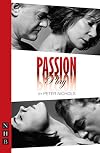
Also published under the title "Passion", this is a play about middle-aged James and Eleanor. Married twenty-five years, they are happily comfortable with each other until their friend dies and his much younger mistress sets her sights on James, who isn't attracted to the woman, yet can't resist the offer.
An interesting take on infidelity, as James' conscience splits off and becomes another character, while the dead friend's wife becomes the voice of foreboding for Eleanor.
An interesting take on infidelity, as James' conscience splits off and becomes another character, while the dead friend's wife becomes the voice of foreboding for Eleanor.
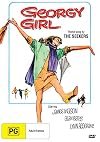
2021 movie #94. 1966. Georgie (Redgrave) is a frumpy, old-fashioned girl in Mod London. Envious of her beautiful roommate (Rampling) and fighting off the advances of her father's boss (Mason), she makes her own independent way. Redgrave was nominated for Best Actress Oscar.

Lists
Awards


You May Also Like


Associated Authors
Statistics
- Works
- 22
- Also by
- 2
- Members
- 451
- Popularity
- #54,391
- Rating
- 3.6
- Reviews
- 9
- ISBNs
- 155
- Languages
- 6