
Simon Gray (1) (1936–2008)
Author of The Smoking Diaries
For other authors named Simon Gray, see the disambiguation page.
About the Author
Playwright Simon Gray was born in Hayling Island, Hampshire, England on October 21, 1936. He received degrees from Dalhousie University in Halifax, Nova Scotia, Canada and from Cambridge University. He has edited a literary review (like the characters in The Common Pursuit) and taught drama, show more poetry, and English literature in universities, both major and provincial. He has written 40 plays, television plays, and screenplays and five novels, and adapted Fyodor Dostoevsky's The Idiot for the National Theatre. Some of his works include Butley, Otherwise Engaged, Quartermaine's Terms, The Smoking Diaries, The Year of the Jouncer, and The Last Cigarette. He died on August 6, 2008. (Bowker Author Biography) show less
Series
Works by Simon Gray
Simon Gray Four Plays: "The Pig Trade", "In the Vale of Health", "Japes", "The Holy Terror" (2004) 8 copies
Simon Gray: Plays 4: Common Pursuit; Holy Terror; After Pilkington; Old Flames; They Never Slept (2010) 6 copies
Simon Gray: Plays 3: Quartermaine's Terms; Stage Struck; Close of Play; Rear Column; Month in the Country; Tartuffe (2010) 3 copies
Simon Gray : 2008 2 copies
Simon Gray: Four Plays 1 copy
Associated Works
The Pleasure of Reading: 43 Writers on the Discovery of Reading and the Books That Inspired Them (2015) — Contributor — 103 copies, 2 reviews
The Actor's Book of Scenes from New Plays: 70 Scenes for Two Actors, from Today's Hottest Playwrights (1988) — Contributor — 87 copies, 1 review
Screen Two: They Never Slept (TV Episode, 1991) — Screenwriter — 2 copies
Tagged
Common Knowledge
- Legal name
- Gray, Simon James Holliday
- Birthdate
- 1936-10-21
- Date of death
- 2008-08-07
- Gender
- male
- Education
- Westminster School, London
Dalhousie University
University of Cambridge (Trinity College) - Occupations
- playwright
lecturer (university)
screenwriter
novelist
memoirist - Organizations
- University of London (Queen Mary's College)
- Awards and honors
- Order of the British Empire (Commander ∙ 2004)
- Relationships
- Pinter, Harold (creative partnership)
Bates, Alan (creative partnership)
Rothschild, Emma (sister-in-law)
Rothschild, Baron Nathaniel Mayer Victor (father-in-law) - Nationality
- UK
- Birthplace
- Hayling Island, Hampshire, England, UK
- Places of residence
- Notting Hill, West London, England, UK
Hayling Island, Hampshire, England, UK
Montreal, Canada - Place of death
- London, England, UK
- Associated Place (for map)
- England, UK
Members
Reviews
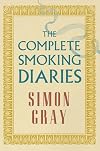
The Smoking Diaries are memoirs in journal form rather than conventional diaries. And although for much of his life Simon Gray was a sixty-five a day man, they’re not really about smoking. His smoking is just constantly there, like the weather. Gray avoids the linear chronology of the diary, and most autobiography, and roams freely through time and place, words pouring out of him in endlessly digressive streams of consciousness. Events in the here and now trigger memories and past and show more present merge into one, each becoming aspects of the other. For Gray, as for all of us, the past is never over and never static, but constantly being relived and reshaped by the imagination.
He was the author of many excellent plays, in not a few of which there was a sardonic, impossibly sophisticated, irascible and self-destructive central character who, one suspected, was the author in disguise. The author hiding in plain sight is actually more like it: in Otherwise Engaged the main character is even called Simon. These four volumes might be viewed as dramatic monologues in which the authorial hero of the plays is liberated from the constraints of plot and allowed to wander at random through his own consciousness and history. Or perhaps they’re internal monologues of the kind one has during the insomniac night. Gray did in fact often write them in the small hours, simultaneously chain-smoking, or gorging himself with chocolate, and drinking a seemingly endless supply of Diet Coke (in earlier years, before these diaries begin, it was three bottles of champagne a day).
He writes about his addictions, infidelities, ageing, schooldays, declining health, family, departed friends and ailing friends, his theatrical successes and failures, and the modern world which he finds largely not to his taste. He is irritable, gloomy, vituperative, self-loathing, unsentimental, playful, regretful, defiant, and human all too human. He spares no one, least of all himself. At the start of the first book he describes himself, on his sixty-fifth birthday, as ‘belching, farting, dribbling, wheezing’, and that’s just Gray warming up.
He makes the actual process of writing part of the finished work, rewriting as he goes along, contradicting himself and commenting, usually disparagingly, on what he has written. Gradually though one begins to notice that all this randomness and spontaneity isn’t quite as random or spontaneous as it appears, and the streams of consciousness artfully arranged. Characters come into focus and narratives unfold in which vital information is strategically withheld in the classic West End or Broadway manner. For all their apparently freewheeling nature these diaries are unmistakably the work of a master theatrical craftsman of the old school.
I can’t believe I’ve got this far without mentioning how funny these books are: they are very funny indeed. There are many passages which are as funny as anything I have ever read. Despite his often sombre subject matter (never more so than in the final volume which deals with his terminal cancer and was published posthumously) reading Simon Gray is an exhilarating experience. The exhilarating comedy stemming in large measure from his vitality of language and the gleefully candid way in which he parades his faults and failings, indiscretions and misdemeanours. I’m resisting the temptation to quote as short extracts don’t do justice to this breathless and breathtaking avalanche of language in which single sentences often unwind over an entire page or more. There’s really no alternative to plunging in and allowing Gray to rattle around your brain in all his intemperate, anarchic, and ultimately life-affirming glory for the full 846 pages. show less
He was the author of many excellent plays, in not a few of which there was a sardonic, impossibly sophisticated, irascible and self-destructive central character who, one suspected, was the author in disguise. The author hiding in plain sight is actually more like it: in Otherwise Engaged the main character is even called Simon. These four volumes might be viewed as dramatic monologues in which the authorial hero of the plays is liberated from the constraints of plot and allowed to wander at random through his own consciousness and history. Or perhaps they’re internal monologues of the kind one has during the insomniac night. Gray did in fact often write them in the small hours, simultaneously chain-smoking, or gorging himself with chocolate, and drinking a seemingly endless supply of Diet Coke (in earlier years, before these diaries begin, it was three bottles of champagne a day).
He writes about his addictions, infidelities, ageing, schooldays, declining health, family, departed friends and ailing friends, his theatrical successes and failures, and the modern world which he finds largely not to his taste. He is irritable, gloomy, vituperative, self-loathing, unsentimental, playful, regretful, defiant, and human all too human. He spares no one, least of all himself. At the start of the first book he describes himself, on his sixty-fifth birthday, as ‘belching, farting, dribbling, wheezing’, and that’s just Gray warming up.
He makes the actual process of writing part of the finished work, rewriting as he goes along, contradicting himself and commenting, usually disparagingly, on what he has written. Gradually though one begins to notice that all this randomness and spontaneity isn’t quite as random or spontaneous as it appears, and the streams of consciousness artfully arranged. Characters come into focus and narratives unfold in which vital information is strategically withheld in the classic West End or Broadway manner. For all their apparently freewheeling nature these diaries are unmistakably the work of a master theatrical craftsman of the old school.
I can’t believe I’ve got this far without mentioning how funny these books are: they are very funny indeed. There are many passages which are as funny as anything I have ever read. Despite his often sombre subject matter (never more so than in the final volume which deals with his terminal cancer and was published posthumously) reading Simon Gray is an exhilarating experience. The exhilarating comedy stemming in large measure from his vitality of language and the gleefully candid way in which he parades his faults and failings, indiscretions and misdemeanours. I’m resisting the temptation to quote as short extracts don’t do justice to this breathless and breathtaking avalanche of language in which single sentences often unwind over an entire page or more. There’s really no alternative to plunging in and allowing Gray to rattle around your brain in all his intemperate, anarchic, and ultimately life-affirming glory for the full 846 pages. show less
Butley by Simon Gray

Butley tells the story of a day in the life of university don Ben Butley (Alan Bates). Unfortunately for him, it is the day on which his life falls apart. Ben is a man full of energy he doesn't know what to do with. He's lost a grip on what gives his life purpose, he's not sure that teaching is of any use or that he's even meant to be a teacher anymore...and he's feasting off the dregs of his relationships.The language, dynamics between characters, vicious game-playing, ruthlessness and show more humour combine to make this a brilliantly funny masterpiece. Celebrated playwright Harold Pinter uses his sole outing as a film director to stunning effect. A fantastic supporting cast includes Richard O'Callaghan and Oscar winner Jessica Tandy (Driving Miss Daisy). The late Alan Bates recreates on celluloid his Tony Award winning performance, which is simultaneously hilarious and heartbreaking.Butley is a brilliant and moving dissection of disillusionment and squandered brilliance. show less
Coda by Simon Gray

Simon Gray's ruminations are always an agreeable read. He can be self-indulgent at times but he has insight into his flaws. He loves, and depends upon, his wife Victoria, never more clearly than in this final volume. He is certainly a good and loyal friend to those he values. He is, quite willingly, organised by his pets. He is an edgy and accurate, but also tolerant, observer of his fellow man.
Gray was a heavy drinker who has described in earlier volumes of his memoirs how, when faced with show more the assurance that alcohol would soon kill him as it had his younger brother, he stopped drinking completely. He was not able to deal with his other self-destructve habit and continued to smoke heavily throughout the three volumes of The Smoking Diaries. At the very end of the third book he reveals that the lung cancer, which, of course, we all were certain was creeping up silently on him has been found. Gray describes this, last, volume as the story of "the beginning of my dying".
Gray is not shy of describing the fear and confusion that goes with the terminal diagnosis but he is rarely sorry for himself. He can put the disease away from himself but he is never in denial. He has no faith or belief in an after-life with which to jolly himself along. He has some superb descriptions of consultations with his doctors, at once funny and fearful. They should be read with close attention by all professionals who deal with patients in the palliative stage of terminal illness. Many oncologists will think twice about the squeeze on the patient's shoulder that Gray comes to recognise "as a kind of mimed proclamation of my death sentence". Then there are the doctors who seem to see themselves in a different physical space from their patients, emerging to connect only when they decide, unaware that they are already visible and audible to those patients.
Gray does not, initially, want to know how long he has to live. His doctor offers to tell him the prognosis and he tries to say no. The doctor's training, however, leaves no room for witholding information from the patient who, so the jargon has it, should be an equal partner in the therapeutic journey and is empowered by openness: he doesn't really listen to Gray and tells him he's got a year left. Gray's reaction is dramatic - "I wanted to kill him. I wanted to kill him and as I pulled the trigger, thrust the dagger, whatever, say, 'That's a year longer than you have, matey'." Of course, towards the end of the book, when there has been some response to treatment and he is 'given' two years, eighteen months at least, he is brimming over with love for the same doctor.
Gray comes over, without really trying on his own behalf, as someone who would be great company, particularly for someone raised in the reasonably affluent, emotionally repressed, mildly racist and anti-feminist but nevertheless liberal-minded, public school and Oxbridge educated, British mid-20th century middle classes. He gives a delightful description of an evening with Harold Pinter(who was, of course, few of the above things), frail after surgery, telling a story about single-handedly losing, disastrously, a cricket match after which they "both laughed and laughed until (they) both coughed and coughed, laughed and coughed -."
Coda confirms what we already knew about Simon Gray from his previous memoirs: a great wit, great love for those close to him, a sympathy for human frailty. There is a satisfactory ending, to his life rather than the book. Instead of dying of cancer, the thought of which disturbed him greatly and generated much consideration of how he might avoid it - not under a train because he always resented the delays arising from a "customer on the line"- he died after the aortic aneurysm that he had known about for years ruptured. He didn't get his two years, but he got a better end. show less
Gray was a heavy drinker who has described in earlier volumes of his memoirs how, when faced with show more the assurance that alcohol would soon kill him as it had his younger brother, he stopped drinking completely. He was not able to deal with his other self-destructve habit and continued to smoke heavily throughout the three volumes of The Smoking Diaries. At the very end of the third book he reveals that the lung cancer, which, of course, we all were certain was creeping up silently on him has been found. Gray describes this, last, volume as the story of "the beginning of my dying".
Gray is not shy of describing the fear and confusion that goes with the terminal diagnosis but he is rarely sorry for himself. He can put the disease away from himself but he is never in denial. He has no faith or belief in an after-life with which to jolly himself along. He has some superb descriptions of consultations with his doctors, at once funny and fearful. They should be read with close attention by all professionals who deal with patients in the palliative stage of terminal illness. Many oncologists will think twice about the squeeze on the patient's shoulder that Gray comes to recognise "as a kind of mimed proclamation of my death sentence". Then there are the doctors who seem to see themselves in a different physical space from their patients, emerging to connect only when they decide, unaware that they are already visible and audible to those patients.
Gray does not, initially, want to know how long he has to live. His doctor offers to tell him the prognosis and he tries to say no. The doctor's training, however, leaves no room for witholding information from the patient who, so the jargon has it, should be an equal partner in the therapeutic journey and is empowered by openness: he doesn't really listen to Gray and tells him he's got a year left. Gray's reaction is dramatic - "I wanted to kill him. I wanted to kill him and as I pulled the trigger, thrust the dagger, whatever, say, 'That's a year longer than you have, matey'." Of course, towards the end of the book, when there has been some response to treatment and he is 'given' two years, eighteen months at least, he is brimming over with love for the same doctor.
Gray comes over, without really trying on his own behalf, as someone who would be great company, particularly for someone raised in the reasonably affluent, emotionally repressed, mildly racist and anti-feminist but nevertheless liberal-minded, public school and Oxbridge educated, British mid-20th century middle classes. He gives a delightful description of an evening with Harold Pinter(who was, of course, few of the above things), frail after surgery, telling a story about single-handedly losing, disastrously, a cricket match after which they "both laughed and laughed until (they) both coughed and coughed, laughed and coughed -."
Coda confirms what we already knew about Simon Gray from his previous memoirs: a great wit, great love for those close to him, a sympathy for human frailty. There is a satisfactory ending, to his life rather than the book. Instead of dying of cancer, the thought of which disturbed him greatly and generated much consideration of how he might avoid it - not under a train because he always resented the delays arising from a "customer on the line"- he died after the aortic aneurysm that he had known about for years ruptured. He didn't get his two years, but he got a better end. show less
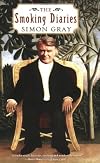
This is the first in a series of diaries prolific British playwright and screenwriter Simon Gray began keeping when he turned 65. A smoker since early childhood, a cigarette was no doubt usually burning in his left hand as he transcribed, with his right hand on a canary yellow pad, his often rambling and sometimes rather unruly thoughts. This first diary begins with Gray’s learning of his friend Harold Pinter’s esophageal cancer. Not surprisingly, then, the book focuses on the show more indignities of aging, along with memories of early childhood, and personal and professional missteps along the way. (Gray had been an adulterer, an alcoholic, and profligate with his money.) I was most entertained by the early sections of the book in which Gray is on holiday in Barbadoes with his second wife, Victoria, and imagines all sorts of backstories for guests staying at the same hotel. There are some laugh-out-loud moments about the poetry of W.H. Auden—which Gray loathed for its sloppy language—and the need for a comprehensive book on piles (hemorrhoids) in history.
Gray’s musings are often unrestrained. Sentences can go on a half a page or more, joined by seemingly endless dashes. It is often difficult to follow the thread, and I found the play-by-plays of soccer and cricket matches (in particular) very tedious. This is a very “male” piece of writing—that is, many of Gray’s preoccupations, and certainly his perceptions of women, are likely to be more sympathetically received by a male audience. In general this book is one in which parts are better than the sum.
Gray died in 2008 of prostate cancer.
Rating: 2.5 show less
Gray’s musings are often unrestrained. Sentences can go on a half a page or more, joined by seemingly endless dashes. It is often difficult to follow the thread, and I found the play-by-plays of soccer and cricket matches (in particular) very tedious. This is a very “male” piece of writing—that is, many of Gray’s preoccupations, and certainly his perceptions of women, are likely to be more sympathetically received by a male audience. In general this book is one in which parts are better than the sum.
Gray died in 2008 of prostate cancer.
Rating: 2.5 show less
Lists
Awards


You May Also Like


Associated Authors
Statistics
- Works
- 65
- Also by
- 10
- Members
- 1,229
- Popularity
- #20,883
- Rating
- 3.7
- Reviews
- 29
- ISBNs
- 154
- Languages
- 2