
Joe Jackson (2) (1955–)
Author of The Thief at the End of the World: Rubber, Power, and the Seeds of Empire
For other authors named Joe Jackson, see the disambiguation page.
Works by Joe Jackson
The Thief at the End of the World: Rubber, Power, and the Seeds of Empire (2008) 199 copies, 8 reviews
A World on Fire: A Heretic, an Aristocrat, and the Race to Discover Oxygen (2005) 142 copies, 6 reviews
A Furnace Afloat: The Wreck of the Hornet and the Harrowing 4,300-mile Voyage of Its Survivors (2003) 79 copies, 3 reviews
Atlantic Fever: Lindbergh, His Competitors, and the Race to Cross the Atlantic (2012) 76 copies, 2 reviews
Tagged
Common Knowledge
- Other names
- JACKSON, Joe
- Birthdate
- 1955
- Gender
- male
- Education
- University of Arkansas (MFA)
- Occupations
- investigative reporter
- Organizations
- Virginian Pilot (newspaper)
- Short biography
- Jackson holds an MFA from the University of Arkansas and was an investigative reporter for the Virginian-Pilot newspaper in Norfolk for twelve years, covering criminal justice and the state's Death Row. His journalism has resulted in the acquittal of a man wrongly convicted of murder, the federal investigation of a jail in which sixteen prisoners died of medical neglect, the investigation of federal agents for misconduct, and the recantations of two men whose testimony helped send men to Death Row. He was the writer-in-residence at the James Thurber House in 2001 and lives in Virginia Beach with his wife, son, and clumsy dog.
- Nationality
- USA
- Places of residence
- Virginia Beach, Virginia, USA
- Associated Place (for map)
- Virginia, USA
Members
Discussions
Joe Jackson in Berlin in Pro and Con (November 2018)
Reviews
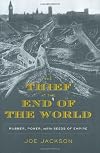
This is my type of book: expansive subject matter - rubber's economic boom (-ish 1880-1915); crazy adventurer to structure the information around; interesting tangents galore; and an ethical conundrum to ponder.
Henry Wickham, a lower-class Englishman, in an effort to earn himself a reputation and a fortune, set his sights on rubber - he was integral in making it a ubiquitous substance today. He successfully stole 70,000 seeds and delivered them viable to Kew Gardens who eventually spread show more the plants to distant colonies and shifted the rubber supply from wild to plantation (from Brazil to England's colonies in East Asia) ultimately providing a more voluminous and cheaper supply. Once the vulcanization process was discovered in 1839 - hardening rubber while increasing its strength and elasticity - life demanded rubber loudly: waterproof shoes & coats then bicycles into Model T's and always war.
Wickham was an impressive adventurer but not so much a likeable individual. His field study of Hevea brasiliensis (Pará) and other rubber-producing trees, in conjunction with his experience surviving in the Amazon jungle, made his 19th-century biopiracy feat possible where others, better supported, failed. But he also convinced his mother, sister & brother + families to join him on a jungle expedition knowing firsthand the risks they'd face. He left the jungle with the seeds and his wife, Violet - the others dead or abandoned behind.
His delivery of the seeds was not life-altering as he had hoped. In continued pursuit of recognition and riches, he dragged Violet to remote and inhospitable environs - back to the Amazon jungle, to Queensland (northeastern Australia), and the Conflict Islands in Papua New Guinea. While London industrialized rapidly, the Wickhams were often fully consumed with basic survival in their far-flung homes.
In 1920, Henry was knighted for his contribution to the empire from decades earlier. He believed that the British empire was mankind's best chance at advancement. Was it in this instance? Could the Amazon basin's resources (managed by the players at the time) have supported the freedom and comfort that cheap and available rubber allowed? Or would the overall state of things be improved without this episode of colonialism ick? show less
Henry Wickham, a lower-class Englishman, in an effort to earn himself a reputation and a fortune, set his sights on rubber - he was integral in making it a ubiquitous substance today. He successfully stole 70,000 seeds and delivered them viable to Kew Gardens who eventually spread show more the plants to distant colonies and shifted the rubber supply from wild to plantation (from Brazil to England's colonies in East Asia) ultimately providing a more voluminous and cheaper supply. Once the vulcanization process was discovered in 1839 - hardening rubber while increasing its strength and elasticity - life demanded rubber loudly: waterproof shoes & coats then bicycles into Model T's and always war.
Wickham was an impressive adventurer but not so much a likeable individual. His field study of Hevea brasiliensis (Pará) and other rubber-producing trees, in conjunction with his experience surviving in the Amazon jungle, made his 19th-century biopiracy feat possible where others, better supported, failed. But he also convinced his mother, sister & brother + families to join him on a jungle expedition knowing firsthand the risks they'd face. He left the jungle with the seeds and his wife, Violet - the others dead or abandoned behind.
His delivery of the seeds was not life-altering as he had hoped. In continued pursuit of recognition and riches, he dragged Violet to remote and inhospitable environs - back to the Amazon jungle, to Queensland (northeastern Australia), and the Conflict Islands in Papua New Guinea. While London industrialized rapidly, the Wickhams were often fully consumed with basic survival in their far-flung homes.
In 1920, Henry was knighted for his contribution to the empire from decades earlier. He believed that the British empire was mankind's best chance at advancement. Was it in this instance? Could the Amazon basin's resources (managed by the players at the time) have supported the freedom and comfort that cheap and available rubber allowed? Or would the overall state of things be improved without this episode of colonialism ick? show less
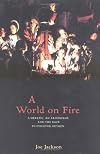
A fascinating book about the quest to discover - consciously discover - oxygen. Taking place in the late 1700s, this is the story of Joseph Priestly, an English Dissenter, and Antoine Lavoisier, a French aristocrat, who both discovered the element. But, since Priestly saw his discovery through the prism of an outdated principle, and since Lavoisier named it, I suppose Lavoisier "won". Except that he lost his head in the Terror, so if he won anything, it was a Pyhrric victory. Well worth show more reading, because this was a fascinating time of discovery, full of larger-than-life personalities. show less
Writing about obscure events in history and showing Western European colonialism, especially British colonialism, in the worst possible light is all the rage these days. This book does both, but is saved by the quality of the writing and by the extraordinary character of the man it describes.
More than the story of how Britain seized the initiative in becoming the dominant rubber producer at a time when that material was comng into its own as a key component of technology, this is the life of show more Henry Wickham, the man who found and transported rubber plant seeds from Brazil to Kew Gardens and then on to the Far East where the Malay rubber plantations were born.
Wickham was a second-rate chancer who managed to screw up evrything he did, had the most appalling bad luck and was turned over by almost everyone he met. In every case he just shrugged his shoulders, dreamt up some new scheme and started again. The core of this book is how one man was able to take so much disappointment and failure and see it all as just the cut and thrust of everyday life. Even when the only morsel of love in his life, his long-suffering wife Violet, left him for good it seems to have been like so much water off a duck’s back.
That this is a story not told before and of material import to the growth of the Britsh Empire and, truth be told, to the development of modern technology in the first half of the 20th centiry - would rubber have been kept in such strong suply with a reliance on wild plant harvesting in Brazil?- is a major contribution to our understanding of the rise of the industrial west. The most important contribution, however, is the picture of a certain type of man who saw adversity and failure as unfathomable steps along the way to riches and fame in the outer reaches of the known, and unknown, world. show less
More than the story of how Britain seized the initiative in becoming the dominant rubber producer at a time when that material was comng into its own as a key component of technology, this is the life of show more Henry Wickham, the man who found and transported rubber plant seeds from Brazil to Kew Gardens and then on to the Far East where the Malay rubber plantations were born.
Wickham was a second-rate chancer who managed to screw up evrything he did, had the most appalling bad luck and was turned over by almost everyone he met. In every case he just shrugged his shoulders, dreamt up some new scheme and started again. The core of this book is how one man was able to take so much disappointment and failure and see it all as just the cut and thrust of everyday life. Even when the only morsel of love in his life, his long-suffering wife Violet, left him for good it seems to have been like so much water off a duck’s back.
That this is a story not told before and of material import to the growth of the Britsh Empire and, truth be told, to the development of modern technology in the first half of the 20th centiry - would rubber have been kept in such strong suply with a reliance on wild plant harvesting in Brazil?- is a major contribution to our understanding of the rise of the industrial west. The most important contribution, however, is the picture of a certain type of man who saw adversity and failure as unfathomable steps along the way to riches and fame in the outer reaches of the known, and unknown, world. show less

This dual biography of Joseph Priestly and Antoine Lavoisier, who both independently discovered oxygen nearly simultaneously but interpreted their findings very differently, gets off to a strong start with its description of the chemists' scientific work. The last third or so of the book, focusing on the political turmoils of the time (the insistence on a parallel structure, juxtaposing riots in Birmingham with the French Revolution, perhaps overemphasizes the former), was nearly unreadably show more dull, however, and filled with overly-"clever" references to the incendiary nature of oxygen; any time flames are mentioned, Jackson insists on pointing out the supposed irony of a discoverer of oxygen being affected by fire. show less
Lists
Awards


You May Also Like


Associated Authors
Statistics
- Works
- 9
- Members
- 802
- Popularity
- #31,797
- Rating
- 3.8
- Reviews
- 20
- ISBNs
- 78
- Languages
- 4
- Favorited
- 1