
Alan Ryan (2) (1940–)
Author of On Politics: A History of Political Thought from Herodotus to the Present
For other authors named Alan Ryan, see the disambiguation page.
About the Author
Alan Ryan, the former warden of New College, Oxford, has taught political theory at Oxford and Princeton since 1969. His books include The Philosophy of John Stuart Mill, Bertrand Russell: A Political Life, John Dewey and the High Tide of American Liberalism, and Liberal Anxieties and Liberal show more Education. show less
Series
Works by Alan Ryan
Associated Works
An examination of Sir William Hamilton's philosophy (1865) — Introduction, some editions — 20 copies
Tagged
Common Knowledge
- Birthdate
- 1940-05-09
- Gender
- male
- Awards and honors
- Fellow of the British Academy (1986)
- Relationships
- Hart, H. L. A. (former father-in-law)
Members
Reviews
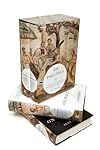
Talk about bad timing: Ryan has obviously been writing this book for years now, and had it been released in, say, 2007, it would have seemed perfectly sensible. It's important to discuss political ideas, to think about how we rule and are ruled, and from where we get our assumptions.
But with the world economy in a never-ending tailspin, massive unemployment in most developed economies and faltering investment rates in developing ones, a very real resurgence of class warfare and ludicrous show more ideology on both sides of the political spectrum, it's more than a bit galling to have a tenured professor explain to you, in patient, lucid prose, that young people are very well equipped to deal with labor market flexibility, or that liberal capitalism works really well because (this is not an exaggeration, he really uses this as his example) contemplative people can become long distance truck drivers and have time to think and venture into their imagination.
In between, presumably, ingesting massive amounts of speed and barely sleeping while they try to make impossible deadlines that are demanded by their employers.
So Ryan has a very bad case of ivorytoweritis, but then, so do I, which I will now prove. This text is at its most disturbing not when he's skimming over the ancient and medieval theorists, not when he's ignoring the historical conditions that give rise to political theories in the first place, not when he gives John Locke a free pass for his execrable arguments, nor when he fails to understand Hobbes, and not even when he purports to write about Marx without writing about, you know, 'Capital'.
It's at its worst when it ignores the fact that the vast majority of important 'political' thought since at least Marx, probably since Rousseau, and possibly since Montesquieu, has focused on social, cultural and economic matters instead of procedural and institutional matters.
This is a contentious claim, and maybe Ryan, like Straussians and other political science types, wants to insist on the continuing importance of 'the political.' But he doesn't do that: he just *ignores* political economy, cultural criticism and social thought... except when he's complaining that leftist cultural critics are exaggerating (viz., the aforementioned happiness of the long distance truck driver and the joys of the flexible new economy). It's no surprise that he doesn't understand the Frankfurt School; it is a surprise that he seems to like fascists (e.g., Schmitt and Gentile) more than the left-liberals who, following Toqueville, point out that a population's mores matter more (sorry about that) than the political organization that is set up around those mores--and that our mores today are destroying the planet.
For Ryan, social criticism is a kind of disease that leads evil people to complain about the greatest system ever set up to deal with human conflict: liberal capitalist democracy of the kind under which most of us no longer labor. Had he put off publishing this book for a few years, I like to think he would have changed his mind about that. But then, professors who retire from Princeton to Oxford and then to private life probably weathered the great recession pretty well.
An extra star for the book design, which is *crazy sexy*. show less
But with the world economy in a never-ending tailspin, massive unemployment in most developed economies and faltering investment rates in developing ones, a very real resurgence of class warfare and ludicrous show more ideology on both sides of the political spectrum, it's more than a bit galling to have a tenured professor explain to you, in patient, lucid prose, that young people are very well equipped to deal with labor market flexibility, or that liberal capitalism works really well because (this is not an exaggeration, he really uses this as his example) contemplative people can become long distance truck drivers and have time to think and venture into their imagination.
In between, presumably, ingesting massive amounts of speed and barely sleeping while they try to make impossible deadlines that are demanded by their employers.
So Ryan has a very bad case of ivorytoweritis, but then, so do I, which I will now prove. This text is at its most disturbing not when he's skimming over the ancient and medieval theorists, not when he's ignoring the historical conditions that give rise to political theories in the first place, not when he gives John Locke a free pass for his execrable arguments, nor when he fails to understand Hobbes, and not even when he purports to write about Marx without writing about, you know, 'Capital'.
It's at its worst when it ignores the fact that the vast majority of important 'political' thought since at least Marx, probably since Rousseau, and possibly since Montesquieu, has focused on social, cultural and economic matters instead of procedural and institutional matters.
This is a contentious claim, and maybe Ryan, like Straussians and other political science types, wants to insist on the continuing importance of 'the political.' But he doesn't do that: he just *ignores* political economy, cultural criticism and social thought... except when he's complaining that leftist cultural critics are exaggerating (viz., the aforementioned happiness of the long distance truck driver and the joys of the flexible new economy). It's no surprise that he doesn't understand the Frankfurt School; it is a surprise that he seems to like fascists (e.g., Schmitt and Gentile) more than the left-liberals who, following Toqueville, point out that a population's mores matter more (sorry about that) than the political organization that is set up around those mores--and that our mores today are destroying the planet.
For Ryan, social criticism is a kind of disease that leads evil people to complain about the greatest system ever set up to deal with human conflict: liberal capitalist democracy of the kind under which most of us no longer labor. Had he put off publishing this book for a few years, I like to think he would have changed his mind about that. But then, professors who retire from Princeton to Oxford and then to private life probably weathered the great recession pretty well.
An extra star for the book design, which is *crazy sexy*. show less
On Politics: A History of Political Thought: From Herodotus to the Present (2 Vol. Set) by Alan Ryan
This is a strangely targeted book. On the one hand, it presents a fascinating history of basic political thought by excising the metaphysical and ethical content from the philosophers it considers. Along with the usual suspects, there are interesting discussions of such unexpected writers as Polybius, Marsilius, and Sorel. On the other hand, it reads like an undergraduate college textbook, running off a series of facts and summaries without an overarching conceptual thesis. One almost show more expects a list of questions for explication at the end of each chapter.
Ultimately, the book is longer and blander than it needs to be. Most of the major figures are covered, but with the exception of Marx, for whom the author clearly has little sympathy, the coverage is perfunctory and uncritical. show less
Ultimately, the book is longer and blander than it needs to be. Most of the major figures are covered, but with the exception of Marx, for whom the author clearly has little sympathy, the coverage is perfunctory and uncritical. show less
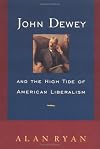
Pragmatism and Democracy
Alan Ryan’s work gives the reader a clear exposition of Dewey’s main ideas, their meaning and role in his intellectual development. The book is readable, the text clear and fluid. Alan Ryan examines Dewey’s works in context and establishes a dialogue between the american philosopher and his critics (of the past and contemporary). Dewey’s concept of education, experience and pragmatism are well exposed and criticized. The idea of democracy that emerges from show more Dewey’s reflections is linked with communitarianism and pluralism. One can easily get such things when they get rid of metaphysics. This is an excellent introduction to Dewey’s work. show less
Alan Ryan’s work gives the reader a clear exposition of Dewey’s main ideas, their meaning and role in his intellectual development. The book is readable, the text clear and fluid. Alan Ryan examines Dewey’s works in context and establishes a dialogue between the american philosopher and his critics (of the past and contemporary). Dewey’s concept of education, experience and pragmatism are well exposed and criticized. The idea of democracy that emerges from show more Dewey’s reflections is linked with communitarianism and pluralism. One can easily get such things when they get rid of metaphysics. This is an excellent introduction to Dewey’s work. show less
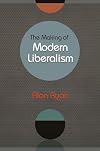
Did not finish book. Stopped at 35%.
Less a history of liberalism, which is what I expected, and more of a series of essays taking deep dives into specific political philosophers, which you really need to be more familiar with than I am, sadly. A bit too in the weeds for me right now. but I am sure there are those who would love the book. Ryan's On Politics - a massive book released the same day as this massive book! - is a gold standard history of political thought, in my opinion.
Less a history of liberalism, which is what I expected, and more of a series of essays taking deep dives into specific political philosophers, which you really need to be more familiar with than I am, sadly. A bit too in the weeds for me right now. but I am sure there are those who would love the book. Ryan's On Politics - a massive book released the same day as this massive book! - is a gold standard history of political thought, in my opinion.
Awards


You May Also Like


Associated Authors
Statistics
- Works
- 27
- Also by
- 6
- Members
- 1,321
- Popularity
- #19,458
- Rating
- 4.2
- Reviews
- 5
- ISBNs
- 128
- Languages
- 8