
John Marchese
Author of The Violin Maker: Finding a Centuries-Old Tradition in a Brooklyn Workshop
About the Author
John Marchese has been a frequent contributor to The New York Times and a contributing writer for Philadelphia magazine, where he shared a National Magazine Award for special interest and won a National Headliner Award for feature writing. His work has appeared in dozens of other publications
Image credit: John Marchese.
Works by John Marchese
The Violin Maker: Finding a Centuries-Old Tradition in a Brooklyn Workshop (2007) 149 copies, 10 reviews
Associated Works
Tagged
Common Knowledge
- Gender
- male
- Occupations
- musician
journalist
Members
Reviews
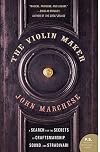
One of my basic principles of nonfiction, be it a book or a documentary film, is that people doing something they love are almost always interesting, even if what they're doing isn't something that you've ever been particularly interested in. Marchese's book is yet another fine illustration of that principle.
Marchese follows master luthier Sam Zygmantowski as he builds a new violin for Eugene Drucker of the Emerson String Quartet. Along the way, he explores the history of the violin and show more violin making, with emphasis on Antonio Stradivari (c. 1644-1737), widely considered to be the greatest violin maker who ever lived. Stradivari is such an important figure in the world of stringed instruments that the leading journal for string players is called The Strad.
(An aside on the Emerson String Quartet. They were founded in 1976, and for nearly 50 years have been considered one of the world's finest quartets. The group has announced that it is disbanding, with its final concerts scheduled for this October. Drucker is one of two members to have been with the Emerson since its founding.)
Making a violin is a mysterious process. There's no set of instructions that tells you that shaving another half-millimeter of wood from this spot will make the sound sweeter, or curving the holes just so will give you more power. We barely have enough shared vocabulary of sound to agree on what we mean by words like "sweeter" or "power."
And yet, those half-millimeters and minute curves are among the many tiny things that can shape the sound of a finished instrument; for a luthier to make all of the correct decisions seems to be equal parts skill, intuition, and luck. It is possible to be a successful luthier by making copies of famous violins, and Zygmantowski does some of that; his violin for Drucker is based on the shape of a specific earlier violin with some small modifications. But even when copying a renowned instrument, one can precisely duplicate every measurement with no guarantee of success. The wood might be less dense, or your varnish recipe might be slightly different, or the pieces might be joined together with an immeasurably small difference in tension; and many violinists will tell you that it takes a few years of breaking in to discover the true sound of a violin.
But Zygmantowski seems to have as good an understanding of why he's making those decisions as anyone can have, and he does a good job of explaining his choices. And Marchese does an equally good job, where necessary, of translating Zygmantowski's explanations into terms that the non-musician or non-woodworker can understand.
It is not entirely Marchese's fault that the digressions into the life and career of Stradivari are less entertaining. There are a lot of gaps in our knowledge of Stradivari's life, and Marchese is too often reduced to "some people believe X; some people think Y" in these sections of the book.
Marchese follows Drucker and his new violin for a year or two after it's finished, as the violinist learns the strengths and weaknesses of the new instrument. Is there certain music for which it's a better or worse choice than the Strad he's been playing? Does it sound better in particular types of halls? Is it well suited to the recording process?
A solid book that comes as close as I can imagine to successfully explaining the inexplicable. show less
Marchese follows master luthier Sam Zygmantowski as he builds a new violin for Eugene Drucker of the Emerson String Quartet. Along the way, he explores the history of the violin and show more violin making, with emphasis on Antonio Stradivari (c. 1644-1737), widely considered to be the greatest violin maker who ever lived. Stradivari is such an important figure in the world of stringed instruments that the leading journal for string players is called The Strad.
(An aside on the Emerson String Quartet. They were founded in 1976, and for nearly 50 years have been considered one of the world's finest quartets. The group has announced that it is disbanding, with its final concerts scheduled for this October. Drucker is one of two members to have been with the Emerson since its founding.)
Making a violin is a mysterious process. There's no set of instructions that tells you that shaving another half-millimeter of wood from this spot will make the sound sweeter, or curving the holes just so will give you more power. We barely have enough shared vocabulary of sound to agree on what we mean by words like "sweeter" or "power."
And yet, those half-millimeters and minute curves are among the many tiny things that can shape the sound of a finished instrument; for a luthier to make all of the correct decisions seems to be equal parts skill, intuition, and luck. It is possible to be a successful luthier by making copies of famous violins, and Zygmantowski does some of that; his violin for Drucker is based on the shape of a specific earlier violin with some small modifications. But even when copying a renowned instrument, one can precisely duplicate every measurement with no guarantee of success. The wood might be less dense, or your varnish recipe might be slightly different, or the pieces might be joined together with an immeasurably small difference in tension; and many violinists will tell you that it takes a few years of breaking in to discover the true sound of a violin.
But Zygmantowski seems to have as good an understanding of why he's making those decisions as anyone can have, and he does a good job of explaining his choices. And Marchese does an equally good job, where necessary, of translating Zygmantowski's explanations into terms that the non-musician or non-woodworker can understand.
It is not entirely Marchese's fault that the digressions into the life and career of Stradivari are less entertaining. There are a lot of gaps in our knowledge of Stradivari's life, and Marchese is too often reduced to "some people believe X; some people think Y" in these sections of the book.
Marchese follows Drucker and his new violin for a year or two after it's finished, as the violinist learns the strengths and weaknesses of the new instrument. Is there certain music for which it's a better or worse choice than the Strad he's been playing? Does it sound better in particular types of halls? Is it well suited to the recording process?
A solid book that comes as close as I can imagine to successfully explaining the inexplicable. show less
The Violin Maker: A Search for the Secrets of Craftsmanship, Sound, and Stradivari (P.S.) by John Marchese
Perhaps unsurprisingly, given my obsession with all things violin, I thoroughly enjoyed this little gem of a book. It rips along like a novel, but is full of wisdom on all manner of creative angst.
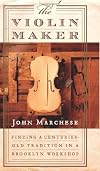
Sam Zygmuntowicz makes and repairs violins in the centuries old traditions of the early masters - in his Brooklyn workshop. John Marchese tags along and chronicles this modern day master.
He also interviews Grammy award winning Eugene Drucker of the famous Emerson String Quartet. Drucker has commissioned Zygmuntowicz to build him a new violin. The challenge will be to have the fiddle sound as good or better than Eugene's current Stradivarius.
This is a fascinating account of world class show more fiddlers and fiddle makers, how they adhere to old world precepts of quality and craftsmanship and survive as 'masters' in a high-tech, cheaply mass-produced, low-standards time.
I met an elderly man at the doctor's office who noticed what I was reading and started commenting on violins; how they differ in sound quality and such. He mentioned the famous violin makers of the past, names I had just finished reading about. Then the doctor called him and he left. The light in his eyes had me imagining that he might have been an 'Old School' master fiddler or fiddle maker. That encounter made me enjoy the book that much more.
Peace,
"Guided by the Ancestors" show less
He also interviews Grammy award winning Eugene Drucker of the famous Emerson String Quartet. Drucker has commissioned Zygmuntowicz to build him a new violin. The challenge will be to have the fiddle sound as good or better than Eugene's current Stradivarius.
This is a fascinating account of world class show more fiddlers and fiddle makers, how they adhere to old world precepts of quality and craftsmanship and survive as 'masters' in a high-tech, cheaply mass-produced, low-standards time.
I met an elderly man at the doctor's office who noticed what I was reading and started commenting on violins; how they differ in sound quality and such. He mentioned the famous violin makers of the past, names I had just finished reading about. Then the doctor called him and he left. The light in his eyes had me imagining that he might have been an 'Old School' master fiddler or fiddle maker. That encounter made me enjoy the book that much more.
Peace,
"Guided by the Ancestors" show less
This lyrical, nonfiction book is a focused look at the making of a violin by master violin craftsman Sam Zygmuntowicz. The book jumps into small vignettes such as the authors trip to and adventures in Cremona, Italy, the home of Stradivarius; interviews with a famous violinist who will be the recipient of the violin profiled here; and other personal musings. Aside from those, all the time is spent in Sam's shop. Fortunately, the book was not too technical, and never said first he put the show more 'tygomin onto the refulan under the yerbop' or the like. But it did dig into the order, the process, selecting the wood, trying to deduce something about the resin coating, and a number of other considerations.
The book does require, I think, at least some nominal knowledge of classical music, as well as an interest in painstaking craftsmanship. To wit, the book includes musings on Sam's philosophies about art and history. That said, it was a book with pace, and well edited. It did not bog down nor did I resent the brief forays into the author's own life. Worth the read and definitely intriguing, and left me wanting to know more. This book definitely could be improved if it had more pictures--if you read this print out some pictures of violins while you read it. show less
The book does require, I think, at least some nominal knowledge of classical music, as well as an interest in painstaking craftsmanship. To wit, the book includes musings on Sam's philosophies about art and history. That said, it was a book with pace, and well edited. It did not bog down nor did I resent the brief forays into the author's own life. Worth the read and definitely intriguing, and left me wanting to know more. This book definitely could be improved if it had more pictures--if you read this print out some pictures of violins while you read it. show less
You May Also Like


Associated Authors
Statistics
- Works
- 2
- Also by
- 1
- Members
- 178
- Popularity
- #120,888
- Rating
- 3.6
- Reviews
- 11
- ISBNs
- 5