
Tim Whitmarsh
Author of Battling the Gods: Atheism in the Ancient World
About the Author
Tim Whitmarsh is Reader in Greek Literature at the University of Exeter.
Works by Tim Whitmarsh
Associated Works
Philostratus's Heroikos: Religion And Cultural Identity In The Third Century C. E. (2004) — Contributor — 8 copies
Being Greek under Rome: Cultural Identity, the Second Sophistic and the Development of Empire (2001) — Contributor — 7 copies
After the Crisis: Remembrance, Re-anchoring and Recovery in Ancient Greece and Rome (2020) — Contributor — 5 copies
Intende, lector : echoes of myth, religion and ritual in the ancient novel (2013) — Contributor — 3 copies
Emotions and Narrative in Ancient Literature and Beyond : Studies in Honour of Irene de Jong (2022) — Contributor — 2 copies
Coping with Versnel: A Roundtable on Religion and Magic. In Honour of the 80th Birthday of Henk S. Versnel (2023) — Contributor — 2 copies
Plotting with Eros : essays on the poetics of love and the erotics of reading (2009) — Contributor — 1 copy
Dynamics of Ancient Prose: Biographic, Novelistic, Apologetic (Trends in Classics - Supplementary Volumes, 62) (2018) — Contributor — 1 copy
Classical antiquity (vol 29 no 2) — Contributor — 1 copy
Tagged
Common Knowledge
- Canonical name
- Whitmarsh, Tim
- Gender
- male
- Organizations
- Cambridge University
- Nationality
- England
- Associated Place (for map)
- England
Members
Reviews

An interesting premise, the conclusion of which exposes the problem with creating a book like this; the censoring of sources both in antiquity and during a christian millennia ensured only vaguely atheist sources remain. Being a dangerous opinion both in ancient Greece and later European history, the best we can do for sources are either just flirting with the stance (rather than explicitly stating it), leaving the label up for interpretation, or it's used as an invective for other thinkers, show more in which case it might (literally) be used as a bludgeon, rather than exposing the accuracy of the accusation.
This left most of the meat of the book being taken up by the handful of sources left to ponder, which are largely (spoiler) not explicit enough to do more than use excerpts and argue about the implications.
That said, a lot of the arguments from presocratics and epicureans sure sound familiar; as if the majority of theistic arguments haven't really moved in more than 2000 years. Is questioning theistic apologia de facto an argument for atheism? That's effectively what this book revolves around, and if your answer is "yes" then this book succeeds with what's on the tin. show less
This left most of the meat of the book being taken up by the handful of sources left to ponder, which are largely (spoiler) not explicit enough to do more than use excerpts and argue about the implications.
That said, a lot of the arguments from presocratics and epicureans sure sound familiar; as if the majority of theistic arguments haven't really moved in more than 2000 years. Is questioning theistic apologia de facto an argument for atheism? That's effectively what this book revolves around, and if your answer is "yes" then this book succeeds with what's on the tin. show less
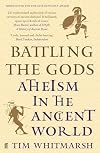
What I found especially fascinating about this book was the fundamental point that he makes about peoples attitudes towards religion. The idea of a single unified faith community is a mirage ..both in the ancient world, in the medieval world and in the modern world: there has always been a spectrum of faith, belief and unbelief. As the author says: "This book represents a kind of archeology of religious skepticism". And he is open about the difficulty of relying on ancient texts (which may show more or may not represent accurately the common way of thinking). To my mind there is a over-reliance on the greek Dramatists and interpreting their works. However, even given some doubts about these sources, Whitmarsh manages to amass enough evidence to bolster his point that skepticism about the Gods and religion is not a new phenomenon. It has existed for thousands of years ...even in societies with no background in rational thought or debate.
There is an interesting discussion about the introduction of Diopeithe's decree in the 430's BC...Whitmarsh calls him a religious crackpot but his decree has massive and long lasting impact. Up until this decree the Athenians were pretty tolerant of varying beliefs about the gods. But following the decree ...to be a good citizen you not only had to do right but to think right too. In a way, this intolerance about "right-thinking" has echoed down through the ages with religious bigotry and intolerance and justified all sorts of terrible pogroms and religious wars....especially after the 300's AD when Christianity gained the ascendancy.
Atheists, after this decree, ran very real risks of being condemned for impiety and disbelief in the gods. and one hears the echoes of this intolerance with Galileo being shown the instruments of torture...to help change his beliefs; and Charles Darwin being reluctant to publish his findings for fear of offending his religious wife ....let alone the rest of the establishment of Victorian England.
There seem to be many in the ancient Greek world who not only didn't believe in the riotous goings-on at Mt Olympus but who rejected the concept of gods altogether. And I take my hat off to them. Diogenes, the cynic, who, whilst one man was marvelling at a series of temple inscriptions put up by survivors of sea storms, retorted that there would have been many more if the the non-survivors had also left dedications. Whitmarsh also makes the point that, as a rule, polytheism...the belief in many gods....was infinitely more hospitable to unbelievers than monotheism. Under Christianity, by contrast, there was no good way of being an atheist. Atheism was the categorical rejection of the very premise on which Christianity defined itself. (I think Augustine of Hippo bears a fair bit or responsibility for this intolerance which has continued don through the centuries ...and probably held back western civilisation from intellectual development for about a thousand years).
I would have liked to have seen more about atheism in other societies (for example, Egyptian, Persian, Chinese, Indian). But the author explains that although China for example had its atheists and other places also, the best historical writings and materials were available for Greece ....hence his concentration on this state. Rome is considered in the latter part of the book and, in general, was fairly tolerant of all sorts of religions and non-believers until the formal adoption of Christianity as the state religion...and with it....as mentioned above...came those wonderful attributes of intolerance, persecution, and execution for those who did not profess the "right-beliefs".
Generally, I found the book quite fascinating ..though also mildly depressing ...especially the persecution of non-believers that is a recurring theme. I give it four stars. show less
There is an interesting discussion about the introduction of Diopeithe's decree in the 430's BC...Whitmarsh calls him a religious crackpot but his decree has massive and long lasting impact. Up until this decree the Athenians were pretty tolerant of varying beliefs about the gods. But following the decree ...to be a good citizen you not only had to do right but to think right too. In a way, this intolerance about "right-thinking" has echoed down through the ages with religious bigotry and intolerance and justified all sorts of terrible pogroms and religious wars....especially after the 300's AD when Christianity gained the ascendancy.
Atheists, after this decree, ran very real risks of being condemned for impiety and disbelief in the gods. and one hears the echoes of this intolerance with Galileo being shown the instruments of torture...to help change his beliefs; and Charles Darwin being reluctant to publish his findings for fear of offending his religious wife ....let alone the rest of the establishment of Victorian England.
There seem to be many in the ancient Greek world who not only didn't believe in the riotous goings-on at Mt Olympus but who rejected the concept of gods altogether. And I take my hat off to them. Diogenes, the cynic, who, whilst one man was marvelling at a series of temple inscriptions put up by survivors of sea storms, retorted that there would have been many more if the the non-survivors had also left dedications. Whitmarsh also makes the point that, as a rule, polytheism...the belief in many gods....was infinitely more hospitable to unbelievers than monotheism. Under Christianity, by contrast, there was no good way of being an atheist. Atheism was the categorical rejection of the very premise on which Christianity defined itself. (I think Augustine of Hippo bears a fair bit or responsibility for this intolerance which has continued don through the centuries ...and probably held back western civilisation from intellectual development for about a thousand years).
I would have liked to have seen more about atheism in other societies (for example, Egyptian, Persian, Chinese, Indian). But the author explains that although China for example had its atheists and other places also, the best historical writings and materials were available for Greece ....hence his concentration on this state. Rome is considered in the latter part of the book and, in general, was fairly tolerant of all sorts of religions and non-believers until the formal adoption of Christianity as the state religion...and with it....as mentioned above...came those wonderful attributes of intolerance, persecution, and execution for those who did not profess the "right-beliefs".
Generally, I found the book quite fascinating ..though also mildly depressing ...especially the persecution of non-believers that is a recurring theme. I give it four stars. show less
Tim Whitmarsh wrote this book, at least in part, to counter the idea that atheism is a modern invention — an outcome of the ascendancy of science. He calls this idea the “modernist mythology”. The book is written in accessible terms, not exclusively for academics, classicists or otherwise.
The book certainly makes a good case that atheism did exist in the classical Greek and Roman worlds. I think it also demonstrates that atheism took some distinctive forms, forms that are unlike the show more positions and arguments of current popular atheists like Richard Dawkins, Sam Harris, etc.
I think there are three strands of atheism in Whitmarsh’s account.
“Atheism" per se means not only what we now mean by the word, denying the existence of god (or the gods), but also maybe a more original meaning of “without god” or “god-forsaken.” Barbarians, for instance, living outside the practices and worship of the Greek gods, were “without god” in this sense.
Impiety appears as another kind of atheism, a failure to worship or care properly for the gods. This is a more legalistic conception in tone.
And the strain of atheism that I found most interesting is the one that supplies the title of Whitmarsh’s book, someone who battles against the gods (theomakhos). Greek myth is full of interactions between the gods and humans, including humans challenging the gods, aspiring to godhood or godlike attributes and abilities, or calling the gods to account for their actions. It’s an odd sort of atheism, at least to modern ears. It doesn’t deny the existence of the gods, but it does challenge their difference from us and their authority over us.
The differences may derive in part from the differences between Greek polytheism and our own monotheistic religions. The Greek gods shared many human attributes, including weaknesses, competitiveness, jealousy — the whole works. What’s more Greek religion, at least in the early centuries of Greek civilization, was not so much an authority over the Greek people as later Christian and other Western and non-Western religions. The gods of the Greek myths seem fluid in character, especially since the idea of a unified Greek culture is itself doubtful. To oppose the gods in some way (Socrates’ fate notwithstanding) doesn’t carry the burden that opposing the Christian God did, or does.
Also, Greek religion lacked a definitive canon — a single text, like the Bible or the Koran, against which beliefs could be measured as conforming or failing conformity. Whitmarsh describes Greek religious culture as “an infinitely extensible network of local cults,” rather than the kind of unified belief structure, or unified church, later exemplified by Catholicism. The nature of Greek empire itself contributes to this fluidity or extensibility, with expansion being a matter of absorbing new and different communities rather than compelling conformity.
But the link between religion and authority does assert itself. Numerous Greek figures were tried for various forms of atheism, including the philosophers Anaxagoras and Socrates. Diopeithes’ decree (in the 430s BC) criminalized atheism of two sorts — failure to recognize the gods (which could mean either atheos or asebes) and "teaching doctrines regarding the heavens”. Both could be, and were, used as political weapons, not just purely enforcements of religious conformity. The decree appears to be the first time religious orthodoxy was legally compelled, with the risk of death as a punishment.
It isn’t until much later though, in Roman culture, that we get something more legalistic and codified. Diopeithes’ decree could be broadly or narrowly interpreted, and didn’t really supply a standard against which to measure conformity. By contrast, the Theodosian Code, in 380 AD, unifies political and religious authority under a code of belief and behavior.
One of the reasons I was attracted to Whitmarsh’s book was curiosity about the forms that religious disbelief may have taken before the age of science, and scientism. Contemporary atheism, thinking again of Dawkins or Harris, or some of the others, seems built on this picture of the progress of science, little by little chipping away at the authority and scope of religious belief and religious accounts of reality. In this picture, atheism is even seen as a measure of progress. This is part of the “modernist mythology” that Whitmarsh talks about.
There is, of course, a strain of naturalism running through Greek atheism, as Whitmarsh describes. Pre-Socratic philosophers account for the regularities and structure of reality without apparent need for the gods. In some cases, like Anaxagoras or Parmenides, what “god” is seems much like the very intelligibility, or the rational structure of reality — its sense. This is hardly a god figure, like Zeus or Yahweh. Marginalization of the gods does seem to be at work.
There are also philosophical rejections of the very conception of the gods. Carneades, Sextus Empiricus, and Aetius especially construct logical challenges to the idea of a god. Those are not arguments we get from the popular atheists of today.
The other strain I don’t especially find, despite the naturalistic marginalization of the gods, is what strikes me as an arrogance of modern scientistic atheism — a faith that science will explain anything and everything, leaving not only no room for gods but no room for the unknown or the mysterious. Seems a shame. show less
The book certainly makes a good case that atheism did exist in the classical Greek and Roman worlds. I think it also demonstrates that atheism took some distinctive forms, forms that are unlike the show more positions and arguments of current popular atheists like Richard Dawkins, Sam Harris, etc.
I think there are three strands of atheism in Whitmarsh’s account.
“Atheism" per se means not only what we now mean by the word, denying the existence of god (or the gods), but also maybe a more original meaning of “without god” or “god-forsaken.” Barbarians, for instance, living outside the practices and worship of the Greek gods, were “without god” in this sense.
Impiety appears as another kind of atheism, a failure to worship or care properly for the gods. This is a more legalistic conception in tone.
And the strain of atheism that I found most interesting is the one that supplies the title of Whitmarsh’s book, someone who battles against the gods (theomakhos). Greek myth is full of interactions between the gods and humans, including humans challenging the gods, aspiring to godhood or godlike attributes and abilities, or calling the gods to account for their actions. It’s an odd sort of atheism, at least to modern ears. It doesn’t deny the existence of the gods, but it does challenge their difference from us and their authority over us.
The differences may derive in part from the differences between Greek polytheism and our own monotheistic religions. The Greek gods shared many human attributes, including weaknesses, competitiveness, jealousy — the whole works. What’s more Greek religion, at least in the early centuries of Greek civilization, was not so much an authority over the Greek people as later Christian and other Western and non-Western religions. The gods of the Greek myths seem fluid in character, especially since the idea of a unified Greek culture is itself doubtful. To oppose the gods in some way (Socrates’ fate notwithstanding) doesn’t carry the burden that opposing the Christian God did, or does.
Also, Greek religion lacked a definitive canon — a single text, like the Bible or the Koran, against which beliefs could be measured as conforming or failing conformity. Whitmarsh describes Greek religious culture as “an infinitely extensible network of local cults,” rather than the kind of unified belief structure, or unified church, later exemplified by Catholicism. The nature of Greek empire itself contributes to this fluidity or extensibility, with expansion being a matter of absorbing new and different communities rather than compelling conformity.
But the link between religion and authority does assert itself. Numerous Greek figures were tried for various forms of atheism, including the philosophers Anaxagoras and Socrates. Diopeithes’ decree (in the 430s BC) criminalized atheism of two sorts — failure to recognize the gods (which could mean either atheos or asebes) and "teaching doctrines regarding the heavens”. Both could be, and were, used as political weapons, not just purely enforcements of religious conformity. The decree appears to be the first time religious orthodoxy was legally compelled, with the risk of death as a punishment.
It isn’t until much later though, in Roman culture, that we get something more legalistic and codified. Diopeithes’ decree could be broadly or narrowly interpreted, and didn’t really supply a standard against which to measure conformity. By contrast, the Theodosian Code, in 380 AD, unifies political and religious authority under a code of belief and behavior.
One of the reasons I was attracted to Whitmarsh’s book was curiosity about the forms that religious disbelief may have taken before the age of science, and scientism. Contemporary atheism, thinking again of Dawkins or Harris, or some of the others, seems built on this picture of the progress of science, little by little chipping away at the authority and scope of religious belief and religious accounts of reality. In this picture, atheism is even seen as a measure of progress. This is part of the “modernist mythology” that Whitmarsh talks about.
There is, of course, a strain of naturalism running through Greek atheism, as Whitmarsh describes. Pre-Socratic philosophers account for the regularities and structure of reality without apparent need for the gods. In some cases, like Anaxagoras or Parmenides, what “god” is seems much like the very intelligibility, or the rational structure of reality — its sense. This is hardly a god figure, like Zeus or Yahweh. Marginalization of the gods does seem to be at work.
There are also philosophical rejections of the very conception of the gods. Carneades, Sextus Empiricus, and Aetius especially construct logical challenges to the idea of a god. Those are not arguments we get from the popular atheists of today.
The other strain I don’t especially find, despite the naturalistic marginalization of the gods, is what strikes me as an arrogance of modern scientistic atheism — a faith that science will explain anything and everything, leaving not only no room for gods but no room for the unknown or the mysterious. Seems a shame. show less
If you, like me, tended to think atheism as a somewhat more recent phenomenon (a product of the European enlightenment), this book will definitely challenge your views.
The author carries us on a historical journey through ancient Greco-Roman history, providing ample examples on how atheism came to be a defensible philosophical position in late antiquity.
On the whole, the book offers an alternative reading of Ancient Philosophy on the lookout for the atheistic positions throughout the show more scattered and fragmentary evidence of the extant texts. This will broaden your view on how the many philosophical debates were carried, how the ideas came to be and what were ultimately their consequences to the furthering the debate.
With a solid argumentation, a clear style and a compelling narrative, this book is not only insightful as it is also entertaining, making it very easy to read and understand. Even if you do not agree with the author's speculations and liberties in the way he treats the ancient texts, you can rest assured that you will no longer view the history of philosophy in the same way. show less
The author carries us on a historical journey through ancient Greco-Roman history, providing ample examples on how atheism came to be a defensible philosophical position in late antiquity.
On the whole, the book offers an alternative reading of Ancient Philosophy on the lookout for the atheistic positions throughout the show more scattered and fragmentary evidence of the extant texts. This will broaden your view on how the many philosophical debates were carried, how the ideas came to be and what were ultimately their consequences to the furthering the debate.
With a solid argumentation, a clear style and a compelling narrative, this book is not only insightful as it is also entertaining, making it very easy to read and understand. Even if you do not agree with the author's speculations and liberties in the way he treats the ancient texts, you can rest assured that you will no longer view the history of philosophy in the same way. show less
Lists
Awards


You May Also Like


Associated Authors
Statistics
- Works
- 15
- Also by
- 32
- Members
- 585
- Popularity
- #42,855
- Rating
- 3.8
- Reviews
- 15
- ISBNs
- 55
- Languages
- 2