
A. B. Yehoshua (1936–2022)
Author of A Woman in Jerusalem
About the Author
Abraham B. Yehoshua, known commonly as A.B. Yehoshua, was born in Jerusalem on December 19, 1936. He studied Hebrew literature and philosophy at the Hebrew University in Jerusalem. He has taught at high-school and university levels and is currently a professor of literature at Haifa University. He show more is a novelist, essayist, and playwright. His first book of stories, The Death of the Old Man, was published in 1962. His novels include Mr. Mani, Open Heart, Five Seasons, and Friendly Fire. He won the Israeli Prize in 1994. (Bowker Author Biography) show less
Disambiguation Notice:
(yid) VIAF:41848108
Image credit: Wikipedia
Works by A. B. Yehoshua
מאי - ערב, לילה ושחר : מחזה 5 copies
עד חורף 1974 : מבחר 3 copies
Israel by Yehoshua, A.B.; Brenner, Frederic published by The Harvill Press Hardcover (1988) 2 copies
Diario di una pace fredda: Israele: dalla strage di Hebron alla vittoria di Netanyahu (1996) 2 copies
אש ידידותית 1 copy
ניצבת 1 copy
חית המחמד של עופרי 1 copy
Yehoshua Abraham 1 copy
La corsa serale di Yatir 1 copy
L'amante 1 copy
חסר ספרדי 1 copy
"Facing the Forests" 1 copy
תשעה סיפורים 1 copy
מול היערות : סיפורים 1 copy
Molkho roman 1 copy
סיפורים 9 1 copy
מסע אל תום האלף 1 copy
המנהרה 1 copy
de enige dochter 1 copy
Associated Works
Here I Am: Contemporary Jewish Stories from Around the World (1998) — Contributor — 57 copies, 1 review
Tagged
Common Knowledge
- Canonical name
- Yehoshua, A. B.
- Legal name
- Yehoshua, Avraham Gavriel
- Other names
- Yehoshua, A. B.
- Birthdate
- 1936-12-19
- Date of death
- 2022-06-14
- Gender
- male
- Education
- Rehavia Gymnasium, Jerusalem
Hebrew University of Jerusalem (Literature ∙ Philosophy)
Sorbonne University - Occupations
- novelist
essayist
playwright
teacher - Organizations
- University of Haifa (senior lecturer in literature)
Israeli Army - Awards and honors
- Bialik Prize (1989)
Israel Prize for Literature (1995)
Man Booker International Prize Finalist (2005)
Brenner Prize
Alterman Prize
Giovanni Boccaccio Prize (Italy, 2005) (show all 7)
Viareggio Prize (Italy, 2005) - Cause of death
- oesophageal cancer
- Nationality
- Israel
- Birthplace
- Jerusalem, Mandatory Palestine
- Places of residence
- Jerusalem, Israel (birthplace)
Paris, France - Place of death
- Tel Aviv, Israel
- Disambiguation notice
- VIAF:41848108
- Associated Place (for map)
- Israel
Members
Reviews

Wanted: Editor for 568 p. book. Must like minute by minute personal accounts and family drama. Action seekers need not apply.
I wanted to enjoy this book, but after 300 pages, I realized that would not happen in this lifetime. It took another lifetime to finish the book. Besides desperately needing to be edited, the story meanders for 500 pages and then tries to make the plot come together in the last couple of chapters. I started off thinking that Yochanan Rivlin, the main character, was show more charming, but after reading about his every move (including urination), thought (even the drivel), and action (usually inane) for several hundred pages, I was ready to strangle him and make this a murder mystery.
Yochanan is obsessed. His son, Ofer, was abruptly divorced five years ago, and neither son nor daughter-in-law will divulge why. Yochanan cannot let it go, and despite injunctions from his wife, his daughter-in-law’s family, and his son, he continues picking at it. When not busily pestering people about the divorce, Yochanan hangs around his office at Haifa University, unable to finish the book he is working on, and refusing to buckle down and write a paper for his elderly mentor’s jubilee publication. Although incapable of finishing his own writing, he refuses to give a recalcitrant Arab student her degree until he knows the intimate details of her life, family, and loves.
Yehoshua can write a good line and is insightful into the day to day interactions between Arabs and Jews. What I couldn’t seem to find in this book was a point. It was a struggle to finish, and I’m not sure why I pushed on. My recommendation: don’t bother with this one. show less
I wanted to enjoy this book, but after 300 pages, I realized that would not happen in this lifetime. It took another lifetime to finish the book. Besides desperately needing to be edited, the story meanders for 500 pages and then tries to make the plot come together in the last couple of chapters. I started off thinking that Yochanan Rivlin, the main character, was show more charming, but after reading about his every move (including urination), thought (even the drivel), and action (usually inane) for several hundred pages, I was ready to strangle him and make this a murder mystery.
Yochanan is obsessed. His son, Ofer, was abruptly divorced five years ago, and neither son nor daughter-in-law will divulge why. Yochanan cannot let it go, and despite injunctions from his wife, his daughter-in-law’s family, and his son, he continues picking at it. When not busily pestering people about the divorce, Yochanan hangs around his office at Haifa University, unable to finish the book he is working on, and refusing to buckle down and write a paper for his elderly mentor’s jubilee publication. Although incapable of finishing his own writing, he refuses to give a recalcitrant Arab student her degree until he knows the intimate details of her life, family, and loves.
Yehoshua can write a good line and is insightful into the day to day interactions between Arabs and Jews. What I couldn’t seem to find in this book was a point. It was a struggle to finish, and I’m not sure why I pushed on. My recommendation: don’t bother with this one. show less
Thanks to NetGalley for my ARC.
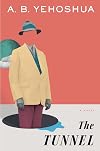
This is a wonderfully conceived, structured, and beautifully written novel that really resonated with me. The story centers around Zvi Lurie, a retired road engineer, diagnosed with dementia in its early stages. At first he loses only the first names, but as the plot progresses, more details blur in his mind. In an attempt to challenge his disintegrating mind, his wife, a pediatrician, suggests that he volunteer and help with the work he has been doing all his show more life: road planning, so when the opportunity arises, she matches him to the son, Maimoni, of the attorney who worked with him. In the Ramon Crater
The symbol of the tunnel is certainly important as a metaphor for the union between the people of Israel and the Palestinians and the description of the protagonist's efforts to combat the onset of dementia by using various strategies to counteract the progressive loss of memory is very sweet; but what I liked most is the description of the relationship between wife and husband who, after 48 years of marriage, have a beautiful complicity and show their love by trying to avoid one another worries and sorrows, helping each other to face the daily obstacles that emerge. These parts shine the most in my mind but the rest of the novel too with its turns of phrase and references to Biblical stories as well.
A.B. Yehoshua and Sturat Schoffman, translator, have delivered into English a novel that is just stunningly beautiful. The parts that develops Zvi's relationships with others by way of his dementia are heartbreaking and resonate in a real way. As Zvi, whose name is mentioned so sparsely you do tend to forget it just like he himself does, this and other effects are in the novel that really embody this idea of forgetting, and tunnels, and lost places, and lost and forgotten and cast aside people, it is just so revealing. So - When Luria arrives with my Maimoni in the field, he discovers the hidden motives for planning the road: a family of unidentified people, refugees from the Palestinian Authority. A father and daughter are hiding on a hill designated for alignment. Lurie, who specializes in tunneling and has previously designed similar tunnels on northern roads, is recruited to design a tunnel under the mountain on which the family resided.
The character of the amiable old Zvi becomes more and more detached as the book progresses. If at first I thought it was innocence, as the plot progresses it seems like he's just really losing his cognitive abilities. This is the only credible character in the story. All things are not as they seem though and Zvi's lucidity comes in and out of focus as do the intentions and personalities of the cast. The character of Maimoni Asael starts of friendly and caring but is also sort of to very creepy and exploitative in the way that he treats the Palestinian girl Yala. The whole subplot of the book that deals with the relationship between Jews and Palestinians is complex and for an outsider reading a translated work it was interesting to read the story from at least on point of view.
A.B. Yehoshua has written a beautifully heartbreaking story about love and loss and what it means to lose, love, identity, self, power, and self initiative. The Tunnel thoroughly explores dementia and forgetfulness as a metaphor and way to understand the world at large and relationships up close. This is a timely novel that begs to be read and reread in this moment and frankly all moments when, most of all, our minds are at stake. show less
This is a wonderfully conceived, structured, and beautifully written novel that really resonated with me. The story centers around Zvi Lurie, a retired road engineer, diagnosed with dementia in its early stages. At first he loses only the first names, but as the plot progresses, more details blur in his mind. In an attempt to challenge his disintegrating mind, his wife, a pediatrician, suggests that he volunteer and help with the work he has been doing all his show more life: road planning, so when the opportunity arises, she matches him to the son, Maimoni, of the attorney who worked with him. In the Ramon Crater
The symbol of the tunnel is certainly important as a metaphor for the union between the people of Israel and the Palestinians and the description of the protagonist's efforts to combat the onset of dementia by using various strategies to counteract the progressive loss of memory is very sweet; but what I liked most is the description of the relationship between wife and husband who, after 48 years of marriage, have a beautiful complicity and show their love by trying to avoid one another worries and sorrows, helping each other to face the daily obstacles that emerge. These parts shine the most in my mind but the rest of the novel too with its turns of phrase and references to Biblical stories as well.
A.B. Yehoshua and Sturat Schoffman, translator, have delivered into English a novel that is just stunningly beautiful. The parts that develops Zvi's relationships with others by way of his dementia are heartbreaking and resonate in a real way. As Zvi, whose name is mentioned so sparsely you do tend to forget it just like he himself does, this and other effects are in the novel that really embody this idea of forgetting, and tunnels, and lost places, and lost and forgotten and cast aside people, it is just so revealing. So - When Luria arrives with my Maimoni in the field, he discovers the hidden motives for planning the road: a family of unidentified people, refugees from the Palestinian Authority. A father and daughter are hiding on a hill designated for alignment. Lurie, who specializes in tunneling and has previously designed similar tunnels on northern roads, is recruited to design a tunnel under the mountain on which the family resided.
The character of the amiable old Zvi becomes more and more detached as the book progresses. If at first I thought it was innocence, as the plot progresses it seems like he's just really losing his cognitive abilities. This is the only credible character in the story. All things are not as they seem though and Zvi's lucidity comes in and out of focus as do the intentions and personalities of the cast. The character of Maimoni Asael starts of friendly and caring but is also sort of to very creepy and exploitative in the way that he treats the Palestinian girl Yala. The whole subplot of the book that deals with the relationship between Jews and Palestinians is complex and for an outsider reading a translated work it was interesting to read the story from at least on point of view.
A.B. Yehoshua has written a beautifully heartbreaking story about love and loss and what it means to lose, love, identity, self, power, and self initiative. The Tunnel thoroughly explores dementia and forgetfulness as a metaphor and way to understand the world at large and relationships up close. This is a timely novel that begs to be read and reread in this moment and frankly all moments when, most of all, our minds are at stake. show less
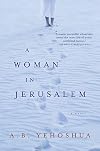
A human resources manager in Jerusalem finds his job more demanding than he anticipated when he is delegated to research the death of an obscure employee killed in a suicide bombing. His long night takes some curious twists as he pieces together the mystery of the deceased woman. Yulia Ragayev, the only character in the book whose name is revealed, was tied to the company by an erroneous pay stub. This led to the tabloid article by a wiley reporter known as the weasel which adversely show more portrayed the bakery where she had been employed as a cleaner.
The aging owner accepts complete responsibility when he asks: “What is left to us if we lose our humanity?” This is the impetus that leads to the human resource director’s odyssey of atonement in Part 2. What began as a work assignment becomes a mission driven by humanity.
This is just one of the layers in this profound book that explores what it is like to live and die in a complicated world where terrorism and ethnicity influence who we are and how we live. Like a good parable, the meaning is not spelled out. The transformation of perspective comes through reading between the lines and seeing beyond the lifeless body of the woman in Jerusalem. Don’t be fooled by the brevity of this book…the subtle deeper layers will occupy your mind long after the final page is read. show less
The aging owner accepts complete responsibility when he asks: “What is left to us if we lose our humanity?” This is the impetus that leads to the human resource director’s odyssey of atonement in Part 2. What began as a work assignment becomes a mission driven by humanity.
This is just one of the layers in this profound book that explores what it is like to live and die in a complicated world where terrorism and ethnicity influence who we are and how we live. Like a good parable, the meaning is not spelled out. The transformation of perspective comes through reading between the lines and seeing beyond the lifeless body of the woman in Jerusalem. Don’t be fooled by the brevity of this book…the subtle deeper layers will occupy your mind long after the final page is read. show less
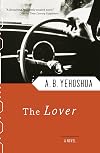
The best thing I can say about A.B. Yehoshua's "The Lover" is that it isn't a political novel, or, rather, that it's not just a political novel. It's set in Haifa just after the 1973 Yom Kippur War, so, as expected, the politics of the place and time are constantly felt. But it's the characters in it that seem to matter most to the author and which will probably stick with me. In a sense, "The Lover" is the story of a disintegrating marriage that could be set anywhere. Asya and Adam are show more wealthier and more successful than they imagined they'd be, but stolid, silent Adam seems adrift and Asya, who is wrapped up in her teaching job, seems to be growing old a bit too quickly.The best-drawn character in the book is their daughter, Dafi, whose body and will seem to be maturing at a fantastic pace and who seems estranged from her parents. Asya has a brief affair with a rather recently returned French Jew whose identity and current whereabouts slowly become Adam's obsession. A blue 1947 Morris Minor plays something of a starring role. Adam enlists Na'im, an Israeli Arab teenager who has recently begun working for him at his garage, to help him find out where he's gone to, and, from that point, things play out as they usually do. As a plot, it's good enough.
But Yehoshua is particularly good at describing -- and making you feel -- the emotional strain this small family is being subjected to. His description of their emotional distress is, if anything, too sharp: I read "The Lover" constantly waiting for the other shoe to drop, for the next plot point to blow the entire novel apart. I suppose it's fitting, as it's set in a fairly tense time and place, but, good as it was, reading this one was sort of exhausting. The reader might feel this all the more keenly because the emotional stress that they're under seems to knock everybody's sleep cycle far out of balance. Dafi suffers from acute insomnia, while Asya works herself into a stupor and spends much of her time at home asleep. She dreams, and -- if only to remind the reader that this novel really is about Israelis, not just Israeli politics -- vivid descriptions of her dreams are included in the text of the novel. Adam sleeps soundly but, on several occasions, also forgoes sleep for several days in a row searching for his wife's former paramour. As the novel goes on, it becomes difficult to be sure exactly who the title refers to: there's not much cruelty in this novel, but frustrated -- even misshapen -- forms of love seem to trap its characters in constant turmoil, and, as the novel comes to a close, it becomes simultaneously more sexual and more spiritual. I'm not sure the novel ever reaches a properly satisfying conclusion on all fronts. A good book, but I felt like picking up something nice and light after reading this one. show less
But Yehoshua is particularly good at describing -- and making you feel -- the emotional strain this small family is being subjected to. His description of their emotional distress is, if anything, too sharp: I read "The Lover" constantly waiting for the other shoe to drop, for the next plot point to blow the entire novel apart. I suppose it's fitting, as it's set in a fairly tense time and place, but, good as it was, reading this one was sort of exhausting. The reader might feel this all the more keenly because the emotional stress that they're under seems to knock everybody's sleep cycle far out of balance. Dafi suffers from acute insomnia, while Asya works herself into a stupor and spends much of her time at home asleep. She dreams, and -- if only to remind the reader that this novel really is about Israelis, not just Israeli politics -- vivid descriptions of her dreams are included in the text of the novel. Adam sleeps soundly but, on several occasions, also forgoes sleep for several days in a row searching for his wife's former paramour. As the novel goes on, it becomes difficult to be sure exactly who the title refers to: there's not much cruelty in this novel, but frustrated -- even misshapen -- forms of love seem to trap its characters in constant turmoil, and, as the novel comes to a close, it becomes simultaneously more sexual and more spiritual. I'm not sure the novel ever reaches a properly satisfying conclusion on all fronts. A good book, but I felt like picking up something nice and light after reading this one. show less
Lists
Jewish Books (6)
Awards


You May Also Like


Associated Authors
Statistics
- Works
- 75
- Also by
- 7
- Members
- 4,431
- Popularity
- #5,653
- Rating
- 3.6
- Reviews
- 103
- ISBNs
- 295
- Languages
- 14
- Favorited
- 11
