
Saadat Hasan Manto (1912–1955)
Author of Bombay Stories
About the Author
Works by Saadat Hasan Manto
Manto's World: A Representative Collection of Saadat Hasan Manto's Fiction and Non-Fiction (2000) 3 copies
Manto Nama 2 copies
Rachana Samagra 2 copies
Shareephan 1 copy
Manto Ke Hashiye (Urdu Edition): Selected Short Stories of Manto: 1 (Urdu Classic Literature) (2022) 1 copy
روسی افسانے 1 copy
Garbh Beez 1 copy
Manto Ke Mazameen 1 copy
Manto Ke Shahkar Afsanay 1 copy
मंटो की सर्वश्रेष्ठ कहानियाँ 1 copy
मंटो की चुनिंदा कहानियाँ 1 copy
Manto ki Kahaniyan 1 copy
Eyes 1 copy
A Manto Panorama : A Representative Selection of Saadat Hasan Manto's Fiction and Non-Fiction 1 copy
SAADAT HASAN MANTO 1 copy
MANTO NUMA 1 copy
MANTO DRAMA 1 copy
MANTO BAQIYAAT 1 copy
Manto kay 16 shahkar afsanay 1 copy
Manto key 100 afsaney 1 copy
Zila toba tek singh taraqi aur syasat — Author — 1 copy
Associated Works
Tablet & Pen: Literary Landscapes from the Modern Middle East (Words Without Borders) (2010) — Contributor — 224 copies, 2 reviews
Tagged
Common Knowledge
- Birthdate
- 1912-05-11
- Date of death
- 1955-01-18
- Gender
- male
- Occupations
- writer
- Relationships
- Jalal, Ayesha (niece)
- Nationality
- Pakistan
- Places of residence
- Lahore, Pakistan
Bombay, India
Delhi, India - Place of death
- Lahore, Pakistan
- Burial location
- Lahore, Pakistan
- Associated Place (for map)
- Pakistan
Members
Reviews
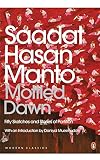
In a Nutshell: A compelling short story collection from one of the Indian subcontinent’s finest and most respected Urdu writers. All the stories, originally written in Urdu, are set during the Indo-Pak partition, which makes this a tough book to read. Heartbreaking, gut-wrenching, devastating. A genuine voice of those who lived through that ghastly period. Recommended if you can stand reading about the inhumaneness of humans.
~~~~~~~~~~~~~~~~~~~~~~~
Most avid Indian (and I bet, Pakistani) show more readers know the name of Saadat Hasan Manto. Born in 1912 in the Punjab province (Then British India, present-day India), Manto was known for his powerful short fiction. He didn’t hesitate to include historically controversial topics such as lust and sex in his work. Many of his female characters are shown enjoying the act of intercourse, which might have created a furore amid conservatives those days.
Manto moved to Pakistan after the 1947 partition as he, a Muslim, found his writing skills less in demand in India. Unfortunately, he wrote screenplays in the film industry, and as the Pakistani movie industry was fledgling at that time, Manto struggled to find employment even in Lahore. This difficult period led to two things: a severe addiction to alcohol, and an immensely productive period of fiction & essay writing.
The introductory note by Pakistani-American author Daniyal Mueenuddin is the perfect way of getting to know about Manto and his life. Mueenuddin’s essay is eloquent and honest, sparing no efforts to let us know why Manto is so acclaimed. I simply loved this write-up. I wish I could say the same about the next write-up by Khalid Hasan, who translated these stories from their original Urdu. While his article is also strong, he includes spoilers for many of the stories. It would have been better if his note had been included at the end of the book. I stopped reading it after some paras because I didn’t want to know the endings of so many stories. I would suggest returning to Hasan’s note only after you complete the collection if you don’t wish to affect your reading experience.
This book has fifty entries, of which twenty are short stories, and the rest are micro-fiction sketches from Manto’s collection titled ‘[b:Siyah Hashiye / سیاہ حاشئے|15828775|Siyah Hashiye / سیاہ حاشئے|سعادت حسن منٹو|https://i.gr-assets.com/images/S/compressed.photo.goodreads.com/books/1344980151l/15828775._SX50_.jpg|65614423]’ (Black Fringe.) Most of the stories are on the briefer side. My paperback is only 170 pages long.
While there are many books that come under ‘partition fiction’, Manto’s voice is unique because he actually lived through the partition and even felt its aftermath, through the distancing he felt in India after the country was split so brutally. An informed reader might expect a greater emotional intensity to the narratives, focussing more on the Pakistani or Muslim experience, and pointing fingers at “the other side”. However, Manto isn’t reputed without a reason. His depiction of the partition is, without a doubt, the most brutal I have ever read, but it is also the most impartial. His stories depict the internecine massacre without any partiality or emotional involvement. His characters suffer, period. Whether they are Muslims or Hindus or Sikhs – the three primary parties connected to the partition violence, their fate is the same: suffering, destruction, loss, death. By focussing more on the people than on the places or beliefs, Manto ensures that we see the characters as humans instead of by their religious or national identities.
It goes without saying that the above approach leads to a stomach-churning experience. As it is, I find it tough to read partition fiction. I can’t believe the horrors that took place during an event worse than the holocaust in so many ways because the brutalities were committed not by the state network but by ordinary citizens. Imagine your neighbour turning into your foe overnight, just because certain idiots decided that cutting a country into three chunks merely by religion was a brilliant idea! Manto’s narratives depict the horror of those days without a filter, so if you think you would also want some positive stories of hope set during the partition, this isn’t the book for you.
I felt utterly traumatized after reading this collection. I knew beforehand I wouldn't be able to read too many stories from this set at a go. So I decided to read this simultaneously with another short story collection, which was a set of Christmas-themed horror stories. The fact that this book chilled my heart more than a gory horror anthology did, should speak volumes about the content.
As per my usual method, I tried to rate the stories individually. However, it is difficult to give star ratings when they are supposed to indicate our enjoyment of a story and I didn't "enjoy" any of the tales in this book. So my ratings are based more on the impact a story had on me. Some of the stories had the partition as an incidental idea or were a bit too lewd for my liking – these didn’t fare that well with me.
These were my top favourites of the twenty short stories:
show less
~~~~~~~~~~~~~~~~~~~~~~~
Most avid Indian (and I bet, Pakistani) show more readers know the name of Saadat Hasan Manto. Born in 1912 in the Punjab province (Then British India, present-day India), Manto was known for his powerful short fiction. He didn’t hesitate to include historically controversial topics such as lust and sex in his work. Many of his female characters are shown enjoying the act of intercourse, which might have created a furore amid conservatives those days.
Manto moved to Pakistan after the 1947 partition as he, a Muslim, found his writing skills less in demand in India. Unfortunately, he wrote screenplays in the film industry, and as the Pakistani movie industry was fledgling at that time, Manto struggled to find employment even in Lahore. This difficult period led to two things: a severe addiction to alcohol, and an immensely productive period of fiction & essay writing.
The introductory note by Pakistani-American author Daniyal Mueenuddin is the perfect way of getting to know about Manto and his life. Mueenuddin’s essay is eloquent and honest, sparing no efforts to let us know why Manto is so acclaimed. I simply loved this write-up. I wish I could say the same about the next write-up by Khalid Hasan, who translated these stories from their original Urdu. While his article is also strong, he includes spoilers for many of the stories. It would have been better if his note had been included at the end of the book. I stopped reading it after some paras because I didn’t want to know the endings of so many stories. I would suggest returning to Hasan’s note only after you complete the collection if you don’t wish to affect your reading experience.
This book has fifty entries, of which twenty are short stories, and the rest are micro-fiction sketches from Manto’s collection titled ‘[b:Siyah Hashiye / سیاہ حاشئے|15828775|Siyah Hashiye / سیاہ حاشئے|سعادت حسن منٹو|https://i.gr-assets.com/images/S/compressed.photo.goodreads.com/books/1344980151l/15828775._SX50_.jpg|65614423]’ (Black Fringe.) Most of the stories are on the briefer side. My paperback is only 170 pages long.
While there are many books that come under ‘partition fiction’, Manto’s voice is unique because he actually lived through the partition and even felt its aftermath, through the distancing he felt in India after the country was split so brutally. An informed reader might expect a greater emotional intensity to the narratives, focussing more on the Pakistani or Muslim experience, and pointing fingers at “the other side”. However, Manto isn’t reputed without a reason. His depiction of the partition is, without a doubt, the most brutal I have ever read, but it is also the most impartial. His stories depict the internecine massacre without any partiality or emotional involvement. His characters suffer, period. Whether they are Muslims or Hindus or Sikhs – the three primary parties connected to the partition violence, their fate is the same: suffering, destruction, loss, death. By focussing more on the people than on the places or beliefs, Manto ensures that we see the characters as humans instead of by their religious or national identities.
It goes without saying that the above approach leads to a stomach-churning experience. As it is, I find it tough to read partition fiction. I can’t believe the horrors that took place during an event worse than the holocaust in so many ways because the brutalities were committed not by the state network but by ordinary citizens. Imagine your neighbour turning into your foe overnight, just because certain idiots decided that cutting a country into three chunks merely by religion was a brilliant idea! Manto’s narratives depict the horror of those days without a filter, so if you think you would also want some positive stories of hope set during the partition, this isn’t the book for you.
I felt utterly traumatized after reading this collection. I knew beforehand I wouldn't be able to read too many stories from this set at a go. So I decided to read this simultaneously with another short story collection, which was a set of Christmas-themed horror stories. The fact that this book chilled my heart more than a gory horror anthology did, should speak volumes about the content.
As per my usual method, I tried to rate the stories individually. However, it is difficult to give star ratings when they are supposed to indicate our enjoyment of a story and I didn't "enjoy" any of the tales in this book. So my ratings are based more on the impact a story had on me. Some of the stories had the partition as an incidental idea or were a bit too lewd for my liking – these didn’t fare that well with me.
These were my top favourites of the twenty short stories:
show less
Again, after all my reading, I was expecting to come away impressed. Manto is held in very high esteem and his works (including some 22 collections of short stories) are considered among the best Urdu writings of the 20th century. Unfortunately, I didn’t find this collection particularly likeable and this time I don’t fault the translation. (I was very interested to read this in a review on Amazon, however: “another translator/scholar, Mohammad Asaduddin, argued that [this version] show more omitted or summarized large portions of Manto's original texts, thereby eliminating key elements in the portrayal of character and theme, added bits of text not by Manto, and changed unnecessarily the titles of some of the stories. In some cases, more than 10% of a story's original text was cut, it was claimed. An example of a changed title would be "The Return," which should be "Open It," a phrase that was uttered in the original to prompt a haunting gesture.” If this criticism is accurate, it might be good reason for a new translation—or for me to see whether there is another more recent collection available in English.)
These stories, generally about the downtrodden (his protagonists are often prostitutes) and the underworld, simply don’t rank with the best of what I have read about that time and place. Part of it is a stylistic habit of Manto’s: stories often end quite abruptly with the conclusion implied (at best). I don’t generally have a problem with that style but there was something about his conclusions, in story after story, that simply failed to impress me and often led to a story falling flat in my estimation. Few of these stories or even characters “spoke” to me in a way I could truly feel and empathize with. I suspect my reaction is a distinct minority (he is very highly rated on Goodreads, for instance) and I cannot help but wonder if my opinion will change with time. show less
These stories, generally about the downtrodden (his protagonists are often prostitutes) and the underworld, simply don’t rank with the best of what I have read about that time and place. Part of it is a stylistic habit of Manto’s: stories often end quite abruptly with the conclusion implied (at best). I don’t generally have a problem with that style but there was something about his conclusions, in story after story, that simply failed to impress me and often led to a story falling flat in my estimation. Few of these stories or even characters “spoke” to me in a way I could truly feel and empathize with. I suspect my reaction is a distinct minority (he is very highly rated on Goodreads, for instance) and I cannot help but wonder if my opinion will change with time. show less
Is the fact that Partition's imprint on the minds of those affected was so similar to that of a short story - plotless, sudden and yet enduring - a reason why a lot of the literature written during those years is in that form ? Manto had set out to master this form. So, it should be no surprise that his pithy writing carries that extra sting when it is about partition.

“Bombay Stories” by Saadat Hasan Manto was described as a book from an under-appreciated giant of Indian realist literature that bridged Partition and the turmoil it had caused. If that had actually been the case, then the stories would have been fascinating. As it is, Manto's life seemed ripe for storytelling, writing scripts for the fledgling Bombay movie scene, moving to Lahore as Partition set in finding himself a non-Muslim minority, being tried for obscenity ad nauseum until show more drinking himself to death.
There's a story there. Unfortunately, Manto's works don't really engage, they are a toothless John Fante. In fact, my biggest gripe with the story is that, barring the different names, I couldn't have distinguished a Fante story from a Manto one, and that isn't really a compliment because Fante is over-inflated crap. Bombay doesn't enter the equation, they are essentially character pieces, focusing almost exclusively on prostitutes. Place and setting and description are lacking, they really do read like a film script.
Manto's fascination with prostitutes is a bit over-the-top, particularly as Manto himself appears asa character in most of his stories, but tellingly, he is the only male character that only wants to "talk" with the prostitutes with which he surrounds himself. It lends a sense of dishonesty and a lack of candor, as if he was willing to push the envelope a tad but wanted to keep himself undirtied. At a certain point, as I was reading a story and said to myself "Alright, this is Fantye, but at least there is none of that “Reefer Madness bullshit" and the very next paragraph we are shown that the crazy, crazy prostitute that beats up the johns is a big fan of the joints. At that point I wondered if Manto was just cribbing Ask The Dust.
So, yeah, not for me. If there are indeed Indo-Pakistani authors who seriously tackle the Partition argument, I'd love to read them, but Manto is toothless and repentant. show less
There's a story there. Unfortunately, Manto's works don't really engage, they are a toothless John Fante. In fact, my biggest gripe with the story is that, barring the different names, I couldn't have distinguished a Fante story from a Manto one, and that isn't really a compliment because Fante is over-inflated crap. Bombay doesn't enter the equation, they are essentially character pieces, focusing almost exclusively on prostitutes. Place and setting and description are lacking, they really do read like a film script.
Manto's fascination with prostitutes is a bit over-the-top, particularly as Manto himself appears asa character in most of his stories, but tellingly, he is the only male character that only wants to "talk" with the prostitutes with which he surrounds himself. It lends a sense of dishonesty and a lack of candor, as if he was willing to push the envelope a tad but wanted to keep himself undirtied. At a certain point, as I was reading a story and said to myself "Alright, this is Fantye, but at least there is none of that “Reefer Madness bullshit" and the very next paragraph we are shown that the crazy, crazy prostitute that beats up the johns is a big fan of the joints. At that point I wondered if Manto was just cribbing Ask The Dust.
So, yeah, not for me. If there are indeed Indo-Pakistani authors who seriously tackle the Partition argument, I'd love to read them, but Manto is toothless and repentant. show less
Lists
Awards


You May Also Like


Associated Authors
Statistics
- Works
- 86
- Also by
- 6
- Members
- 739
- Popularity
- #34,364
- Rating
- 3.8
- Reviews
- 16
- ISBNs
- 91
- Languages
- 8
- Favorited
- 1