
L. Leslie Brooke (1862–1940)
Author of Johnny Crow's Garden
About the Author
Image credit: from gutenberg.org
Works by L. Leslie Brooke
Associated Works
Tagged
Common Knowledge
- Legal name
- Brooke, Leonard Leslie
- Birthdate
- 1862-09-24
- Date of death
- 1940
- Gender
- male
- Occupations
- illustrator
- Short biography
- Illustrated books by Mrs. Molesworth, Andrew Lang and Edward Lear. Also wrote and illustrated his own stories. Published by Frederick Warne & Co.
His son, Henry, became British Home Secretary. - Nationality
- England
UK - Places of residence
- Birkenhead, Cheshire, England, UK
- Associated Place (for map)
- England, UK
Members
Reviews

Originally published in 1905, and reprinted by Clarion Books in 1992, this delightful volume features four beloved folktales, together with L. Leslie Brooke's classic artwork. These images have long been in the public domain, and will be familiar to many readers. In fact, the Wikipedia pages for three of the four tales contained herein include Brooke's illustrations. Clarion did an excellent job, particularly in their reproductions of the color plates (there are numerous black and white show more drawings, in addition to the plates), making this a desirable volume for fans of Golden-Age illustration for children.
In addition to the not inconsiderable pleasures of Brooke's art, The Golden Goose Book also features four enjoyable tales, sure to please young readers with a taste for folklore. Here is the titular The Golden Goose, originally recorded by the Brothers Grimm, in which a simpleton wins the hand of a princess, through his act of kindness to a little grey man. The Story of the Three Bears, also known as Goldilocks and the Three Bears; The Three Little Pigs, whose popular refrain - "Not by the hair of my chinny, chin, chin" - will be familiar to many children; and Tom Thumb, with its diminutive hero; are all from the English fairy-tale tradition.
I enjoyed Brooke's narrative, I loved his artwork, and I appreciated the synergy between the two! The expressions on his human and animals characters are so humorous, and the overall effect is charming. This is definitely one I recommend to all folklore lovers, as well as fans of this style of artwork. It's a shame that the reprint has now gone out of print, as this is a real classic! show less
In addition to the not inconsiderable pleasures of Brooke's art, The Golden Goose Book also features four enjoyable tales, sure to please young readers with a taste for folklore. Here is the titular The Golden Goose, originally recorded by the Brothers Grimm, in which a simpleton wins the hand of a princess, through his act of kindness to a little grey man. The Story of the Three Bears, also known as Goldilocks and the Three Bears; The Three Little Pigs, whose popular refrain - "Not by the hair of my chinny, chin, chin" - will be familiar to many children; and Tom Thumb, with its diminutive hero; are all from the English fairy-tale tradition.
I enjoyed Brooke's narrative, I loved his artwork, and I appreciated the synergy between the two! The expressions on his human and animals characters are so humorous, and the overall effect is charming. This is definitely one I recommend to all folklore lovers, as well as fans of this style of artwork. It's a shame that the reprint has now gone out of print, as this is a real classic! show less
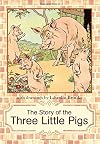
I liked this book because of its characters and the plot. I found this version of the story to be very interesting because it is a bit different then the classic tale. The plot was very simple and direct, because it told the original story of “The Three Little Pigs” but included some of its own new details. For example, in this version the pigs bought the materials to build their homes from an “old sowMan.” The story began with the wolf eating the little pig that lived in the straw show more house and the little pig that lived in the furze house. The rest of the tale only talked about the pig that lived in the brick house, and the wolf that was trying so hard to eat him. Since the wolf was unable to blow the brick house down, he instead attempted to lure the pig out of his house. The wolf tried to trick the pig many times, but the pig always managed to outsmart the wolf. For example, the wolf asked the pig if he wanted to go apple picking. The pig said yes and asked the wolf for the location of the apple trees. Next he secretly went an hour before the wolf was supposed to arrive, and picked apples by himself. The wolf tried to lure the pig outside to other places, but soon decided to give up. Finally the wolf went down the pig’s chimney and ended up in a pot of boiling water, and was eaten by the pig. I found the story to be a bit ironic considering the wolf wanted to eat the pig, and was eventually consumed by one.
I feel that the main idea of the story is that playing tricks on others can backfire in many ways. The wolf was a mean character that was also sneaky, and unkind. Ultimately, the wolf got what he deserved at the end of the story. show less
I feel that the main idea of the story is that playing tricks on others can backfire in many ways. The wolf was a mean character that was also sneaky, and unkind. Ultimately, the wolf got what he deserved at the end of the story. show less
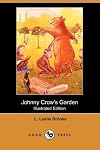
Johnny Crow’s Garden is a story written in lyrical poetry about a crow who would “Dig and Sow” until “he made a little Garden.” After constructing this immaculate garden, Johnny is visited by numerous animals ranging from a rat who “Wore a Feather in His Hat” to a bear who “Had nothing to wear.” All the animals seem to enjoy coming to Johnny’s garden.
The rhyming is adorable and I think it would draw children into the story. The illustrations truly add to this story. They show more help the reader to realize how brilliant and expansive Johnny’s garden is. There are park benches for the animals to lounge in and there are walkways fashioned out of shrubs. It is truly quite and undertaking that this crow has created.
This book states on the cover that it is a picture book, but I think an interesting exercise would be to read the story to children without showing the pictures. I think that this would encourage children to use their imaginations and focus on the imagery of the poetry. After all, the situations in the book are quite imaginative. This could also be a good chance to teach note taking skills. I would also have the children try to draw some of the situations portrayed by the poetry (for example, a lion with a necktie or rat wearing a hat). This could truly be a creative experience for the children. show less
The rhyming is adorable and I think it would draw children into the story. The illustrations truly add to this story. They show more help the reader to realize how brilliant and expansive Johnny’s garden is. There are park benches for the animals to lounge in and there are walkways fashioned out of shrubs. It is truly quite and undertaking that this crow has created.
This book states on the cover that it is a picture book, but I think an interesting exercise would be to read the story to children without showing the pictures. I think that this would encourage children to use their imaginations and focus on the imagery of the poetry. After all, the situations in the book are quite imaginative. This could also be a good chance to teach note taking skills. I would also have the children try to draw some of the situations portrayed by the poetry (for example, a lion with a necktie or rat wearing a hat). This could truly be a creative experience for the children. show less

Beautiful pictures from a master illustrator. The story is about Johnny Crow and all of the animals who come to his garden. The text is wonderful for teaching children about words rhymes and phenomes. The simple phrasing is wonderful for very young children.
Lists
Awards
You May Also Like


Associated Authors
Statistics
- Works
- 36
- Also by
- 12
- Members
- 637
- Popularity
- #39,574
- Rating
- 3.8
- Reviews
- 14
- ISBNs
- 88
- Languages
- 3