
Philip Reeve
Author of Mortal Engines
About the Author
Philip Reeve was born in Brighton, England, and worked in a bookshop for many years before breaking out and becoming the illustrator of children's book He has also produced and directed several no-budget theater productions, and cowrote a musical, The Ministry of Biscuits. Mr. Reeve and his wife show more and son now live in a hamlet high above the moorland in Devon, England show less
Series
Works by Philip Reeve
Larklight: A Rousing Tale of Dauntless Pluck in the Farthest Reaches of Space (2006) 1,177 copies, 47 reviews
Starcross: A Stirring Adventure of Spies, Time Travel and Curious Hats (2007) 423 copies, 16 reviews
Oxford Reading Tree Treetops Greatest Stories: Oxford Level 16: Gawain and the Green Knight (2016) 7 copies
Olivier en de dwaaleilanden 2 copies
Adventuremice: Mice, Camera, Action! 2 copies
Máquinas Mortais 1 copy
The Ghost Wood 1 copy
The Exeter Riddles 1 copy
Adventuremice: Of Mice and Mummies - from bestselling creative dream team, Reeve and McIntyre (2026) 1 copy
Adventure Mice 4 Books Collection Set by Reeve & McIntyre (Mice on the Ice, Otter Chaos, Mermouse Mystery, Mice on the Moon) (2024) 1 copy
Duendes Contra Anões 1 copy
Ragadozó városok - Vannak örök sebek - a Ragadozó városok krónikája sorozat első kötete (2018) 1 copy
Duendes 1 copy
Bolos no Espaço 1 copy
Goblini 1 copy
Goblini versus trpaslíci 1 copy
Astra en de astrotaartjes 1 copy
Associated Works
Professor Fiendish's Book of Diabolical Brain-benders (2002) — Illustrator, some editions — 59 copies
The Future of Horror: The Collected Solaris Horror Anthologies, featuring House of Fear, Magic and End of the Road (2015) — Contributor — 8 copies
Tagged
Common Knowledge
- Birthdate
- 1966-02-28
- Gender
- male
- Education
- Cambridgeshire College of Arts and Technology
Brighton Polytechnic - Occupations
- bookstore clerk
illustrator
science fiction writer - Short biography
- Philip Reeve (born 28 February 1966) is a British author and illustrator of children's books, primarily known for the 2001 book Mortal Engines and its sequels. His 2007 novel, Here Lies Arthur, based on the legendary King Arthur, won the Carnegie Medal, which sets out to choose the year's best children's book published in the UK.
Born on 28 February 1966 in Brighton, Reeve studied illustration, first at Cambridgeshire College of Arts and Technology (CCAT – now Anglia Ruskin University), where he contributed a comic strip to the Student Union magazine, and later at Brighton Polytechnic (now the University of Brighton). Before becoming an illustrator he worked at a bookshop in Brighton for several years. During his student years and for a few years afterwards he wrote for and performed in comedy sketch shows with a variety of collaborators under various group names, among them The Charles Atlas Sisters. He lives on Dartmoor with his wife Sarah and their son Sam.
With Brian Mitchell, Reeve is the author of a 1998 dystopian comic musical,The Ministry of Biscuits. "Stop! Think before you eat that biscuit! Is it in any way fancy? If so, then you are a criminal! In Post-War London, The Ministry of Biscuits casts its sinister shadow over every tea-time and elevenses in the land. Established to 'control biscuits, and to control the idea of biscuits', it prohibits decadent sweetmeats, such as the Gypsy Cream." This was performed at the Pavilion Theatre, Brighton, the Yvonne Arnaud Theatre, Guildford, and the 1999 Edinburgh Fringe Festival. It underwent a revival in 2005 at the Sallis Benney, Brighton, and began playing at Brighton's Lantern Theatre in November 2017. It has also toured to various other locations throughout the United Kingdom. - Nationality
- UK
- Birthplace
- Brighton, Sussex, England, UK
- Places of residence
- Dartmoor, Devon, England, UK
- Map Location
- England, UK
Members
Reviews
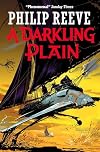
(This is probably my longest review ever – sorry about that, I meant to keep it short and not so rambling, but it just kept spilling out.)
A satisfying conclusion to a great series.
A Darkling Plain is the final installment in a quadrilogy, and as such it shares the strengths and weaknesses of its predecessors.
On the plus side it is insanely imaginative, with stunning ideas and wonderfuland epic worldbuilding. Reeve has a real knack for describing highly visual concepts - something that's show more trickier than one might think. The novel is exciting and fast paced - it moves along fine and seldom lingers.
There are two qualities In Reeves writing that I would especially like to praise, since they are so rare and yet so needed in young adult fiction (and perhaps in genre fiction in general). These things relate to the series in general rather than just this last installment, but I might as well put them down here.
The first noteworthy thing is the ambiguity of characters. While not exactly deep or nuanced, each character is clearly defined and given a motivation that is for most part if not relatable then at least understandable. There are ”good” characters, and “bad” ones, but no one is a jerk from his or her own point of view. Also, a lot of the characters are intriguingly ambivalent in their morality - like, for real, not just in a cookie-cutter “jaded and troubles antihero with a heart of gold” way, something that really challenged my preconciets about the complexity of YA fiction. Hester, for instance, is one of the most interesting characters I’ve come across in genre fiction in quite a while, and her arc across the series is truly epic, and decidedly unconventional.
Secondly: While this is, at its heart, an action story full of ships, guns, heroes and adventure, Reeve almost always makes it perfectly clear that the personal stakes are high for the characters involves: Excitement is scary, adventure is genuinely dangerous, and the world, while certainly sublime and wonderful in many ways, is mainly terrifying, raw, and decidedly Not A Nice Place.
This is important, since genre fiction I general often falls in love with its own excitement. The implicit implication is often that a dangerous world is a more adventurous word, and therefore a better world that builds better people. Reeves subtly and continuously tells us that this is not the case: struggle makes us primitive, and primitivism isn’t romantic. This is especially clear when it comes to war and the military. While there are a lot of exciting guns, tanks, uniforms and fighting in the series, one thing is also made clear: War is Hell - A very tangible, visceral kind of hell. This is probably largely due to the fact that the protagonists is almost always small and powerless, thrown into larger event where ruthless players gamble for very high stakes where the lives of real people are used as currency. Fans of libertarian post-apocalyptic power fantasies can look elsewhere.
The bittersweet ending with it's almost mythological tinge was also far beyond the standard safe and happy fare I was expecting. I must confess I welled up, and I not ashamed to do so.
On the negative side, Reeves has a tendency to let his plot progress thanks to outside influences that hinges just a tad to much on the coincidental or the inexplicable. It’s not a full-blown Deus-Ex-Machina, but it sniffs in that general vicinity. Things are set up so that a character just happens to show up just where he or she need to be, the location of something crucial is reavealed just when it’s needed to… In a way this is kind of fascinating and stylistic - as a reader you can see the pieces of the lot move on the board, setting themselves up to converge. But it also feels a bit convoluted at times, and from most characters’ point of view a lot of things ought to look really weird and impossibly random. I suspect this annoys me more than most, but at times it can be really grating.
Also, it runs a bit long, which is classic last-book-syndrome – to many end to tie up, a bit too much to say, darlings that should probably be killed, but aren’t. It’s not a huge deal ,but a bit annoying.
In conclusion : A Darkling Plain is a worthy finale in one of the more interesting YA series I’ve ever read. It doesn’t pull punches, and it’s not pandering to the idea that fiction for young people should be sugar-coated or simple. It’s also one of the most excitingly imaginative genre series I’ve ever encountered – a testament to the triumph of original imagination in an age of Harry Potter-ripoffs, Twilight-rippoffs and bad fantasy mishmashes. show less
A satisfying conclusion to a great series.
A Darkling Plain is the final installment in a quadrilogy, and as such it shares the strengths and weaknesses of its predecessors.
On the plus side it is insanely imaginative, with stunning ideas and wonderfuland epic worldbuilding. Reeve has a real knack for describing highly visual concepts - something that's show more trickier than one might think. The novel is exciting and fast paced - it moves along fine and seldom lingers.
There are two qualities In Reeves writing that I would especially like to praise, since they are so rare and yet so needed in young adult fiction (and perhaps in genre fiction in general). These things relate to the series in general rather than just this last installment, but I might as well put them down here.
The first noteworthy thing is the ambiguity of characters. While not exactly deep or nuanced, each character is clearly defined and given a motivation that is for most part if not relatable then at least understandable. There are ”good” characters, and “bad” ones, but no one is a jerk from his or her own point of view. Also, a lot of the characters are intriguingly ambivalent in their morality - like, for real, not just in a cookie-cutter “jaded and troubles antihero with a heart of gold” way, something that really challenged my preconciets about the complexity of YA fiction. Hester, for instance, is one of the most interesting characters I’ve come across in genre fiction in quite a while, and her arc across the series is truly epic, and decidedly unconventional.
Secondly: While this is, at its heart, an action story full of ships, guns, heroes and adventure, Reeve almost always makes it perfectly clear that the personal stakes are high for the characters involves: Excitement is scary, adventure is genuinely dangerous, and the world, while certainly sublime and wonderful in many ways, is mainly terrifying, raw, and decidedly Not A Nice Place.
This is important, since genre fiction I general often falls in love with its own excitement. The implicit implication is often that a dangerous world is a more adventurous word, and therefore a better world that builds better people. Reeves subtly and continuously tells us that this is not the case: struggle makes us primitive, and primitivism isn’t romantic. This is especially clear when it comes to war and the military. While there are a lot of exciting guns, tanks, uniforms and fighting in the series, one thing is also made clear: War is Hell - A very tangible, visceral kind of hell. This is probably largely due to the fact that the protagonists is almost always small and powerless, thrown into larger event where ruthless players gamble for very high stakes where the lives of real people are used as currency. Fans of libertarian post-apocalyptic power fantasies can look elsewhere.
The bittersweet ending with it's almost mythological tinge was also far beyond the standard safe and happy fare I was expecting. I must confess I welled up, and I not ashamed to do so.
On the negative side, Reeves has a tendency to let his plot progress thanks to outside influences that hinges just a tad to much on the coincidental or the inexplicable. It’s not a full-blown Deus-Ex-Machina, but it sniffs in that general vicinity. Things are set up so that a character just happens to show up just where he or she need to be, the location of something crucial is reavealed just when it’s needed to… In a way this is kind of fascinating and stylistic - as a reader you can see the pieces of the lot move on the board, setting themselves up to converge. But it also feels a bit convoluted at times, and from most characters’ point of view a lot of things ought to look really weird and impossibly random. I suspect this annoys me more than most, but at times it can be really grating.
Also, it runs a bit long, which is classic last-book-syndrome – to many end to tie up, a bit too much to say, darlings that should probably be killed, but aren’t. It’s not a huge deal ,but a bit annoying.
In conclusion : A Darkling Plain is a worthy finale in one of the more interesting YA series I’ve ever read. It doesn’t pull punches, and it’s not pandering to the idea that fiction for young people should be sugar-coated or simple. It’s also one of the most excitingly imaginative genre series I’ve ever encountered – a testament to the triumph of original imagination in an age of Harry Potter-ripoffs, Twilight-rippoffs and bad fantasy mishmashes. show less
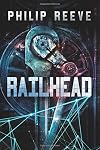
Railhead/Philip Reeve The Great Network is an ancient web of routes and gates, where sentient trains can take you anywhere in the galaxy in the blink of an eye. Zen Starling is a nobody. A petty thief from the filthy streets of Thunder City who aimlessly rides the rails of the Network. So when the mysterious stranger Raven offers Zen a chance to escape the squalor of the city and live the rest of his days in luxury, Zen can’t believe his luck. All he has to do is steal one small box from show more the Emperor’s train with the help of Nova, an android girl. But the Great Network is a hazardous mess of twists and turns, and that little box just might bring everything in this galaxy — and the next — to the end of the line. The highly anticipated novel from Carnegie-medal-winning author Philip Reeve, Railhead is a fast, immersive, and heart-pounding ride perfect for any sci-fi fan. Step aboard — the universe is waiting.
I was pleasantly surprised by how much of a solid and captivating book this was.
I was expecting to enjoy this, but I was expecting to have to work to remember the terminology and to understand all of the science fiction elements. However, it was surprisingly easy to pick up on the concepts of the world Reeve had created. I appreciated that there weren't endless descriptions of the world; instead, we were simply placed in it and everything came together cohesively.
There were some intriguing ideas given about humanity without feeling too forced. With a lot of emphasis on artificial intelligence, it became natural to be contemplating humanity and its role in the world. With the Guardians, godlike figures, being sentient creatures that one could send "data-prayers" too, even the idea of major religious figures was brought into contemplation.
There were comedic moments too that lightened the mood. The book was mainly action based, with the characters constantly on the move and constantly in the throes of some danger or some crisis, so having things like Zen thinking a bowl for washing his fingers was soup broke the tension beautifully.
My one major issue with this book was with the lack of personal repercussion for a particular action taken. I don't think it was entirely necessary, and I think that given the characters' thoughts leading up to it, what followed didn't make sense. (Avoiding spoilers makes me way too ambiguous!)
The ending left potential for a sequel open, and I'd definitely read a sequel. But this was such a good stand alone book that I almost wouldn't want to know what happens next so that I can keep imagining it.
This was a really fun read, and I totally recommend it to anyone who likes scifi casually but is scared of the investment most scifi books require. And to anyone who loves a good, fast-moving plot!
I received a free copy of this book in exchange for an honest review. show less
I was pleasantly surprised by how much of a solid and captivating book this was.
I was expecting to enjoy this, but I was expecting to have to work to remember the terminology and to understand all of the science fiction elements. However, it was surprisingly easy to pick up on the concepts of the world Reeve had created. I appreciated that there weren't endless descriptions of the world; instead, we were simply placed in it and everything came together cohesively.
There were some intriguing ideas given about humanity without feeling too forced. With a lot of emphasis on artificial intelligence, it became natural to be contemplating humanity and its role in the world. With the Guardians, godlike figures, being sentient creatures that one could send "data-prayers" too, even the idea of major religious figures was brought into contemplation.
There were comedic moments too that lightened the mood. The book was mainly action based, with the characters constantly on the move and constantly in the throes of some danger or some crisis, so having things like Zen thinking a bowl for washing his fingers was soup broke the tension beautifully.
My one major issue with this book was with the lack of personal repercussion for a particular action taken. I don't think it was entirely necessary, and I think that given the characters' thoughts leading up to it, what followed didn't make sense. (Avoiding spoilers makes me way too ambiguous!)
The ending left potential for a sequel open, and I'd definitely read a sequel. But this was such a good stand alone book that I almost wouldn't want to know what happens next so that I can keep imagining it.
This was a really fun read, and I totally recommend it to anyone who likes scifi casually but is scared of the investment most scifi books require. And to anyone who loves a good, fast-moving plot!
I received a free copy of this book in exchange for an honest review. show less
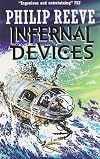
I really wish this had been better. "Mortal Engines" is one of my favorite sci-fi books, and even the sequel was pretty dang good! But this one just...lacks. In a lot of places.
Reeve's writing itself is still super readable and interesting, a lovely blend of storytelling-like narration and vivid descriptions. I love the cities and towns he creates! The world of Mortal Engines is easy to get lost in, and he has managed to keep things feeling fresh throughout three books.
I also really show more enjoyed the time jump and getting to know Wren. I was a bit hesitant when I saw that this book was 17 years after the events of "Predator's Gold" but Reeve transitioned to this story almost seamlessly. Wren, while a tad underdeveloped, is an interesting character and I liked the generational leap.
Unfortunately, the plot itself wasn't very good. It felt a bit rehashed, like the first book with a bunch of bits and pieces rearranged and a new setting. I also have to admit that I'm 100% DONE with Pennyroyal's reoccurring appearance. He's predictable. He's blustering. He was fine originally, but I wish we could have gotten much less of him. I don't usually mind reoccurring characters, like Shrike, but because Pennyroyal is so predictable it makes the book that way, too.
One of the biggest problems with this book is Hester's characterization. The whole book she is angry, violent, childish, and lacked any sort of development. She seems almost jealous of Wren, and says several times that she wishes Wren would have never been born or that she is glad Wren got kidnapped. I would have thought that all those years in Anchorage would have given Tom and Hester time to get to know each other even more and communicate with each other, but apparently Hester hated it there the whole time and just never said anything to Tom even after all they've been through together. :/ Everything with Hester was just disappointing in this novel.
All in all, "Infernal Devices" was fine. I liked bits of it, disliked other bits. I'm still going to read the final book because I really am invested in the series, but I'm realllllyyy hoping the last book has more of the dynamic, action-packed wonders and fun of the first couple books, with way less murderous Hester. show less
Reeve's writing itself is still super readable and interesting, a lovely blend of storytelling-like narration and vivid descriptions. I love the cities and towns he creates! The world of Mortal Engines is easy to get lost in, and he has managed to keep things feeling fresh throughout three books.
I also really show more enjoyed the time jump and getting to know Wren. I was a bit hesitant when I saw that this book was 17 years after the events of "Predator's Gold" but Reeve transitioned to this story almost seamlessly. Wren, while a tad underdeveloped, is an interesting character and I liked the generational leap.
Unfortunately, the plot itself wasn't very good. It felt a bit rehashed, like the first book with a bunch of bits and pieces rearranged and a new setting. I also have to admit that I'm 100% DONE with Pennyroyal's reoccurring appearance. He's predictable. He's blustering. He was fine originally, but I wish we could have gotten much less of him. I don't usually mind reoccurring characters, like Shrike, but because Pennyroyal is so predictable it makes the book that way, too.
One of the biggest problems with this book is Hester's characterization. The whole book she is angry, violent, childish, and lacked any sort of development. She seems almost jealous of Wren, and says several times that she wishes Wren would have never been born or that she is glad Wren got kidnapped. I would have thought that all those years in Anchorage would have given Tom and Hester time to get to know each other even more and communicate with each other, but apparently Hester hated it there the whole time and just never said anything to Tom even after all they've been through together. :/ Everything with Hester was just disappointing in this novel.
All in all, "Infernal Devices" was fine. I liked bits of it, disliked other bits. I'm still going to read the final book because I really am invested in the series, but I'm realllllyyy hoping the last book has more of the dynamic, action-packed wonders and fun of the first couple books, with way less murderous Hester. show less
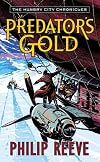
On one hand, Predator's Gold does a solid job of expanding on what was the best part of Mortal Engines: the world building all around mobile cities that eat one another. We get to see a few more cities--both predators and trading cities--along with more details on airships in this world. But the real worldbuilding gold[^heh] is in the parasites that can attach themselves to cities and steal from them. It really makes the cities feel like gigantic living organisms as much as anything, which show more I'm sure is Reeve's intention.
On the other hand, I very nearly put Predator's Gold down several times during the first half of the book. There's a rather blatant love triangle between Tom, Hester, and Freya (princess of Anchorage--roving city of the north nearly destroyed by a plague in the recent past). It really doesn't make much sense given Tom and Hester's relationship at the end of the first book and drags on way too long. Perhaps that's what some people read the book for... but it's really not for me.
Luckily, once you get everyone apart from one another, the book picks up again and I do quite enjoy the second half. Gives me hope for the rest of the series. We shall have to see.
[^heh]: Pun intended. show less
On the other hand, I very nearly put Predator's Gold down several times during the first half of the book. There's a rather blatant love triangle between Tom, Hester, and Freya (princess of Anchorage--roving city of the north nearly destroyed by a plague in the recent past). It really doesn't make much sense given Tom and Hester's relationship at the end of the first book and drags on way too long. Perhaps that's what some people read the book for... but it's really not for me.
Luckily, once you get everyone apart from one another, the book picks up again and I do quite enjoy the second half. Gives me hope for the rest of the series. We shall have to see.
[^heh]: Pun intended. show less
Lists
Awards


You May Also Like


Associated Authors
Statistics
- Works
- 105
- Also by
- 18
- Members
- 16,738
- Popularity
- #1,345
- Rating
- 3.9
- Reviews
- 534
- ISBNs
- 699
- Languages
- 22
- Favorited
- 33
