
Ralph Moody (1898–1982)
Author of Little Britches: Father and I Were Ranchers
About the Author
Ralph Moody (1898-1982) is the author of Come on Seabiscuit! as well as the Little Britches series about a boy's life on a Colorado ranch
Disambiguation Notice:
Not to be confused with actor Ralph Moody of the same time
Series
Works by Ralph Moody
5 The Fields of Home 1 copy
4 Mary Emma & Company 1 copy
3 The Home Ranch 1 copy
2 Man of the Family 1 copy
8 Horse of a Different Color 1 copy
7 The Dry Divide 1 copy
6 Shaking the Nickel Bush 1 copy
Associated Works
I Died a Thousand Times [1955 film] — Actor — 6 copies
Dragnet: 9 Classic Episodes — Actor — 1 copy
Tagged
Common Knowledge
- Legal name
- Ralph Owen Moody
- Birthdate
- 1898-12-16
- Date of death
- 1982-06-28
- Gender
- male
- Education
- 8th Grade Grammar School
- Occupations
- rancher
writer
cowman
farmer
playwrite
bust sculptor (show all 8)
action rider
farm hand - Short biography
- He was born in East Rochester, New Hampshire and moved to Littleton, Colorado in 1906 with his family when he was eight in the hopes that a dry climate would improve his father Charles's tuberculosis. Moody detailed his experiences in Colorado in the first book of the Little Britches series, Little Britches: Father and I Were Ranchers. After his father died, eleven-year-old Moody assumed the duties of the "man of the house". He and his sister Grace combined ingenuity with hard work in a variety of odd jobs, including starting a street baking business, to help their mother provide for their large family. The Moody clan returned to Boston some time after Charles's death, because Mary-Emma, Ralph's mother, was served a subpoena but did not want to appear in court against a man she believed to be innocent. Ralph, however, had difficulty readjusting. Following more than two times that he got his name in the local "bad boy book," most of which were false charges, he left the family home in Boston to live on his grandfather, Thomas Gould's farm in Lisbon Falls, Maine which is covered in the 1953 book, The Fields of Home. Thomas Gould died in 1929. Ralph Moody's later books cover his subsequent travels through Arizona, New Mexico, Nebraska, and Kansas. He traveled west intending to end up in Littleton, Colorado before he succumbed to a diagnosed illness, diabetes. During this time, the books cover his experiences in the desert southwest and mid western US including stints as a bust sculptor, a horse rider doing "horse falls" for motion pictures, and a farm hand - turned owner – as he worked his way back toward Colorado while continuing to support his family financially.
After four years of the roving life, he continued to remain in good health and decided the prognosis for his illness was wrong. According to the Littleton Colorado Chamber of Commerce, 'He married Edna Hudgins of Boston in 1922. Moving to Kansas City, MO, they had three children, Charles, Edna and Andrew, and Ralph began a career with the Procter & Gamble Company. Soon afterward, he left Procter & Gamble to become partners with a former client, B/G Foods, Inc., and moved his family to California.' Moody's formal education was limited, but he had a lifelong interest in learning and self-education. At age 50, he enrolled in a writing class; this led to his first novel Little Britches, which led to a series covering his diverse boyhood and overcoming the rigors of growing up in the American West. His books have been described as crude in the language of the times but are highly praised by his readership and have been in continuous publication since 1950. The "crude language" is solely used as an accurate portrayal of the common language of the times, being spoken by the real-life characters depicted in the books.
In the early 1970s, Moody moved back to Massachusetts after his wife died. His mother, Mary Emma, was still living then, and she died in 1974 at the age of 102. Ralph then lived with his younger sister, Elizabeth, in Shirley, Massachusetts, until his death on June 20, 1982. According to his Boston Globe obituary, published June 21, 1982, his death was on June 20, 1982. - Nationality
- USA
- Birthplace
- East Rochester, New Hampshire
- Places of residence
- Shirley, Massachusetts,
- Place of death
- Shirley, Massachusetts,
- Disambiguation notice
- Not to be confused with actor Ralph Moody of the same time
- Associated Place (for map)
- Shirley, Massachusetts
Members
Reviews

I found this ragged old copy of Ralph Moody's LITTLE BRITCHES at a local library sale. Bought it for my grandson, but my wife picked it up to look at it and ended up reading it straight through, and said, "You'd like this yourself. Try it." And so did I, read it straight through, I mean. It's that good a story. Ralph Moody's own story about growing up on a poor dry land Colorado ranch. It begins in 1906 when Ralph - the "Little Britches" of the story - was 8 years old and covers the next show more three years, telling the story of Charlie and Molly Moody's family of five children - Ralph was second oldest - trying to make a living after moving west from New Hampshire, looking for a dry healthy climate, where Charlie might recover from tuberculosis. Young Ralph wants to be a cowboy, and he makes a darn good start, learning to ride and handle a team of horses from the time he is 8 or nine. By the time he is eleven he has even learned some stunt riding and how to cut cattle under the tutelage of his sure-enough cowboy pal, Hi. He has also learned to drive a hay rake and plant vegetables and maintain a garden and build an outhouse and other rough carpentry - much of this from his father, who is very inventive and clever with his hands. He learns about breaking horses and rides in a rodeo before he is twelve. All of these things are related in simple straightforward storytelling that does not fail to delight and keeps you turning the pages wondering what will happen next. In other words, Ralph Moody tells a good story - his own. You will be reminded of Laura Ingalls Wilder's LITTLE HOUSE series of books. In fact, Moody wrote several more memoirs before he was finished, in addition to several historical novels for young people. In researching Moody (1898-1982) a little, I found it interesting that he did not begin to write until he was well past fifty. By then he had a wide variety of experiences to draw from and just kept on writing them down. Moody is such a natural story teller and engaging writer I am going to try to read some more of his stuff. LITTLE BRITCHES I will recommend highly. (And yes, we are giving it to our grandson to read. I hope he likes it as much as we did.) Oh, and P.S. The book was first published in 1950. In 1970, Disney adapted it for a film called THE WILD COUNTRY, starring Ronny Howard and his little brother, Clint. show less
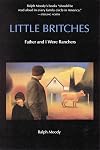
I should maybe wait until the emotions from the last chapter have passed; but from the very first chapters, I had already decided this is a book that every single one of my children will read, and each of the books in the series are on my to-read list, at least mentally.
The language of the book is so beautiful, the way Moody simply describes his life and activities. It’s plain-spoken and matter-of-fact, but there’s almost a poetry to it, and the narrator describes things just enough to show more get a good idea of the places and people and how he feels about them and not a word more. There’s an ease to his storytelling, and the adventures this young boy has are exciting and contain just the right amount of danger. I was also constantly in love with Moody’s relationship with his father. He learns so much from him and he loves and respects his father so fully, and he finds such beautiful ways to express it. And any man who is able to teach his son so much about life with a soft word and firm actions, but also so much trust and regard is certainly a man to be admired. It about broke my heart when the last chapter came around and it was obvious what was to come.
I have tomboys and girls who love horses and one little boy who loves a good story. This whole series is destined to be added into our home’s bookshelves, and read for years to come. show less
The language of the book is so beautiful, the way Moody simply describes his life and activities. It’s plain-spoken and matter-of-fact, but there’s almost a poetry to it, and the narrator describes things just enough to show more get a good idea of the places and people and how he feels about them and not a word more. There’s an ease to his storytelling, and the adventures this young boy has are exciting and contain just the right amount of danger. I was also constantly in love with Moody’s relationship with his father. He learns so much from him and he loves and respects his father so fully, and he finds such beautiful ways to express it. And any man who is able to teach his son so much about life with a soft word and firm actions, but also so much trust and regard is certainly a man to be admired. It about broke my heart when the last chapter came around and it was obvious what was to come.
I have tomboys and girls who love horses and one little boy who loves a good story. This whole series is destined to be added into our home’s bookshelves, and read for years to come. show less
Ralph Moody's "Little Britches" is one of those rare books that stays in your heart forever. This is the first in an autobiographical series written by Ralph Moody about his childhood in Colorado in the early nineteen hundreds. The story is filled the sorts of adventures that are near and dear to a young boy's heart, but the core of the story is Ralph's relationship with his father.
Ralph is a typical boy and full of mischief, but his father's simple words of wisdom always manages to keep show more Ralph on the path of honor and integrity. The values taught by Ralph's father spill through the story to the reader in a way that is rarely seen in today's novels. Ralph and his family become so real and dear that you will feel like you've said goodbye to your best friend when you read the final page. This book is for both adults and children, but if you are going to read just one book to your children, let it be this one. show less
Ralph is a typical boy and full of mischief, but his father's simple words of wisdom always manages to keep show more Ralph on the path of honor and integrity. The values taught by Ralph's father spill through the story to the reader in a way that is rarely seen in today's novels. Ralph and his family become so real and dear that you will feel like you've said goodbye to your best friend when you read the final page. This book is for both adults and children, but if you are going to read just one book to your children, let it be this one. show less
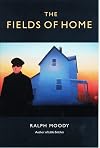
My least favorite of these books so far, because of the ornery old grandpa. I got tired of his grouchiness awfully quickly, and it really bother me how everyone excused his behavior and let him get away with chasing off farmhands and being set in his ways to the point of ridiculousness. He was a mess of contradictions and untamed habits, insults and pride and love, and I was surprised Ralph stayed as long as he did; it’s a testament to his own character. After Levi explained about why show more Grandpa was the way he was, I understood better but still didn’t approve, especially of how Levi and Millie (not to mention anyone in his youth, apparently) never challenged his childishness. A cautionary tale of what you might end up as if you can’t master your own passions and learn to look at the world and your own experience rationally as well as emotionally. End of rant.
Other than Grandpa, this story is filled with Moody’s trademark grit and determination, finding the good in a difficult situation and seeing his obligations (stated or internally felt) through to the end as best he can. Grandpa obviously plays a large part in this, and the story would perhaps be vastly different if he had been a nicer fellow. Ralph butts heads with him frequently, and it’s humorous that their major point of contention is that they both think their father’s way of doing things is the best.
It all ends up right in the end, Ralph’s hard work and steadiness paying dividends in his relationship with his grandfather as well as on the farm. It ended a bit abruptly, but it was pretty satisfying all the same. show less
Other than Grandpa, this story is filled with Moody’s trademark grit and determination, finding the good in a difficult situation and seeing his obligations (stated or internally felt) through to the end as best he can. Grandpa obviously plays a large part in this, and the story would perhaps be vastly different if he had been a nicer fellow. Ralph butts heads with him frequently, and it’s humorous that their major point of contention is that they both think their father’s way of doing things is the best.
It all ends up right in the end, Ralph’s hard work and steadiness paying dividends in his relationship with his grandfather as well as on the farm. It ended a bit abruptly, but it was pretty satisfying all the same. show less
Lists
Awards


You May Also Like


Associated Authors
Statistics
- Works
- 42
- Also by
- 3
- Members
- 8,146
- Popularity
- #2,970
- Rating
- 4.3
- Reviews
- 75
- ISBNs
- 121
- Favorited
- 6

