
Glenn Fabry
Author of Neil Gaiman's Neverwhere [comic book adaptation]
Works by Glenn Fabry
Anatomy for Fantasy Artists: An Illustrator's Guide to Creating Action Figures and Fantastical Forms (2005) 191 copies
Preacher vol. 1-9 1 copy
Sláine the Berserker No. 10 — Illustrator — 1 copy
Associated Works
John Constantine, Hellblazer: Dangerous Habits (1994) — Cover artist, some editions — 696 copies, 8 reviews
John Constantine, Hellblazer Vol. 02: The Devil You Know (2007) — Cover artist, some editions — 507 copies, 8 reviews
9-11: The World's Finest Comic Book Writers & Artists Tell Stories to Remember (2002) — Illustrator — 256 copies, 1 review
Batman Versus Bane (2012) — Cover Art - Batman: Vengeance of Bane No. 1, Collection Cover — 63 copies, 4 reviews
House of Mystery Vol. 2 # 07 — Cover artist — 3 copies
House of Mystery Vol. 2 # 06 — Cover artist — 3 copies
House of Mystery Vol. 2 # 10 — Cover artist — 2 copies
Spawn: The Dark Ages #03 — Cover, some editions — 2 copies
Crisis # 27 — Cover artist — 2 copies
House of Mystery Vol. 2 # 09 — Cover artist — 2 copies
House of Mystery Vol. 2 # 08 — Cover artist — 2 copies
Swamp Thing vol. 3 # 11 — Cover artist — 1 copy
Tagged
Common Knowledge
- Birthdate
- 1961-03-24
- Gender
- male
- Nationality
- UK
- Map Location
- England, UK
Members
Reviews
Nessundove fa parte di quei libri che in tanti hanno letto e amato ma che, reputandoli fuori dalla comfort zone, restano relegati in fondo alla lista dei desideri. E ci stanno spesso giusto per rispetto a quelli che te li hanno osannati (sìsì, lo leggo appena ho smaltito la mia lista infinita, intorno al giorno di San Mai, mese più mese meno).
Poi Mondadori se ne esce con una versione illustrata molto bella e per niente cara. Che fai, la lasci lì? Visto che ce l'hai ,che fai, non provi show more almeno a cominciarlo? E visto che pian piano (ma neanche così tanto piano) scopri che è un gioiellino, che fai, non lo divori?
Dopo questa lunga premessa, Nessundove è un romanzo di formazione in cui il protagonista supera tutta una serie di prove che lo portano ad alla crescita ed alla consapevolezza di se stesso e del mondo.
Ma lo fa esplorando il mondo della Londra di sotto (fantastica) e incontrando personaggi molto ben caratterizzati.
Scorre che è una meraviglia e, almeno per me, con pochissimo di scontato/chiamato. Come già detto, la scelta poi, in questa edizione, di integrare nel testo una serie di illustrazioni di Riddell ha reso la lettura ancora più piacevole.
Assolutamente da leggere anche per chi, come me, nel fantasy tendenzialmente non ci sguazza. show less
Poi Mondadori se ne esce con una versione illustrata molto bella e per niente cara. Che fai, la lasci lì? Visto che ce l'hai ,che fai, non provi show more almeno a cominciarlo? E visto che pian piano (ma neanche così tanto piano) scopri che è un gioiellino, che fai, non lo divori?
Dopo questa lunga premessa, Nessundove è un romanzo di formazione in cui il protagonista supera tutta una serie di prove che lo portano ad alla crescita ed alla consapevolezza di se stesso e del mondo.
Ma lo fa esplorando il mondo della Londra di sotto (fantastica) e incontrando personaggi molto ben caratterizzati.
Scorre che è una meraviglia e, almeno per me, con pochissimo di scontato/chiamato. Come già detto, la scelta poi, in questa edizione, di integrare nel testo una serie di illustrazioni di Riddell ha reso la lettura ancora più piacevole.
Assolutamente da leggere anche per chi, come me, nel fantasy tendenzialmente non ci sguazza. show less
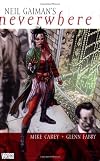
This was a little surprising. I am a big fan of the novel Neverwhere, and love Carey's and Fabry's work, but from the firsts sneak peak I saw of this adaptation in the back of an issue of Fables I felt that I had to avoid it. The image of the characters were too firmly entrenched in my mind, Fabry's imaginings too far off from what I felt was the truth of the story. When a friend of mine essentially hoisted the book upon me in his attempt to clear out his life, I held it at arms length. show more Indeed, I almost sold it, but stopped to read Carey's introduction.
In it, he mirrored many of my feelings about the original story, and about Gaiman's writing in general. He spoke about what a good experience adapting the story had been for him as it allowed him to really take apart a book he loves and see how it works. I went on to swallow my snobish pride and cleanly devoured the thing in a sitting. It left me with much the same feeling of wistful joy that the novel does, and painted a different way to look at the story. True, Fabry made some of the characters a little too comic-book sexy and the supporting cast a sort of Transmetropolitan goofy, but his linework speaks with his particular grit, and Carey did some really wonderful things to make the story flow. This is an adaptation that loses nothing in transition from prose to sequential art, becoming something new just as Carey states in his introduction. My biggest complaint is that the imagery makes my imagination look very low budget.
As a side note, I don't think I'm going to sell it tomorrow. show less
In it, he mirrored many of my feelings about the original story, and about Gaiman's writing in general. He spoke about what a good experience adapting the story had been for him as it allowed him to really take apart a book he loves and see how it works. I went on to swallow my snobish pride and cleanly devoured the thing in a sitting. It left me with much the same feeling of wistful joy that the novel does, and painted a different way to look at the story. True, Fabry made some of the characters a little too comic-book sexy and the supporting cast a sort of Transmetropolitan goofy, but his linework speaks with his particular grit, and Carey did some really wonderful things to make the story flow. This is an adaptation that loses nothing in transition from prose to sequential art, becoming something new just as Carey states in his introduction. My biggest complaint is that the imagery makes my imagination look very low budget.
As a side note, I don't think I'm going to sell it tomorrow. show less
It was great fun reisiting Gaiman's London Below and all the characters who populate it, as seen through the eyes of Mike Carey and Glenn Fabry. Their retelling is artful in that all the right moments were kept in the story, and it retained its Gaiman-esque tone even with the change in narrator. There's something about the story that really works well on a visual level as well, and I'm not sure how Gaiman described some of the scenes - particularly Downing Street. The images of Door, show more Richard, and Hunter swinging through a topsy turvy street are perfection in the montage, which takes on an Alice in Wonderland kind of vibe. Really, what's next for Neverwhere though; its been done in most formats now, but it is clearly unwilling to stop until all are conquered. show less
Não achei aqui para marcar a edição em português-br, que ficou "Lugar Nenhum", mas de qualquer forma foi a edição que li. Ou melhor, a que terminei de ler, já que comecei a comprar na época em que foi lançada em partes. Só não me recordo se ela parou de ser publicada (provável) ou eu parei de comprar. De qualquer modo, está lida e gostei bastante. Esse foi um presente fantástico que ganhei do querido Artur Vecchi
A tradução dos nomes de alguns personagens/locais me show more surpreendeu, pq conheço alguns daqueles locais e me causou algum estranhamento. Por outro lado, nem todo mundo é obrigado a entender trocadilhos (e tb nem todo mundo morou em Londres). Assim, as notas da edição guiam o leitor e solucionam a questão. Adorei mesmo o fato da região de Islington ser citada, sobretudo pq eu passava pela Angel tube station para ir para balada gótica com uma certa regularidade. Será que os porões da 'Slimelight' tem um acesso para a Londres de baixo? Aposto que o Neil Gaiman sabe a resposta! :D
A arte do Fabry está muito boa, funciona bem para a história. Enfim, se vc gosta das loucuras do universo Vertigo, vale investir nesse hardcover. show less
A tradução dos nomes de alguns personagens/locais me show more surpreendeu, pq conheço alguns daqueles locais e me causou algum estranhamento. Por outro lado, nem todo mundo é obrigado a entender trocadilhos (e tb nem todo mundo morou em Londres). Assim, as notas da edição guiam o leitor e solucionam a questão. Adorei mesmo o fato da região de Islington ser citada, sobretudo pq eu passava pela Angel tube station para ir para balada gótica com uma certa regularidade. Será que os porões da 'Slimelight' tem um acesso para a Londres de baixo? Aposto que o Neil Gaiman sabe a resposta! :D
A arte do Fabry está muito boa, funciona bem para a história. Enfim, se vc gosta das loucuras do universo Vertigo, vale investir nesse hardcover. show less
Lists
You May Also Like


Associated Authors
Statistics
- Works
- 16
- Also by
- 57
- Members
- 1,822
- Popularity
- #14,115
- Rating
- 4.1
- Reviews
- 38
- ISBNs
- 47
- Languages
- 10
- Favorited
- 1