
Steve Anderson (1)
Author of The Losing Role
For other authors named Steve Anderson, see the disambiguation page.
Works by Steve Anderson
Mark of Cain 2 copies
Associated Works
Tagged
Common Knowledge
- Gender
- male
- Occupations
- waiter
language instructor
advertising copywriter
literary translator
freelance editor - Short biography
- Steve Anderson is the author of the Kaspar Brothers novels (The Losing Role, Liberated, Lost Kin), Under False Flags: A Novel, and other works. In The Other Oregon: A Thriller, he writes about his home state. Anderson was a Fulbright Fellow in Germany and is a literary translator of German as well as a freelance editor. He lives in Portland, Oregon. http://www.stephenfanderson.com
- Nationality
- USA
- Places of residence
- Germany
Portland, Oregon, USA - Associated Place (for map)
- Oregon, USA
Members
Reviews
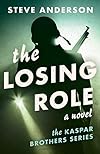
Late in 1944, the German Army pressed westward along the western front in a desperate attempt to break the Allied advance. The offensive would later come to be known as the Battle of the Bulge. While plenty of novels and movies have portrayed the American side of the struggle in Belgium's Ardennes forest that winter, Steve Anderson's The Losing Role examines the story of a German soldier caught up in a cause he knows is lost.
Max Kaspar is an out-of-work actor drafted into the German Army to show more fight a war he doesn't have the stomach for. A former emigrant to America, Max's English speaking skills, not to mention his acting ability, lands him a part in Operation Greif, the brainchild of SS Colonel Otto Skorzeny. The plan is for English-speaking soldiers to sneak behind American lines and wreak as much havoc as possible to better the odds of Panzer divisions breaking through American lines. Max, however, has plans of his own.
Max has seen enough of the horrors of war to know that Germany is fooling itself if it can think it can win. The Russians are fueled by revenge on the Eastern Front and the Americans, well, there's no end to the resources at their disposal. It's Max's hope to use the cover of the operation to desert the Army and find passage back to America, where he can rejoin his family and renew his career. But any soldier can tell you that nothing ever goes as planned in war.
Anderson doesn't offer much hope for Max. It seems as if everyone has an ulterior motive and Max isn't sure who to trust, or for how long. Each encounter he faces could be the one where he gets caught or killed. Anderson deftly elevates the tension when Max stumbles over words, phrases or elements of American culture that any American would know. The story is told entirely from Max’s point of view but Anderson skillfully hints to the reader what other characters are up to through well placed conversational and body language clues that Max doesn’t always pick up on.
While it would be easy to root against Max simply because he’s a German soldier (our enemy at the time), Anderson sculpts Max as a likable guy, a victim of circumstance rather than a hero for Deutschland. Through a series of flashbacks, we learn of Max's struggle to fit in as an immigrant actor in America, forced to play German stereotypes. Disgruntled, he returns to a rejuvenated Germany where he finds success and love, at least until the bombs start to fall.
I would’ve liked to have seen more interaction with Max and his pre-war girlfriends on both sides of the Atlantic. While we got a good start with Lucy, Liselotte comes across as an ideal placed on a pedestal. We never really get to know her.
It's always refreshing to see a portrayal of a German soldier as something other than a mindless stormtrooper perpetuating Hitler's bloodlust for world domination. Max isn't a Nazi and he has no stomach for war. He's an actor who just wants to entertain his audience, but he's smart enough to know that those that speak out against the war effort disappear.
The setting is thoroughly researched, but Anderson uses it to bolster the credibility of the story rather than rehashing historical trivia. His masterful use of dialogue builds suspense every step of the way. The Losing Role is an excellent WW II espionage thriller that transcends the genre, making it a story that you don't have to be a history buff to enjoy. show less
Max Kaspar is an out-of-work actor drafted into the German Army to show more fight a war he doesn't have the stomach for. A former emigrant to America, Max's English speaking skills, not to mention his acting ability, lands him a part in Operation Greif, the brainchild of SS Colonel Otto Skorzeny. The plan is for English-speaking soldiers to sneak behind American lines and wreak as much havoc as possible to better the odds of Panzer divisions breaking through American lines. Max, however, has plans of his own.
Max has seen enough of the horrors of war to know that Germany is fooling itself if it can think it can win. The Russians are fueled by revenge on the Eastern Front and the Americans, well, there's no end to the resources at their disposal. It's Max's hope to use the cover of the operation to desert the Army and find passage back to America, where he can rejoin his family and renew his career. But any soldier can tell you that nothing ever goes as planned in war.
Anderson doesn't offer much hope for Max. It seems as if everyone has an ulterior motive and Max isn't sure who to trust, or for how long. Each encounter he faces could be the one where he gets caught or killed. Anderson deftly elevates the tension when Max stumbles over words, phrases or elements of American culture that any American would know. The story is told entirely from Max’s point of view but Anderson skillfully hints to the reader what other characters are up to through well placed conversational and body language clues that Max doesn’t always pick up on.
While it would be easy to root against Max simply because he’s a German soldier (our enemy at the time), Anderson sculpts Max as a likable guy, a victim of circumstance rather than a hero for Deutschland. Through a series of flashbacks, we learn of Max's struggle to fit in as an immigrant actor in America, forced to play German stereotypes. Disgruntled, he returns to a rejuvenated Germany where he finds success and love, at least until the bombs start to fall.
I would’ve liked to have seen more interaction with Max and his pre-war girlfriends on both sides of the Atlantic. While we got a good start with Lucy, Liselotte comes across as an ideal placed on a pedestal. We never really get to know her.
It's always refreshing to see a portrayal of a German soldier as something other than a mindless stormtrooper perpetuating Hitler's bloodlust for world domination. Max isn't a Nazi and he has no stomach for war. He's an actor who just wants to entertain his audience, but he's smart enough to know that those that speak out against the war effort disappear.
The setting is thoroughly researched, but Anderson uses it to bolster the credibility of the story rather than rehashing historical trivia. His masterful use of dialogue builds suspense every step of the way. The Losing Role is an excellent WW II espionage thriller that transcends the genre, making it a story that you don't have to be a history buff to enjoy. show less
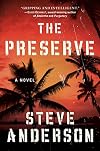
Steve Anderson’s new book is a post-WWII thriller set on the Big Island of Hawaii in 1948. Wendell Lett, war hero turned deserter, seeks treatment for combat trauma at an isolated facility called The Preserve. Instead of a cure for his jangled nerves, he finds himself caught up in an assassination plot that runs all the way to General Douglas MacArthur.
The Preserve is a first-rate historical thriller. It is fast, dark, complicated enough without being ridiculous, with characters and show more relationships you are interested in, and enough historic facts salted through the narrative to make you ponder long after the last page.
The Preserve is Anderson's second book featuring Wendell Lett, who first appeared in Under False Flags. They can be read as stand-alones, and are even better read back to back. show less
The Preserve is a first-rate historical thriller. It is fast, dark, complicated enough without being ridiculous, with characters and show more relationships you are interested in, and enough historic facts salted through the narrative to make you ponder long after the last page.
The Preserve is Anderson's second book featuring Wendell Lett, who first appeared in Under False Flags. They can be read as stand-alones, and are even better read back to back. show less
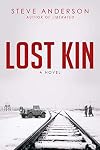
After the events in Liberated, Harry Kaspar has been relocated to Munich. As he enters the final weeks of service as an administrator for the military government, his life is good. He resides in a nice house with cushy amenities, has a former WAC girlfriend, and the locals appreciate his efforts to restore some semblance of pre-war normalcy. And then a cop shows up on his doorstep one night informing him that there's been an incident and his brother may be involved. Having not seen nor heard show more from his brother for several years, Harry's interest is piqued, though for a German-American, he knows this could be a scam, or worse. What follows is an investigation into a murder, black market sales of the spoils of war, and old scores that demand to be settled in blood.
There are elements of noir in this story. Harry's girlfriend has a bit of femme fatale to her which both excites and worries him. Meetings with informants take place in dark alleys and secluded rooms, forcing Harry to always be alert for the double cross. The atmosphere of downtrodden Munich is leaden with cold autumnal rain and early snow. And the American military government is seen through a lens of world weary cynicism.
As with Liberated, Anderson has done the research. The deal that FDR and Churchhill made with Stalin in Yalta would soon turn out to be a Faustian bargain. I don't want to spoil it, but Anderson explores an aspect of that here as a way for the two brothers' paths to cross again.
Lost Kin is a strong finish to the Kaspar Brothers trilogy. The noir elements spice up the intriguing plot, and Anderson's characters are well-developed. I got caught up in their predicament as Anderson entwined their fates with historical events. I'd recommend the series as a whole for WW2 historical fiction fans looking for something different from that time period. show less
There are elements of noir in this story. Harry's girlfriend has a bit of femme fatale to her which both excites and worries him. Meetings with informants take place in dark alleys and secluded rooms, forcing Harry to always be alert for the double cross. The atmosphere of downtrodden Munich is leaden with cold autumnal rain and early snow. And the American military government is seen through a lens of world weary cynicism.
She knew so many majors, colonels, and generals, all rearguard types who'd never seen combat but rode desks like gladiator chariots except their shields were their puffed-up chests done up with medals of every color, the swords their sharp tongues and stern memos, the feints and thrust their back-room whispers and leaks applied with extreme prejudice. Opponents cowered, colleagues awed, and mistresses swooned.
As with Liberated, Anderson has done the research. The deal that FDR and Churchhill made with Stalin in Yalta would soon turn out to be a Faustian bargain. I don't want to spoil it, but Anderson explores an aspect of that here as a way for the two brothers' paths to cross again.
Lost Kin is a strong finish to the Kaspar Brothers trilogy. The noir elements spice up the intriguing plot, and Anderson's characters are well-developed. I got caught up in their predicament as Anderson entwined their fates with historical events. I'd recommend the series as a whole for WW2 historical fiction fans looking for something different from that time period. show less
The Losing Role is a WWII espionage story from the German point of view, based on an actual German spy mission in which English-speaking German soldiers were sent behind American lines. Steve Anderson was drawn to the story because, although the operation took on legendary status, it was really a debacle. Most of the soldiers recruited for the effort had been actors, waiters, or sailors – exposed to some American English, maybe, but not really fluent and not capable of pulling off such an show more audacious campaign of wartime terrorism.
Max Kaspar gets plucked off the Eastern Front and into the operation because he is an actor who spent years in New York. As the official plans go awry, Max forms his own plan, one that finds him at cross-purposes with everyone he encounters.
Telling the story from Max's perspective gives it an edge not possible with an American narrator. The Nazis and their SS goons are the real bad guys. Max is stuck in the middle, with mixed feelings for America where he failed as an actor, and grieving for his country and its inevitable destruction. His is a story of thwarted ambition, personal identity, lost love, divided loyalty, and, above all, the striving for freedom.
Anderson's journalism background reveals itself in the clear way he tells the story, with descriptive details instead of leaden explanations. He understands the rule that it is better to show the reader than tell the reader.
He also has a great ear for dialog, which is crucial in a story about language and linguistic subterfuge. Again, without telling, simply by doing, Anderson subtly distinguishes between Germans with varying levels of fluency in English -- from those who have mastered American slang, to the hero who is fluent but too formal, to those who get it all wrong. Much of the plot turns on these distinctions.
The Losing Role is a terrific book that deserves a wide audience. It is exciting and funny and keeps you thinking long after the action is over.
Also posted on Rose City Reader. show less
Max Kaspar gets plucked off the Eastern Front and into the operation because he is an actor who spent years in New York. As the official plans go awry, Max forms his own plan, one that finds him at cross-purposes with everyone he encounters.
Telling the story from Max's perspective gives it an edge not possible with an American narrator. The Nazis and their SS goons are the real bad guys. Max is stuck in the middle, with mixed feelings for America where he failed as an actor, and grieving for his country and its inevitable destruction. His is a story of thwarted ambition, personal identity, lost love, divided loyalty, and, above all, the striving for freedom.
Anderson's journalism background reveals itself in the clear way he tells the story, with descriptive details instead of leaden explanations. He understands the rule that it is better to show the reader than tell the reader.
He also has a great ear for dialog, which is crucial in a story about language and linguistic subterfuge. Again, without telling, simply by doing, Anderson subtly distinguishes between Germans with varying levels of fluency in English -- from those who have mastered American slang, to the hero who is fluent but too formal, to those who get it all wrong. Much of the plot turns on these distinctions.
The Losing Role is a terrific book that deserves a wide audience. It is exciting and funny and keeps you thinking long after the action is over.
Also posted on Rose City Reader. show less
Awards

You May Also Like


Associated Authors
Statistics
- Works
- 13
- Also by
- 2
- Members
- 169
- Popularity
- #126,056
- Rating
- 3.7
- Reviews
- 20
- ISBNs
- 59
- Languages
- 3


