
David Tallerman
Author of Giant Thief
Series
Works by David Tallerman
The Sign in the Moonlight: And Other Stories (Digital Horror Fiction Author Collection) (2016) 4 copies, 2 reviews
the way of the leaves 4 copies
Across the Terminator [short story] 3 copies
Stockholm Syndrome 2 copies
Not Us [short story] 1 copy
Slow Drowning 1 copy
Rindelstein’s Monsters 1 copy
Friendly 1 copy
Exodus 1 copy
Associated Works
Mysterion: Rediscovering the Mysteries of the Christian Faith (2016) — Contributor — 18 copies, 1 review
Fission #2 Volume 1: Stories from the British Science Fiction Association (2022) — Contributor — 3 copies
A Tribute to H.G. Wells, Stories Inspired by the Master of Science Fiction Volume 1: Mars: Bringer of War (2019) — Author — 2 copies
Tagged
Common Knowledge
- Canonical name
- Tallerman, David
- Gender
- male
- Occupations
- author
- Nationality
- UK
- Associated Place (for map)
- UK
Members
Reviews

What happens when a scientist invents a machine that connects parallel realities and that machine gets shot - and the scientist is surprised by how the machine behaves? Something not so good obviously.
Meet Dran Florrian. He invented Palimpsest - a machine that can get anything from another parallel world. There is only one rule - no weapons can be brought through - or anything that can harm anyone. Add a psychopath that wants to use the machine as a weapon and Florrian's ex-wife and the show more story can start. The machine get damaged surprising everyone and instead of exploding or just shutting down, it starts playing protector - it merges reality to save its inventor.
The first time the characters change, I wondered where the editor was. It took a few pages to start suspecting what really is going on, a lot longer for it to be confirmed. Or for Dran to figure it out.
At the end of the day, it is a pretty good novella about parallel realities and hard choices. Not the best I had ever read, probably won't be the best this year even but it was a nice read and it made me think about choices. The parallel realities were different enough to make them interesting (even the small part that we saw of them) and the explanations on why they are was fascinating. And the end is almost perfect - it opens the door for additional stories but it also closes the story that it started to tell.
Novellas are hard to sell - too long for most collections and magazines, too short to be published on their own. I am very happy that Tor started the current line - the novella is a perfect length for Science Fiction and Fantasy. And that one proves exactly what the length can do - it could have been a lot longer and overwritten story but by allowing it to be as long as that, the story is a lot stronger. And it is allowed to have a single storyline instead of the usual multiple stories in a novel. show less
Meet Dran Florrian. He invented Palimpsest - a machine that can get anything from another parallel world. There is only one rule - no weapons can be brought through - or anything that can harm anyone. Add a psychopath that wants to use the machine as a weapon and Florrian's ex-wife and the show more story can start. The machine get damaged surprising everyone and instead of exploding or just shutting down, it starts playing protector - it merges reality to save its inventor.
The first time the characters change, I wondered where the editor was. It took a few pages to start suspecting what really is going on, a lot longer for it to be confirmed. Or for Dran to figure it out.
At the end of the day, it is a pretty good novella about parallel realities and hard choices. Not the best I had ever read, probably won't be the best this year even but it was a nice read and it made me think about choices. The parallel realities were different enough to make them interesting (even the small part that we saw of them) and the explanations on why they are was fascinating. And the end is almost perfect - it opens the door for additional stories but it also closes the story that it started to tell.
Novellas are hard to sell - too long for most collections and magazines, too short to be published on their own. I am very happy that Tor started the current line - the novella is a perfect length for Science Fiction and Fantasy. And that one proves exactly what the length can do - it could have been a lot longer and overwritten story but by allowing it to be as long as that, the story is a lot stronger. And it is allowed to have a single storyline instead of the usual multiple stories in a novel. show less
The Sign in the Moonlight: And Other Stories (Digital Horror Fiction Author Collection) by David Tallerman
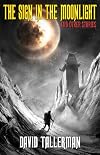
I received this book in return for a review.
David Tallerman's short fiction is commonly seen in all the best genre magazines and anthologies, which tells you that it is well-crafted. This collection showcases a short story writer of uncommon skill.
In here you'll find stories that brush the unknown with fingers outstretched, that send shivers down the spine, that paint with a palette of darkness. Tallerman is obviously influenced by past writers of the macabre in some of these tales but the show more range is much broader than that. Be he writing in the style of Victorian ghost tale, pulp era horror or modern his voice comes through.
Tales of mountain explorers, barrow dwellers, Santa Things, freezing deserts, soulful scarecrows and, of course, ghosts fill these pages and you'd be hard pressed to find an off note in the symphony of shadows. It is possible to find favourites though. I was especially taken with The facts in the case of Algernon Whisper's Karma a very clever tale of reincarnation. Also The war of the rats, written especially for this volume, was an utterly compelling tale of World War 1. Another favourite was the charmingly disturbing tale of My friend Fishfingerby Daisy, Aged 7.
I wouldn't hesitate to recommend this work to fans of Lovecraft, MR James, Algernon Blackwood et al as Tallerman can take his place amongst those, and other, master craftsmen of the dark tale. show less
David Tallerman's short fiction is commonly seen in all the best genre magazines and anthologies, which tells you that it is well-crafted. This collection showcases a short story writer of uncommon skill.
In here you'll find stories that brush the unknown with fingers outstretched, that send shivers down the spine, that paint with a palette of darkness. Tallerman is obviously influenced by past writers of the macabre in some of these tales but the show more range is much broader than that. Be he writing in the style of Victorian ghost tale, pulp era horror or modern his voice comes through.
Tales of mountain explorers, barrow dwellers, Santa Things, freezing deserts, soulful scarecrows and, of course, ghosts fill these pages and you'd be hard pressed to find an off note in the symphony of shadows. It is possible to find favourites though. I was especially taken with The facts in the case of Algernon Whisper's Karma a very clever tale of reincarnation. Also The war of the rats, written especially for this volume, was an utterly compelling tale of World War 1. Another favourite was the charmingly disturbing tale of My friend Fishfingerby Daisy, Aged 7.
I wouldn't hesitate to recommend this work to fans of Lovecraft, MR James, Algernon Blackwood et al as Tallerman can take his place amongst those, and other, master craftsmen of the dark tale. show less
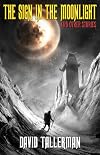
I’ll freely admit horror, or dark fantasy, is not really my thing. Even so, if there was one thing which jumped out at me about the stories in this collection, it’s that they pastiched their inspirations a little too effectively. In fact, for much of the collection, it felt like the author had no voice of their own. Granted, it takes good craft to pastiche so effectively, and in an individual story read in, say, a magazine or anthology, it wouldn’t present a problem… but in a show more collection of such stories, you start to wonder who has actually written them… I wasn’t as taken with the Lovecraft-kiddie story, ‘My Friend Fish Finger By Daisy, Aged 7’, which I first heard at a York pub meet, as much as I know others have been; and I thought the title story, an Aleister Crowley story, suffered from a lack of, well, Aleister Crowley… although I thought it quite effective otherwise. The stories are, on the whole, well-crafted and polished, and wouldn’t look out of place in any random Weird Tales sort of anthology or magazine. The collection is also very nicely illustrated, with a page of art introducing each story. But for me, that lack of a voice felt like a deal-breaker, and it all seemed somewhat too polished, so your attention tended to slide from the prose. It has occurred to me that short stories succeed when they contain a high concept conceit that resonates with readers or a strong voice – and the best stories have both. In terms of strong conceits, some of the stories in The Sign in the Moonlight get close, and in isolation those conceits might have seemed stronger. I’ve always liked collections, I much prefer them, in fact, to anthologies… but reading this one made me think about why I prefer them, and why some are more successful than others. show less
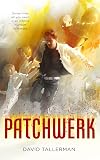
Dran Florrian has invented a machine he calls Palimpsest and, afraid it might be used as a weapon, he decides to do a runner with it. But his arch rival, Harlan Dorric, tracks him down and tries to take Palimpsest for himself. Oh, and Florian’s ex-wife, Karen is now with Doric too. Palimpsest apparently provides a means of viewing, and even manipulating, alternate realities – as is revealed when Doric and his goons attack Florrian, and Florrian and Karen find themselves in a completely show more different world (a steampunkish one, in fact). And so it goes. As the chase continued across alternate realities, it occurred to me this was a very cunning way to expand a short story to novella-length. Because the resolution of the story is not dependent on the realities Florrian and Karen visit – in fact, all they do is delay, or perhaps even obstruct, the resolution. But this is hardly a problem as the story is fast-paced, very readable and manages a more-than-sufficient level of invention. Perhaps the various backgrounds are a little sketchy, and Florrian has a tendency to over-analyse at times; but at short-story length this would probably have been too light on detail to be satisfying, and there really isn’t enough plot to justify novel length. But it works just fine as a novella. show less
Awards

You May Also Like


Associated Authors
Statistics
- Works
- 27
- Also by
- 24
- Members
- 239
- Popularity
- #94,924
- Rating
- 3.6
- Reviews
- 16
- ISBNs
- 43
- Languages
- 1
- Favorited
- 1