
A.R.R.R. Roberts
Author of Yellow Blue Tibia
About the Author
Disambiguation Notice:
Don Brine is a pseudonym of Adam Roberts (academic, critic and novelist) who also writes parodies under the pseudonyms of A. R. R. R. Roberts and A3R Roberts.
Image credit: Roberts at Salon du livre 2008 (Paris, France) By Georges Seguin (Okki) - Own work, CC BY-SA 3.0, https://commons.wikimedia.org/w/index.php?curid=3716186
Series
Works by A.R.R.R. Roberts
Star Warped: Once Upon A Time In A Galaxy Nowhere Near Far Enough Away (Gollancz) (2005) 73 copies, 1 review
Shoreline of Infinity 32: Science fictional fairy tales and myths (Science Fiction Magazine) (2022) 4 copies
An Account of a Voyage from World to World Again, by Way of the Moon, 1726: Undertaken by Captain Captain Wm Chetwin Aboard the Cometes Georgius (2012) 3 copies
The Swoon 3 copies
Publishing and the Science Fiction Canon: The Case of Scientific Romance (Elements in Publishing and Book Culture) (2018) 3 copies, 1 review
Swiftly [short story] 3 copies
Anhedonia 2 copies
Poem in Four Parts 2 copies
Petrolpunk {short story} 2 copies
Distillation Of Grace 2 copies
The Time Telephone 2 copies
War Of Another World 2 copies
Dick Does Time 1 copy
New Model Computer 1 copy
The Order Of Things 1 copy
Balancing 1 copy
And Future King 1 copy
Man You Gotta Go 1 copy
lo sghrbit 1 copy
Gross Thousand (short story) 1 copy
In the Night of the Comet 1 copy
Mocputer (Short story) 1 copy
Moon Poem (poem) 1 copy
Noose (short story) 1 copy
Saint Rebor (short story) 1 copy
The Sixth Star (short story) 1 copy
Recursitopia 1 copy
Between Nine and Eleven 1 copy
Associated Works
The Midwich Cuckoos (1957) — Introduction, some editions; Introduction, some editions — 3,387 copies, 101 reviews
Extraordinary Engines: The Definitive Steampunk Anthology (2008) — Contributor — 366 copies, 17 reviews
The Year's Best Science Fiction: Twenty-Seventh Annual Collection (2010) — Contributor — 321 copies, 6 reviews
The Year's Best Science Fiction: Thirtieth Annual Collection (2013) — Contributor — 254 copies, 3 reviews
Flirting with Pride & Prejudice: Fresh Perspectives on the Original Chick-Lit Masterpiece (2005) — Contributor — 242 copies, 9 reviews
The Year's Best Fantasy and Horror: Sixteenth Annual Collection (2003) — Contributor — 240 copies, 2 reviews
The Year's Best Science Fiction: Thirty-Second Annual Collection (2015) — Contributor — 206 copies, 8 reviews
Star Wars on Trial: Science Fiction and Fantasy Writers Debate the Most Popular Science Fiction Films of All Time (2006) — Contributor — 194 copies, 5 reviews
The Very Best of the Best: 35 Years of The Year's Best Science Fiction (2019) — Contributor — 183 copies, 1 review
The Best Science Fiction and Fantasy of the Year, Volume 7 (2013) — Contributor — 154 copies, 3 reviews
The Anthology at the End of the Universe: Leading Science Fiction Authors on Douglas Adams' The Hitchhiker's Guide to th (2005) — Contributor — 139 copies, 2 reviews
Solaris Rising: The New Solaris Book of Science Fiction (2011) — Contributor — 138 copies, 4 reviews
Boarding the Enterprise: Transporters, Tribbles, and the Vulcan Death Grip in Gene Roddenberry's Star Trek (2006) — Contributor — 91 copies, 5 reviews
So Say We All: An Unauthorized Collection of Thoughts and Opinions on Battlestar Galactica (2006) — Contributor — 82 copies, 2 reviews
Glorifying Terrorism, Manufacturing Contempt: An Anthology (2006) — Contributor — 69 copies, 3 reviews
Solaris Rising 3: The New Solaris Book of Science Fiction (2014) — Contributor — 48 copies, 6 reviews
Dislocations: Nine Stories of Speculation and Imagination (2007) — Contributor — 38 copies, 2 reviews
Celebration: Commemorating the 50th Anniversary of the British Science Fiction Association (2008) — Contributor — 37 copies, 1 review
The Unauthorized X-Men: SF and Comic Writers on Mutants, Prejudice, and Adamantium (Smart Pop series) (2006) — Contributor — 34 copies, 1 review
Investigating CSI: An Unauthorized Look Inside the Crime Labs of Las Vegas, Miami and New York (2006) — Contributor — 24 copies
King Kong Is Back!: An Unauthorized Look at One Humongous Ape! (Smart Pop series) (2005) — Contributor — 19 copies
Solaris Rising 1.5: An Exclusive ebook of New Science Fiction (2012) — Contributor — 16 copies, 1 review
Beta-Life: Short Stories from an A-Life Future (Science-Into-Fiction) (2014) — Contributor — 15 copies
Stories of Hope and Wonder: In Support of the UK's Healthcare Workers (2020) — Contributor — 11 copies, 1 review
Crises and Conflicts: Celebrating the First 10 Years of Newcon Press (2016) — Contributor — 6 copies
BSFA Awards 2019: Featuring All the Nominated Short Stories and Non-Fiction for the 2019 BSFA Awards (2020) — Contributor — 2 copies
BSFA Awards 2020: Featuring All the Nominated Short Stories and Non-Fiction for the 2020 BSFA Awards (2021) — Contributor — 2 copies, 1 review
Tagged
Common Knowledge
- Legal name
- Roberts, Adam Charles
- Other names
- Roberts, Adam
Roberts, A. R. R. R.
Brine, Don - Birthdate
- 1965-06-30
- Gender
- male
- Education
- University of Aberdeen (MA) (English)
University of Cambridge (PhD) - Occupations
- novelist
teacher of English literature and creative writing - Organizations
- Royal Holloway, University of London
- Nationality
- UK
- Disambiguation notice
- Don Brine is a pseudonym of Adam Roberts (academic, critic and novelist) who also writes parodies under the pseudonyms of A. R. R. R. Roberts and A3R Roberts.
- Associated Place (for map)
- UK
Members
Reviews
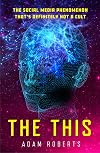
In an afterword, Roberts says this is a kind of Hegelian companion-piece to The Thing Itself, his 2015 novel which roots its cosmic horror in Kantian metaphysics. Maybe it's because I at least didn't skip my first-year undergrad Kant class whereas I've studiously avoided all things Hegelian all my life, but The This didn't leave me as gruntled as its Kantian counterpart. I think also the philosophy is less embedded in the plot, but that could just be my lack of Hegel.
I don't think it's only show more that I didn't grok the underlying philosophy, though. The This was published 2022, so presumably written 2020-21, and it's a near-future framing of our escalating social media and phone infatuation. Any fiction trying to extrapolate today's tech even a few years risks — more like accepts — looking a bit silly in very short hindsight. In Roberts's near-future, for example — when people are starting to get brain implants to mediate their thoughts direct to their socials — blogs (I realise they're still a thing but most people live in total ignorance of them), "message-boards" and Skype are still things, and at one point the main character refers to his desktop as a "mainframe". Twitter, not Facebook or Insta, seems to be the dominant network. None of this is Roberts' fault, but it gives the book a stale smell even as early as 2025.
This is still a pretty great science fiction novel and I'll say why in a minute. But a couple other whinges first. This novel is stuffed full of bad puns, and I say this as a connoisseur of the bad pun who wishes there were more good bad puns in life and in social media. But Roberts serves up some gratuitous ones here. I wasn't going to mention this issue until I got hit with "Wilhelm it was really nothing" in the epilogue set in Hegel's deathchamber. What's also, I think, gratuitous are the scattershot literary references. Joyce ("The Dead" and the Wake), 2001: A Space Odyssey and The Waste Land are quoted (or should I say subtweeted) to no obvious purpose other than permitting the author to wink at his more edumacated readers. I'm sure I missed plenty. This kind of thing is OK in moderation but it has to serve the story and I don't think it does here; it comes off as showoffy.
But it's still a pretty great science fiction novel. SF is about ideas if it's about anything, and the ideas here, the development of the hive-mind that arises out of brain-embedded social media in Roberts' future, is convincing, scary, and thoroughly fleshed out. At times (like the later future when people's phones have evolved into biomechanical slaves, frequently of a sexual nature) it reads like satire, and I think it works on that level as well as on a high-falutin' Hegelian one which only one in a hundred readers will grasp. As I discovered when The Thing Itself eventually outran my cognitive capacity, Roberts is good at puckering buttholes by brandishing the dildo of philosophy. show less
I don't think it's only show more that I didn't grok the underlying philosophy, though. The This was published 2022, so presumably written 2020-21, and it's a near-future framing of our escalating social media and phone infatuation. Any fiction trying to extrapolate today's tech even a few years risks — more like accepts — looking a bit silly in very short hindsight. In Roberts's near-future, for example — when people are starting to get brain implants to mediate their thoughts direct to their socials — blogs (I realise they're still a thing but most people live in total ignorance of them), "message-boards" and Skype are still things, and at one point the main character refers to his desktop as a "mainframe". Twitter, not Facebook or Insta, seems to be the dominant network. None of this is Roberts' fault, but it gives the book a stale smell even as early as 2025.
This is still a pretty great science fiction novel and I'll say why in a minute. But a couple other whinges first. This novel is stuffed full of bad puns, and I say this as a connoisseur of the bad pun who wishes there were more good bad puns in life and in social media. But Roberts serves up some gratuitous ones here. I wasn't going to mention this issue until I got hit with "Wilhelm it was really nothing" in the epilogue set in Hegel's deathchamber. What's also, I think, gratuitous are the scattershot literary references. Joyce ("The Dead" and the Wake), 2001: A Space Odyssey and The Waste Land are quoted (or should I say subtweeted) to no obvious purpose other than permitting the author to wink at his more edumacated readers. I'm sure I missed plenty. This kind of thing is OK in moderation but it has to serve the story and I don't think it does here; it comes off as showoffy.
But it's still a pretty great science fiction novel. SF is about ideas if it's about anything, and the ideas here, the development of the hive-mind that arises out of brain-embedded social media in Roberts' future, is convincing, scary, and thoroughly fleshed out. At times (like the later future when people's phones have evolved into biomechanical slaves, frequently of a sexual nature) it reads like satire, and I think it works on that level as well as on a high-falutin' Hegelian one which only one in a hundred readers will grasp. As I discovered when The Thing Itself eventually outran my cognitive capacity, Roberts is good at puckering buttholes by brandishing the dildo of philosophy. show less
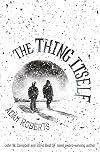
Francis Spufford recommended ‘The Thing Itself’ to me in The Guardian, although it didn’t need a very hard sell because I’d read seven of Adam Roberts other novels. Roberts is a brilliant high concept sci-fi writer: his novels always have some deeply interesting conceit at their centre, and generally experiment with structure in original ways as well. On the other hand, too many of his narrators fall into the narrow category of Crap Men, who generally don’t treat women very well. show more In this case, the title and blurb suggest that the novel will riff on John Carpenter’s The Thing, when in fact only the first thirty pages do. The rest considers the existential causes and consequences of a The Thing-like situation. It shuttles backwards and forwards in time, centring on events in 2017. The enjoyment any individual reader gets out of ‘The Thing Itself’ might depend on their tolerance for conversations about Kant, of which there are many. I found the exploration of philosophical questions involving and playful, while the action scenes kept up the pace. The interludes in the past and future were very neatly done. As with other Roberts novels (especially [b:Jack Glass|13235961|Jack Glass|Adam Roberts|https://images.gr-assets.com/books/1328403804s/13235961.jpg|18433389]), the narrative shows you what will happen fairly early on, then keeps you wondering about how it will happen.
Although Charlie the main narrator was another Crap Man (can’t we have a Crap Woman for once?), I found the other point of view characters much more intriguing. For this reason, it took me about 80 pages to get into ‘The Thing Itself’ then once I had I couldn’t put it down. I do have a few outstanding questions, though.What was the significance of the many instances of aphasia in various characters? How did Kant discover the Ding An Sich in the first place? Was there a reason that so many incursions by Peta involved gay men? Is love as discussed here exclusively romantic & sexual? Those queries aside, I found the concept of Applied Kant fascinating and the business with the Ghosts (including a war everyone knew the end of) particularly brilliant. The narrative argues with conviction that space and time are artefacts of perception while death is unavoidable; it handles complex philosophical concepts with creativity and aplomb. Overall, a unique and thought-provoking exploration of how philosophical rather than technological progress can transform humanity, told with a mixture of black humour, horror, and wonder. However it did not make me want to read Kant. show less
Although Charlie the main narrator was another Crap Man (can’t we have a Crap Woman for once?), I found the other point of view characters much more intriguing. For this reason, it took me about 80 pages to get into ‘The Thing Itself’ then once I had I couldn’t put it down. I do have a few outstanding questions, though.

Set in the near future, Adam Roberts imagines a world where someone has invented a way for people's hair to photosynthesise light into energy thus removing the problems of hunger and famine: they live, quite literally, 'by light alone'. But rather than ushering in a new age of contentment and equality, this invention has created an even larger gap between the rich and the poor, emphasised by the fact that the very poor are kept jobless and childless now that there is no need to pay them and show more due to the fact that the energy produced by photosynthesis isn't enough for a woman to carry a pregnancy to term. The only way to have a baby and to feed that baby is to have food. But even once common foods are now unbelievably expensive and only available to the very, very wealthy who shave their heads to show they are not reliant on photosynthesis. The end result of this imbalance? Revolution.
"The thing wealthy people don't understand is that, for most of human history, poverty has been something that could always get worse. Human beings would appear to be completely down and out; but they could alwys sink lower. This was beacuse for most of human history poverty was a subsistence phenomenon. Poor meant having the bare minimum. That is to say, it meant having something. And something can always be pared away. Not now! Now a new manifestation of poverty has come into the world - the most significant development in human history since the invention of farming. Now we have absolute poverty. And absoute poverty is absolute freedom! It can't be pared away, or threatened, or warred down."
Roberts has written a very thought-provoking, social science fiction novel which reminded me of Margaret Atwood's writings, both because of the themes of genetic engineering and poverty and because the writing style is quite literary. I've seen its depiction of the very rich referred to as Gatsby-esque which makes the cover particularly apt. The negatives? The first part of the book is mainly about how empty and pointless the lives of the very rich are, and how unhappy they are as a result. Fair enough and some of these characters do develop later in the novel, but I felt this first section was close to becoming heavy handed. And the ending is still a puzzle to me. But all in all, a literary science fiction novel which deserves more readers. I can't help feeling that this comment by the reviewer in The Telegraph is sadly, probably all too true: "If By Light Alone were written by David Mitchell or Margaret Atwood, for example, it would doubtless be said to "transcend its science fiction" roots, as all literary fiction which borrows SF trappings must. But By Light Alone is unashamedly SF, and would that half the supposed "literary" novels on the shelves today were as well written, thoughtful and intelligent as this." show less
"The thing wealthy people don't understand is that, for most of human history, poverty has been something that could always get worse. Human beings would appear to be completely down and out; but they could alwys sink lower. This was beacuse for most of human history poverty was a subsistence phenomenon. Poor meant having the bare minimum. That is to say, it meant having something. And something can always be pared away. Not now! Now a new manifestation of poverty has come into the world - the most significant development in human history since the invention of farming. Now we have absolute poverty. And absoute poverty is absolute freedom! It can't be pared away, or threatened, or warred down."
Roberts has written a very thought-provoking, social science fiction novel which reminded me of Margaret Atwood's writings, both because of the themes of genetic engineering and poverty and because the writing style is quite literary. I've seen its depiction of the very rich referred to as Gatsby-esque which makes the cover particularly apt. The negatives? The first part of the book is mainly about how empty and pointless the lives of the very rich are, and how unhappy they are as a result. Fair enough and some of these characters do develop later in the novel, but I felt this first section was close to becoming heavy handed. And the ending is still a puzzle to me. But all in all, a literary science fiction novel which deserves more readers. I can't help feeling that this comment by the reviewer in The Telegraph is sadly, probably all too true: "If By Light Alone were written by David Mitchell or Margaret Atwood, for example, it would doubtless be said to "transcend its science fiction" roots, as all literary fiction which borrows SF trappings must. But By Light Alone is unashamedly SF, and would that half the supposed "literary" novels on the shelves today were as well written, thoughtful and intelligent as this." show less
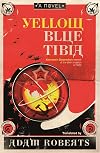
After the end of WWII, Josef Stalin secretly brought together a group of science fiction writers whom he invited to imagine an alien invasion scenario that could be used to unite the Soviet people against a supposed new enemy. Nothing ever seemed to come of it. So why, forty years later, are weird, inexplicable things happening to one of the writers? Why are things they imagined in their fictional scenario happening? Things like the explosions of an American space vehicle and a Ukrainian show more nuclear reactor? And what's going on with the KGB and the Scientologists and the UFOs that might or might not actually exist?
Yeah, this is a strange, strange novel. Like, however strange you think it is from that description, bump it up a notch or two. It's impossible to know what the hell is going on for most of it, either for the reader or the protagonist, and while things are sort of explained in the end, it's a weird and wild explanation. But it's a fun ride, full of droll humor and a bit of interesting food for thought. There are some individual elements I could take issue with. Like, there's a character who is very clearly autistic, and he and his "syndrome" are played for some absurd laughs. Should I be uncomfortable with this, given that everyone is played for absurd laughs? Probably, yeah, but I find myself as unsure what to make of that as I am of everything else. Still, overall, it was quite engaging and entertaining, even if it was in that "What the heck am I even reading?" kind of a way most of the time, and I'm genuinely impressed by how well it worked for me. show less
Yeah, this is a strange, strange novel. Like, however strange you think it is from that description, bump it up a notch or two. It's impossible to know what the hell is going on for most of it, either for the reader or the protagonist, and while things are sort of explained in the end, it's a weird and wild explanation. But it's a fun ride, full of droll humor and a bit of interesting food for thought. There are some individual elements I could take issue with. Like, there's a character who is very clearly autistic, and he and his "syndrome" are played for some absurd laughs. Should I be uncomfortable with this, given that everyone is played for absurd laughs? Probably, yeah, but I find myself as unsure what to make of that as I am of everything else. Still, overall, it was quite engaging and entertaining, even if it was in that "What the heck am I even reading?" kind of a way most of the time, and I'm genuinely impressed by how well it worked for me. show less
Lists
2024-25 reading (1)
Awards


You May Also Like


Associated Authors
Statistics
- Works
- 130
- Also by
- 95
- Members
- 7,212
- Popularity
- #3,395
- Rating
- 3.9
- Reviews
- 276
- ISBNs
- 251
- Languages
- 14
- Favorited
- 1
