
Dolores Hitchens (1907–1973)
Author of The Cat Saw Murder
About the Author
Series
Works by Dolores Hitchens
Devious Design 2 copies
Strip For Murder: Complete Novel in *Mercury Mystery Magazine* October, 1958 (Volume 4, No. 5) (1958) 2 copies
Death Cuts a Silhouette 2 copies
Cats don't smile 2 copies
El corazón de Paul 1 copy
The Night of the Bowstring 1 copy
The Shivering Bough 1 copy
Associated Works
Tagged
Common Knowledge
- Legal name
- Hitchens, Julia Clara Catharine Dolores Birk Olsen
- Other names
- Hitchens, Dolores
Olsen, D. B.
Birkley, Dolan
Burke, Noel - Birthdate
- 1907-12-25
- Date of death
- 1973-08-01
- Gender
- female
- Occupations
- mystery writer
- Relationships
- Hitchens, Bert (husband)
- Nationality
- USA
- Birthplace
- San Antonio, Texas, USA
- Places of residence
- San Antonio, Texas, USA
Los Angeles County, California, USA - Place of death
- Orange County, California, USA
- Associated Place (for map)
- California, USA
Members
Reviews
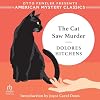
I wanted to try an American Golden Age mystery, to see how they differ from the English Golden Age Mysteries. 'The Cat Saw Murder' caught my attention because it has a gorgeous cover and the amateur sleuth at the heart of the story is a seventy-year-old maiden aunt. My curiosity was piqued when I checked the details and found that this kicked off a thirteen-book series of Rachel Murdock mysteries with cats in the title that ran from 1939 to 1956, which must make both the cat and Rachel show more Murdock long-lived.
From the publisher's description, I'd expected that the amateur sleuthing would be done by the Murdoch sisters but only Rachel, the more adventurous of the two sisters, responds to her niece's call. Still, at least the publisher was consistently inaccurate. The cat plays no part in the sleuthing (except leaving its pawprints in unexpected places) and the Miss Murdock and the local police investigator, Detective Lieutenant Stephen Mayhew work in close partnership.
I was happy to find that Rachel Murdock wasn't Miss Marple with an American accent. She's kinder and gentler than Miss Marple and does her best not to think the worst of people even when the people she's surrounded by are far from nice. Even so, Miss Murdock is no pushover. She notices things and she observes people as acutely, if a little more kindly, than Miss Marple does. Where Miss Marple pretends to be a harmless old lady, almost too timid to voice her opinions as she pokes and prods and analyses, Miss Murdock really is a harmless old lady, of the sort who looks and acts like the grandmother many people wish they had, but she also puts her point of view to Inspector Mayhew clearly and simply and with every expectation of being listened to. Perhaps the biggest difference between Miss Murdock and Miss Marple is that Miss Murdock doesn't hesitate to get involved in the investigation in ways that place her in danger.
The plot unfolds in a beachside boarding house of a kind that didn't survive World War II and is populated with a wide variety of people, almost none of whom are who they appear to be. I loved the details of this shoddy, slightly disreputable house and its occupants. It gave me a window into an earlier, down-at-heal-but-unexceptional America. Of course, pretty much everyone becomes a suspect at some point. Even, Lily, the niece Miss Murdock has travelled so far to help, is hiding secrets and living a little outside the lines.
To me, the story and the storytelling felt modern, almost as if it was written for a TV market that did not yet exist. I slipped into the narrative easily and had a good time.
Although this was a very accessible story, the way in which it was told was quite unique. It was told in the third person but it had the flavour of someone sharing a much-loved and often-told reminiscence from two old friends. It took me a little while to get used to the style but it ended up being one of the things I liked most about the book. I'll share the opening paragraphs of the book to show you what I mean. If these work for you, then I'm sure you'll enjoy the rest of the novel.
"Detective Lieutenant Stephen Mayhew has been heard to complain that the murder of the Sticklemann woman was the damnedest case that he ever met up with; that solving the thing was like working a jigsaw puzzle upside down and backward; that it got progressively worse as it dragged along; and that it set him at such insane tasks as pulling hairs out of Miss Rachel’s cat and forcing a timid fat woman to scream. He has said, with embellishments, that he hated the thing from beginning to end.
But Miss Rachel from the wisdom of her seventy years thinks otherwise. Though she admits Mayhew’s pose of truculence, she thinks that it was a camouflage for happiness. She says that Mayhew’s eyes shone and that his step was springy in spite of himself. She has an idea that he ate well during that time, and slept like a top. She is as sure of his grin at finding the pin at the window as she is of putting it there. It was a small and ordinary pin but it set awry the first careful intrigue of the murderer. It must have pleased the lieutenant.
As for Rachel herself: there was shock and grief, and a time when the cold fingers of death had almost clutched her. There was the puzzle of the crime, which allured her mathematical mind as would a problem in algebra. At only one time was she really desperately afraid and that was during the night that she spent in the attic listening to the murderer search her room below. The attic was windy and chill, and so black that Miss Rachel felt disembodied in darkness. Until she sneezed. Then she became very much present in the flesh—a breathless thing all ears to hear if the person below had caught the sneeze and were coming up after her. The wind blew on her through the musty attic; the black pressed like a fist into her eyes; and she didn’t dare stir for fear of making a sound.
A minute ticked away. Perhaps two. The whispering rustle below continued as someone went through her belongings. Miss Rachel breathed again.
Then the cat opened her mouth with a small wet sound in the dark and Miss Rachel was struck anew with terror. Was the cat getting ready to yowl—or just to yawn? Miss Rachel waited.
But Lieutenant Mayhew would object that the story shouldn’t begin there—not properly. It should start at the beginning, before even he had barged into the picture.
So the scene fades back and back, until … The Misses Murdock were having breakfast." show less
From the publisher's description, I'd expected that the amateur sleuthing would be done by the Murdoch sisters but only Rachel, the more adventurous of the two sisters, responds to her niece's call. Still, at least the publisher was consistently inaccurate. The cat plays no part in the sleuthing (except leaving its pawprints in unexpected places) and the Miss Murdock and the local police investigator, Detective Lieutenant Stephen Mayhew work in close partnership.
I was happy to find that Rachel Murdock wasn't Miss Marple with an American accent. She's kinder and gentler than Miss Marple and does her best not to think the worst of people even when the people she's surrounded by are far from nice. Even so, Miss Murdock is no pushover. She notices things and she observes people as acutely, if a little more kindly, than Miss Marple does. Where Miss Marple pretends to be a harmless old lady, almost too timid to voice her opinions as she pokes and prods and analyses, Miss Murdock really is a harmless old lady, of the sort who looks and acts like the grandmother many people wish they had, but she also puts her point of view to Inspector Mayhew clearly and simply and with every expectation of being listened to. Perhaps the biggest difference between Miss Murdock and Miss Marple is that Miss Murdock doesn't hesitate to get involved in the investigation in ways that place her in danger.
The plot unfolds in a beachside boarding house of a kind that didn't survive World War II and is populated with a wide variety of people, almost none of whom are who they appear to be. I loved the details of this shoddy, slightly disreputable house and its occupants. It gave me a window into an earlier, down-at-heal-but-unexceptional America. Of course, pretty much everyone becomes a suspect at some point. Even, Lily, the niece Miss Murdock has travelled so far to help, is hiding secrets and living a little outside the lines.
To me, the story and the storytelling felt modern, almost as if it was written for a TV market that did not yet exist. I slipped into the narrative easily and had a good time.
Although this was a very accessible story, the way in which it was told was quite unique. It was told in the third person but it had the flavour of someone sharing a much-loved and often-told reminiscence from two old friends. It took me a little while to get used to the style but it ended up being one of the things I liked most about the book. I'll share the opening paragraphs of the book to show you what I mean. If these work for you, then I'm sure you'll enjoy the rest of the novel.
"Detective Lieutenant Stephen Mayhew has been heard to complain that the murder of the Sticklemann woman was the damnedest case that he ever met up with; that solving the thing was like working a jigsaw puzzle upside down and backward; that it got progressively worse as it dragged along; and that it set him at such insane tasks as pulling hairs out of Miss Rachel’s cat and forcing a timid fat woman to scream. He has said, with embellishments, that he hated the thing from beginning to end.
But Miss Rachel from the wisdom of her seventy years thinks otherwise. Though she admits Mayhew’s pose of truculence, she thinks that it was a camouflage for happiness. She says that Mayhew’s eyes shone and that his step was springy in spite of himself. She has an idea that he ate well during that time, and slept like a top. She is as sure of his grin at finding the pin at the window as she is of putting it there. It was a small and ordinary pin but it set awry the first careful intrigue of the murderer. It must have pleased the lieutenant.
As for Rachel herself: there was shock and grief, and a time when the cold fingers of death had almost clutched her. There was the puzzle of the crime, which allured her mathematical mind as would a problem in algebra. At only one time was she really desperately afraid and that was during the night that she spent in the attic listening to the murderer search her room below. The attic was windy and chill, and so black that Miss Rachel felt disembodied in darkness. Until she sneezed. Then she became very much present in the flesh—a breathless thing all ears to hear if the person below had caught the sneeze and were coming up after her. The wind blew on her through the musty attic; the black pressed like a fist into her eyes; and she didn’t dare stir for fear of making a sound.
A minute ticked away. Perhaps two. The whispering rustle below continued as someone went through her belongings. Miss Rachel breathed again.
Then the cat opened her mouth with a small wet sound in the dark and Miss Rachel was struck anew with terror. Was the cat getting ready to yowl—or just to yawn? Miss Rachel waited.
But Lieutenant Mayhew would object that the story shouldn’t begin there—not properly. It should start at the beginning, before even he had barged into the picture.
So the scene fades back and back, until … The Misses Murdock were having breakfast." show less
The second of Hitchens's two novels featuring Los Angeles private eye Jim Sader.
Sader is hired by Hale Gibbings, a prominent architect, who asks him to find the grandson he forced his unwed daughter to give up for adoption five years ago. Gibbings has recently received an anonymous letter telling him that the boy's adoptive parents have died, and that the child is being badly abused by the people who have taken him in. Gibbings certainly doesn't want to take the child into his own family, show more because that would be more socially embarrassing than he could handle. But even if it's only to confirm or disprove the abuse, he wants the child found.
The story Hitchens spins from that premise isn't breaking any new ground in private eye novels, even by 1960 standards, but it's entertaining. Suspects and supporting players are given enough depth to be more than merely functional; there's an appropriate level of tension and peril; and Sader is a sturdy enough, albeit somewhat bland, central character.
For those averse to child-in-peril stories, the only scene in the book in which we actually see any abuse is a brief prologue of 2 or 3 pages which focuses more on his terror than on the violence. It's not gratuitous, and given the ambiguity that is a part of private eye stories -- Is the client telling the truth? Is the danger real? -- I think that scene is essential to ground the reader in the fact that there really is a child at risk.
Hitchens published more than 40 novels, under a variety of pseudonyms, between 1938 and 1973. Based solely on this book, I wouldn't argue that she's been unjustly forgotten by history. But it's a modestly entertaining, thoroughly professional book, and I can understand why she was as successful as she was in her time. show less
Sader is hired by Hale Gibbings, a prominent architect, who asks him to find the grandson he forced his unwed daughter to give up for adoption five years ago. Gibbings has recently received an anonymous letter telling him that the boy's adoptive parents have died, and that the child is being badly abused by the people who have taken him in. Gibbings certainly doesn't want to take the child into his own family, show more because that would be more socially embarrassing than he could handle. But even if it's only to confirm or disprove the abuse, he wants the child found.
The story Hitchens spins from that premise isn't breaking any new ground in private eye novels, even by 1960 standards, but it's entertaining. Suspects and supporting players are given enough depth to be more than merely functional; there's an appropriate level of tension and peril; and Sader is a sturdy enough, albeit somewhat bland, central character.
For those averse to child-in-peril stories, the only scene in the book in which we actually see any abuse is a brief prologue of 2 or 3 pages which focuses more on his terror than on the violence. It's not gratuitous, and given the ambiguity that is a part of private eye stories -- Is the client telling the truth? Is the danger real? -- I think that scene is essential to ground the reader in the fact that there really is a child at risk.
Hitchens published more than 40 novels, under a variety of pseudonyms, between 1938 and 1973. Based solely on this book, I wouldn't argue that she's been unjustly forgotten by history. But it's a modestly entertaining, thoroughly professional book, and I can understand why she was as successful as she was in her time. show less
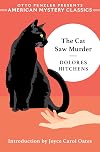
The First Ever Cat Mystery?
Review of the Penzler Publishers - American Mystery Classics paperback edition (June 1, 2021) of the Doubleday hardcover original (1939).
I'm not necessarily a devotee of the cat mystery sub-genre, but when something is identified as being the first ever creation of anything, I'm always curious to find out how it began. The Cat Saw Murder is actually a bit more noirish and bloody than the supposed cozy mysteries which are usually associated with the tag.
Miss Rachel Murdock, along with her sister Jennifer, is the caregiver for Samantha, an heiress cat endowed by a relative. Miss Rachel is 70 years old and quite feisty and spry, even shockingly so in a few scenes in this book. Rachel answers a plea for assistance from her niece Lily and travels from Los Angeles to Lily's beach town where she is living in somewhat downtrodden circumstances after a failed marriage.
Awkwardly, Lily is at first hesitant to explain what her problem is. But once Rachel encounters some of the various suspicious characters living in the same boarding house as her niece, it slowly becomes clear where the danger lies. Then there are attempts on the life of the cat Samantha! And then the niece herself is murdered while Rachel herself is drugged unconscious. The cat is a witness and lives up to the title. Will Rachel solve the crime with the help of Samantha the cat? Of course she will! 🐈
Note: Samantha the cat is described as being of a marmalade colour. This apparently didn't suit the marketing and design staff for the book series, where a black cat constantly appears in the titles and the book covers. 🐈⬛
Soundtrack
See Bonus Track below.
Trivia and Links
This edition of The Cat Saw Murder is part of the Otto Penzler American Mystery Classics series (2018-ongoing). There is a related Goodreads Listopia here with 57 books listed as of early April 2024. There are currently 71 titles listed at the Mysterious Press online bookshop. The official website for the series at Penzler Publishers seems to show only the most recent and upcoming titles.
Bonus Track
Not the soundtrack for The Cat Saw Murder, but when I saw that Dolores Hitchens was also the writer of Fools' Gold (1958) which was adapted as the Jean-Luc Godard film Bande à part (Band of Outsiders) (1964), I couldn't resist looking up the completely charming version of the Madison Dance scene which was edited with the recording of "Dance With Me" (orig. by Lords of the New Church) by the covers band Nouvelle Vague which you can see here. French band Nouvelle Vague usually perform covers of English language songs from the 1970s & 1980s punk / glam / new wave rock era, but with bossa-nova arrangements 💃🏻🕺🏻🎶 show less
Review of the Penzler Publishers - American Mystery Classics paperback edition (June 1, 2021) of the Doubleday hardcover original (1939).
The first in a series of mysteries by D.B. Olsen, one of the pseudonyms of bestselling Dolores Hitchens (1907-1973), The Cat Saw Murder (1939) inaugurates what has become a curious publishing phenomenon - the "cat mystery," now a multi-million-dollar-a-year industry. (Given the mythology of cats, originating in ancient Egyptshow more
where cats were allegedly worshipped as gods, it is not surprising that the cat, of all animals, is imagined as the Doppelgänger of amateur detectives.) - from the Introduction by Joyce Carol Oates.
I'm not necessarily a devotee of the cat mystery sub-genre, but when something is identified as being the first ever creation of anything, I'm always curious to find out how it began. The Cat Saw Murder is actually a bit more noirish and bloody than the supposed cozy mysteries which are usually associated with the tag.
Miss Rachel Murdock, along with her sister Jennifer, is the caregiver for Samantha, an heiress cat endowed by a relative. Miss Rachel is 70 years old and quite feisty and spry, even shockingly so in a few scenes in this book. Rachel answers a plea for assistance from her niece Lily and travels from Los Angeles to Lily's beach town where she is living in somewhat downtrodden circumstances after a failed marriage.
Awkwardly, Lily is at first hesitant to explain what her problem is. But once Rachel encounters some of the various suspicious characters living in the same boarding house as her niece, it slowly becomes clear where the danger lies. Then there are attempts on the life of the cat Samantha! And then the niece herself is murdered while Rachel herself is drugged unconscious. The cat is a witness and lives up to the title. Will Rachel solve the crime with the help of Samantha the cat? Of course she will! 🐈
Note: Samantha the cat is described as being of a marmalade colour. This apparently didn't suit the marketing and design staff for the book series, where a black cat constantly appears in the titles and the book covers. 🐈⬛
Soundtrack
See Bonus Track below.
Trivia and Links
This edition of The Cat Saw Murder is part of the Otto Penzler American Mystery Classics series (2018-ongoing). There is a related Goodreads Listopia here with 57 books listed as of early April 2024. There are currently 71 titles listed at the Mysterious Press online bookshop. The official website for the series at Penzler Publishers seems to show only the most recent and upcoming titles.
Bonus Track
Not the soundtrack for The Cat Saw Murder, but when I saw that Dolores Hitchens was also the writer of Fools' Gold (1958) which was adapted as the Jean-Luc Godard film Bande à part (Band of Outsiders) (1964), I couldn't resist looking up the completely charming version of the Madison Dance scene which was edited with the recording of "Dance With Me" (orig. by Lords of the New Church) by the covers band Nouvelle Vague which you can see here. French band Nouvelle Vague usually perform covers of English language songs from the 1970s & 1980s punk / glam / new wave rock era, but with bossa-nova arrangements 💃🏻🕺🏻🎶 show less
A Poison Pen Murder
Review of the Mysterious Press/Open Media Kindle edition (October 11, 2022) of the Doubleday hardcover original (1949).
After exhausting Agatha Christie's Miss Marples, I find myself turning regularly to Dolores Hitchens' Rachel Murdock series for my lighter cozy mystery reads. Miss Rachel seems to be never aging in her early 70s and can be quite fearless and feisty. In The Cat Wears a Mask we also get a lengthy cameo appearance by disapproving older sister Miss Jennifer who is usually left at home when Rachel and her cat Samantha head out on yet another crime solving adventure.
Both Jennifer and Rachel (and of course Samantha) end up at the restored adobe ranch retreat in Arizona of Rachel's goddaughter Gail who is one of the victims of a poison pen campaign. Due to the insider knowledge of the poison pen, a limited group of suspects from college days are all gathered together at the ranch. But then the poison pen is murdered, a thunderstorm causes the roads to wash out and the survivors are stuck at the isolated location with a murderer in their midst.
See cover at https://images-na.ssl-images-amazon.com/images/S/compressed.photo.goodreads.com/...
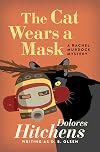
Cover design of the original 1949 Doubleday edition when the book was published under the D.B. Olsen pseudonym. Image sourced from Goodreads.
Hitchens builds her story around the Hopi native culture with a visit to the local First Nation for their Snake Dance ritual. The Kachina dolls and masks of the Hopis also play a role in the proceedings. The isolated location of Gail's ranch and that she was an artist did make me think that Hitchens may have been inspired by stories of Georgia O'Keeffe's Ghost Ranch in New Mexico.
The murderer's motive, methods and schemes seemed enormously elaborate for the given circumstances and did stretch believability. And no, Samantha the cat never gets to wear a mask. Also a half-point off for sloppy proofreading of the text scan for this eBook edition with several e's transcribed as c's, rn's transcribed as m's, etc. (you can see some random samples in my text highlights). Still a 3-star Like for me. 🐈⬛
Trivia and Link
I don't know if Hitchens actually travelled to see the Hopi tribes and their rain dance rituals but there were certainly documentary films from earlier years which had recorded the dancers with their snakes. A British Pathé newsreel from 1932 can be seen on YouTube here. show less
Review of the Mysterious Press/Open Media Kindle edition (October 11, 2022) of the Doubleday hardcover original (1949).
Obviously what was wrong with Rachel was that she had simply never grown up. To resist growing up through all those years, to refuse to take up knitting, to turn down the chance to be secretary for the Parchly Heights Methodist Ladies’ Aid, to read murder mysteries endlessly and go to see motion pictures named Corpses Don’t Like Candy or some show more such...
After exhausting Agatha Christie's Miss Marples, I find myself turning regularly to Dolores Hitchens' Rachel Murdock series for my lighter cozy mystery reads. Miss Rachel seems to be never aging in her early 70s and can be quite fearless and feisty. In The Cat Wears a Mask we also get a lengthy cameo appearance by disapproving older sister Miss Jennifer who is usually left at home when Rachel and her cat Samantha head out on yet another crime solving adventure.
Both Jennifer and Rachel (and of course Samantha) end up at the restored adobe ranch retreat in Arizona of Rachel's goddaughter Gail who is one of the victims of a poison pen campaign. Due to the insider knowledge of the poison pen, a limited group of suspects from college days are all gathered together at the ranch. But then the poison pen is murdered, a thunderstorm causes the roads to wash out and the survivors are stuck at the isolated location with a murderer in their midst.
See cover at https://images-na.ssl-images-amazon.com/images/S/compressed.photo.goodreads.com/...
Cover design of the original 1949 Doubleday edition when the book was published under the D.B. Olsen pseudonym. Image sourced from Goodreads.
Hitchens builds her story around the Hopi native culture with a visit to the local First Nation for their Snake Dance ritual. The Kachina dolls and masks of the Hopis also play a role in the proceedings. The isolated location of Gail's ranch and that she was an artist did make me think that Hitchens may have been inspired by stories of Georgia O'Keeffe's Ghost Ranch in New Mexico.
The murderer's motive, methods and schemes seemed enormously elaborate for the given circumstances and did stretch believability. And no, Samantha the cat never gets to wear a mask. Also a half-point off for sloppy proofreading of the text scan for this eBook edition with several e's transcribed as c's, rn's transcribed as m's, etc. (you can see some random samples in my text highlights). Still a 3-star Like for me. 🐈⬛
Trivia and Link
I don't know if Hitchens actually travelled to see the Hopi tribes and their rain dance rituals but there were certainly documentary films from earlier years which had recorded the dancers with their snakes. A British Pathé newsreel from 1932 can be seen on YouTube here. show less
Lists
Awards

You May Also Like


Associated Authors
Statistics
- Works
- 56
- Also by
- 14
- Members
- 559
- Popularity
- #44,692
- Rating
- 3.6
- Reviews
- 20
- ISBNs
- 71
- Languages
- 4