
Alison Moore (1) (1971–)
Author of The Lighthouse
For other authors named Alison Moore, see the disambiguation page.
About the Author
Alison Moore was born in Manchester in 1971. She lives in a village on the Leicestershire-Nottinghamshire border. She is a member of Nottingham Writers Studio and an honorary lecturer in the School of English at Nottingham University. In 2012 her novel The Lighthouse, the unsettling tale of a show more middle-aged man who embarks on a contemplative German walking holiday after the break-up of his marriage only to find himself more alienated than ever, was shortlisted for the Man Booker prize. Her other title's include He Wants, Death and the Seaside, Missing, and The Harvestman. (Bowker Author Biography) show less
Image credit: © 2013 Emma Farrer
Works by Alison Moore
When the Door Closed, It Was Dark 6 copies
The Junction 4 copies
Small Animals 3 copies
The Harvestman 3 copies
Broad Moor 3 copies
Associated Works
Bound in Blood: Stories of Cursed Books, Damned Libraries and Unearthly Authors (2024) — Contributor — 57 copies, 3 reviews
Tagged
Common Knowledge
- Canonical name
- Moore, Alison
- Birthdate
- 1971
- Gender
- female
- Occupations
- novelist
short story writer - Nationality
- England
UK - Birthplace
- Manchester, Lancashire, England, UK
- Places of residence
- Nottingham, Nottinghamshire, England, UK
- Associated Place (for map)
- England, UK
Members
Discussions
The Lighthouse by Alison Moore in Booker Prize (January 2014)
Reviews
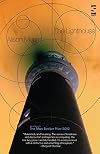
The long- listed Booker novel The Lighthouse begins with this epigraph:
she became a tall lighthouse sending out kindly beams which some took for a welcome instead of warnings against the rocks - Muriel Spark , " The Curtain Blown by the Breeze"
And so begins a fascinating and somewhat challenging read, full of symbolism and ambiguity.
At first glance it appears to be a tale of the mundane details of the middle- aged , recently separated man named " Futh". We never learn if " Futh " is his show more first or last name, he is simply" Futh" and an easily forgettable man. Futh appears to be somewhat slow witted, having not learned to drive until he was middle aged, and someone who has great difficulty with a map and organizing his life. He is also socially awkward, having no one to serve as his best man at his own wedding except for his father.
The lighthouse exists for Futh's father as physical, technological interest; whereas for Futh, the lighthouse is a perfume container that many years ago belonged to Futh's mother. Futh's mother left her husband and Futh when Futh was but a 10 year old because she was " bored". He carries the silver lighthouse with him at all times, mainly a memory of his mother, but also somewhat of a talisman.
At beginning of the story, Futh is traveling to Germany to re- walk a holiday that he took with his father shortly after his mother left. During his "circular" walk he hopes to close some old wounds and try to come to terms with his life as a child , and his recent separation from his wife. Futh stays at inn named " Hellhaus" , which in English, " translates to" bright house" or " light house", but one can easily understand its other meaning. Hellhaus is owned and run by a rather dysfunctional couple, Bernard and Ester.
Fragrances and smells play an important role in the story. In fact, years ago Futh worked in the manufacturing of artificial odors. Futh takes in much of the world through this sense. The first fellow that he meets in the story causes Futh to note " the smell of the mans supper coming through his mouth." The smell of violets, cigarette smoke and less understandably , oranges, evoke memories and thoughts of the women in Futh's life, most especially that of his mother. Camphor is a smell most often associated with men.
Parallel to Futh's circular walk runs a story about the wife who helps run the Hellhaus Inn . I found it intriguing that her name was "Ester" rather than the more familiar spelling, "Esther." Like all of the men and woman in the story , she is emotionally damaged. Both she and a older female neighbour of Futh's keep Venus Fly trap plants - female plants which eat moths and flies.
This novella of about 180 pages is spare and elegic , but full of ambiguity and symbolism. The denouement was sudden, startling and ambiguous, so much so that I immediately re- read the book and came away with both more understanding and more questions. A brilliantly written book , one which I feel certain will make it to the Booker Short List.
4. 5 stars. show less
she became a tall lighthouse sending out kindly beams which some took for a welcome instead of warnings against the rocks - Muriel Spark , " The Curtain Blown by the Breeze"
And so begins a fascinating and somewhat challenging read, full of symbolism and ambiguity.
At first glance it appears to be a tale of the mundane details of the middle- aged , recently separated man named " Futh". We never learn if " Futh " is his show more first or last name, he is simply" Futh" and an easily forgettable man. Futh appears to be somewhat slow witted, having not learned to drive until he was middle aged, and someone who has great difficulty with a map and organizing his life. He is also socially awkward, having no one to serve as his best man at his own wedding except for his father.
The lighthouse exists for Futh's father as physical, technological interest; whereas for Futh, the lighthouse is a perfume container that many years ago belonged to Futh's mother. Futh's mother left her husband and Futh when Futh was but a 10 year old because she was " bored". He carries the silver lighthouse with him at all times, mainly a memory of his mother, but also somewhat of a talisman.
At beginning of the story, Futh is traveling to Germany to re- walk a holiday that he took with his father shortly after his mother left. During his "circular" walk he hopes to close some old wounds and try to come to terms with his life as a child , and his recent separation from his wife. Futh stays at inn named " Hellhaus" , which in English, " translates to" bright house" or " light house", but one can easily understand its other meaning. Hellhaus is owned and run by a rather dysfunctional couple, Bernard and Ester.
Fragrances and smells play an important role in the story. In fact, years ago Futh worked in the manufacturing of artificial odors. Futh takes in much of the world through this sense. The first fellow that he meets in the story causes Futh to note " the smell of the mans supper coming through his mouth." The smell of violets, cigarette smoke and less understandably , oranges, evoke memories and thoughts of the women in Futh's life, most especially that of his mother. Camphor is a smell most often associated with men.
Parallel to Futh's circular walk runs a story about the wife who helps run the Hellhaus Inn . I found it intriguing that her name was "Ester" rather than the more familiar spelling, "Esther." Like all of the men and woman in the story , she is emotionally damaged. Both she and a older female neighbour of Futh's keep Venus Fly trap plants - female plants which eat moths and flies.
This novella of about 180 pages is spare and elegic , but full of ambiguity and symbolism. The denouement was sudden, startling and ambiguous, so much so that I immediately re- read the book and came away with both more understanding and more questions. A brilliantly written book , one which I feel certain will make it to the Booker Short List.
4. 5 stars. show less

Whatever I wanted, it wasn't this clumsily constructed, overly contrived but largely empty story.
Judging from the critical acclaim this novel received, I'm in the minority in seeing this particular emperor as naked.
"He Wants" was The Observer Book of the Year in 2014, which asserted, ‘Moore movingly mines the aching gap between aspiration and actuality.’ The Guardian called it "brave and rigorous’. The Financial Times declared, ‘Moore is a serious talent. There’s art here. show more There’s care.’
My experience of "He Wants" was very different. I read a book that was reaching for profundity wrapped in a fable but only achieved monotony, wrapped in astute and sometimes funny observations on what it feels like to grow old.
I'm in my sixties and I smiled at how well Moore captured the small assaults of old age on wellbeing. The prose was sparse but evocative, especially when summoning childhood memories. The opening was intriguing and promised much but the middle and the end delivered very little.
The framework of the story kept trying to link the action (such as it was) to a wider exploration of what we want and what we don't want and what we do about the gap between what we want and what we have but it was done in a very heavy-handed, sometimes clumsy way, that distracted from the story.
My main stumbling point was that I neither believed in nor cared about either of the two main characters.
Lewis Sullivan, widower and retired Secondary School RE teacher is, in his sixties, a boy-man afraid of the world and so passive and cautious that he's one step away from being put into care. Yet he doesn't come across as tragic or even interesting, just irredeemably dull and timid. Sydney, Lewis' anarchic childhood friend / teenboy crush, who, after disappearing for decades, returns from prison just in time to move the story towards its denouement, is at best and archetype and at worst a caricature.
The plot relies heavily upon co-incidence but doesn't use the co-incidences to go anywhere except around in circles of ever-diminishing meaning.
"He Wants" had me starting by wanting it to be as intriguing as it seemed to be, moved me swiftly on to wanting it to be less empty than it seemed to be and ended with me just wanting it to be over. show less
A very intriguing, thought-provoking little novella. Hard to believe it's the author's debut because the novel brims with confidence. I found strange Mr. Futh oddly engaging and was intrigued by his journey and its intersections with Ester and Bernard. The novel is highly symbolic and I'm sure it would benefit from a second (third, fourth) reading. So much is left unsaid that much of the story resides in its silences. Definitely worth a read. Everything else I want to write hints at the show more ending, so I'll stop! show less
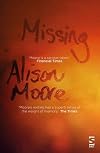
I suspect I would like anything this author writes - she has a spare, stripped-down narrative style that concentrates attention directly on her character(s), their actions, observations and innermost thoughts. I like the way she focuses on those people on the outside of society, people who others might consider oddballs but who would consider themselves entirely normal. I also like the way she gives time and space to idle thoughts that go through her characters’ heads, whether or not they show more move the plot along (the bit where Jessie muses about ‘long dead’ authors raised a smile!).
I suspect I didn’t get all the subtleties in this novel. The events right at the end may well have wrapped up some plot theme that sailed over my head. On the other hand it may just be that this was a short but perfectly observed window on an imperfect life. Who knows? And given how much I enjoyed reading it, I’m not too bothered. show less
I suspect I didn’t get all the subtleties in this novel. The events right at the end may well have wrapped up some plot theme that sailed over my head. On the other hand it may just be that this was a short but perfectly observed window on an imperfect life. Who knows? And given how much I enjoyed reading it, I’m not too bothered. show less
Lists
Awards


You May Also Like


Associated Authors
Statistics
- Works
- 16
- Also by
- 15
- Members
- 819
- Popularity
- #31,141
- Rating
- 3.6
- Reviews
- 53
- ISBNs
- 74
- Languages
- 5
- Favorited
- 1
