
Vincent Starrett (1886–1974)
Author of The Private Life of Sherlock Holmes
About the Author
Image credit: Courtesy of the NYPL Digital Gallery (image use requires permission from the New York Public Library)
Series
Works by Vincent Starrett
Books alive; a profane chronicle of literary endeavor and literary misdemeanor (1940) 45 copies, 1 review
Conferment by Needle 2 copies
Sherlock alive : Sherlockian excerpts from Vincent Starrett's "Books alive" column in The Chicago Tribune, 1942-1967 (2010) 2 copies
Monologue in Baker Street 2 copies
An essay on limited editions 1 copy
The Mid-Watch Tragedy 1 copy
A MODERN BOOK OF WONDERS. Amazing Facts in a Remarkable World. University of Knowledge. Glenn Frank, Editor-in-Chief. (1938) 1 copy
The Evil Eye 1 copy
Goodby Chris 1 copy
Fifteen more poems 1 copy
The Fugitive Statue 1 copy
Associated Works
The Game Is Afoot: Parodies, Pastiches, and Ponderings of Sherlock Holmes (1994) — Contributor — 217 copies, 2 reviews
101 Years' Entertainment: The Great Detective Stories 1841-1941 (1941) — Contributor — 111 copies, 1 review
Weird Tales : a selection in facsimile, of the best from the world's most famous fantasy magazine (1976) — Contributor — 82 copies
Arkham's Masters of Horror: A 60th Anniversary Anthology Retrospective of the First 30 Years of Arkham House (2000) — Contributor — 48 copies, 1 review
The Steampunk Megapack: 26 Modern and Classic Steampunk Stories (2013) — Contributor — 43 copies, 1 review
Weird Tales: A Facsimile of the World's Most Famous Fantasy Magazine: v. 1 (1978) — Contributor — 30 copies
Science Fiction Omnibus: The Best Science Fiction Stories: 1949, 1950 (1952) — Contributor — 11 copies
Tales of the Undead: Vampires and Visitants (1947) — Contributor, some editions — 10 copies, 1 review
John McCutcheon's book — Introduction — 4 copies
Weird Tales Volume 33 Number 4, April 1939 — Contributor — 2 copies
Weird Tales Volume 31 Number 4, April 1938 — Contributor — 2 copies
The Reviewer, Volume III, Numbers 1-12 (April 1922-July 1923) — Contributor — 1 copy
The Reviewer, Volume IV, Numbers 1-5 (October 1923-October 1924) — Contributor — 1 copy
Friendly Aliens: Thirteen Stories of the Fantastic Set in Canada by Foreign Authors (1981) — Contributor — 1 copy
Tagged
Common Knowledge
- Canonical name
- Starrett, Vincent
- Legal name
- Starrett, Charles Vincent Emerson
- Birthdate
- 1886-10-26
- Date of death
- 1974-01-05
- Gender
- male
- Education
- John Marshall High School
- Occupations
- newspaperman
writer - Organizations
- Chicago Daily News
Chicago Tribune
Baker Street Irregulars - Awards and honors
- MWA Grand Master (1958)
- Nationality
- USA
Canada (birth) - Birthplace
- Toronto, Ontario, Canada
- Places of residence
- Chicago, Illinois, USA
- Place of death
- Chicago, Illinois, USA
- Burial location
- Graceland Cemetery, Chicago, Illinois, USA
- Map Location
- USA
Members
Reviews
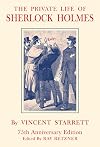
First, a warning: if you aren't a Sherlock Holmes enthusiast*, you might wish to give this a miss. The book is predicated on a basic familiarity/fascination with the canon, the characters, and the author. If you are a fan of the great detective, however, I predict you'll thoroughly enjoy this opportunity to engage in a leisurely discourse with one of the most noted of Sherlockian scholars and admirers. (I say discourse, because this is the kind of book you talk back to - read it with pencil show more in hand so you can underline, star, and annotate at will!)
(*While Holmes enthusiasts are often eccentric, it is inaccurate to characterize them as "crackpots". Famous members of the most esteemed Sherlock Club - the Baker Street Irregulars - include Franklin Roosevelt, Harry Truman, Isaac Asimov, and an array of scientists, scholars, and businessmen. No shame in numbering oneself among such company!)
Vincent Starett is one of the original "Sherlockians" and this book one of the first to establish the boundaries of "Sherlockian studies". Originally published in the 1940s, this collection of essays includes discussions on the origins of the character, his methods, his (in)famous plummet from Reichenbach Falls & triumphant return, 221B Baker Street (its location and contents), and an especially interesting exploration of Sherlock in books/art/stage. The essays whimsically wander between acknowledging the stories as fiction and treating them as actual historical documents, recording the adventures of an authentic historical personage. Thus we are treated to factual explorations of Conan Doyle's career, Victorian London, and publication details, interspersed with passionate debates about inconsistencies in the stories, lists of monographs purportedly published by Holmes, a discussion of Holmes' biography, an exploration of the nature of the friendship between he and Watson, and speculative lists of "unpublished cases". Starett, a noted journalist, author, and bibliophile back in the day, manages to maintain a reverent, erudite tone without lapsing into campiness. And his knowledge of the canon is wonderfully thorough: every page contained some new insight or item of information that enriched my appreciation of the canon, the gentleman who created them, and - yes - even the people who continue to revere Sherlock and his gaslamp-lit world, "where it is always 1895".
And because this is a 75th anniversary edition, we also get an extensive forward by Ray Betzner exploring the life and adventures of Starrett - a fascinating fellow in his own right - as well as an overview of the evolution of Sherlockian studies.
The book is some 200 pages but a quick, engaging read (depending, that is, on how much time you spend annotating), with a great bibliography of Sherlock-related texts at the end; and don't miss out on an opportunity to assess your own Sherlock cred by tackling the "Final Examination Paper" at the end ... sure to humble even the most avid and well-read Sherlock fans! show less
(*While Holmes enthusiasts are often eccentric, it is inaccurate to characterize them as "crackpots". Famous members of the most esteemed Sherlock Club - the Baker Street Irregulars - include Franklin Roosevelt, Harry Truman, Isaac Asimov, and an array of scientists, scholars, and businessmen. No shame in numbering oneself among such company!)
Vincent Starett is one of the original "Sherlockians" and this book one of the first to establish the boundaries of "Sherlockian studies". Originally published in the 1940s, this collection of essays includes discussions on the origins of the character, his methods, his (in)famous plummet from Reichenbach Falls & triumphant return, 221B Baker Street (its location and contents), and an especially interesting exploration of Sherlock in books/art/stage. The essays whimsically wander between acknowledging the stories as fiction and treating them as actual historical documents, recording the adventures of an authentic historical personage. Thus we are treated to factual explorations of Conan Doyle's career, Victorian London, and publication details, interspersed with passionate debates about inconsistencies in the stories, lists of monographs purportedly published by Holmes, a discussion of Holmes' biography, an exploration of the nature of the friendship between he and Watson, and speculative lists of "unpublished cases". Starett, a noted journalist, author, and bibliophile back in the day, manages to maintain a reverent, erudite tone without lapsing into campiness. And his knowledge of the canon is wonderfully thorough: every page contained some new insight or item of information that enriched my appreciation of the canon, the gentleman who created them, and - yes - even the people who continue to revere Sherlock and his gaslamp-lit world, "where it is always 1895".
And because this is a 75th anniversary edition, we also get an extensive forward by Ray Betzner exploring the life and adventures of Starrett - a fascinating fellow in his own right - as well as an overview of the evolution of Sherlockian studies.
The book is some 200 pages but a quick, engaging read (depending, that is, on how much time you spend annotating), with a great bibliography of Sherlock-related texts at the end; and don't miss out on an opportunity to assess your own Sherlock cred by tackling the "Final Examination Paper" at the end ... sure to humble even the most avid and well-read Sherlock fans! show less
The Private Life of Sherlock Holmes
It seems that nowadays one cannot turn a street corner without coming across an advert for Sherlock Holmes themed events. Whether it is the numerous films and TV shows currently doing the rounds or shop mannequins wearing Baker Street orientated attire with required pipe (I have seen this!) the man, quite frankly, is everywhere. There are no complaints here however. To have anything which brings the canon into conversation and the public eye is excellent show more and long may it continue. I do hope though that these televisual and other delights have inspired people to pick up the works of Sir Arthur Ignatius Conan Doyle to perhaps see where the legend began.
For those that have read the stories we will all have our favourites (and for those that haven’t had the pleasure please, please, please pick up a copy of a Study in Scarlet) but it is something a little different that I would like to recommend.
The Private Life of Sherlock Holmes by Vincent Starrett was written in 1933 and has become one the essential critiques for all Sherlockians. The book itself is a series of essays dealing with a myriad of topics starting with the origins of Holmes (including some rather lovely reminisces about Dr. Joseph Bell, Doyles’ mentor and the inspiration for Holmes), his methods, his interests and relationship with John Watson (the “private life” of the title), the rooms at 221B Baker Street to the plunge from the Reichenbach Falls and his infamous return. The book also includes an excellent chapter on the stalwart Mrs. Hudson, a character often overlooked but an ever present feature in the life of both Holmes and Watson and also lists the untold tales or rather those adventures and crimes that are mentioned but are never elaborated on. It turns out that there are dozens of memoirs that we will never hear about including the mythical Giant Rat of Sumatra! Starrett also has a look at the portrayals of Holmes through the years from the stage and screen to the Sidney Paget illustrations. Included is a fantastic photo of one William Gillette, an American actor who had obtained permission from Doyle to write a play based upon Holmes (in which one Charles Chaplin played the part of Holmes’ page, Billy) who I must say really does look the part; tall, square of chin, hawk-like nose and deep set eyes. There is even a small chapter entitled The Real Life Sherlock Holmes in which the author concentrates on the crimes that Doyle investigated himself. These were crimes that Doyle had thought the outcome rather spurious and had decided to use his own skills to fathom out a solution and, as it turns out, with a modicum of success. The book ends with chapters about The Baker Street Irregulars, the enthusiasts club that Starrett belonged to and a pastiche, The Adventure of the Unique Hamlet.
“But there can be no grave for Sherlock Holmes or Doctor Watson….Shall they not always live in Baker Street? Are they not there this moment, as one writes?...Outside, the hansoms rattle through the rain, and Moriarty plans his latest devilry. Within, the sea coal flames upon the hearth and Holmes and Watson make their well-won ease….So they still live for all that loves them well: in a romantic chamber of the heart, in a nostalgic country of the mind, where it is always 1895.”
What is remarkable and admirable about this book is that although it is essentially a literary critique not once does it become too bogged down in its own importance nor does it feel that the author is speaking to us as a superior authority. There is no doubt that Starrett has an immense knowledge and respect for the canon but what really comes across is his love and admiration for the character. The book mentions the fact that sometimes the timeline of the stories is a little askew and Dr Watsons’ memory seems to be a touch hazy at times but Starrett doesn’t use this as a method to score points or to prove his palpable knowledge but to generate debate and make us think. There are sections on matters that that have been talked about and discussed by the experts (and are still being dissected today!) such as the question of the university Holmes attended and the relationship between Holmes and Watson but Starretts opinions are not thrust upon us as the last word but instead he speaks eloquently and fluently and leads us to make our own minds up with the evidence he has presented. There is the sense that the book is one long conversation between old friends with a common interest, this being Starretts contribution, and any response or counter argument would be most welcomed. We have no long convoluted diatribes, the writing is often humorous and Starrett is always happy to defer to others who have made important discoveries concerning Holmes. Indeed, in the chapter about the rooms at 221B Starrett writes a great deal about the excellent work done by a Dr. Gray Briggs in tracking down what he felt was the exact location of 221B and includes the original diagram drawn by Briggs upon his discovery. Throughout the book the author always backs up his ideas and theories with evidence from the stories and on every page there is something fresh to learn, a new fact to be digested or just a different viewpoint for us to contemplate. Did you know, for instance that Sherlock was originally to be named Sherrinford (heaven forbid and thank god Doyle refrained but I think a rather marvellous name for the library cat…) or that the reason that one of the stories (The Cardboard Box) was originally pulled from the publication of the Memoirs of Sherlock Holmes was that the authors “chivalrous regret that he had allowed a women’s reputation to be smirched, a literary practice which he deplored” or that Doyles’ father was one of the early illustrators for the books.
There is something for everyone in this book, from the serious student of all things Sherlockian, who is keen to investigate the minutiae of the times and dates of the adventures, to the reader with a mere passing interest who would like to know a trifle more about the world that Doyle created. show less
It seems that nowadays one cannot turn a street corner without coming across an advert for Sherlock Holmes themed events. Whether it is the numerous films and TV shows currently doing the rounds or shop mannequins wearing Baker Street orientated attire with required pipe (I have seen this!) the man, quite frankly, is everywhere. There are no complaints here however. To have anything which brings the canon into conversation and the public eye is excellent show more and long may it continue. I do hope though that these televisual and other delights have inspired people to pick up the works of Sir Arthur Ignatius Conan Doyle to perhaps see where the legend began.
For those that have read the stories we will all have our favourites (and for those that haven’t had the pleasure please, please, please pick up a copy of a Study in Scarlet) but it is something a little different that I would like to recommend.
The Private Life of Sherlock Holmes by Vincent Starrett was written in 1933 and has become one the essential critiques for all Sherlockians. The book itself is a series of essays dealing with a myriad of topics starting with the origins of Holmes (including some rather lovely reminisces about Dr. Joseph Bell, Doyles’ mentor and the inspiration for Holmes), his methods, his interests and relationship with John Watson (the “private life” of the title), the rooms at 221B Baker Street to the plunge from the Reichenbach Falls and his infamous return. The book also includes an excellent chapter on the stalwart Mrs. Hudson, a character often overlooked but an ever present feature in the life of both Holmes and Watson and also lists the untold tales or rather those adventures and crimes that are mentioned but are never elaborated on. It turns out that there are dozens of memoirs that we will never hear about including the mythical Giant Rat of Sumatra! Starrett also has a look at the portrayals of Holmes through the years from the stage and screen to the Sidney Paget illustrations. Included is a fantastic photo of one William Gillette, an American actor who had obtained permission from Doyle to write a play based upon Holmes (in which one Charles Chaplin played the part of Holmes’ page, Billy) who I must say really does look the part; tall, square of chin, hawk-like nose and deep set eyes. There is even a small chapter entitled The Real Life Sherlock Holmes in which the author concentrates on the crimes that Doyle investigated himself. These were crimes that Doyle had thought the outcome rather spurious and had decided to use his own skills to fathom out a solution and, as it turns out, with a modicum of success. The book ends with chapters about The Baker Street Irregulars, the enthusiasts club that Starrett belonged to and a pastiche, The Adventure of the Unique Hamlet.
“But there can be no grave for Sherlock Holmes or Doctor Watson….Shall they not always live in Baker Street? Are they not there this moment, as one writes?...Outside, the hansoms rattle through the rain, and Moriarty plans his latest devilry. Within, the sea coal flames upon the hearth and Holmes and Watson make their well-won ease….So they still live for all that loves them well: in a romantic chamber of the heart, in a nostalgic country of the mind, where it is always 1895.”
What is remarkable and admirable about this book is that although it is essentially a literary critique not once does it become too bogged down in its own importance nor does it feel that the author is speaking to us as a superior authority. There is no doubt that Starrett has an immense knowledge and respect for the canon but what really comes across is his love and admiration for the character. The book mentions the fact that sometimes the timeline of the stories is a little askew and Dr Watsons’ memory seems to be a touch hazy at times but Starrett doesn’t use this as a method to score points or to prove his palpable knowledge but to generate debate and make us think. There are sections on matters that that have been talked about and discussed by the experts (and are still being dissected today!) such as the question of the university Holmes attended and the relationship between Holmes and Watson but Starretts opinions are not thrust upon us as the last word but instead he speaks eloquently and fluently and leads us to make our own minds up with the evidence he has presented. There is the sense that the book is one long conversation between old friends with a common interest, this being Starretts contribution, and any response or counter argument would be most welcomed. We have no long convoluted diatribes, the writing is often humorous and Starrett is always happy to defer to others who have made important discoveries concerning Holmes. Indeed, in the chapter about the rooms at 221B Starrett writes a great deal about the excellent work done by a Dr. Gray Briggs in tracking down what he felt was the exact location of 221B and includes the original diagram drawn by Briggs upon his discovery. Throughout the book the author always backs up his ideas and theories with evidence from the stories and on every page there is something fresh to learn, a new fact to be digested or just a different viewpoint for us to contemplate. Did you know, for instance that Sherlock was originally to be named Sherrinford (heaven forbid and thank god Doyle refrained but I think a rather marvellous name for the library cat…) or that the reason that one of the stories (The Cardboard Box) was originally pulled from the publication of the Memoirs of Sherlock Holmes was that the authors “chivalrous regret that he had allowed a women’s reputation to be smirched, a literary practice which he deplored” or that Doyles’ father was one of the early illustrators for the books.
There is something for everyone in this book, from the serious student of all things Sherlockian, who is keen to investigate the minutiae of the times and dates of the adventures, to the reader with a mere passing interest who would like to know a trifle more about the world that Doyle created. show less

Edited by Vincent Starrett and first published in 1940, this is an early piece of the Sherlockian great game, with pastiches (Starrett's fine enough "Unique Hamlet"; the soggy, sorry "Sussex Interview" by one P. M. Stone); some research (a fine bit of investigation on whether Holmes had American ties, a good one on his eating habits, but then flaccid ones like the comparison of Holmes and Dr. Johnson). Etc. A very important book for students of Holmes and Sherlockiana, reissued here in Otto show more Penzler's 1990s "Sherlock Holmes Library" series of paperbacks. It makes me want the other books in the series. show less
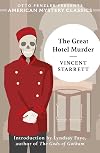
Premise: A man checks into a hotel. He meets another man who requests that they exchange rooms. It is arranged. The next morning, the man who requested the room change is found dead. To futher compound things, he wasn't who he says he was.
I was intrigued by the premise, by the fact that this book was a classic in the 30s that fell into obscurity, and Otto Penzler has brought it back to life. I love love love the resuscitation of lost classics.
The author, Vincent Starrett, was an expert show more on all things Sherlock Holmes, so that sounded grand as well.
It is my own muddle-headed handicap that if there are too many characters introduced at once, I find it darned hard to keep them all sorted in my head. The very-likeable sleuth makes it more difficult by posing various explanations of motives and allegiances so that midway through the mystery. Imagine that you don't have a firm grasp on the rules of chess and someone proceeds to point out all the possibilities of the next five moves and what could happen, only backwards. I gave up all hope of sorting for myself and just kept reading for the fun of it.
I enjoyed the book. There were quite a few passages where either the 30s language or a description stopped me in my tracks and I had to read it again to savor it. Also found myself wondering if the sleuth Riley Blackwood might reappear in another novel. Bit of a surprise ending. No way I would have hashed it all out. For all that, the book itself is lovely, I mean physically lovely--feels good in the hand, fun cover, well-formatted. I'm looking forward to hunting up more Otto Penzler Presents American Mystery Classics. show less
I was intrigued by the premise, by the fact that this book was a classic in the 30s that fell into obscurity, and Otto Penzler has brought it back to life. I love love love the resuscitation of lost classics.
The author, Vincent Starrett, was an expert show more on all things Sherlock Holmes, so that sounded grand as well.
It is my own muddle-headed handicap that if there are too many characters introduced at once, I find it darned hard to keep them all sorted in my head. The very-likeable sleuth makes it more difficult by posing various explanations of motives and allegiances so that midway through the mystery. Imagine that you don't have a firm grasp on the rules of chess and someone proceeds to point out all the possibilities of the next five moves and what could happen, only backwards. I gave up all hope of sorting for myself and just kept reading for the fun of it.
I enjoyed the book. There were quite a few passages where either the 30s language or a description stopped me in my tracks and I had to read it again to savor it. Also found myself wondering if the sleuth Riley Blackwood might reappear in another novel. Bit of a surprise ending. No way I would have hashed it all out. For all that, the book itself is lovely, I mean physically lovely--feels good in the hand, fun cover, well-formatted. I'm looking forward to hunting up more Otto Penzler Presents American Mystery Classics. show less
Lists
Awards


You May Also Like


Associated Authors
Statistics
- Works
- 79
- Also by
- 58
- Members
- 1,181
- Popularity
- #21,763
- Rating
- 4.1
- Reviews
- 23
- ISBNs
- 73
- Favorited
- 1
