

Kyle Baker
Author of Why I Hate Saturn
About the Author
Series
Works by Kyle Baker
Bizarro Comics! (2001) — Writer, Artist, Letterer, Colourist & Separator (69-78) — 229 copies, 2 reviews
Special Forces #2 6 copies
Marvel Action Black Panther (2019) #3 — Author — 6 copies
Marvel Action Black Panther (2019) #2 — Author — 6 copies
Marvel Action Black Panther (2019-) #1 — Author — 6 copies
Special Forces #4 5 copies
The Bakers #1 4 copies
Plastic Man: Rubber Banded - The Deluxe Edition (Plastic Man (2003-2006)) (English Edition) (2020) 3 copies
Plastic Man [2004] #4 — Author — 3 copies
Plastic Man [2004] #2 — Author — 3 copies
Plastic Man [2004] #5 3 copies
Plastic Man #18 2 copies
Circuit Breaker #1 2 copies
Plastic Man [2004] #3 2 copies
Nat Turner #2 2 copies
Plastic Man [2004] #1 2 copies
Plastic Man #20 1 copy
Why I Hate Saturn & The Cowboy Wally Show Double Deluxe Edition: Quality Jollity 30th Anniversary Spectacular (2017) 1 copy
Plastic Man #14 1 copy
Plastic Man #11 1 copy
Plastic Man Rubber Bandits Vol 2 (Plastic Man Rubber Bandits, Vol 2) — Author — 1 copy
Plastic Man #7 1 copy
Helloo Ladies! 1 copy
Plastic Man #16 1 copy
Plastic Man #19 1 copy
Plastic Man #10 1 copy
Tardigrade 1 copy
Associated Works
Black Panther Book 01: A Nation Under Our Feet Part 01 (2016) — Illustrator — 1,138 copies, 39 reviews
9-11: The World's Finest Comic Book Writers & Artists Tell Stories to Remember (2002) — Illustrator — 256 copies, 1 review
Doom Patrol Vol. 2 #77 — Cover artist, some editions — 7 copies
The Transformers #10 - The Next Best Thing to Being There (1985) — Cover artist, some editions — 5 copies
Doom Patrol Vol. 2 #82 — Cover artist, some editions — 5 copies
Doom Patrol Vol. 2 #79 — Cover artist, some editions — 5 copies
Doom Patrol Vol. 2 #84 — Cover artist, some editions — 5 copies
Doom Patrol Vol. 2 #80 — Cover artist, some editions — 4 copies
Doom Patrol Vol. 2 #83 — Cover artist, some editions — 4 copies
The Powerpuff Girls [2000] #25 — Illustrator — 2 copies
House of Mystery Vol. 2 # 10 — Illustrator — 2 copies
Tagged
Common Knowledge
- Legal name
- Baker, Kyle John
- Birthdate
- 1965-12-13
- Gender
- male
- Awards and honors
- Eisner Award (Best Writer/Artist: Humor, 1999)
Eisner Award (Best Writer/Artist: Humor, 2000)
Eisner Award (Best Writer/Artist: Humor, 2004)
Eisner Award (Best Writer/Artist: Humor, 2005)
Eisner Award (Best Writer/Artist: Humor, 2006)
Eisner Award (Best Short Story, 2000) (show all 10)
Eisner Award (Best New Series, 2004)
Eisner Award (Best Title for Younger Readers, 2005)
Harvey Award (Best New Series, 2004)
Squiddy Award (Best Cartoonist, 2004) - Nationality
- USA
- Birthplace
- Queens, New York, USA
- Places of residence
- New York, New York, USA
- Associated Place (for map)
- New York, USA
Members
Reviews
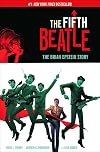
Standard disclaimer: I don't usually buy or read graphic novels, but I needed an antidote to Ray Coleman's homophobic mudslinging 'biography' of Brian Epstein, the Beatles' manager who died tragically in 1967. Thankfully, Vivek Tiwary obviously loves and respects Brian's memory, so this beautifully illustrated life story was a delight for both the eye and the soul.
The author's 'ongoing and unrequited love affair' with Brian's story is both succinctly and emotionally written, occasionally show more playing fast and loose with the people and places in the Beatles' timeline but always capturing the essence of their manager, 'a flawed and imperfect hero'. I love how Vivek uses friends and associates of Brian like Nat Weiss to absolve him of the blame and rumours which have been dumped on his grave over the years - 'You've done an incredible job in almost every way, No one can deny that' - and boost Brian's reputation posthumously - 'You're a part of that, literally, figuratively, any way you want to look at it, my friend. You're loved'. I also love how Brian's sexuality is treated openly and honestly. He's beaten, betrayed and can never find the love he's looking for, but being gay doesn't make him a bad person or a failure. 'Moxie', a new character who is a mix of Joanne Petersen, Brian's real life assistant, and a representation of Brian's own enthusiasm and ambition, is a delight and John, Paul, George and Ringo and winningly portrayed, full of amusement and affection. (I love the scene with Brian and John in Barcelona, rating men on the beach!) But oh wow, those final frames were like a punch in the feels - and I wouldn't expect anything less.
The artwork by Andrew C Robinson takes a little adjusting to. Everyone seems to have these wide smiles in every frame, I don't know if that's a particular style or not. But then there are some stunning full page spreads that I would frame if I could, especially that photo of John and Paul with their girlfriends in a car and Brian's face reflected on the window. I also love the scenes of JFK and Jackie in Dallas, 1963.
Quirky but heartfelt, I would recommend Vivek Tiwary's genuine devotion over any money-grubbing biographies of Brian Epstein currently available. show less
The author's 'ongoing and unrequited love affair' with Brian's story is both succinctly and emotionally written, occasionally show more playing fast and loose with the people and places in the Beatles' timeline but always capturing the essence of their manager, 'a flawed and imperfect hero'. I love how Vivek uses friends and associates of Brian like Nat Weiss to absolve him of the blame and rumours which have been dumped on his grave over the years - 'You've done an incredible job in almost every way, No one can deny that' - and boost Brian's reputation posthumously - 'You're a part of that, literally, figuratively, any way you want to look at it, my friend. You're loved'. I also love how Brian's sexuality is treated openly and honestly. He's beaten, betrayed and can never find the love he's looking for, but being gay doesn't make him a bad person or a failure. 'Moxie', a new character who is a mix of Joanne Petersen, Brian's real life assistant, and a representation of Brian's own enthusiasm and ambition, is a delight and John, Paul, George and Ringo and winningly portrayed, full of amusement and affection. (I love the scene with Brian and John in Barcelona, rating men on the beach!) But oh wow, those final frames were like a punch in the feels - and I wouldn't expect anything less.
The artwork by Andrew C Robinson takes a little adjusting to. Everyone seems to have these wide smiles in every frame, I don't know if that's a particular style or not. But then there are some stunning full page spreads that I would frame if I could, especially that photo of John and Paul with their girlfriends in a car and Brian's face reflected on the window. I also love the scenes of JFK and Jackie in Dallas, 1963.
Quirky but heartfelt, I would recommend Vivek Tiwary's genuine devotion over any money-grubbing biographies of Brian Epstein currently available. show less

Access a version of the below that includes illustrations on my blog.
The Truth: Red, White & Black is a 2003 miniseries published by Marvel Comics, about a group of black men who were experimented on with the same super-soldier serum that was used to create Captain America; it was later collected as Captain America: Truth, which I accessed via Hoopla. I read it as part of my ongoing Black Panther project because its main character was the father of one of the characters featured in show more Christopher Priest's The Crew, which also featured a former Black Panther. Okay, so that's kind of tangential as a "Black Panther" comic, but it seemed to me I ought to read it before I ended up even further away from the point where I read The Crew.
The story is made up of two distinct halves. In one, a bunch of black men join the U.S. military after Pearl Harbor, all from various walks of life, all for their own reasons. They encounter, unsurprisingly, racism in the institutions of the military, and soon they are being experimented on in what is clearly a riff on the Tuskegee experiment. Writer Robert Morales and artist Kyle Baker introduce us to a diverse and sympathetic group of characters—and then put them through some really heinous, racist stuff. I've never read any other comics by Morales (he doesn't seem to have written many others, actually) but here he shows himself to be a thoughtful, interesting writer. I think this could have been pretty hamhanded, but the racial dynamics of it ring truly. I have read other work by Baker, who has a pretty cartoony style, and who I usually associate with more, well, comic work; his big claim to fame other than this is a Plastic Man miniseries, for what it's worth. He has more of a dynamic range within that cartoony style than I might have guessed, with some characters (usually the very racist whites) being drawn as almost literal caricatures, and others as fully fleshed out people. Some moments are quite horrifying even in his style. I don't think it's what I would have chosen, but I think it works.
In the second half of the comic, though, the perspective shifts; it's the present day and Steve Rogers is investigating the events of the 1940s that he never knew anything about, which continue to be filled in as flashbacks. This, to me, diminished some of the potency of the whole affair. It seemed pretty clear to me that the experiments in the first half were meant to be forerunners of the experiments on Steve Rogers, it just doesn't make sense any other way. But to fit with Marvel continuity, it has to turn out that all this happened in parallel with what happened to Rogers, that he has to be the first super-soldier. To me, this really disrupts what was surely the whole point of the story: that we would want to do this to a person of color. But it turns out we did it to a white person first? It also turns the narrative focus onto a white person, the problem of the book becomes how does a white person find out about this injustice? Which is a marked difference to how the opening chronicles the black experience.
All that and yet—I have often said superhero stories are power fantasies, and thus that makes the superhero stories that explore powerlessness particularly interesting to me. It's a powerful metaphor, and even if this comic doesn't make the best use of it, it's clearly trying to do something more interesting than 95% of the superhero comics out there. show less
The Truth: Red, White & Black is a 2003 miniseries published by Marvel Comics, about a group of black men who were experimented on with the same super-soldier serum that was used to create Captain America; it was later collected as Captain America: Truth, which I accessed via Hoopla. I read it as part of my ongoing Black Panther project because its main character was the father of one of the characters featured in show more Christopher Priest's The Crew, which also featured a former Black Panther. Okay, so that's kind of tangential as a "Black Panther" comic, but it seemed to me I ought to read it before I ended up even further away from the point where I read The Crew.
The story is made up of two distinct halves. In one, a bunch of black men join the U.S. military after Pearl Harbor, all from various walks of life, all for their own reasons. They encounter, unsurprisingly, racism in the institutions of the military, and soon they are being experimented on in what is clearly a riff on the Tuskegee experiment. Writer Robert Morales and artist Kyle Baker introduce us to a diverse and sympathetic group of characters—and then put them through some really heinous, racist stuff. I've never read any other comics by Morales (he doesn't seem to have written many others, actually) but here he shows himself to be a thoughtful, interesting writer. I think this could have been pretty hamhanded, but the racial dynamics of it ring truly. I have read other work by Baker, who has a pretty cartoony style, and who I usually associate with more, well, comic work; his big claim to fame other than this is a Plastic Man miniseries, for what it's worth. He has more of a dynamic range within that cartoony style than I might have guessed, with some characters (usually the very racist whites) being drawn as almost literal caricatures, and others as fully fleshed out people. Some moments are quite horrifying even in his style. I don't think it's what I would have chosen, but I think it works.
In the second half of the comic, though, the perspective shifts; it's the present day and Steve Rogers is investigating the events of the 1940s that he never knew anything about, which continue to be filled in as flashbacks. This, to me, diminished some of the potency of the whole affair. It seemed pretty clear to me that the experiments in the first half were meant to be forerunners of the experiments on Steve Rogers, it just doesn't make sense any other way. But to fit with Marvel continuity, it has to turn out that all this happened in parallel with what happened to Rogers, that he has to be the first super-soldier. To me, this really disrupts what was surely the whole point of the story: that we would want to do this to a person of color. But it turns out we did it to a white person first? It also turns the narrative focus onto a white person, the problem of the book becomes how does a white person find out about this injustice? Which is a marked difference to how the opening chronicles the black experience.
All that and yet—I have often said superhero stories are power fantasies, and thus that makes the superhero stories that explore powerlessness particularly interesting to me. It's a powerful metaphor, and even if this comic doesn't make the best use of it, it's clearly trying to do something more interesting than 95% of the superhero comics out there. show less
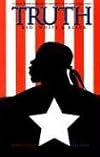
Truth: Red, White and Black provides a twist to the Captain America origin story—and is, I believe, now treated by the Marvel writers as mainstream canon. Steve Rogers was not the first American to be experimented on by the US army in order to create a super-soldier. Instead, a group of African-American soldiers were exploited and tortured without their consent, paralleling the real life Tuskegee Experiments. The final surviving member of the group, Isaiah Bradley, goes out on a mission show more while wearing the Captain America uniform, and he is treated appallingly by the government for being a black man who dares to wear this symbol of American power. The writing, while a little heavy-handed at times, is powerful and engaging and succinctly shows Cap—and by extension the reader—his unexamined privilege; I thought that Kyle Baker's art was poor, however, and not at all tonally suited to the subject matter. show less
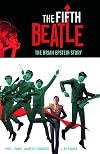
The trend of graphic biographies is an interesting one, and this subject is particularly interesting. It is the story of Brian Epstein, whom most people know simply as the Beatles' manager. In this book we see their meeting from his perspective, his ambition to make them the best thing the world had ever seen, and his struggles with anxiety and being gay in an era when being gay was a felony. I found the artwork varied and well done, but the layout and sequence of some panels caused show more confusion; it would take me a couple of read-throughs to figure out the direction of the conversation on the page.
This book probably works best for those who have some familiarity with the Beatles' story. show less
This book probably works best for those who have some familiarity with the Beatles' story. show less
Lists
Five star books (1)
1990s (1)
Awards


You May Also Like


Associated Authors
Statistics
- Works
- 89
- Also by
- 45
- Members
- 2,682
- Popularity
- #9,574
- Rating
- 3.9
- Reviews
- 59
- ISBNs
- 91
- Languages
- 8
- Favorited
- 7


