
Louis Begley
Author of Wartime Lies
About the Author
Louis Begley previous novels are Wartime Lies, The Man Who Was late, As max Saw It, About Schmidt, and Mistler's Exit. He lives in New York City. (Bowker Author Biography)
Image credit: Bettina Straus
Series
Works by Louis Begley
The Tremendous World I Have Inside My Head: Franz Kafka: A Biographical Essay (2008) 92 copies, 4 reviews
Jacob the Liar 1 copy
Wojenne klamstwa 1 copy
Associated Works
For the Love of Books: 115 Celebrated Writers on the Books They Love Most (1999) — Contributor — 479 copies, 4 reviews
Tagged
Common Knowledge
- Birthdate
- 1933-10-06
- Gender
- male
- Education
- Harvard College ( [1954])
Harvard Law School ( [1959])
Jan Sobieski Gymnasium, Cracow, Poland
Erasmus Hall High School, Brooklyn, New York, USA - Occupations
- attorney
writer - Organizations
- PEN American Center
Debevoise & Plimpton, New York
American Philosophical Society
American Academy of Arts and Letters
US Army - Awards and honors
- American Academy of Arts and Letters Academy Award (Literature ∙ 1995)
- Agent
- Georges Borchardt, Inc.
- Relationships
- Muhlstein, Anka (2nd wife)
Begley, Adam (son) - Nationality
- Poland (birth)
USA - Birthplace
- Stryj, Polish Republic (now Ukraine)
- Places of residence
- Stryj, Ukraine [formerly Stryj, Poland]
Lwów, Ukraine [formerly Lwów, Poland]
Warsaw, Poland
Cracow, Poland
Paris, France
New York, New York, USA (show all 8)
Brooklyn, New York, USA
Göppingen, Germany
Members
Reviews
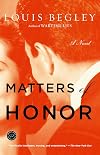
This is a sleeper of a novel. On the surface it is simply a tale of four post-WWII Harvard freshmen and their coming of age with typical life struggles in the arenas of career, family, and relationships. However, Begley's writing subtly draws the reader into a much bigger theme which is self-invention and re-invention. We meet Sam, our narrator whose parents were not up to snuff by many standards. We meet Archie, who is a burgeoning alcoholic who refuses to transform. We meet Margot who has show more it all and yet has nothing. We meet our very dear Henry, a Polish, Jewish survivor of the Holocaust, who is gifted in the area of re-invention. So, the novel resonates for anyone who has wanted to re-invent themselves, leaving behind those aspects of their identity which are distasteful, socially unacceptable, frightening, and/or which stand in the way of what we seek in life. There were a few sections which seemed to drag, perhaps not feeling quite necessary to the forward motion of the story, and the use of language was subtly powerful, but not exquisite enough for a 5 star rating. Very good novel! show less
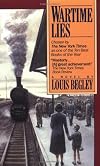
This partly autobiographical novel tells the story of a young Jewish boy Maciek who together with his Aunt Tania pose as Catholic Poles during WW II to survive the Holocaust. The narrator is looking back on these childhood experiences as an old man, and remembers how much of his heritage and identity had to be denied in order to survive. "Our man has no childhood he can bear to remember." It was only lies that enabled him to survive, constantly moving from place to place, maintaining a show more distance from others, as one by one other members of his family vanish or die.
All of this is narrated in a completely matter of fact way, with a complete absence of judgment, which makes it all quite chilling. Clearly, to survive physically, the psyche is irreparably damage.
"She and I had to get used to the idea we were quite alone. Tania and Maciek against the world. This was not an easy lesson to learn but probably the world would beat it into our heads." show less
All of this is narrated in a completely matter of fact way, with a complete absence of judgment, which makes it all quite chilling. Clearly, to survive physically, the psyche is irreparably damage.
"She and I had to get used to the idea we were quite alone. Tania and Maciek against the world. This was not an easy lesson to learn but probably the world would beat it into our heads." show less
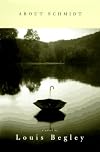
I thought the first half of the book was a poignant portrayal of an older man shocked by the death of his wife and pushed into early retirement by his law firm. The second half was a bit far fetched (in a relationship with a 20 year old) and a bit weird (running over an old homeless man who crapped on his doorstep). I'll read the follow up novel before passing final judgement on this tale (and novelist).
The setting here is very, one might say supremely, bourgeois. Albert Schmidt, newly widowed, recently retired from a cutthroat Manhattan law firm, is fully fitted out with all the appurtenances of great material success. The circles in which he moves are peopled by the very rich and often famous. Six months after his wife's death his daughter, Charlotte, announces her engagement to Jon Riker. Riker, a former mentee, is disliked by Schmidt for numerous reasons. One reason being that he's a show more Jew. More objectionable to Schmidt, however, is that Riker has knowingly undermined him at the firm where he no longer works. Schmidt has lost his beloved wife, Mary, and now he is losing his daughter to a grasping young man devoid of the romantic sensibilities that he most cherishes. Schmidt feels himself to be a radical truth teller, yet much of his "commentary" he must repress if he is not to alienate those around him. One wonders how he has done it. One wonders how he has managed to be successful. Interpersonal relationships are so key to the high-brow kind of law he once practiced, yet they also annoy him terribly. The answer of course is Mary. Often we hear Schmidt say something like "Mary would have managed it so well." And our sense is of his wife coming along behind him setting matters to rights. There are improbable sex scenes--two sixty-plus men with 20 year old girlfriends--yet somehow Begley carries them off. Certainly, the fact that both men are very rich makes the liaisons more plausible than they would be otherwise. I generally abhor all descriptions of coitus in print. Philip Roth's Sabbath's Theater is to my mind full of such repulsive writing. Begley's method however is defter and almost without vulgarity. I haven't quite figured out how he does it. I suppose one could say that Begley writes about territory already covered by John Updike and Philip Roth. Yet Begley's style is distinctive, nothing like the other two writers, and his milieu is far more genteel. I absolutely adore this novel. It's my favorite of all the Begley novels I've read so far, including Wartime Lies, which is saying a lot. show less
Lists
Awards


You May Also Like


Associated Authors
Statistics
- Works
- 27
- Also by
- 3
- Members
- 2,420
- Popularity
- #10,592
- Rating
- 3.5
- Reviews
- 34
- ISBNs
- 204
- Languages
- 7
- Favorited
- 6
