

Brian M. Sammons
Author of World War Cthulhu: A Collection of Lovecraftian War Stories
About the Author
Series
Works by Brian M. Sammons
World War Cthulhu: A Collection of Lovecraftian War Stories (2014) — Editor; Contributor — 73 copies, 4 reviews
The Children of Gla'aki: A Tribute to Ramsey Campbell's Great Old One (2016) — Editor — 42 copies, 2 reviews
Steampunk Cthulhu: Mythos Terror in the Age of Steam (Chaosium Fiction #6054) (2014) — Editor; Contributor — 27 copies, 2 reviews
Eldritch Chrome: Unquiet Tales of a Mythos-Haunted Future (Chaosium Fiction) (2013) — Editor; Contributor — 22 copies, 1 review
Undead & Unbound: Unexpected Tales From Beyond the Grave (Chaosium Fiction) (2013) — Editor; Contributor — 16 copies
Tales of Cthulhu Invictus: Britannia 2 copies
Dread Shadows in Paradise 1 copy
Dead But Dreaming 2 1 copy
E'ch Pi El #8 1 copy
Associated Works
A Lonely and Curious Country: Tales from the Lands of Lovecraft (2015) — Contributor — 8 copies, 1 review
Tagged
Common Knowledge
- Gender
- male
Members
Reviews
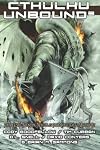
Do we really need another anthology of Cthulhu mythos stories? Haven’t we seen all the possible permutations of Lovecraft’s ideas? The four authors of the novellas included in this new anthology would argue that there’s still room for more great stories about the Cthulhu mythos, and I would agree. Like the first two CTHULHU UNBOUND collections from Permuted Press, this third volume features “cross-genre” stories in which Lovecraftian horror is mixed with other genres to produce show more entirely new amalgams. In the case of the four novellas included here, we have Lovecraft mixed with a western, present-day psychological weirdness, a gritty prison drama, and a technothriller.
The four novellas included in this collection are:
* UNSEEN EMPIRE by Cody Goodfellow
* MIRRORRORRIM by D.L. Snell
* NEMESIS THEORY by Tim Curran
* THE R’LYEH SINGULARITY by David Conyers and Brian M. Sammons (who also serve as the collection’s editors)
Mild plot spoilers for each of the stories follow.
UNSEEN EMPIRE: Cody Goodfellow has blended the Cthulhu Mythos with a classic Western in this tale of a half-Commanche bounty hunter (who also appears in the chapbook “Black Wind” by Perilous Press) who runs afoul of something terrible as he searches for some people missing from an Indian reservation. It’s got monsters, a lost underground city from an ancient civilization, and the Oklahoma badlands. What more could you want? Goodfellow does such a good job with that one that I enjoyed it immensely, despite not even particularly liking some Western tropes.
MIRRORRORRIM: Snell has given us a story about the only male member of a therapy group for self-mutilators who soon realizes that the other members of the group – and perhaps even himself – are far more than they initially appear. The story is reminiscent of both the New Weird fiction and an old David Cronenberg movie, especially since it focuses heavily on body horror. I personally found MIRRORRORRIM to be the least successful of the four novellas – though I did enjoy it and found it satisfyingly creepy in a number of places – because I tend not to prefer stories that rely on horrifying weirdness where it’s not entirely clear exactly what’s going on. Deliberate obfuscation by an author can work, it’s just not my preferred mode of storytelling. Your mileage may vary.
NEMESIS THEORY: Tim Curran has pulled off a masterstroke with this Lovecraftian tale set inside a maximum security prison. One of the inmates, a former leader of a Jonestown-like suicide cult, manages to unsettle even these hardened criminals, then all hell truly breaks loose. Curran provides a great look at what might happen when “the stars are right.” Hint: it’s horrifying almost beyond imagination. I was initially a little skeptical of the premise of NEMESIS THEORY because I was unsure that the panoptical setting of a maximum-security prison would allow enough room for an author to tell a satisfying horror story. But then again, any tale involving something living beyond the outer reaches of our solar system described as the “Million Malignant Minds” has GOT to be good, doesn’t it? This was easily my favorite story in the collection.
THE R’LYEH SINGULARITY: Two international men of mystery who routinely deal with supernatural- and espionage-related matters for a variety of intelligence services fight to stop a global catastrophe in the making: a multinational corporation has begun a deep-sea drilling expedition that appears to be waking the sleeping dreamer Cthulhu in R’lyeh. Massive earthquakes and tsunamis affecting the entire Pacific basin have already started and things are only getting worse. One of the two men is Hamilton Peel, a former Australian military intelligence officer who also appears in the collection “The Spiraling Worm” and the chapbook “The Eye of Infinity” by David Conyers. I should note that, just as with the previous Peel tales, THE R'LYEH SINGULARITY is a tie-in with the Delta Green series of novels, stories, and role-playing game books put out by Pagan Press about confrontations between government agencies and Cthulhu set in the modern day. If you like Charles Stross’ “A Colder War” and series beginning with THE ATROCITY ARCHIVES, you’ll already have a sense of what Cthulhu mixed with modern-day techno-thrillers looks like.
All in all, I highly recommend CTHULHU UNBOUND 3: it’s a great collection of recent novellas that blend traditional Lovecraftian themes with other genres. I think that if you’re not already a fan of the larger Cthulhu Mythos you wouldn’t get quite as much out of most of these stories (MIRRORRORRIM is one exception to that, it isn’t closely tied in with Lovecraft’s work). If you like the Cthulhu Mythos – unless you’re staunchly opposed to Lovecraft’s ideas being blended with other genres – I think you’ll find a lot to like in this collection.
Review copyright © 2013 J. Andrew Byers show less
The four novellas included in this collection are:
* UNSEEN EMPIRE by Cody Goodfellow
* MIRRORRORRIM by D.L. Snell
* NEMESIS THEORY by Tim Curran
* THE R’LYEH SINGULARITY by David Conyers and Brian M. Sammons (who also serve as the collection’s editors)
Mild plot spoilers for each of the stories follow.
UNSEEN EMPIRE: Cody Goodfellow has blended the Cthulhu Mythos with a classic Western in this tale of a half-Commanche bounty hunter (who also appears in the chapbook “Black Wind” by Perilous Press) who runs afoul of something terrible as he searches for some people missing from an Indian reservation. It’s got monsters, a lost underground city from an ancient civilization, and the Oklahoma badlands. What more could you want? Goodfellow does such a good job with that one that I enjoyed it immensely, despite not even particularly liking some Western tropes.
MIRRORRORRIM: Snell has given us a story about the only male member of a therapy group for self-mutilators who soon realizes that the other members of the group – and perhaps even himself – are far more than they initially appear. The story is reminiscent of both the New Weird fiction and an old David Cronenberg movie, especially since it focuses heavily on body horror. I personally found MIRRORRORRIM to be the least successful of the four novellas – though I did enjoy it and found it satisfyingly creepy in a number of places – because I tend not to prefer stories that rely on horrifying weirdness where it’s not entirely clear exactly what’s going on. Deliberate obfuscation by an author can work, it’s just not my preferred mode of storytelling. Your mileage may vary.
NEMESIS THEORY: Tim Curran has pulled off a masterstroke with this Lovecraftian tale set inside a maximum security prison. One of the inmates, a former leader of a Jonestown-like suicide cult, manages to unsettle even these hardened criminals, then all hell truly breaks loose. Curran provides a great look at what might happen when “the stars are right.” Hint: it’s horrifying almost beyond imagination. I was initially a little skeptical of the premise of NEMESIS THEORY because I was unsure that the panoptical setting of a maximum-security prison would allow enough room for an author to tell a satisfying horror story. But then again, any tale involving something living beyond the outer reaches of our solar system described as the “Million Malignant Minds” has GOT to be good, doesn’t it? This was easily my favorite story in the collection.
THE R’LYEH SINGULARITY: Two international men of mystery who routinely deal with supernatural- and espionage-related matters for a variety of intelligence services fight to stop a global catastrophe in the making: a multinational corporation has begun a deep-sea drilling expedition that appears to be waking the sleeping dreamer Cthulhu in R’lyeh. Massive earthquakes and tsunamis affecting the entire Pacific basin have already started and things are only getting worse. One of the two men is Hamilton Peel, a former Australian military intelligence officer who also appears in the collection “The Spiraling Worm” and the chapbook “The Eye of Infinity” by David Conyers. I should note that, just as with the previous Peel tales, THE R'LYEH SINGULARITY is a tie-in with the Delta Green series of novels, stories, and role-playing game books put out by Pagan Press about confrontations between government agencies and Cthulhu set in the modern day. If you like Charles Stross’ “A Colder War” and series beginning with THE ATROCITY ARCHIVES, you’ll already have a sense of what Cthulhu mixed with modern-day techno-thrillers looks like.
All in all, I highly recommend CTHULHU UNBOUND 3: it’s a great collection of recent novellas that blend traditional Lovecraftian themes with other genres. I think that if you’re not already a fan of the larger Cthulhu Mythos you wouldn’t get quite as much out of most of these stories (MIRRORRORRIM is one exception to that, it isn’t closely tied in with Lovecraft’s work). If you like the Cthulhu Mythos – unless you’re staunchly opposed to Lovecraft’s ideas being blended with other genres – I think you’ll find a lot to like in this collection.
Review copyright © 2013 J. Andrew Byers show less

A fairly slender volume containing sixteen stories of liturgical Yog-Sothothery, The Dark Rites of Cthulhu featured only four authors previously familiar to me, so I was grateful for the appended "About the Authors" info. The stories are reasonably solid throughout. Some do sort of stretch the category of ritual magic, such as one concerned with martial arts ("Of Circles and Rings" by Tom Lynch). A few are detective stories oriented around ritual murders. There is considerable variety of show more flavor within the "magic" field, encompassing voodoo, online cult recruitment, and stage magic, among others.
Most of these tales don't bother with Arkham and Lovecraft country, though some do, and a few even go so far as to include or reference specific characters from Grandpa Cthulhu's "ritual literature" (so-called by Michel Houellebecq). The Lovecraft stories that most conspicuously served as references in this assortment were "The Dunwich Horror" (of course) and "From Beyond."
"The Dark Horse" by John Goodrich is set in a stars-were-right post-apocalyptic regime of human dispossession. Edward Erdelac's story "Black Tallow" lost points from me initially by misspelling the name Aleister Crowley, but ultimately redeemed itself with a credible representation of pathological contemporary ceremonial magic, along with lovely Club Dumas bibliophile fan service.
I read this book slowly over several months, since there is no continuity from story to story. It's a decent collection of new weird fiction built around specialized themes that are of particular to interest to me, and I was satisfied by it. show less
Most of these tales don't bother with Arkham and Lovecraft country, though some do, and a few even go so far as to include or reference specific characters from Grandpa Cthulhu's "ritual literature" (so-called by Michel Houellebecq). The Lovecraft stories that most conspicuously served as references in this assortment were "The Dunwich Horror" (of course) and "From Beyond."
"The Dark Horse" by John Goodrich is set in a stars-were-right post-apocalyptic regime of human dispossession. Edward Erdelac's story "Black Tallow" lost points from me initially by misspelling the name Aleister Crowley, but ultimately redeemed itself with a credible representation of pathological contemporary ceremonial magic, along with lovely Club Dumas bibliophile fan service.
I read this book slowly over several months, since there is no continuity from story to story. It's a decent collection of new weird fiction built around specialized themes that are of particular to interest to me, and I was satisfied by it. show less
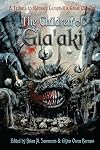
I got this in a book bundle from Dark Regions. I’d never heard of the Gla’aki mythos before reading the book but thoroughly enjoyed this collection of stories. There was a lot of variety on the theme so I got to know common elements without getting bored.

This is a horror anthology I backed on Kickstarter a while ago. The general premise was to do a Lovecraftian anthology where the protagonists weren't all WASP male types that Lovecraft himself used. It's got protagonists who are female, transgendered, African American, Jewish, gay, autistic, Hispanic, Asian, Italian, and Russian. It's actually a very good collection. I really only had problems with Mercedes M. Yardley's story "Ivan and the Hurting Doll," and my problem with that isn't about show more the quality of the story, it's that it's really more of a dark fantasy and feels a bit out of place among the Lovecraftian horror stories. show less
Lists
Awards

You May Also Like


Associated Authors
Statistics
- Works
- 30
- Also by
- 10
- Members
- 510
- Popularity
- #48,630
- Rating
- 3.7
- Reviews
- 13
- ISBNs
- 36
- Languages
- 1