
María Zambrano (1904–1989)
Author of Claros del bosque
About the Author
In 1988, Maria Zambrano (1904-1991) became the first woman to win the Miguel de Cervantes Prize, the most prestigious award available to Spanish-language writers. She was the author of more than thirty books and was one of the most important disciples of Jose Ortega y Gasset.
Works by María Zambrano
La confesion/ The Confession: Genero Literario/ Literary Genre (Biblioteca De Ensayo: Serie Menor) (Spanish Edition) (1988) 19 copies, 1 review
El pensamiento vivo de Seneca/ The Live Thought of Seneca (Coleccion Teorema) (Spanish Edition) (1987) 16 copies
La soledad enamorada 9 copies
Las palabras del regreso/ The Words of Return (Letras Hispanicas/ Hispanic Writings) (Spanish Edition) (1995) 6 copies
Obras reunidas. Primera entrega 2 copies
Poesia e Metafísica 1 copy
O Sonho Criador 1 copy
Libros (1977-1990). Tomo I: Obras Completas María Zambrano, volumen IV (Spanish Edition) (2018) 1 copy
Revista de occidente. Año XIII. N° CXLV, CXLVI, CXLVII — Contributor — 1 copy
Señal que cabalgamos 1 copy
María Zambrano en Orígenes 1 copy
Antes de la palabra 1 copy
Breve Antología. Poemas. 1 copy
℗I ℗beati 1 copy
Orígenes 1 copy
Associated Works
Tagged
Common Knowledge
- Canonical name
- Zambrano, María
- Birthdate
- 1904-04-22
- Date of death
- 1989-02-06
- Gender
- female
- Education
- University of Madrid
- Occupations
- philosopher
essayist - Awards and honors
- Premio Miguel de Cervantes (1988)
Prince of Asturias Award (Communication and Humanities, 1981) - Short biography
- Maria Zambrano went to high school in Segovia and then studied with and was influenced by Spanish liberal philosopher José Ortega y Gasset. During her university years, she participated in student protests and wrote for various newspapers. She went on to teach metaphysics at Madrid University from 1931 to 1936. In 1936, she married Alfonso Rodríguez Aldave, the secretary of the Spanish Embassy in Santiago, Chile. Her support for the Republican cause in the Spanish Civil War forced Zambrano into exile when Generalissimo Franco came to power. She lived in Chile, Cuba, Puerto Rico, Italy, France, Mexico, and Switzerland, keeping in communication with her intellectual circle, for about 45 years. In 1981, she was awarded the Prínce of Asturias Award, followed by the Cervantes literature prize. She finally returned to Spain in 1984. A film about her life entitled María querida ("Dearest Maria"), directed by José Luis García Sánchez, was released in 2004.
- Nationality
- Spain
- Birthplace
- Velez-Malaga, Spain
- Places of residence
- Spain
- Place of death
- Madrid, Spain
- Associated Place (for map)
- Spain
Members
Reviews
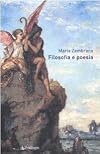
La tesi di fondo di questo saggio della Zambrano, che parte dalla netta divisione tra parola filosofica e parola poetica attuata da Platone, sostiene che mentre il filosofo - greco in particolare - cerca l'unità e spende tutto se stesso in questa indagine facendo violenza alla molteplicità del reale, il poeta vive nella frammentarietà del tutto e ad essa si dà gratuitamente poiché a lui si offrono come dono le apparenze, ovvero la realtà così come essa è.
In questa prospettiva la show more poesia è infatti incontro, dono, scoperta venuta dal cielo; la filosofia è ricerca, urgente domanda guidata da un metodo. show less
In questa prospettiva la show more poesia è infatti incontro, dono, scoperta venuta dal cielo; la filosofia è ricerca, urgente domanda guidata da un metodo. show less
Es un libro difícil de leer no por el vocabulario, sino por como están formuladas las frases, aún así es muy enriquecedor.
Habla del amor en todo su esplendor y opciones.
Habla del amor en todo su esplendor y opciones.
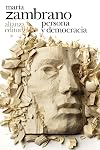

María Zambrano publicó por primera vez su libro Persona y Democracia en 1958, en circunstancias -según ella misma confiesa en su prólogo de 1987- a las que vivimos hoy. Lo que las nuevas circunstancias revelan es la renuncia del hombre a ser persona, a vivir humanamente: habita un eterno presente donde la historia ya no se constituye como proyecto, donde no existe progreso ni democracia, sino el poder absoluto de dioses oscuros ávidos de sacrificios humanos: la democracia y la historia show more verdaderas -humanas y, por tanto, morales- parecen empresas condenadas a la destrucción. show less
Lists
Antigua Grecia (1)
Awards


You May Also Like


Associated Authors
Statistics
- Works
- 91
- Also by
- 1
- Members
- 724
- Popularity
- #35,064
- Rating
- 3.7
- Reviews
- 19
- ISBNs
- 188
- Languages
- 6
- Favorited
- 1