
Brooke Gladstone
Author of The Influencing Machine: Brooke Gladstone on the Media
About the Author
Image credit: On The Media
Works by Brooke Gladstone
Tagged
Common Knowledge
- Birthdate
- 1955
- Gender
- female
- Education
- University of Vermont
Stanford University - Occupations
- journalist
media analyst - Relationships
- Kaplan, Fred M. (husband)
- Nationality
- USA
- Birthplace
- Long Island, New York, USA
- Places of residence
- New York, New York, USA
- Associated Place (for map)
- New York, USA
Members
Reviews
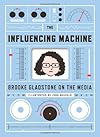
This surprised me. I was sure that I wasn't going to like it, but I did. I'm constantly ticked off by the media. Constantly. I can't watch more than five minutes of the mainstream news before a new stress twitch starts somewhere around my eyes. It's not new for me. My media “black pill” was back in the mid-80s when someone I knew was murdered and I had to read the press coverage in the NYC press. I don't completely believe anything they say unless I can verify it with at least two or show more three other sources.
I developed the habit of checking and rechecking events that mattered to me. With the advent of the Internet, it became so much easier to track down sources. I wasn't confined to the library to do my checking on important stuff. I had a huge resource sitting in my house. I could go to other sources, listen to multiple sides of an issue, and find witnesses to an event talking directly to the public. So much better.
Gladstone essentially says the same thing. We shouldn't trust what we read or hear. We should check and double-check the things that are important to us. Don't rely on Twitter for the news. Figure out what those Facebook posts really mean. And most important, don't blame the media when you misinterpret things. Headlines are not the news. Headlines sell the paper (or get the clicks). That's what they are meant to do.
So yeah! The illustrations kept this light-hearted and she had plenty of excellent things to say. show less
I developed the habit of checking and rechecking events that mattered to me. With the advent of the Internet, it became so much easier to track down sources. I wasn't confined to the library to do my checking on important stuff. I had a huge resource sitting in my house. I could go to other sources, listen to multiple sides of an issue, and find witnesses to an event talking directly to the public. So much better.
Gladstone essentially says the same thing. We shouldn't trust what we read or hear. We should check and double-check the things that are important to us. Don't rely on Twitter for the news. Figure out what those Facebook posts really mean. And most important, don't blame the media when you misinterpret things. Headlines are not the news. Headlines sell the paper (or get the clicks). That's what they are meant to do.
So yeah! The illustrations kept this light-hearted and she had plenty of excellent things to say. show less
The media. Most of us have, like me, a love-hate relationship with the media. Can't live with it, can't live without it, right?
In this book, Brooke Gladstone explores the history of the media, and in particular, the history of the American media. Now, you might think this would be a boring subject, but Gladstone and her book, both in comic/graphic form, makes it both interesting and entertaining - and I really enjoyed it. If you are unhappy with the media today, it seems we have been here show more before. "Everything we hate about the media today was present at its creation."
Additionally, Gladstone explores issues related to the media—bias (who knew there were that many kinds!?), objectivity, propaganda, war coverage, disclosure, to name a few. She also touches on contemporary media issues (photoshopification of photos, citizen journalism...etc) and looks ahead into the future (chips in our heads, anyone?). There's a lot in this book.
I didn't think I would like the graphic/comic rending of the book, but in hindsight, I thought it a perfect vehicle for it. The visual style spread the ideas out a bit, giving you a bit of space to mull them over, while augmenting the ideas with illustrations, some quite humorous. As I said before, it's a fabulous blend of education and entertainment. She isn't defending the media so much as explaining and educating. Yes, it's as bad as we thought. "So news consumers seeking quality information have to penetrate an intensifying fog of passion and poppycock. That take great commitment. Because truth seekers also must struggle endlessly with a force even more seductive than the media, a force that weaves an irresistible vision of a familiar and predictable world."
Here's some tidbits:
"There's a long-standing debate in the media biz over whether news outlets should give the public what it wants, or what it needs. This debate presupposes that media execs actually know what it wants or needs. And that there actually is a unitary 'public' ."
"Impartiality, like news itself, is whatever the publisher says it is."
"The American media are not afraid of the government. They are afraid of their audiences and advertisers. The media do not control you. They pander to you."
"{Neil}Postman says the moment we could get instant news from everywhere--news not directly relevant to us--that's when news became entertainment. Or as C. K. Chesterton put it: Journalism largely consists of saying 'Lord Jones is Dead' to people who never knew Lord Jones was alive. But Chesterton's news came from newspapers. In fact, as far back as Caesar's Acta Diurna, news has always been entertainment. The difference between their eras and our own is that now, news from everywhere is relevant. Unemployment in the Middle East, environmental policies in Asia, epidemics in Africa--this news affects us all. And now we can act, easily, to spread the news, and even influence how those stories end." show less
In this book, Brooke Gladstone explores the history of the media, and in particular, the history of the American media. Now, you might think this would be a boring subject, but Gladstone and her book, both in comic/graphic form, makes it both interesting and entertaining - and I really enjoyed it. If you are unhappy with the media today, it seems we have been here show more before. "Everything we hate about the media today was present at its creation."
Additionally, Gladstone explores issues related to the media—bias (who knew there were that many kinds!?), objectivity, propaganda, war coverage, disclosure, to name a few. She also touches on contemporary media issues (photoshopification of photos, citizen journalism...etc) and looks ahead into the future (chips in our heads, anyone?). There's a lot in this book.
I didn't think I would like the graphic/comic rending of the book, but in hindsight, I thought it a perfect vehicle for it. The visual style spread the ideas out a bit, giving you a bit of space to mull them over, while augmenting the ideas with illustrations, some quite humorous. As I said before, it's a fabulous blend of education and entertainment. She isn't defending the media so much as explaining and educating. Yes, it's as bad as we thought. "So news consumers seeking quality information have to penetrate an intensifying fog of passion and poppycock. That take great commitment. Because truth seekers also must struggle endlessly with a force even more seductive than the media, a force that weaves an irresistible vision of a familiar and predictable world."
Here's some tidbits:
"There's a long-standing debate in the media biz over whether news outlets should give the public what it wants, or what it needs. This debate presupposes that media execs actually know what it wants or needs. And that there actually is a unitary 'public' ."
"Impartiality, like news itself, is whatever the publisher says it is."
"The American media are not afraid of the government. They are afraid of their audiences and advertisers. The media do not control you. They pander to you."
"{Neil}Postman says the moment we could get instant news from everywhere--news not directly relevant to us--that's when news became entertainment. Or as C. K. Chesterton put it: Journalism largely consists of saying 'Lord Jones is Dead' to people who never knew Lord Jones was alive. But Chesterton's news came from newspapers. In fact, as far back as Caesar's Acta Diurna, news has always been entertainment. The difference between their eras and our own is that now, news from everywhere is relevant. Unemployment in the Middle East, environmental policies in Asia, epidemics in Africa--this news affects us all. And now we can act, easily, to spread the news, and even influence how those stories end." show less
Complaints about the media are pretty rife, in just about any time, it seems, along with a lot of misconceptions about how it's worked in the past. In this book, Gladstone sets out to try to address these problems with a historical overview of the topic, starting from the Mayans and the Romans, but mostly focusing on the US context through the years. Along the way, she goes through a good amount of history and historical figures (Jefferson definitely switched his views once he was in office, show more but still stayed in favor of a free press to the end), philosophers, and quotes from authors, journalists and poets about how they feel about the press. For a fairly short book, you come away feeling like you've picked up a lot on the topic.
Gladstone addresses a good amount about how people have felt about objectivity through the years, as compared to disclosure, discusses the different kinds of bias, talks about changes in how people have dealt with censorship, with covering wars, with changes in media, and other sorts of exciting topics. That was meant unsarcastically; I rather like discussions about media, so this was a good fit for me, but if you're not into the topic as a matter of general interest, this might still be a good book for you, and get you think about the topic.
I wasn't sure at the outset how well the graphic format would fit the discussion, but I've read a bunch of non-fiction comic setups through the years, and so I had an open mind about it. This actually was a nice hybrid; the pictures were crisp, well done, with the green tones making it feel somehow historic, and illustrated the point, or even carried it, sometimes, but there were also occasional pages of text to make the point where the pictures might have gotten in the way. In other words, the pictures and the words were both used quite judiciously.
On the whole, this was a really quite interesting book, if not super in depth, and a nice, fast and easy read. It's a worthy match for some of the other non-fiction comics I've read, like various books by Larry Gonick, for example, and I'm open to trying more of this sort of thing now. show less
Gladstone addresses a good amount about how people have felt about objectivity through the years, as compared to disclosure, discusses the different kinds of bias, talks about changes in how people have dealt with censorship, with covering wars, with changes in media, and other sorts of exciting topics. That was meant unsarcastically; I rather like discussions about media, so this was a good fit for me, but if you're not into the topic as a matter of general interest, this might still be a good book for you, and get you think about the topic.
I wasn't sure at the outset how well the graphic format would fit the discussion, but I've read a bunch of non-fiction comic setups through the years, and so I had an open mind about it. This actually was a nice hybrid; the pictures were crisp, well done, with the green tones making it feel somehow historic, and illustrated the point, or even carried it, sometimes, but there were also occasional pages of text to make the point where the pictures might have gotten in the way. In other words, the pictures and the words were both used quite judiciously.
On the whole, this was a really quite interesting book, if not super in depth, and a nice, fast and easy read. It's a worthy match for some of the other non-fiction comics I've read, like various books by Larry Gonick, for example, and I'm open to trying more of this sort of thing now. show less
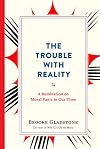
Saw this slender little book on the featured table at the store and just couldn't resist it. Especially as it name-checked Philip K. Dick on the flap. Gladstone is clearly my kind of people. Which is confirmed over and over again as she quotes Le Guin, and then George Lakoff. So, basically I'm pretty much exactly her core audience.
Which is a good thing, because this little tract gives little space to identify a problem, its causes, and a possible solution. Those not already on board may find show more these arguments unconvincing. But for me, each page was assimilated directly into my brain, no resistance.
While I would have loved more concrete suggestions in the end, those given were entirely in keeping with the more philosophical tone of this tract. Very happy to have picked it up. show less
Which is a good thing, because this little tract gives little space to identify a problem, its causes, and a possible solution. Those not already on board may find show more these arguments unconvincing. But for me, each page was assimilated directly into my brain, no resistance.
While I would have loved more concrete suggestions in the end, those given were entirely in keeping with the more philosophical tone of this tract. Very happy to have picked it up. show less
Lists
Awards


You May Also Like


Associated Authors
Statistics
- Works
- 4
- Members
- 693
- Popularity
- #36,520
- Rating
- 4.1
- Reviews
- 37
- ISBNs
- 14
- Languages
- 3