
About the Author
Noah Strycker has studied birds in some of the world's most extreme environments and is associate editor of the American Birding Association's flagship magazine, Birding. He writes, lectures, and lives near Eugene, Oregon, between field seasons.
Image credit: Noah Strycker birding in California, in 2014 / Photo by Bkpix
Works by Noah Strycker
The Thing with Feathers: The Surprising Lives of Birds and What They Reveal About Being Human (2014) 473 copies, 35 reviews
Birding Without Borders: An Obsession, a Quest, and the Biggest Year in the World (2017) 217 copies, 12 reviews
National Geographic Birding Basics: Tips, Tools, and Techniques for Great Bird-watching (2022) 24 copies, 3 reviews
The Magic and Mystery of Birds: The Surprising Lives of Birds and What They Reveal About Being Human (2014) 12 copies, 1 review
Tagged
Common Knowledge
- Birthdate
- 1986-02-09
- Gender
- male
- Education
- Oregon State University (BS|Fisheries and Wildlife Science)
- Occupations
- editor
ornithologist - Short biography
- Noah Strycker is a 30-year-old writer, photographer, and bird man based near Eugene, Oregon. In 2015, during a quest spanning 41 countries and all seven continents, he set a world record by seeing 6,042 species of birds – more than half the birds on Earth – in one calendar year. He has also written two well-received books, The Thing With Feathers (2014) and Among Penguins (2011), and is Associate Editor of Birding magazine.
- Nationality
- USA
- Places of residence
- Oregon, USA
- Associated Place (for map)
- Oregon, USA
Members
Reviews

This spring migration I did my own very small version of listing, trying to get as many birds in Manhattan as I could in April and May. This made me eager to read a couple of books about better birders trying for bigger lists.
Noah Strycker tried for a Global Big Year in 2015, trying to see as many birds as he possibly could all around the world. Most books of this genre describe a breakneck pace of birders trying to spot as many rarities as possible in order to up their numbers. But, show more Strycker's attitude towards his own pursuit was refreshing:
"The world is the only scale that doesn’t reward rarity hunts. I liked the idea that, by thinking globally and birding locally, I was helping to reinvent the Big Year as a way to appreciate the most common birds in their proper habitats."
This book is a great addition to the genre. show less
Noah Strycker tried for a Global Big Year in 2015, trying to see as many birds as he possibly could all around the world. Most books of this genre describe a breakneck pace of birders trying to spot as many rarities as possible in order to up their numbers. But, show more Strycker's attitude towards his own pursuit was refreshing:
"The world is the only scale that doesn’t reward rarity hunts. I liked the idea that, by thinking globally and birding locally, I was helping to reinvent the Big Year as a way to appreciate the most common birds in their proper habitats."
This book is a great addition to the genre. show less
The Thing with Feathers: The Surprising Lives of Birds and What They Reveal About Being Human by Noah Strycker
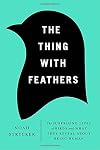
I thoroughly enjoyed "The Thing with Feathers." This well-written book discusses specialized traits and behaviours of various bird species with both humor and charm. The assertiveness of the smallest hummingbirds, the amazing migratory journeys, the sensitivity of the vultures' nose, the fascinating and distracting irruptions of the magnificant snowy owl; all are described with sufficient detail and scope to both inform and fascinate. My only quibble, and it is minor, is that some of the show more observations regarding parallels with human traits seemed unecessary and distracting. Rather, I wanted more of the elegant portraits of bird species and their interesting peculiarities of behaviour. The author's expertise on birds is apparent but he is neither patronizing or pedantic in tone; both the experienced biologist or birder and the curious amateur should enjoy this work and find new perspectives and information. My thanks to LibraryThing Early Reviewers for this very enjoyable book. show less
 This review was written for LibraryThing Early Reviewers.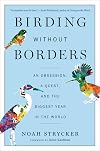
I really enjoyed following Strycker's adventures; his love of birding is definitely communicative! This is a good balance of travel, birding, appreciation of nature, and adventure. While we definitely learn about birds, this book can appeal to a broader audience, curious about following one's passions or travelling the world. Admittedly it gave me a bit of FOMO!
Also, I have fallen in love with bird names all over again: who cannot be enthralled with a Buffit Pitpit or Heart-spotted show more Woodpecker even without seeing one? show less
Also, I have fallen in love with bird names all over again: who cannot be enthralled with a Buffit Pitpit or Heart-spotted show more Woodpecker even without seeing one? show less
The Thing with Feathers: The Surprising Lives of Birds and What They Reveal About Being Human by Noah Strycker
You might not think you could learn anything about humans by studying birds, but Noah Strycker, who calls himself "a full-time bird man," thinks you can. What's more, he has written a terrific new book, "The Thing with Feathers" (Riverhead Books), in which he discusses 13 bird species whose behavior may shed light on human behavior.
Do bowerbirds display an artistic sense when males build elaborate bowers to attract mates? Is their behavior all that different from human males who sometimes show more use art, whether it is rock music or a sporty car, to attract women?
Are fairy-wrens being altruistic when they help feed the young of unrelated fairy-wrens? Does their behavior teach us anything about human acts of generosity?
Can the lifetime mating of albatrosses really be called love? Why do they seem to do it better than most human couples?
Whether he's writing about the militant ways of hummingbirds or the pecking order of chickens, Strycker always returns to the human species and draws some surprising conclusions.
I wonder how others in the scientific community feel about Strycker's research. Do they find him guilty of recklessly extending human qualities to animals? But never mind. He writes more for general readers than for scientists, and this general reader, at least, is impressed. Here is one of my favorite of Strycker's conclusions: "Sure, we can never know whether or not real altruism exists in this universe, but wouldn't it be wise for us -- considering the bleak alternative -- to take a cue from fairy-wrens, and act as if it did? show less
Do bowerbirds display an artistic sense when males build elaborate bowers to attract mates? Is their behavior all that different from human males who sometimes show more use art, whether it is rock music or a sporty car, to attract women?
Are fairy-wrens being altruistic when they help feed the young of unrelated fairy-wrens? Does their behavior teach us anything about human acts of generosity?
Can the lifetime mating of albatrosses really be called love? Why do they seem to do it better than most human couples?
Whether he's writing about the militant ways of hummingbirds or the pecking order of chickens, Strycker always returns to the human species and draws some surprising conclusions.
I wonder how others in the scientific community feel about Strycker's research. Do they find him guilty of recklessly extending human qualities to animals? But never mind. He writes more for general readers than for scientists, and this general reader, at least, is impressed. Here is one of my favorite of Strycker's conclusions: "Sure, we can never know whether or not real altruism exists in this universe, but wouldn't it be wise for us -- considering the bleak alternative -- to take a cue from fairy-wrens, and act as if it did? show less
This review was written for LibraryThing Early Reviewers.Lists
Awards


You May Also Like


Associated Authors
Statistics
- Works
- 8
- Members
- 877
- Popularity
- #29,203
- Rating
- 4.2
- Reviews
- 55
- ISBNs
- 36
- Languages
- 5
