
Laurie Penny
Author of Unspeakable Things: Sex, Lies and Revolution
About the Author
Laurie Penny was born in London in 1986 and grew up on the Internet. Her blog, Penny Rea, was shortlisted for the Orwell Prize for political writing in 2010. She is a contributing editor at New Statesman magazine and editor at large at the New Inquiry, and has written for the Guardian, Salon, the show more Nation, and others. She is also the author of Meat Market female Flesh Under Capitalism, a collection of her columns; Penny Red: Notes from the New Age of Dissent; Discordia: Six Nights in Crisis Athens (with Molly Crabapple): and Cybersexism, an original e-book from which this book draws. Follow@PennyRed. show less
Image credit: Laurie Penny
Works by Laurie Penny
Associated Works
The Wicked + The Divine, Vol. 5: Imperial Phase, Part 1 (2017) — Contributor — 480 copies, 17 reviews
Worlds Seen in Passing: Ten Years of Tor.com Short Fiction (2018) — Contributor — 161 copies, 1 review
Some of the Best from Tor.com: 2019 Edition: A Tor.com Original (2020) — Contributor — 157 copies, 3 reviews
Femme Magnifique: 50 Magnificent Women who Changed the World (2018) — Contributor — 60 copies, 2 reviews
Tagged
Common Knowledge
- Canonical name
- Penny, Laurie
- Other names
- PENNY, Laurie
- Birthdate
- 1986-09-28
- Gender
- female
- Education
- Brighton College
University of Oxford (Wadham College) - Occupations
- journalist
essayist
non-fiction author
short story writer
blogger
author - Nationality
- UK
- Birthplace
- London, England, UK
- Places of residence
- Brighton, Sussex, England, UK
- Associated Place (for map)
- England, UK
Members
Reviews

Entertaining and thought-provoking, this novella left me wanting more. (Sooooo much more!)
(Full disclosure: I received a free ebook for review through NetGalley. Trigger warning for rape.)
“All I wanted was to make something small and bright and good, something that lasted a little while, a little while longer than I did. All I wanted was to push back against the darkness just a little bit. To live in the cracks in capitalism with the people I care about, just for a little while. But it show more turns out I can’t even have that. And now I just want to burn shit down.”
It's the turn of the century - the 21st, to be exact - and humanity has finally discovered the fountain of youth. It comes in the form of a little blue pill that will cost you $200 a pop on the black market; a little less, if you're one of the lucky few who has insurance. Most don't, as this "weaponization of time" has only exacerbated class inequality.
Only the wealthiest citizens can afford life-extension drugs; regular folks deemed "important to society" - scientists, artists, musicians, the occasional writer - may receive a sponsorship to continue their work, but ultimately they live and age and die at the whim of those more powerful than they. Show a modicum of concern for the working class, and you just might find your sponsorship revoked.
Alex, Nina, Margo, Fidget, and Jasper are a group of artist/activists living in a dilapidated, mouse- and mold-infested flat in the underside of Oxford city. They work day jobs where they can find them, but their real passion is playing at Robin Hood. A few times a week, they load up their food truck with cheese sammies or mystery stews made of reclaimed food, and distribute free meals to Oxford's neediest citizens. At the bottom of each foodstuff is a happy meal surprise: a little blue pill, most likely stolen. One per person, so second helpings.
The group's machinations are kicked up about twenty notches when they meet Professor Daisy Craver (d.o.b. April 14, 2003), a 95-year-old woman in a 14-year-old girl's body. She was one of the pioneers of the fix; now she wants to be its downfall. Or rather, its equalizer.
Complicating matters is Alex's duplicity: for the past three years, he's been working for Daisy's employer, TeamThreeHundred, as a snitch: infiltrating the group and reporting back on their activities.
(Given that he's sleeping with Nina, this raises some pretty thorny ethical questions, as explored in "AFTER SARKEESIAN: A RADICAL FEMINIST CLOUDCAST." Penny based this particular plot point on contemporary reports of undercover officers in the UK "deliberately engineer[ing] relationships with activists to facilitate their work.": "Interviews with the agents spin these stories as tragic doomed romances. The women involved describe the experiences as a violation. We believe them.")
So I'm really enjoying Tor's new series of novellas; it gives me a chance to read more authors and explore more fictional worlds than I could otherwise, thanks to the shorter format. As with Kij Johnson's The Dream-Quest of Vellitt Boe, Everything Belongs to the Future expertly walks the tightrope that is the novella. Penny introduces a world that is rich and complex and vividly imagined, giving us a plot that's fully fleshed out and resolved satisfactorily, all in just 112 pages. And she leaves us wanting more. (So, so much more!) This is an idea that could easily support a full-length novel - or a whole series of them - and yet still makes it work in a fraction of space.
The characters are all wonderfully developed, from Nina and Daisy to Margo and Fidget. I especially loved the introduction of Milo; he could easily carry a spin-off novella on his own (someone make this happen please?). Penny tackles a wealth of issues: class, race, religion, the meritocracy, sexuality, representation, gender identity, activism, gender, rape, consent, climate change, biodiversity, science and ethics. Everything Belongs to the Future exhibits greater diversity than the entire oeuvres of some authors, and is all the better - more real, engaging, and compassionate - for it.
To summarize, I cannot recommend Everything Belongs to the Future highly enough. The only real downside is that it makes me super-depressed that Penny hasn't written more fiction, on account of she's so damn good at it. Le sigh.
http://www.easyvegan.info/2016/12/05/everything-belongs-to-the-future-by-laurie-... show less
(Full disclosure: I received a free ebook for review through NetGalley. Trigger warning for rape.)
“All I wanted was to make something small and bright and good, something that lasted a little while, a little while longer than I did. All I wanted was to push back against the darkness just a little bit. To live in the cracks in capitalism with the people I care about, just for a little while. But it show more turns out I can’t even have that. And now I just want to burn shit down.”
It's the turn of the century - the 21st, to be exact - and humanity has finally discovered the fountain of youth. It comes in the form of a little blue pill that will cost you $200 a pop on the black market; a little less, if you're one of the lucky few who has insurance. Most don't, as this "weaponization of time" has only exacerbated class inequality.
Only the wealthiest citizens can afford life-extension drugs; regular folks deemed "important to society" - scientists, artists, musicians, the occasional writer - may receive a sponsorship to continue their work, but ultimately they live and age and die at the whim of those more powerful than they. Show a modicum of concern for the working class, and you just might find your sponsorship revoked.
Alex, Nina, Margo, Fidget, and Jasper are a group of artist/activists living in a dilapidated, mouse- and mold-infested flat in the underside of Oxford city. They work day jobs where they can find them, but their real passion is playing at Robin Hood. A few times a week, they load up their food truck with cheese sammies or mystery stews made of reclaimed food, and distribute free meals to Oxford's neediest citizens. At the bottom of each foodstuff is a happy meal surprise: a little blue pill, most likely stolen. One per person, so second helpings.
The group's machinations are kicked up about twenty notches when they meet Professor Daisy Craver (d.o.b. April 14, 2003), a 95-year-old woman in a 14-year-old girl's body. She was one of the pioneers of the fix; now she wants to be its downfall. Or rather, its equalizer.
Complicating matters is Alex's duplicity: for the past three years, he's been working for Daisy's employer, TeamThreeHundred, as a snitch: infiltrating the group and reporting back on their activities.
(Given that he's sleeping with Nina, this raises some pretty thorny ethical questions, as explored in "AFTER SARKEESIAN: A RADICAL FEMINIST CLOUDCAST." Penny based this particular plot point on contemporary reports of undercover officers in the UK "deliberately engineer[ing] relationships with activists to facilitate their work.": "Interviews with the agents spin these stories as tragic doomed romances. The women involved describe the experiences as a violation. We believe them.")
So I'm really enjoying Tor's new series of novellas; it gives me a chance to read more authors and explore more fictional worlds than I could otherwise, thanks to the shorter format. As with Kij Johnson's The Dream-Quest of Vellitt Boe, Everything Belongs to the Future expertly walks the tightrope that is the novella. Penny introduces a world that is rich and complex and vividly imagined, giving us a plot that's fully fleshed out and resolved satisfactorily, all in just 112 pages. And she leaves us wanting more. (So, so much more!) This is an idea that could easily support a full-length novel - or a whole series of them - and yet still makes it work in a fraction of space.
The characters are all wonderfully developed, from Nina and Daisy to Margo and Fidget. I especially loved the introduction of Milo; he could easily carry a spin-off novella on his own (someone make this happen please?). Penny tackles a wealth of issues: class, race, religion, the meritocracy, sexuality, representation, gender identity, activism, gender, rape, consent, climate change, biodiversity, science and ethics. Everything Belongs to the Future exhibits greater diversity than the entire oeuvres of some authors, and is all the better - more real, engaging, and compassionate - for it.
To summarize, I cannot recommend Everything Belongs to the Future highly enough. The only real downside is that it makes me super-depressed that Penny hasn't written more fiction, on account of she's so damn good at it. Le sigh.
http://www.easyvegan.info/2016/12/05/everything-belongs-to-the-future-by-laurie-... show less
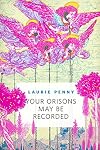
“Human hearts,” says Gremory, “are brittle, but also durable. I should know; I’ve eaten thousands. You should never attempt to engage one while it’s still beating. I advise against it.”
An angel working in a call center answering prayers (errr, kind of) is suffering from burnout after centuries on the job. A surreal, heartrending, and darkly humorous meditation on love and loss, passion and faith, wants and needs. The narrator is reminiscent of Supernatural's Castiel, what with show more her weird affinity for humans and our "petty" affairs. It's a short story, but the world Penny creates here would make a pretty rad setting for a full-length book. show less
An angel working in a call center answering prayers (errr, kind of) is suffering from burnout after centuries on the job. A surreal, heartrending, and darkly humorous meditation on love and loss, passion and faith, wants and needs. The narrator is reminiscent of Supernatural's Castiel, what with show more her weird affinity for humans and our "petty" affairs. It's a short story, but the world Penny creates here would make a pretty rad setting for a full-length book. show less
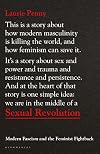
I was prepared to go along with, even endorse, Laurie Penny's contention that white male entitlement is almost exclusively to blame for our society's burden of sexism and sexual violence because, well, if we are honest about it, there's much truth to it, and if her thesis is rather simplistically and brutally prosecuted for rhetorical purposes, then again so is male violence. But one passage in this otherwise cogently argued book, fiery polemics aside, stuck out like a jagged edge, so show more unbelievable are its implications. Penny is careful to differentiate between the worst of male offenders and the rest of the male population, the majority of whom after all do not offend. Yet when she queried her male friends "what exactly it was that stopped them going down that road" and "manage to retain their grip on human decency," as if the only thing holding them back was their triumphant self-control, the reasons they gave are nonetheless unwittingly shocking:
"It was my mother, one man wrote. She raised me to respect women. It was my father, said another. I saw how he treated my mother and sisters. I swore to be different. I escaped an oppressive Evangelist background, another man told me, and that led me to question everything. It was the love of Jesus, said another. My college girlfriend was patient with me. My wife had had enough. I have a daughter. I am a son. It was the girls in my online gaming group. It was my karate teacher. I got sober. I got dumped. I got better."
So that means, if I don't have a good mother, or a good father, I'm more liable to hate and kill women? Or it's only because I "swear" to be "different" from the common killer that prevents me from becoming one? If I don't love Jesus, I will inevitably assault or kill? If my college girlfriend is impatient with me, I will have to kill her? Or only having a child can prevent me from becoming violent? If the females in my gaming group aren't friendly enough, that will cause me to kill them? Alternatively, to prevent myself from becoming a murderer, I can try distracting myself with martial arts? Or stop drinking? Or behave just obnoxiously enough to get dumped so that I don’t do anything worse?
Wow. Who the hell are these guys? I suppose I've met a smattering of types over the years who may have expressed such dimwitted sentiments but I don't recall any. Equally bewildering is Penny's implicit assumption that these represent the best of men, her evident admiration for their courage in facing their darkest impulses: "Every answer was different. The common thing was that they all had one. There was a moment, or a number of moments, where they decided to rewrite the story of their own lives. The difference between sexist and non-sexist men is not how depressed they are but how good their skills are for dealing with it."
If struggling against the implacable inner compulsion toward violence represents some kind of model behavior or skillfulness in handling male despair, I'm not sure where that leaves me, as I, inexplicably, do not feel any such compulsion. Perhaps I must be in some kind of denial and if I were honest with myself I would have to recognize and come to terms with my own killer instinct?
No. I am sorry, but although I am a white male, I am not one of them. The reason I don't assault or kill women is not that something is holding me back. Quite simply, the very idea of hurting another person is repugnant and unimaginable irrespective of the circumstances! And of course it's morally wrong and evil. No other reason is needed. I can no more comprehend the mentality of violent men than any (nonviolent) woman can.
If Penny truly believes it's only men's mastery of their violent tendencies that keeps them from harming women, hers is indeed a grim, dark, pessimistic view of men. It's clear from Penny's account that she does not hate men; she claims to have loved many men in her life. She reminds us that the sexual revolution she believes is presently gathering force can restore male-female sexual relations to a state of equality and consent rather than coercion and fear: "Men who mouth the language of erotic liberation are often secretly terrified of women’s sexual agency." While she does express a nice paradox here, it doesn't ring true for me. I am not at all intimidated by women who boldly declare their desire; it's quite a turn-on in fact. I am sure many men long to see a society where women could display their sexual agency as freely and safely as they themselves can.
I'm afraid men are more complex and the world more complicated than Penny makes it out to be. The problem is not her depiction of awful men, legions of whom unfortunately do exist. It's the absence of any truly positive examples of men that confounds, or not even that, just ordinary men I see around me and deal with on a regular basis who are living constructively and creatively and have better things to do than live lives "predicated on violence." show less
"It was my mother, one man wrote. She raised me to respect women. It was my father, said another. I saw how he treated my mother and sisters. I swore to be different. I escaped an oppressive Evangelist background, another man told me, and that led me to question everything. It was the love of Jesus, said another. My college girlfriend was patient with me. My wife had had enough. I have a daughter. I am a son. It was the girls in my online gaming group. It was my karate teacher. I got sober. I got dumped. I got better."
So that means, if I don't have a good mother, or a good father, I'm more liable to hate and kill women? Or it's only because I "swear" to be "different" from the common killer that prevents me from becoming one? If I don't love Jesus, I will inevitably assault or kill? If my college girlfriend is impatient with me, I will have to kill her? Or only having a child can prevent me from becoming violent? If the females in my gaming group aren't friendly enough, that will cause me to kill them? Alternatively, to prevent myself from becoming a murderer, I can try distracting myself with martial arts? Or stop drinking? Or behave just obnoxiously enough to get dumped so that I don’t do anything worse?
Wow. Who the hell are these guys? I suppose I've met a smattering of types over the years who may have expressed such dimwitted sentiments but I don't recall any. Equally bewildering is Penny's implicit assumption that these represent the best of men, her evident admiration for their courage in facing their darkest impulses: "Every answer was different. The common thing was that they all had one. There was a moment, or a number of moments, where they decided to rewrite the story of their own lives. The difference between sexist and non-sexist men is not how depressed they are but how good their skills are for dealing with it."
If struggling against the implacable inner compulsion toward violence represents some kind of model behavior or skillfulness in handling male despair, I'm not sure where that leaves me, as I, inexplicably, do not feel any such compulsion. Perhaps I must be in some kind of denial and if I were honest with myself I would have to recognize and come to terms with my own killer instinct?
No. I am sorry, but although I am a white male, I am not one of them. The reason I don't assault or kill women is not that something is holding me back. Quite simply, the very idea of hurting another person is repugnant and unimaginable irrespective of the circumstances! And of course it's morally wrong and evil. No other reason is needed. I can no more comprehend the mentality of violent men than any (nonviolent) woman can.
If Penny truly believes it's only men's mastery of their violent tendencies that keeps them from harming women, hers is indeed a grim, dark, pessimistic view of men. It's clear from Penny's account that she does not hate men; she claims to have loved many men in her life. She reminds us that the sexual revolution she believes is presently gathering force can restore male-female sexual relations to a state of equality and consent rather than coercion and fear: "Men who mouth the language of erotic liberation are often secretly terrified of women’s sexual agency." While she does express a nice paradox here, it doesn't ring true for me. I am not at all intimidated by women who boldly declare their desire; it's quite a turn-on in fact. I am sure many men long to see a society where women could display their sexual agency as freely and safely as they themselves can.
I'm afraid men are more complex and the world more complicated than Penny makes it out to be. The problem is not her depiction of awful men, legions of whom unfortunately do exist. It's the absence of any truly positive examples of men that confounds, or not even that, just ordinary men I see around me and deal with on a regular basis who are living constructively and creatively and have better things to do than live lives "predicated on violence." show less
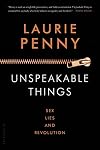
I found ‘Unspeakable Things’ thought-provoking in ways that I did not expect. It is a forceful and lucid polemic about the structural sexism of neoliberal capitalism. Laurie Penny talks about a number of her own experiences, which are powerful and at times uncomfortable to read (notably on the subject of anorexia). Her main topics are how the patriarchy negatively impacts on teenage girls, men, sex, the internet, and love. Of these, I found the standouts to be the chapter on men and that show more on cybersexism. The former points out very effectively that patriarchy has always involved a few rich, powerful men imposing their will, leaving the remainder of men with only power over women and children. The intersection between sexism and other inequalities is neatly exposed in her writing. On cybersexism, she describes the depressing trend of women who express opinions online receiving hyperbolic threats of rape and other violence. I hadn’t come across such detailed analysis of this horrible phenomenon before. A quote that struck me:
What really threw the book into focus for me was the afterword, though. It begins as follows: ‘People wanted me to sum up this book, to tie it up neatly with a set of answers. What programme, what policy would make life under neoliberalism less demeaning for women, queer people, and their allies?’ Indeed, that’s what I was expecting! It’s the standard model for such books, as well as something I particularly like in anything I read critiquing the status quo. Proposed solutions don’t have to be costed, watertight, and detailed, but I enjoy novel suggestions for making the world a better place. Laurie Penny takes an interesting stance on this: that engaging on such a level isn’t helpful as there are ‘no easy answers’. Her hope for the future comes from marginal, alternative communities finding different ways to love and relate to one another. I suppose that stance seems odd to me as I have a mindset mired in academia. I want to understand the flaws in a series of systems (within the system-of-systems that is capitalism), in order to propose ways to change those systems for the better. This book has thus caused me to contemplate in more depth the range of ways to mentally approach the notion of ‘changing the world’, balancing lived experience and analysis. It also reminded me of the importance of speaking up for non-normative female lives. I am a woman who has never wanted to get married or have children, and that’s just fine. show less
Patriarchal surveillance was a daily feature of the lives of women and girls for centuries before the computer in every workplace and the camera in every pocket made it that much easier. The emotional logic of state and corporate surveillance works very much the same way: the police, our employers, even our parents with network connections may be watching only one in a thousand of our tweets, one in ten thousand of our indiscreet facebook messages, they may only be watching one in a hundred CCTV cameras of the tens of thousands deployed around every major city, but we must always act as if we are observed and curb our behaviour accordingly.
What really threw the book into focus for me was the afterword, though. It begins as follows: ‘People wanted me to sum up this book, to tie it up neatly with a set of answers. What programme, what policy would make life under neoliberalism less demeaning for women, queer people, and their allies?’ Indeed, that’s what I was expecting! It’s the standard model for such books, as well as something I particularly like in anything I read critiquing the status quo. Proposed solutions don’t have to be costed, watertight, and detailed, but I enjoy novel suggestions for making the world a better place. Laurie Penny takes an interesting stance on this: that engaging on such a level isn’t helpful as there are ‘no easy answers’. Her hope for the future comes from marginal, alternative communities finding different ways to love and relate to one another. I suppose that stance seems odd to me as I have a mindset mired in academia. I want to understand the flaws in a series of systems (within the system-of-systems that is capitalism), in order to propose ways to change those systems for the better. This book has thus caused me to contemplate in more depth the range of ways to mentally approach the notion of ‘changing the world’, balancing lived experience and analysis. It also reminded me of the importance of speaking up for non-normative female lives. I am a woman who has never wanted to get married or have children, and that’s just fine. show less
Lists
Awards


You May Also Like


Associated Authors
Statistics
- Works
- 17
- Also by
- 10
- Members
- 1,005
- Popularity
- #25,666
- Rating
- 3.8
- Reviews
- 37
- ISBNs
- 45
- Languages
- 3
- Favorited
- 2