
Ifeoma Onyefulu
Author of A Is for Africa
About the Author
Image credit: Publicity photo from author's website.
Series
Works by Ifeoma Onyefulu
Tagged
Common Knowledge
- Birthdate
- 1959
- Gender
- female
- Occupations
- photographer
- Birthplace
- Onitsha, Anambra, Nigeria
- Associated Place (for map)
- Anambra, Nigeria
Members
Reviews
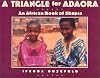
"A Triangle For Adaora," is an interesting math-related children's book. Adaora's cousin promises to find her a triangle. As they travel through their African village, they identify many different shapes. I found this book interesting because it shows children that shapes can be found all around the world, in items which may be common to a certain culture that we may not be familiar with. In addition, I was impressed that the author choose to explain to her readers a description of each item show more and its use in which the shapes were found. The shapes that were discussed in the book went beyond ordinary shapes. For instance, when we think of shapes, we think of squares, rectangles, circles, triangles, etc. But, in this book the author discusses an oval, a heart, a diamond, a semicircle and a crescent. Not only did this book meet all the criteria listed for evaluating math-related children's books, but it's also a book one could use with integrated criteria such as, language arts/ reading, social studies, and even the subject of diversity. show less
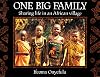
I absolutely loved reading, "One Big Family," for many reasons. This book was an informational text about a village in Africa. The author goes into description about her village and her whole family throughout the entirety of the book. One thing that I loved that the author did was when she was introducing a new word to her readers she spelled it out phonetically. For example, when introducing herself to the readers she states, "Hello! My name is Obioma (pronounced o-bee-oma)". This is not show more only helpful for readers who are not familiar with this type of language but it is informational for the readers to see the difference between phonics in English and in this African tongue. I also loved the use of actual photographs throughout the book. I love when storybooks are filled with hand-drawn illustrations but for this particular book I found the photographs to be very helpful in visualizing what the author was speaking about. Additionally, the author did a wonderful job at explaining every detail of her tribe that she mentioned throughout the text. The author writes about age groups in the family and how age groups are divided into sets called "Obgo." The author did a great job at informing her readers about things that may be completely foreign to them. One last thing that I enjoyed about this text was the celebration of the culture in Obioma's village. The author writes, "Obinwanne sings sweet songs and dance at special events." All in all, this book was a pleasure to read. show less
This book lightly touches on the typical family structure that one would find in Africa. I had mixed emotions about this book. I liked how this book showed how the family dynamic of an African family is structured with vivid, clear photographs. However, I didn't like how difficult the family dynamic was to follow; I wish there were a chart at the end of the book for reference.
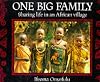
I liked this book, and learned a lot from it. Although fiction books can be wonderful additions to a text set regarding a certain culture, I believe that nonfiction informational books must also be included. Well written, engaging books like this one will both inform the reader and prompt them to ask questions and want to know more about the topic.
This book is engaging to students because it revolves around topics that the students will be able to connect to: family, friends, and leisure show more time. This book’s message is slightly different from those of many multicultural books, it emphasizes and celebrates the differences between the african culture and american culture. For example, the book begins by noting differences, “In Awkozu, every child belongs to an igbo, together with all the other children born within a five-year period. Fat or thin, rich or poor, it does not matter. Everyone has a friend; no one is born alone”. This is very different from how Americans view a family unit, and the author makes this difference positive.
There were some elements of this nonfiction book that also made it an excellent learning tool. I noticed that the author was sure to use the language of the people, Swahili, instead of translations. One feature that I believe helps make the book both interesting and accessible is the inclusions of pronunciation guides for each Swahili word. Additionally, the author used photographs that they had taken themselves, which helped to prove that they were a knowledgable source for this book. show less
This book is engaging to students because it revolves around topics that the students will be able to connect to: family, friends, and leisure show more time. This book’s message is slightly different from those of many multicultural books, it emphasizes and celebrates the differences between the african culture and american culture. For example, the book begins by noting differences, “In Awkozu, every child belongs to an igbo, together with all the other children born within a five-year period. Fat or thin, rich or poor, it does not matter. Everyone has a friend; no one is born alone”. This is very different from how Americans view a family unit, and the author makes this difference positive.
There were some elements of this nonfiction book that also made it an excellent learning tool. I noticed that the author was sure to use the language of the people, Swahili, instead of translations. One feature that I believe helps make the book both interesting and accessible is the inclusions of pronunciation guides for each Swahili word. Additionally, the author used photographs that they had taken themselves, which helped to prove that they were a knowledgable source for this book. show less
Lists
Awards


You May Also Like


Statistics
- Works
- 25
- Members
- 1,457
- Popularity
- #17,639
- Rating
- 3.9
- Reviews
- 94
- ISBNs
- 91
- Languages
- 2
- Favorited
- 1