

Pär Lagerkvist (1891–1974)
Author of Barabbas
About the Author
Swedish novelist, poet and playwright Par Lagerkvist was born on May 23, 1891 in Vaxjo, Sweden. He attended the University of Uppsala briefly, but did not complete a degree. His first book was published in 1912, the same year he left the University. In 1913 Lagerkvist moved to Paris. He lived show more abroad, mainly in France and Italy, for many years, and even after returning to Sweden, he traveled frequently in Europe. In his earlier writing, Lagerkvist was often bleakly pessimistic. His strong opposition to totalitarianism was voiced in the plays Victor in the Darkness and The Man without a Soul. In the 1940s, however, his focus shifted, and his writing began to explore religious and moral themes, such as the struggle between good and evil or reconciliation with God. Works from this period include The Sibyl, The Death of Ahasuerus, Herod and Mariamne, and The Dwarf. Although he is now probably best known for The Dwarf, which was first published in the 1940s, Lagerkvist's first international success came in 1951, with the publication of Barrabas, a story about the life of the biblical character after he, rather than Jesus Christ, was pardoned. Barrabas was translated into several languages, and adapted as both a play and a movie. Par Lagerkvist was named as one of the 18 "immortals" of the Swedish Academy in 1940. Several years later, in 1951, he received the Nobel Prize for Literature. He died in Stockholm on July 11, 1974. (Bowker Author Biography) show less
Disambiguation Notice:
(yid) VIAF:64007846
VIAF:64007846
Series
Works by Pär Lagerkvist
Sagor, satirer och noveller 17 copies
Barabbas / The Dwarf / Dreadful Tales 15 copies
Kämpande ande 9 copies
Hjärtats sånger 9 copies
Järn och människor : noveller 7 copies
Ordkonst och bildkonst : [om modärn skönlitteraturs dekadans] : [om den modärna konstens vitalitet] (1991) 6 copies
Motiv 5 copies
Prosa 5 copies
Prosa. Prosastycken ur Ångest ; Den fordringsfulla gästen ; Det eviga leendet ; Morgonen ; Onda sagor (1955) 5 copies
Maailmas võõrsil 4 copies
Dikt i utvalg 4 copies
Vid lägereld / Pär Lagerkvist 4 copies
Den lyckliges väg 4 copies
Den osynlige : skådespel i tre akter 4 copies
Han som fick leva om sitt liv 4 copies
The King: A Play in Three Acts 4 copies
Hemmet och stjärnan 3 copies
Den befriade människan 3 copies
Ospite della realta, Il sorriso eterno, Il nano, La sibilla, La morte di Assuero, Pellegrino sul mare, La Terra Santa (1979) 2 copies
Ahasverus död 2 copies
Prosa V • VI : Dvärgen & Barabbas 2 copies
KUOLLEET, JOTKA ETSIVÄT JUMALAA 2 copies
Literary art and pictorial art : on the decadence of modern literature : on the vitality of modern art (1991) 2 copies
Genius 2 copies
Valda sidor 2 copies
Povestiri amare 2 copies
Sång och strid 2 copies
The Clenched Fist 2 copies
Fire and the Hammer, Barabbas, Helen Gould Was My Mother in Law, the Glass of Fashion, the Overloaded Ark, Washington Square, Voyages and Discoveries (1954) — Author — 1 copy
Sång och strid. [Poems.] 1 copy
Sista mänskan : ett drama 1 copy
Rabelj / Bodeln 1 copy
Punduris : romāns 1 copy
Själarnas maskerad 1 copy
Dvärgen 1 copy
Le opere 1 copy
Gæst hos virkeligheden 1 copy
Eight Swedish poets 1 copy
Barabas 1 copy
Bedste Fortællinger 1 copy
Opere 1 copy
Dramatik 1 copy
Två sagor om livet 1 copy
Krvnik i druge priče 1 copy
Ben 1 copy
Obras completas Tomo 1 1 copy
La Sibila 1 copy
Himlens hemlighet 1 copy
Prosa III-IV: Kämpande ande ; Bödeln ; Den knutna näven ; I den tiden ; Den befriade människan 1 copy
Prosa [5] Dvr̃gen 1 copy
Χορός μεταμφιεσμένων 1 copy
Associated Works
Ordens musik : dikter med klang och rytm från Lasse Lucidor till Tage Danielsson : en antologi (1990) — Contributor — 38 copies
Meesters der Zweedse vertelkunst — Author, some editions — 10 copies
Meesters der vertelkunst : zevenendertig verhalen uit de moderne wereldliteratuur (1975) — Contributor — 2 copies
The King [radio play] 1 copy
Svenske fortællere fra August Strindberg til Harry Martinson — Author, some editions — 1 copy, 1 review
The Hangman [radio play] 1 copy
Antologia do conto moderno — Author — 1 copy
Tagged
Common Knowledge
- Canonical name
- Lagerkvist, Pär
- Legal name
- Lagerkvist, Pär Fabian
- Birthdate
- 1891-05-23
- Date of death
- 1974-07-11
- Gender
- male
- Education
- Uppsala University
- Occupations
- novelist
playwright
poet
essayist - Awards and honors
- Nobel Prize (Literature, 1951)
Svenska Akademien (stol 8|1940) - Relationships
- Lagerkvist, Bengt (son)
Lagerkvist, Ulf (son)
Lagerkvist, Elaine (spouse) - Nationality
- Sweden
- Birthplace
- Växjö, Sweden
- Places of residence
- Växjö, Småland, Sweden
Stockholm, Sweden
Denmark
Paris, France - Place of death
- Stockholm, Sweden
- Burial location
- Lidingö kyrkogård, Lidingö, Sverige
- Disambiguation notice
- VIAF:64007846
- Associated Place (for map)
- Sweden
Members
Reviews
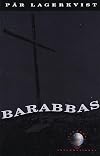
Read this one on a whim. I'm not particularly interested in Barabbas, but I did recognize the name and saw that the book took the Nobel Prize for Literature in 1951. That was enough to pick it up.
According to the Gospels, Barabbas is the criminal who is spared from death by crucifixion on Golgotha and in the process becomes a narrative adjunct to one of the most important events in Christian theology. Is Barabbas a changed man after the event? This is what Lagerkvist seems to explore. If the show more crucifixion was a self-sacrifice on behalf of the wretched and sinful, what immediate effect does it have? And who better to examine than the wretched, sinful person most directly and literally the beneficiary of this self-sacrifice?
One way to read the events that follow is that Barabbas remains doubtful. There is certainly doubt about the canonical miracles associated with Christianity, but there is also evidence that Barabbas is changed by at least the experience of being spared. He can't make the same choice of self-sacrifice, ultimately, but he does seem to be more tuned in to the suffering of others even if his attempts to do anything about it are misguided, ineffectual, and late.
It is an enjoyable novel, very spare and short. Good for inspiring a bit of deep thinking. show less
According to the Gospels, Barabbas is the criminal who is spared from death by crucifixion on Golgotha and in the process becomes a narrative adjunct to one of the most important events in Christian theology. Is Barabbas a changed man after the event? This is what Lagerkvist seems to explore. If the show more crucifixion was a self-sacrifice on behalf of the wretched and sinful, what immediate effect does it have? And who better to examine than the wretched, sinful person most directly and literally the beneficiary of this self-sacrifice?
One way to read the events that follow is that Barabbas remains doubtful. There is certainly doubt about the canonical miracles associated with Christianity, but there is also evidence that Barabbas is changed by at least the experience of being spared. He can't make the same choice of self-sacrifice, ultimately, but he does seem to be more tuned in to the suffering of others even if his attempts to do anything about it are misguided, ineffectual, and late.
It is an enjoyable novel, very spare and short. Good for inspiring a bit of deep thinking. show less
4.5/5
It amuses me, sometimes, the way people judge books. They'll ban them for epithets, they'll ban them for sex, they'll ban them for witchcraft. More often than not, they'll ban them for raising uncomfortable questions in the minds of children who have not yet been conditioned to follow the proper path. Ignore, and if you cannot ignore, condemn until you can, and if you cannot condemn until you can. Eradicate.
You could ban this book for any of those reasons, much as you could ban the show more Bible. Either one poses much more danger than most literature that is deemed unsafe. For one has resulted in millenia of misguided atrocities and the other is, well. A glimpse of its birth, before all the context, before all the history, before all the rules. Of what could have resulted without it.
The New York Times and Time magazine both referred to it as a parable. I really have to wonder how seriously they took it. It's true that it's not that long, and has religions underpinnings. The 'conveying a truth, religious principle, moral lesson, or meaning' part, though. To put it succinctly, in comparison to this 'parable', nihilism seems vastly more definitive, even encouraging. At least there's an end goal with that.
I will admit to bias, seeing how I was raised Catholic without once grasping the concept behind it all. The question has always fascinated me, though. The meaning of existence. And what a broad field it is! Sophisticated existentialism, misinformed agnosticism, misinterpreted atheism. The hydra of faith. It's all very fascinating, really. To see what extensive lengths humanity has gone in its attempt to reconcile the matter of its wandering in the world. All the shields it has built up between it and the dark.
If this book doesn't make you question whatever shield you have chosen, I would be worried. It doesn't matter that this is framed within the context of one of many religions. It is a human story, subject to the facts of life, the whims of fate, and the maelstrom of the mind. Ultimately, it is cruel, and strange, and will not divulge its secrets, for the truth is that it has no secrets to divulge. What it has is a chain of events that could mean one thing, or another, unless perhaps you missed a lesson here, or heard something incorrectly there, and maybe that person really wasn't the right one you should have listened to, or it was that one happenstance that really messed things up, and if it wasn't for that one specific moment in time you'd know exactly what you were supposed to do, and how things were going to happen, and what it all meant.
Chitterings in the void.
You know what, go ahead and think that this is a parable. Settle on some kind of conclusion, at least, and get it out of your head. It's not conducive to living, this kind of talk. Banning is a bit much, but temperance. Yes. Temperance is a must. show less
It amuses me, sometimes, the way people judge books. They'll ban them for epithets, they'll ban them for sex, they'll ban them for witchcraft. More often than not, they'll ban them for raising uncomfortable questions in the minds of children who have not yet been conditioned to follow the proper path. Ignore, and if you cannot ignore, condemn until you can, and if you cannot condemn until you can. Eradicate.
You could ban this book for any of those reasons, much as you could ban the show more Bible. Either one poses much more danger than most literature that is deemed unsafe. For one has resulted in millenia of misguided atrocities and the other is, well. A glimpse of its birth, before all the context, before all the history, before all the rules. Of what could have resulted without it.
The New York Times and Time magazine both referred to it as a parable. I really have to wonder how seriously they took it. It's true that it's not that long, and has religions underpinnings. The 'conveying a truth, religious principle, moral lesson, or meaning' part, though. To put it succinctly, in comparison to this 'parable', nihilism seems vastly more definitive, even encouraging. At least there's an end goal with that.
I will admit to bias, seeing how I was raised Catholic without once grasping the concept behind it all. The question has always fascinated me, though. The meaning of existence. And what a broad field it is! Sophisticated existentialism, misinformed agnosticism, misinterpreted atheism. The hydra of faith. It's all very fascinating, really. To see what extensive lengths humanity has gone in its attempt to reconcile the matter of its wandering in the world. All the shields it has built up between it and the dark.
If this book doesn't make you question whatever shield you have chosen, I would be worried. It doesn't matter that this is framed within the context of one of many religions. It is a human story, subject to the facts of life, the whims of fate, and the maelstrom of the mind. Ultimately, it is cruel, and strange, and will not divulge its secrets, for the truth is that it has no secrets to divulge. What it has is a chain of events that could mean one thing, or another, unless perhaps you missed a lesson here, or heard something incorrectly there, and maybe that person really wasn't the right one you should have listened to, or it was that one happenstance that really messed things up, and if it wasn't for that one specific moment in time you'd know exactly what you were supposed to do, and how things were going to happen, and what it all meant.
Chitterings in the void.
You know what, go ahead and think that this is a parable. Settle on some kind of conclusion, at least, and get it out of your head. It's not conducive to living, this kind of talk. Banning is a bit much, but temperance. Yes. Temperance is a must. show less

Lagerkvist has given us a tale of two tormented, direct experiences with the divine: Ahasuerus (the Wandering Jew) who had a brief unhappy encounter with Jesus and the Sibyl who became a famous Oracle of Delphi for many years spouting messages from Apollo.
Lagerkvist made an intriguing story pairing these two traditions, the meeting taking place at the crossroads of history when there was a changing of the guards of god, so to speak. And yet age-old questions remained, like how to endure the show more whims of god, and then how to endure the absence of god.
Ahasuerus was neither good nor bad, but a rather ordinary man living an ordinary happy life who, in one unwitting moment was unkind to Jesus as he was on his way to crucifixion, then was cursed by god's son to roam the earth for eternity, alone, unblessed. He was seeking the Sibyl to tell him his future -- hoping, I'm sure, to see some end to his suffering.
The Sibyl, who as a young country girl felt a vague lacking, was transformed when she was chosen to be a Pythia for Apollo. She gave it her all, accepted being a vessel to be used, and became one of the best ever Oracles, all without reward. In her 30s (the age when most priestesses were replaced but she was not because she was too profitable for the temple), she committed a crime against god by falling in mortal love with a one-armed man. Her punishment was the death of her lover, being violently raped by Apollo via a goat, and conceiving a half-witted, half-god (and half-goat!) son.
This is clearly not the experience one seeks when wanting to be closer to god. And is the sobering reminder of god's inscrutable and, from a human perspective, fickle nature.
The Sibyl had observed others, including her own parents, living quite peaceably and sincerely with god, and observed others living peaceably (and profitably) without god. There didn't seem to be a clear-cut right way or wrong way to garner a peaceful mortal life. Her hard-earned wisdom was whether god blesses, curses, or ignores, we are all under an erratic god. (And she experienced all three.) Thus she ultimately answers Ahasuerus,
"Perhaps one day he will bless you instead of cursing you. I don't know. Perhaps one day you will let him lean his head against your house. Perhaps you won't. I know nothing about that. But whatever you may do, your fate will be forever bound up with god, your soul forever filled with god."
I'm not sure that will be a comfort to Ahasuerus. But it is the Sibyl's advice that acceptance is the only course for humans whether living under Olympian or Heavenly rule. show less
Lagerkvist made an intriguing story pairing these two traditions, the meeting taking place at the crossroads of history when there was a changing of the guards of god, so to speak. And yet age-old questions remained, like how to endure the show more whims of god, and then how to endure the absence of god.
Ahasuerus was neither good nor bad, but a rather ordinary man living an ordinary happy life who, in one unwitting moment was unkind to Jesus as he was on his way to crucifixion, then was cursed by god's son to roam the earth for eternity, alone, unblessed. He was seeking the Sibyl to tell him his future -- hoping, I'm sure, to see some end to his suffering.
The Sibyl, who as a young country girl felt a vague lacking, was transformed when she was chosen to be a Pythia for Apollo. She gave it her all, accepted being a vessel to be used, and became one of the best ever Oracles, all without reward. In her 30s (the age when most priestesses were replaced but she was not because she was too profitable for the temple), she committed a crime against god by falling in mortal love with a one-armed man. Her punishment was the death of her lover, being violently raped by Apollo via a goat, and conceiving a half-witted, half-god (and half-goat!) son.
This is clearly not the experience one seeks when wanting to be closer to god. And is the sobering reminder of god's inscrutable and, from a human perspective, fickle nature.
The Sibyl had observed others, including her own parents, living quite peaceably and sincerely with god, and observed others living peaceably (and profitably) without god. There didn't seem to be a clear-cut right way or wrong way to garner a peaceful mortal life. Her hard-earned wisdom was whether god blesses, curses, or ignores, we are all under an erratic god. (And she experienced all three.) Thus she ultimately answers Ahasuerus,
"Perhaps one day he will bless you instead of cursing you. I don't know. Perhaps one day you will let him lean his head against your house. Perhaps you won't. I know nothing about that. But whatever you may do, your fate will be forever bound up with god, your soul forever filled with god."
I'm not sure that will be a comfort to Ahasuerus. But it is the Sibyl's advice that acceptance is the only course for humans whether living under Olympian or Heavenly rule. show less

I really liked this one!
Historical fiction, set in Renaissance-era Italy, with squabbling city-states and courtly intrigues as the backdrop. The narrator, a dwarf kept as a curiosity by a local lord, has rejected all connections to humanity, and views everything and everyone else with barely-concealed hatred and disgust. Absolutely no-one he’s ever met has treated him in any other way than as a despicable non-human, and so he keeps himself aloof, separate from the accursed human race.
The show more narrator is unapologetically and just so delightfully evil. Early on in the book, to establish his character, Lagerkvist has him kill a kitten, just to hurt the child whose pet it is. As the novel progresses, and his lord’s ambitions soar, he delights in wreaking underhanded havoc, revels vicariously in crude bloodshed, and spews his indiscriminate revulsion at any and all.
It’s one of those books where the main character would be an awesome villain in someone else’s story, and where the story is one ofthings going from bad to worse for a fascinatingly evil main character, such that you enjoy the destruction while at the same time kinda rooting for and admiring them . show less
Historical fiction, set in Renaissance-era Italy, with squabbling city-states and courtly intrigues as the backdrop. The narrator, a dwarf kept as a curiosity by a local lord, has rejected all connections to humanity, and views everything and everyone else with barely-concealed hatred and disgust. Absolutely no-one he’s ever met has treated him in any other way than as a despicable non-human, and so he keeps himself aloof, separate from the accursed human race.
The show more narrator is unapologetically and just so delightfully evil. Early on in the book, to establish his character, Lagerkvist has him kill a kitten, just to hurt the child whose pet it is. As the novel progresses, and his lord’s ambitions soar, he delights in wreaking underhanded havoc, revels vicariously in crude bloodshed, and spews his indiscriminate revulsion at any and all.
It’s one of those books where the main character would be an awesome villain in someone else’s story, and where the story is one of
Lists
Awards


You May Also Like


Associated Authors
Statistics
- Works
- 140
- Also by
- 20
- Members
- 5,014
- Popularity
- #4,995
- Rating
- 3.9
- Reviews
- 100
- ISBNs
- 240
- Languages
- 24
- Favorited
- 29