

Ingrid D. Rowland
Author of Giordano Bruno: Philosopher/Heretic
About the Author
Ingrid D. Rowland is Professor at the University of Notre Dame School of Architecture in Rome.
Image credit: University of Notre Dame
Works by Ingrid D. Rowland
Associated Works
Tagged
Common Knowledge
- Other names
- Rowland, Ingrid Drake
Rowland, Ingrid - Birthdate
- 1953-08-19
- Gender
- female
- Education
- Pomona College (BA|Classics|1974)
Bryn Mawr College (MA|Greek Literature and Classical Archaeology|1976)
Bryn Mawr College (PhD|Greek Literature ad Classical Archaeology|1980) - Occupations
- historian
- Organizations
- University of Notre Dame
University of Chicago
The New York Review of Books - Awards and honors
- American Academy of Arts and Sciences (2002)
Socio Corrispondente, Accademia degli Intronati (2015)
Howard Marraro Prize (2010)
William Nelson Prize (1985)
Socio Corrispondente, Accademia dei Sepolti (2005)
Roma nel Rinascimento (2017) - Relationships
- Rowland, F. S. (father)
- Short biography
- Ingrid D. Rowland lives in Rome, where she teaches in the University of Notre Dame's School of Architecture. She is a regular essayist for The New York Review of Books and The New Republic. [adapted from Giordano Bruno (2008)
- Nationality
- USA
- Places of residence
- Rome, Italy
- Associated Place (for map)
- Rome, Italy
Members
Reviews
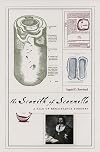
I do love a good hoax. And Ingrid Rowland's The Scarith of Scornello: A Tale of Renaissance Forgery (University of Chicago Press, 2004) is the story of a pretty good hoax. In 1634, 19-year old Curzio Inghirami, his younger sister and a servant, wandering the grounds of their rural Tuscan estate near the old city of Volterra, "stumbled upon" a strange ball of pitch, fabric and hair which when broken revealed several pieces of linen rag paper on which were written certain 'prophecies' penned show more by one Prospero of Fiesole (Prosperus Fesulanus). More of these strange capsules, which became known as scarith (based on one of the inscriptions), were soon found near the same location, and they purported to be a series of writings dating from the late Etruscan period, around the mid-60s B.C.
The Inghirami clan rallied around young Curzio, claiming and then defending the authenticity of the scarith and their inscriptions - which, if accurate, raised their region to a certain historical prominence. Curzio published a compilation of the contents of the scarith in a lavish book, Ethruscarum Antiquitatum Fragmenta (Florence, 1636), complete with a false 1637 Frankfurt imprint. The book, richly made and illustrated with numerous woodcuts, copper engravings, and folding charts, was a triumph of book production ... but its flashy contents failed to convince the critics.
Rowland inexplicably fails to mention one of the first criticisms, by Meric Casaubon in his 1638 book A treatise of use and custome, but she does examine the strong critiques leveled at Inghirami's work by Leone Allacci and others, in which it was pointed out that Curzio's philological and forensic skills weren't quite up to par: his "Etruscan" inscriptions read left to right, rather than the correct right to left, and his inscriptions were written on rag paper, rather than the linen cloth known to have been used in actual Etruscan writings. Curzio also has his writer complain about running out of paper at one point, when the inscription was found balled up within several layers of extra paper ... which of course was setting aside the larger issue of the fact that the inscriptions were later found to be printed on paper bearing the watermark of the state paper factory. It's a good thing Curzio didn't show off his scarith very often.
The criticisms of Inghirami's work by Allacci and various others, as well as defenses written by Curzio himself and a few of his friends, are well outlined, and Rowland does well at placing Curzio's work in the context of Italian regional political and religious jockeying of the seventeenth century, with the struggle over Galilean scientific theory never far from the fore and the various regions families competing for influence. The book is well illustrated, although the small format has resulted in the compression of Inghirami's detailed engravings to an unfortunate degree. Almost fifty pages of footnotes with translations and much additional content, plus a delightfully-detailed bibliography, are welcome additions indeed.
There are some really interesting aspects to this case which bear some similarities to a few other literary forgeries: the "important discovery" by a young man who later published his findings in a luxurious book reminded me of William Henry Ireland's Miscellaneous papers and legal instruments under the hand and seal of William Shakspeare (1796); the regional patriotism brings to mind the Ossian forgeries of William Macpherson, and Rowland herself draws parallels with Thomas Chatterton. The "d'oh moment" with the watermarks is similar to the Vrain-Denis Lucas forgeries, although those (for reasons entirely unclear) held up far longer than they should have.
A must-read for the forgery buff. Anybody up for translating and reprinting the canon of original works? That I'd like to see. In the meantime, if you have £2,500, you can have your own copy of Ethruscarum Antiquitatum Fragmenta, via Arthur Freeman Rare Books (their description of the book, I have to say, is an absolute delight).
http://philobiblos.blogspot.com/2009/05/book-review-scarith-of-scornello.html show less
The Inghirami clan rallied around young Curzio, claiming and then defending the authenticity of the scarith and their inscriptions - which, if accurate, raised their region to a certain historical prominence. Curzio published a compilation of the contents of the scarith in a lavish book, Ethruscarum Antiquitatum Fragmenta (Florence, 1636), complete with a false 1637 Frankfurt imprint. The book, richly made and illustrated with numerous woodcuts, copper engravings, and folding charts, was a triumph of book production ... but its flashy contents failed to convince the critics.
Rowland inexplicably fails to mention one of the first criticisms, by Meric Casaubon in his 1638 book A treatise of use and custome, but she does examine the strong critiques leveled at Inghirami's work by Leone Allacci and others, in which it was pointed out that Curzio's philological and forensic skills weren't quite up to par: his "Etruscan" inscriptions read left to right, rather than the correct right to left, and his inscriptions were written on rag paper, rather than the linen cloth known to have been used in actual Etruscan writings. Curzio also has his writer complain about running out of paper at one point, when the inscription was found balled up within several layers of extra paper ... which of course was setting aside the larger issue of the fact that the inscriptions were later found to be printed on paper bearing the watermark of the state paper factory. It's a good thing Curzio didn't show off his scarith very often.
The criticisms of Inghirami's work by Allacci and various others, as well as defenses written by Curzio himself and a few of his friends, are well outlined, and Rowland does well at placing Curzio's work in the context of Italian regional political and religious jockeying of the seventeenth century, with the struggle over Galilean scientific theory never far from the fore and the various regions families competing for influence. The book is well illustrated, although the small format has resulted in the compression of Inghirami's detailed engravings to an unfortunate degree. Almost fifty pages of footnotes with translations and much additional content, plus a delightfully-detailed bibliography, are welcome additions indeed.
There are some really interesting aspects to this case which bear some similarities to a few other literary forgeries: the "important discovery" by a young man who later published his findings in a luxurious book reminded me of William Henry Ireland's Miscellaneous papers and legal instruments under the hand and seal of William Shakspeare (1796); the regional patriotism brings to mind the Ossian forgeries of William Macpherson, and Rowland herself draws parallels with Thomas Chatterton. The "d'oh moment" with the watermarks is similar to the Vrain-Denis Lucas forgeries, although those (for reasons entirely unclear) held up far longer than they should have.
A must-read for the forgery buff. Anybody up for translating and reprinting the canon of original works? That I'd like to see. In the meantime, if you have £2,500, you can have your own copy of Ethruscarum Antiquitatum Fragmenta, via Arthur Freeman Rare Books (their description of the book, I have to say, is an absolute delight).
http://philobiblos.blogspot.com/2009/05/book-review-scarith-of-scornello.html show less
It's hard when you only read one of many accounts of a controversial figure; now I only know one perspective well. Giordano Bruno was many things; by emphasizing certain aspects of his work, one can paint him as whatever one wishes. Among others, Bruno was:
- Some sort of pantheist who believed that God was infinite, the little things don't matter, and anyone who got bogged down in detailed questions of dogma was an ass.
- An obnoxious prick who considered nearly everyone an ass, and show more frequently told them so.
- A master of memory who made much of his living by teaching his system to others. We know that he had a great memory; it's totally unclear whether he really had a system for it, because all his publications on it were geared to attracting students and therefore frustratingly vague. Many of his students were certainly dissatisfied.
- A "Falstaffian" skirt-chaser, by which I mean both lecherous and mostly unsuccessful.
- A genius at picking out the right theories from the maze available at the time. He was correct that the universe is infinite and made of atoms, and that the stars in the sky are like our own sun and should therefore have their own planets. None of those ideas are his, but half the battle is picking the right things to believe, and he was aces at that.
- A magician whose mnemonic system may have been in part magical and who published books on magic that discussed...oh, some kind of bonding between planetary figures and the spirit.
- A heretic who believed that Jesus was (again) an ass who disproved his divinity by asking God for a mulligan just before his death, and that transubstantiation is a stupid idea.
I guess some Catholics still believe in transubstantiation, but they think it happens without changing the physical makeup of the wafer (which is why it doesn't taste like chicken*). Lame. Did you know they used to argue about whether a blessed communion wafer would turn into Jesus meat if a mouse ate it? Like, they were really worried about that issue. I bet the mouse doesn't care.
Bruno wasn't the courageous martyr he's made out to be. When first faced with the Inquisition, he apologized profusely on his knees, happily renouncing all kinds of beliefs. It was only when he realized the tide had turned against him and he was going to die anyway that he backtracked and got fresh with the Inquisitors.
Unfortunately, the transcripts of his defense haven't survived, so we have only a summary written later to go on; that's better info than we have on many trials, but it's still second hand. We don't know, then, the full extent (or not) of his defiance. And it looks like we don't know for sure whether he believed in extraterrestrial life. Generally, his belief in "the plurality of planets" implied that he also believed there might be life on them, but I can find no first-hand mention of him saying so.
He's a strange hero: a tiny little man given to running his mouth, insulting people, occasionally slapping them, running all over Europe to escape trouble, feeling sorry for himself, trying to get back in the graces of various people and churches, and failing due to his own obnoxiousness. He was possibly a charlatan, certainly a heretic, and a total asshole. But he was also way ahead of his time in many ways, and right about pretty much everything, and he went to the stake with one of the great last lines: "Perhaps you pronounce this sentence against me with greater fear than I receive it." So: a strange hero he is.
* All meat you haven't eaten tastes like chicken. If it's meat from an animal widely seen as gross, then it tastes like chicken but "a little gamy."
Rowland's book downplays the magic and fails utterly to penetrate the mnemonics; it positions him as a guy who got it right with the science and whose accepting views of different religions made him a forerunner to today's more liberal religions (such as they are). Is that correct? Probably. But I suspect one could write a book emphasizing the sorcery and come out sounding pretty believable, too. I suspect Rowland of failing the Nero Test:** given two historical possibilities, she's inclined to take the more interesting one even if the other is slightly more supported. And she often repeats herself; I caught her saying the same thing three times in two pages at one point. But it's clear and engaging enough; I wouldn't warn you off it if you wanted to read up on your Bruno.
** Nero may have put Christians in baskets atop poles and set them on fire to use as streetlamps, but he probably didn't. But it makes a great story. show less
- Some sort of pantheist who believed that God was infinite, the little things don't matter, and anyone who got bogged down in detailed questions of dogma was an ass.
- An obnoxious prick who considered nearly everyone an ass, and show more frequently told them so.
- A master of memory who made much of his living by teaching his system to others. We know that he had a great memory; it's totally unclear whether he really had a system for it, because all his publications on it were geared to attracting students and therefore frustratingly vague. Many of his students were certainly dissatisfied.
- A "Falstaffian" skirt-chaser, by which I mean both lecherous and mostly unsuccessful.
- A genius at picking out the right theories from the maze available at the time. He was correct that the universe is infinite and made of atoms, and that the stars in the sky are like our own sun and should therefore have their own planets. None of those ideas are his, but half the battle is picking the right things to believe, and he was aces at that.
- A magician whose mnemonic system may have been in part magical and who published books on magic that discussed...oh, some kind of bonding between planetary figures and the spirit.
- A heretic who believed that Jesus was (again) an ass who disproved his divinity by asking God for a mulligan just before his death, and that transubstantiation is a stupid idea.
I guess some Catholics still believe in transubstantiation, but they think it happens without changing the physical makeup of the wafer (which is why it doesn't taste like chicken*). Lame. Did you know they used to argue about whether a blessed communion wafer would turn into Jesus meat if a mouse ate it? Like, they were really worried about that issue. I bet the mouse doesn't care.
Bruno wasn't the courageous martyr he's made out to be. When first faced with the Inquisition, he apologized profusely on his knees, happily renouncing all kinds of beliefs. It was only when he realized the tide had turned against him and he was going to die anyway that he backtracked and got fresh with the Inquisitors.
Unfortunately, the transcripts of his defense haven't survived, so we have only a summary written later to go on; that's better info than we have on many trials, but it's still second hand. We don't know, then, the full extent (or not) of his defiance. And it looks like we don't know for sure whether he believed in extraterrestrial life. Generally, his belief in "the plurality of planets" implied that he also believed there might be life on them, but I can find no first-hand mention of him saying so.
He's a strange hero: a tiny little man given to running his mouth, insulting people, occasionally slapping them, running all over Europe to escape trouble, feeling sorry for himself, trying to get back in the graces of various people and churches, and failing due to his own obnoxiousness. He was possibly a charlatan, certainly a heretic, and a total asshole. But he was also way ahead of his time in many ways, and right about pretty much everything, and he went to the stake with one of the great last lines: "Perhaps you pronounce this sentence against me with greater fear than I receive it." So: a strange hero he is.
* All meat you haven't eaten tastes like chicken. If it's meat from an animal widely seen as gross, then it tastes like chicken but "a little gamy."
Rowland's book downplays the magic and fails utterly to penetrate the mnemonics; it positions him as a guy who got it right with the science and whose accepting views of different religions made him a forerunner to today's more liberal religions (such as they are). Is that correct? Probably. But I suspect one could write a book emphasizing the sorcery and come out sounding pretty believable, too. I suspect Rowland of failing the Nero Test:** given two historical possibilities, she's inclined to take the more interesting one even if the other is slightly more supported. And she often repeats herself; I caught her saying the same thing three times in two pages at one point. But it's clear and engaging enough; I wouldn't warn you off it if you wanted to read up on your Bruno.
** Nero may have put Christians in baskets atop poles and set them on fire to use as streetlamps, but he probably didn't. But it makes a great story. show less
Ingrid Rowland and Noah Charney’s book “The Collector of Lives” is a fascinating and educational ride through the history of art history, the renaissance, church history and the artists we think of as the foundation of western art. The book chronicles the life of Giorgio Vasari born in Tuscany who lived from 1511 to 1574. Vassari, considered the father of art history, was a sculptor, painter, writer and architect in his own right and lived at the center of art in renaissance Italy show more (although it was not known as Italy until later.) Vasari is perhaps best known for his book “Lives of the Most Eminent Painters, Sculptors and Architects” which is considered the first book of art history. In fact, the artists we consider foundational to western art are those Vasari chose to include in his writings and our views of western art could have been much different but for Vasari’s promotion of Raphael, Michelangelo and Leonardo. I was amazed that one person writing in the 1500 could have had that much influence on the modern perception of art.
As was the custom of the time creators of art such as Vasari were engaged to create works for elite families and the church. Vasari had a long running relationship with Medici family, a military, religious and social force in Florence that included royalty, cardinals, popes and military leaders. Through the elite’s sponsorship of art, they promoted their version of history, publicly demonstrated spiritual devotion as much of the art of the time was religious in nature and created legacy. It was in this context that Vassari came to know most of the leaders of his society, the papacy and its artists. In his engagements by the Medici family and others he came to know intimately the work of the artists of prior generations and his direct peers. It was through this knowledge that he came to write his books while simultaneously completing commissions for painting, sculpture and architecture. Prior to Vasari’s writings practitioners of art were considered craftsmen and were to large degree anonymous. In his books he chronicled in great detail the works of specific artists and told the story of art thereby elevating the creators of art from craftsmen to artists. His work was the beginning of the cult of personality in art and promoted the concept that art flowed from the divine through a particular person.
Rowland and Charney’s book brought Vassari and the art of his time from dry abstraction and history to the personal and relevant. I was given an audio version of the book to review which I supplemented with a hard copy of the book from a local library. I recommend a hard copy of the book as it is about 400 pages and you will want to underline and make notes as the quantity of information is significant. show less
As was the custom of the time creators of art such as Vasari were engaged to create works for elite families and the church. Vasari had a long running relationship with Medici family, a military, religious and social force in Florence that included royalty, cardinals, popes and military leaders. Through the elite’s sponsorship of art, they promoted their version of history, publicly demonstrated spiritual devotion as much of the art of the time was religious in nature and created legacy. It was in this context that Vassari came to know most of the leaders of his society, the papacy and its artists. In his engagements by the Medici family and others he came to know intimately the work of the artists of prior generations and his direct peers. It was through this knowledge that he came to write his books while simultaneously completing commissions for painting, sculpture and architecture. Prior to Vasari’s writings practitioners of art were considered craftsmen and were to large degree anonymous. In his books he chronicled in great detail the works of specific artists and told the story of art thereby elevating the creators of art from craftsmen to artists. His work was the beginning of the cult of personality in art and promoted the concept that art flowed from the divine through a particular person.
Rowland and Charney’s book brought Vassari and the art of his time from dry abstraction and history to the personal and relevant. I was given an audio version of the book to review which I supplemented with a hard copy of the book from a local library. I recommend a hard copy of the book as it is about 400 pages and you will want to underline and make notes as the quantity of information is significant. show less
 This review was written for LibraryThing Early Reviewers.
From Heaven to Arcadia: The Sacred and the Profane in the Renaissance (New York Review Books) by Ingrid D. Rowland
This is a collection of book reviews written by Rowland and almost all published in the New York Review of Books over the last 20 years. Most of the books reviewed are catalogs of shows of Renaissance art - all the big names.
There is no real direction to this book - each review just stands on its own. So one could certainly pick it up and just read any chapter in isolation or in any order at all.
It is a good fun read. One needn't have read any of the books reviewed. The reviews stand on show more their own very nicely, not just apart from each other but apart from the works reviewed. Rowland seems to know not only a lot about the world of the Renaissance, but also about how that world is discussed today. E.g. she does a nice job of comparing several books about Artemisia Gentileschi.
This book is more like a glass of champagne than a fitet mignon. It sparkles delightfully but is not filling. It might well work as an appetizer, sending the reader off to dig deeper into any of the directions it touches on. show less
There is no real direction to this book - each review just stands on its own. So one could certainly pick it up and just read any chapter in isolation or in any order at all.
It is a good fun read. One needn't have read any of the books reviewed. The reviews stand on show more their own very nicely, not just apart from each other but apart from the works reviewed. Rowland seems to know not only a lot about the world of the Renaissance, but also about how that world is discussed today. E.g. she does a nice job of comparing several books about Artemisia Gentileschi.
This book is more like a glass of champagne than a fitet mignon. It sparkles delightfully but is not filling. It might well work as an appetizer, sending the reader off to dig deeper into any of the directions it touches on. show less
Lists
Awards


You May Also Like


Associated Authors
Statistics
- Works
- 18
- Also by
- 17
- Members
- 764
- Popularity
- #33,304
- Rating
- 3.8
- Reviews
- 14
- ISBNs
- 38
- Languages
- 3
- Favorited
- 1
