

Dominique Lapierre (1931–2022)
Author of The City of Joy
About the Author
Image credit: Dominique Lapierre le 8 juillet 1992
Works by Dominique Lapierre
Five Past Midnight in Bhopal: The Epic Story of the World's Deadliest Industrial Disaster (2001) — Author — 433 copies, 10 reviews
So lebt man heute in Rußland 3 copies
La città della gioia. vol. 2 2 copies
Esta noche, la libertad T2 2 copies
℗[La citta della gioia] ℗1 2 copies
Luna de Mil al Rededor del Mundo 2 copies
Muito além do amor - 42 1 copy
La città della gioia vol. 2 1 copy
Peti jezdec 1 copy
Mesto radosti 1 copy
Kudüs Ey Kudüs 1 copy
Os ministros do crime 1 copy
So lebt man heute in Rußland 1 copy
Non hanno ucciso Chessman 1 copy
℗[La citt© della gioia] ℗2 1 copy
Associated Works
I Should Have Stayed Home: The Worst Trips of the Great Writers (1994) — Contributor — 188 copies, 5 reviews
Reader's Digest Condensed Books: Tsunami / The City of Joy /Spearhead / Hunter's Moon (1989) — Author — 4 copies
Reader's Digest Auswahlbücher 167 - Todesangst. Im Herzen des Tals. Stadt der Freude. Späte Liebe - spätes Glück (1989) 3 copies
Reader's Digest Condensed Books: The Edge • The City of Joy • Profit Without Honour • Brownstone Facade (1989) — Author — 3 copies
De Cock en het lijk in de kerstnacht; De stad der vreugde; Doodsoorzaak onbekend; Helden zonder vreem of blaam — Author — 1 copy, 1 review
Tagged
Common Knowledge
- Birthdate
- 1931-07-30
- Date of death
- 2022-12-04
- Gender
- male
- Education
- Lafayette College
Lycée Condorcet
Jesuit School, New Orleans, USA - Occupations
- reporter
writer - Organizations
- Paris Match
- Awards and honors
- Fulbright Scholarship
Padma Bhushan - Relationships
- Lapierre, Alexandra (daughter)
Collins, Larry (coauthor) - Nationality
- France
- Birthplace
- Châtelaillon-Plage, Charente-Maritime, France
- Places of residence
- Paris, Île-de-France, France
New Orleans, Louisiana, USA - Place of death
- Sainte-Maxime, Var, Provence-Alpes-Côte d'Azur, France
- Associated Place (for map)
- France
Members
Reviews
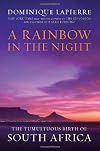
Former Paris Match reporter and philanthropist Lapierre writes a passionate and lively history of South Africa from the landing of the Dutch East India Company’s small group of lettuce farmers under the direction of Jan van Riebeeck in 1652 to the election of Nelson Mandela as the first black president of a multi-racial country in 1994. The emphasis is on the twentieth century, what happened after the Great Trek of the Afrikaners into the interior and their bloody battles with the British, show more the Zulus, and the other native inhabitants. It tells of the foundation of the Nationalist Party, and an inner group of them, the Broederbond, inspired and taught by the Nazis in Hitler’s Germany, gained control of the government in 1948 and immediately started its harsh form of segregation called apartheid separating the races with no pretense of equality. Lapierre recounts the struggle against this regime interspersed with the stories of Nelson Mandela and those of Christiaan Barnard and Helen Lieberman two upper class whites who ignored the legal restrictions of apartheid by actively working to aid their fellow black and colored residents of South Africa. The history is by no means impartial, Lapierre communicates his own points of view throughout the text. He does not spare the exclamation points! This however, just enlivens his text. show less
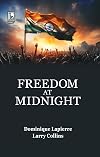
A magnificent account of the last stage of India's struggle for independence, the compulsions that made the British (mainly Mountbatten) and the Indian leaders agree to partition, and its bloody aftermath. The account of Gandhi's last days is deeply understanding and profoundly moving, showing how deeply the authors have penetrated into the mind of India and its philosophical and religious well-springs. It is also a unique work, based as it is on face-to-face interviews and conversations show more with so many of the last remaining witnesses of the era: Mountbatten, definitely, but also a host of retired administrators, associates of the main leaders, ordinary people, and most surprisingly, the remaining members of the Hindutva group that carried out the assassination of the Mahatma. A massive book of over 700 pages, one has to finally drive through it with determination in order to keep the thread and reach the end; but the story is such a captivating one, keeping its interest however many times one reads about it, and told with such depth of understanding and personal knowledge, that one is borne along by the narrative, even to the extent of reading all the Notes at the back (something which I have rarely managed with other such tomes). show less
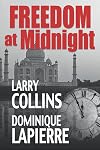
This book is an old classic and I am surprised I had not read it until now. The book is racy and well-paced. You won't find much analysis of the historical events. However, what you get is a fast-paced but biased narration of the events of those fateful years.
The authors appear to be glamour-struck by Mountbatten. Most other books I have read do not portray him in a flattering light.
The sections and detailed narration of Mahatma Gandhi's assassination are good. I learned a few things when show more I read this part of the book.
Overall, I recommend this book but; it is not perfect. There are a few errors, I believe. show less
The authors appear to be glamour-struck by Mountbatten. Most other books I have read do not portray him in a flattering light.
The sections and detailed narration of Mahatma Gandhi's assassination are good. I learned a few things when show more I read this part of the book.
Overall, I recommend this book but; it is not perfect. There are a few errors, I believe. show less
Five Past Midnight in Bhopal: The Epic Story of the World's Deadliest Industrial Disaster by Dominique Lapierre
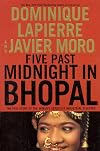
Last year I read Animal's People by Indra Sinha, an excellent novel about the slum dwellers who lived around the Union Carbide plant releasing the deadly chemicals. The novel was set years after the release, and focused on the tragic effects the disaster had on those people and their attempts to hold the company responsible.
This book sets the stage for the disaster with the history of Bhopal, how the plant came to be built, its executives and employees, and the manner of its operation, from show more the beginning until the accident, which occurred during a period of time the plant's operations were being phased out. It also introduces us to a number of the families who resided in the makeshift dwellings surrounding the plant.
It may be my imagination, but having read Animal's People, I think that this book is slightly too sympathetic to Union Carbide, or at least to the American employees who were running the plant. For example, in the acknowledgements section the author thanks the individual "who made us welcome in their charming house..., enabling us to reconstruct the happy years when Warren was in charge of the Bhopal factory." Or, "The pursuit of perfection was Carbide's hallmark." The accident itself occurred when Americans were ceding management to Indian employees, and it was those employees whose mistakes or inaction caused the chemical release. However, it was the American owners who stinted on proper safety equipment when building the plant, on maintaining what safety equipment there was, and who failed to provide adequate training for the employees.
The book was written shortly after the accident, and does not stress that Union Carbide has failed (and has actively resisted) to pay adequate recompense to the victims. The long-term health problems of the victims is also not completely considered, although the author has a charity which does provide some assistance to victims with health issues. With those caveats, I can state that the book is informative and moving. It is well-written--certainly in such way that it is a page-turner, and tells a compelling story. show less
This book sets the stage for the disaster with the history of Bhopal, how the plant came to be built, its executives and employees, and the manner of its operation, from show more the beginning until the accident, which occurred during a period of time the plant's operations were being phased out. It also introduces us to a number of the families who resided in the makeshift dwellings surrounding the plant.
It may be my imagination, but having read Animal's People, I think that this book is slightly too sympathetic to Union Carbide, or at least to the American employees who were running the plant. For example, in the acknowledgements section the author thanks the individual "who made us welcome in their charming house..., enabling us to reconstruct the happy years when Warren was in charge of the Bhopal factory." Or, "The pursuit of perfection was Carbide's hallmark." The accident itself occurred when Americans were ceding management to Indian employees, and it was those employees whose mistakes or inaction caused the chemical release. However, it was the American owners who stinted on proper safety equipment when building the plant, on maintaining what safety equipment there was, and who failed to provide adequate training for the employees.
The book was written shortly after the accident, and does not stress that Union Carbide has failed (and has actively resisted) to pay adequate recompense to the victims. The long-term health problems of the victims is also not completely considered, although the author has a charity which does provide some assistance to victims with health issues. With those caveats, I can state that the book is informative and moving. It is well-written--certainly in such way that it is a page-turner, and tells a compelling story. show less
Lists
Fiction: Asia (1)
THE WAR ROOM (1)
Awards


You May Also Like


Associated Authors
Statistics
- Works
- 46
- Also by
- 10
- Members
- 8,372
- Popularity
- #2,877
- Rating
- 3.9
- Reviews
- 165
- ISBNs
- 461
- Languages
- 19
- Favorited
- 2

