
Timothy L. Smith (1924–1997)
Author of Revivalism and Social Reform: American Protestantism on the Eve of the Civil War
About the Author
Timothy L. Smith is a tutor at Thomas Aquinas College in Santa Paula, California, and a former post-doctoral fellow and instructor at The University of Notre Dame.
Works by Timothy L. Smith
Revivalism and Social Reform: American Protestantism on the Eve of the Civil War (1966) 162 copies, 2 reviews
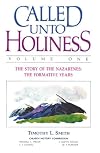
CALLED UNTO HOLINESS: Volume One - The Story of the Nazarenes: The Formative Years (1962) 97 copies, 1 review
Indiana Historical Society Lectures 1976-1977: The History of Education in the Middle West, c.1 (1978) 2 copies
La historia de los nazarenos 1 copy
Associated Works
Making Higher Education Christian: The History and Mission of Evangelical Colleges in America (1987) — Contributor — 26 copies
The Mormon History Association's Tanner Lectures: The First Twenty Years (2006) — Contributor — 9 copies
To All the World: The Book of Mormon Articles from the Encyclopedia of Mormonism (2000) — Contributor — 6 copies
Tagged
Common Knowledge
- Birthdate
- 1924
- Date of death
- 1997-01-20
- Gender
- male
- Education
- Harvard University (PhD|History)
- Occupations
- historian
writer
author
pastor
professor (history) - Organizations
- Church of the Nazarene
Johns Hopkins University
Eastern Nazarene College
East Texas State College - Awards and honors
- Brewer Prize from the American Society of Church History
- Short biography
- Dr. Timothy L. Smith was the first widely recognized historian who was a member of the Church of the Nazarene. He pastored several churches before his teaching career.
He earned his PhD from Harvard University under the tutelage of Arthur M. Schlesinger, Sr. He taught history at Eastern Nazarene College, East Texas State College, and Johns Hopkins University.
He published numerous articles and two major books on history. His dissertation at Harvard was formed into Revivalism and Social Reform. Later he published an account of the first 25 years of the Church of the Nazarene entitled Called Unto Holiness. - Nationality
- USA
- Places of residence
- Boston, Massachusetts, USA
Baltimore, Maryland, USA
Commerce, Texas, USA - Associated Place (for map)
- USA
Members
Reviews
Revivalism and social reform : American Protestantism on the eve of the Civil War by Timothy L. Smith

This book should be read by anyone who is trying to understand 19th century America. It will be of special interest to students of church history, intellectual history and social reform.
Revivalism and Social Reform: American Protestantism on the Eve of the Civil War by Timothy L. Smith
This is better than Smith's Called Unto Holiness. Smith just was not a great writer. His style is very dry.
If you can plow through the book, it offers fantastic insight into the Protestant church of the mid 19th century. It is a look at what the laymen were reading and where they were headed. It does not focus on the clergy, except from the standpoint of their interaction with the laity.
Smith explores the complex role of the church in debate over slavery from the militant abolitionists of show more the far North to the accommodationists of the South to the fence straddlers of the middle states.
Smith contends that the Wesleyan revivals of the middle 19th century manifested in "perfectionism" and growing Arminian theology led to social reforms in everything from prohibition to slavery to women's rights to child labor, etc.
Very informative, if you can plow through. Don't read it when you are tired. show less
If you can plow through the book, it offers fantastic insight into the Protestant church of the mid 19th century. It is a look at what the laymen were reading and where they were headed. It does not focus on the clergy, except from the standpoint of their interaction with the laity.
Smith explores the complex role of the church in debate over slavery from the militant abolitionists of show more the far North to the accommodationists of the South to the fence straddlers of the middle states.
Smith contends that the Wesleyan revivals of the middle 19th century manifested in "perfectionism" and growing Arminian theology led to social reforms in everything from prohibition to slavery to women's rights to child labor, etc.
Very informative, if you can plow through. Don't read it when you are tired. show less
A brutally dull list of names, dates and places. I would never have finished the book if I had not been forced to read it. This is a great cure for insomnia.
Lists
Awards


You May Also Like


Associated Authors
Statistics
- Works
- 18
- Also by
- 5
- Members
- 316
- Popularity
- #74,770
- Rating
- 3.3
- Reviews
- 3
- ISBNs
- 19