
Tatsuhiko Takimoto
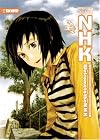
Author of Welcome to the N.H.K.
About the Author
Disambiguation Notice:
The Welcome to the NHK manga volumes (1-8) are written by Tatsuhiko Takimoto with art by Kendi Oiwa.
Series
Works by Tatsuhiko Takimoto
ECCO 1 copy
Associated Works
FAUST: Fiction and Manga From the Cutting Edge of Japanese Pop Culture, Volume 1 (2008) — Contributor — 81 copies, 1 review
FAUST: Fiction and Manga From the Cutting Edge of Japanese Pop Culture, Volume 2 (2009) — Contributor — 42 copies
Tagged
Common Knowledge
- Canonical name
- Takimoto, Tatsuhiko
- Legal name
- 滝本, 竜彦
- Birthdate
- 1978-09-20
- Gender
- male
- Occupations
- hikikomori
- Nationality
- Japan
- Disambiguation notice
- The Welcome to the NHK manga volumes (1-8) are written by Tatsuhiko Takimoto with art by Kendi Oiwa.
- Associated Place (for map)
- Japan
Members
Reviews
"We're people, so it's painful."
The subjects of this book weren’t really joyful, still I wouldn’t say the atmosphere was gloomy, so it wasn’t one of those books you shouldn’t be reading if you’re depressed because it could make you even more depressed. In fact, it could even give you some insight on your situation (or rather, on life in general).
"Who in the world are we, anyway? If I could answer that question, maybe our destination would change."
I don’t think the characters show more really come to terms with that question, they seem more interested in how to survive it, which is what makes them look more real than ever: their feelings are raw and sharp, when they’re suffering, they’re stuck and there’s nowhere else to go.
At first, the ending left me somewhat unsatisfied, and I realized it would have been interesting to read Misaki’s POV, but I know now that this wasn’t the point of the book. The point was: how on earth, among all the suffering and the despair, can you make the word “hope” not look so empty? Well, you can dwell in drug-induced epiphanies, you can obsess over the creation of an erotic RPG, or you can find relief in another person. But what if that other person is hurting more than you? Well, I guess that when you’re lost, even their despair would look like a good enough anchor. So if you don’t know where you’re going, at least now you know where to start. show less
The subjects of this book weren’t really joyful, still I wouldn’t say the atmosphere was gloomy, so it wasn’t one of those books you shouldn’t be reading if you’re depressed because it could make you even more depressed. In fact, it could even give you some insight on your situation (or rather, on life in general).
"Who in the world are we, anyway? If I could answer that question, maybe our destination would change."
I don’t think the characters show more really come to terms with that question, they seem more interested in how to survive it, which is what makes them look more real than ever: their feelings are raw and sharp, when they’re suffering, they’re stuck and there’s nowhere else to go.
At first, the ending left me somewhat unsatisfied, and I realized it would have been interesting to read Misaki’s POV, but I know now that this wasn’t the point of the book. The point was: how on earth, among all the suffering and the despair, can you make the word “hope” not look so empty? Well, you can dwell in drug-induced epiphanies, you can obsess over the creation of an erotic RPG, or you can find relief in another person. But what if that other person is hurting more than you? Well, I guess that when you’re lost, even their despair would look like a good enough anchor. So if you don’t know where you’re going, at least now you know where to start. show less

The plot mostly concerns the daily struggles of Satou, a 22 year old Hikikomori(jobless shut in) who has been in isolation so long he has become quite insane. The main theme of the manga is conspiracies, with Satou convincing himself that he is the victim of a global conspiracy designed to make sure he does not leave his apartment or live his life.
Satou is lovably deranged. This entire series of manga is just a darkly comedic look at the lives of several people with some serious issues. I show more don't think that by the end of the manga I could name to you even one character who is not borderline insane. At times I went through feelings of disgust, pity and hilarity, or a curious mixture of all three, all in the space of several panels. What makes this manga so good is that I found myself empathising with these seriously disturbed individuals, and that my friends is the mark of a solid plot with excellent characterisation. show less
Satou is lovably deranged. This entire series of manga is just a darkly comedic look at the lives of several people with some serious issues. I show more don't think that by the end of the manga I could name to you even one character who is not borderline insane. At times I went through feelings of disgust, pity and hilarity, or a curious mixture of all three, all in the space of several panels. What makes this manga so good is that I found myself empathising with these seriously disturbed individuals, and that my friends is the mark of a solid plot with excellent characterisation. show less
Tatsuhiko Takimoto's novel Welcome to the N.H.K. was first published in Japan in 2002. The English translation by Lindsey Akashi was based off of the 2005 Japanese edition of the novel and was released by Tokyopop in 2007. I don't remember exactly how I first learned about Welcome to the N.H.K. but somehow I gained the impression that it was one of the best books to come out of Tokyopop's short lived Pop Fiction line. Perhaps surprisingly, I was aware of the novel Welcome to the N.H.K. show more before I was aware of either the twenty-four episode anime adaptation or the eight volume manga series (also published by Tokyopop) which was based on the novel. Both the manga and the anime are much easier to come by--the Welcome to the N.H.K. novel is unfortunately long out of print and hard to find. And when you do come across a copy it tends to be rather expensive. I count myself lucky to actually own the book.
Satou Tatsuhiro is a twenty-year-old hikikomori--a young recluse who has shut himself away from the world. His family doesn't know it yet, but he has dropped out of college and is living off of the allowance they send to him. Satou rarely leaves his small, cluttered apartment except for food, but even going to buy groceries is an ordeal for him. Normally he sleeps for sixteen hours, waking up long enough to eat, drink, and maybe throw together a concoction of over-the-counter drugs in an attempt to make himself feel better before falling back to sleep again. And so it is more by chance than anything else that he happens to meet a girl named Misaki, who is just a little odd herself. She is determined to make Satou her "project" and cure him of his hikikomori ways. Satou's not entirely sure what to make of that or what to do about her. However, the two fall into a strange sort of friendship whether they mean to or not.
As he reveals in the afterword, Tatsuhiko Takimoto himself is a self-proclaimed hikikomori (or NEET, a more socially acceptable term). I wasn't aware of this fact until after reading Welcome to the N.H.K. Inevitably, Takimoto drew on his own experiences and feelings as a hikikomori while writing the novel, lending to the authenticity of the main character. Understandably, it was a difficult task for the author to write the book. Takimoto imagines readers' responses to Welcome to the N.H.K. as "It's really funny. But it made me cry a little, too." I completely agree with the sentiment. If it wasn't for the humor, the novel would be terribly depressing. Welcome to the N.H.K. is in turn funny, even hilarious, and heartbreaking. Even so, while the humor may often be self-denigrating, Takimoto is never cruel.
The translation and adaptation work of Welcome to the N.H.K. is exceptional. It reads incredibly naturally, even considering the occasional end note. I was particularly impressed because significant sections of the novel are nearly stream-of-conscious, a style of writing that can be difficult to pull off well. Welcome to the N.H.K. nails it. The entire story is told directly from Satou's perspective regardless of his current state of mind. This includes both his good and bad trips. Although Welcome to the N.H.K. can be a bit silly or goofy, it is also dealing with some very serious and mature issues and themes: drug use, sexual fantasies (including lolicon and erotic video games), religion, abuse, and suicide, just to name a few. It can be an uncomfortable experience for the reader--the story proceeds innocently enough only to repeatedly turn around to hit you hard in the gut when you're not expecting it--but Welcome to the N.H.K. is a fantastic novel. I was glad to discover that it was just as good if not better than I was led to believe.
Experiments in Manga show less
Satou Tatsuhiro is a twenty-year-old hikikomori--a young recluse who has shut himself away from the world. His family doesn't know it yet, but he has dropped out of college and is living off of the allowance they send to him. Satou rarely leaves his small, cluttered apartment except for food, but even going to buy groceries is an ordeal for him. Normally he sleeps for sixteen hours, waking up long enough to eat, drink, and maybe throw together a concoction of over-the-counter drugs in an attempt to make himself feel better before falling back to sleep again. And so it is more by chance than anything else that he happens to meet a girl named Misaki, who is just a little odd herself. She is determined to make Satou her "project" and cure him of his hikikomori ways. Satou's not entirely sure what to make of that or what to do about her. However, the two fall into a strange sort of friendship whether they mean to or not.
As he reveals in the afterword, Tatsuhiko Takimoto himself is a self-proclaimed hikikomori (or NEET, a more socially acceptable term). I wasn't aware of this fact until after reading Welcome to the N.H.K. Inevitably, Takimoto drew on his own experiences and feelings as a hikikomori while writing the novel, lending to the authenticity of the main character. Understandably, it was a difficult task for the author to write the book. Takimoto imagines readers' responses to Welcome to the N.H.K. as "It's really funny. But it made me cry a little, too." I completely agree with the sentiment. If it wasn't for the humor, the novel would be terribly depressing. Welcome to the N.H.K. is in turn funny, even hilarious, and heartbreaking. Even so, while the humor may often be self-denigrating, Takimoto is never cruel.
The translation and adaptation work of Welcome to the N.H.K. is exceptional. It reads incredibly naturally, even considering the occasional end note. I was particularly impressed because significant sections of the novel are nearly stream-of-conscious, a style of writing that can be difficult to pull off well. Welcome to the N.H.K. nails it. The entire story is told directly from Satou's perspective regardless of his current state of mind. This includes both his good and bad trips. Although Welcome to the N.H.K. can be a bit silly or goofy, it is also dealing with some very serious and mature issues and themes: drug use, sexual fantasies (including lolicon and erotic video games), religion, abuse, and suicide, just to name a few. It can be an uncomfortable experience for the reader--the story proceeds innocently enough only to repeatedly turn around to hit you hard in the gut when you're not expecting it--but Welcome to the N.H.K. is a fantastic novel. I was glad to discover that it was just as good if not better than I was led to believe.
Experiments in Manga show less
The story follows Tatsuhiro Satou, a 22-year-old college dropout and hikikomori, a term used to refer to a person who has dropped out of society to live in extreme isolation (in Satou's case, he barricades himself in his apartment and lies to his parents so they keep sending him an allowance to live on). Satou hates himself for becoming what he sees as one of the dregs of society, but he is unable to overcome his persecution complex and reconnect with the outside world. He is eventually show more adopted by a young girl named Misaki, who wants to cure him of being a hikikomori (despite Satou's desperate and ill-fated attempts to convince her that he isn't one) - but is herself so strange that even Satou has to wonder about her.
The first chapter of this book is one of the funniest things I've ever read, as Satou gets high and, with the help of his furniture cheering him on, realizes that the NHK, the Japanese Broadcast Association, must be running a conspiracy to get people addicted to their TV shows and turn them into hikikomori. While most of the book is a dark comedy, though, the "dark" part is emphasized just as much as the "comedy" part - just about everyone is lonely and dangerously depressed, even the ones who seem to have their lives together; Satou in particular frequently goes on long-winded rants about how disgusted he is by himself and his lifestyle and how he ought to die. The whole thing is textbook schadenfreude, but it's entertaining schadenfreude, with an oddly satisfying ending. It helps that the author himself is a hikikomori, so it feels more like laughing with him than at him.
This is absolutely not a book for the easily offended, by the way; there is copious recreational drug use, attempted suicide, a ridiculous amount of discussion of the virtues of erotic video games, an entire chapter focusing on a burgeoning Lolita complex, passionate arguments in favor of misogyny, and descriptions of Christianity as basically a weird cult thing (although since less than 1% of Japanese are Christian, for them it kind of is). The narration really doesn't endorse most of that, though (Satou seeing them as more symptoms of his depravity), and frankly, most of the time it's done in such a ridiculous way that it's hard to really take offense. show less
The first chapter of this book is one of the funniest things I've ever read, as Satou gets high and, with the help of his furniture cheering him on, realizes that the NHK, the Japanese Broadcast Association, must be running a conspiracy to get people addicted to their TV shows and turn them into hikikomori. While most of the book is a dark comedy, though, the "dark" part is emphasized just as much as the "comedy" part - just about everyone is lonely and dangerously depressed, even the ones who seem to have their lives together; Satou in particular frequently goes on long-winded rants about how disgusted he is by himself and his lifestyle and how he ought to die. The whole thing is textbook schadenfreude, but it's entertaining schadenfreude, with an oddly satisfying ending. It helps that the author himself is a hikikomori, so it feels more like laughing with him than at him.
This is absolutely not a book for the easily offended, by the way; there is copious recreational drug use, attempted suicide, a ridiculous amount of discussion of the virtues of erotic video games, an entire chapter focusing on a burgeoning Lolita complex, passionate arguments in favor of misogyny, and descriptions of Christianity as basically a weird cult thing (although since less than 1% of Japanese are Christian, for them it kind of is). The narration really doesn't endorse most of that, though (Satou seeing them as more symptoms of his depravity), and frankly, most of the time it's done in such a ridiculous way that it's hard to really take offense. show less
Awards

You May Also Like


Associated Authors
Statistics
- Works
- 17
- Also by
- 3
- Members
- 1,045
- Popularity
- #24,650
- Rating
- 3.9
- Reviews
- 19
- ISBNs
- 61
- Languages
- 5
- Favorited
- 1