
Sydney J. Van Scyoc
Author of Darkchild
About the Author
Series
Works by Sydney J. Van Scyoc
When Petals Fall [novelette] 3 copies
Deathsong [novella] 3 copies
Virgin Wings 3 copies
Poppies 2 copies
Bimmie Says 1 copy
Pollony Undiverted 1 copy
Darkmorning 1 copy
Associated Works
Women of Wonder, the Contemporary Years: Science Fiction by Women from the 1970s to the 1990s (1995) — Contributor — 216 copies, 2 reviews
New Eves: Science Fiction About the Extraordinary Women of Today and Tomorrow (1994) — Contributor — 71 copies, 3 reviews
Isaac Asimov's Science Fiction Magazine: Vol. 9, No. 12 [December 1985] (1985) — Contributor — 13 copies
The Magazine of Fantasy and Science Fiction November 1964, Vol. 27, No. 5 (1964) — Author — 13 copies
Heyne Science Fiction Jahresband 1991. 8 Romane und Erzählungen prominenter SF- Autoren. (1993) — Contributor — 8 copies
Johann Sebastian Bach Memorial Barbecue. Internationale Science Fiction Erzählungen. (1992) — Contributor — 4 copies
Tagged
Common Knowledge
- Canonical name
- Van Scyoc, Sydney J.
- Legal name
- Van Scyoc, Sydney Joyce
- Other names
- Brown, Sydney Joyce (birth)
Brown, Joyce - Birthdate
- 1939-07-27
- Gender
- female
- Occupations
- jeweler
writer - Nationality
- USA
- Birthplace
- Mount Vernon, Indiana, USA
- Associated Place (for map)
- Indiana, USA
Members
Discussions
Found: Obscure 70s Scifi about cat-like creatures Sithi on planet Irya in Name that Book (January 25)
Rainbows of Wut in Good Show Sir! — bad science fiction and fantasy covers (January 25)
Recorder lessons in Good Show Sir! — bad science fiction and fantasy covers (June 2025)
SF short story - clones in Name that Book (December 2020)
Reviews

This book was really a huge disappointment. I've read (nearly?) all of VanScyoc's published work, and her 'Darkchild' trilogy is one of my all-time favorites. Admittedly, this was one of her first novels, but it's really just not very good.
The protagonist, Tollan Bailey, is an Earthman who lives in a place where labor unions have made sure that everyone has a cushy position and works very little for a comfortable life. He's not happy with this, because he has a "Protestant Work Ethic."
A show more random lottery sends him to a planet on a supposed assignment, which he is expected to treat as a vacation. Instead, he takes the job seriously, and ends up trying to solve the problem on a stagnant alien culture.
The problem here is not just the unoriginal theme of "Ingenious Earthman to the Rescue!", or that the "alien" culture functions only as a clunky allegory of our society, or the weird bashing of labor unions and artistic personalities (ok, we need them, but they have to be kept in check), but the character of the protagonist.
The whole time, I was like, "whoa, this guy needs some anger management classes!" His immediate reaction to anything is to lose his temper. (whether he's winning a contest or having his luggage searched in a routine customs check, he's always about to assault someone.) And the book treats this as normal. It's never even acknowledged, let alone addressed. He's crazily, horribly sexist, with rigid ideas about gender roles. The book dismisses this as "part of Human culture" even though the Human woman who's a character in the book doesn't really fit these stereotypes. Possibly worst, the conflict in the book arises when Tollan, in an accident, kills a citizen of the planet he's visiting. Absolutely no sympathy for the victim is had by anyone - the only focus is on how unfair it is to blame him for something that was an accident. OK, fine. It was an accident. But still, how about a smidgin of empathy for another sentient being!?
Overall, it's just really a very problematic book. show less
The protagonist, Tollan Bailey, is an Earthman who lives in a place where labor unions have made sure that everyone has a cushy position and works very little for a comfortable life. He's not happy with this, because he has a "Protestant Work Ethic."
A show more random lottery sends him to a planet on a supposed assignment, which he is expected to treat as a vacation. Instead, he takes the job seriously, and ends up trying to solve the problem on a stagnant alien culture.
The problem here is not just the unoriginal theme of "Ingenious Earthman to the Rescue!", or that the "alien" culture functions only as a clunky allegory of our society, or the weird bashing of labor unions and artistic personalities (ok, we need them, but they have to be kept in check), but the character of the protagonist.
The whole time, I was like, "whoa, this guy needs some anger management classes!" His immediate reaction to anything is to lose his temper. (whether he's winning a contest or having his luggage searched in a routine customs check, he's always about to assault someone.) And the book treats this as normal. It's never even acknowledged, let alone addressed. He's crazily, horribly sexist, with rigid ideas about gender roles. The book dismisses this as "part of Human culture" even though the Human woman who's a character in the book doesn't really fit these stereotypes. Possibly worst, the conflict in the book arises when Tollan, in an accident, kills a citizen of the planet he's visiting. Absolutely no sympathy for the victim is had by anyone - the only focus is on how unfair it is to blame him for something that was an accident. OK, fine. It was an accident. But still, how about a smidgin of empathy for another sentient being!?
Overall, it's just really a very problematic book. show less
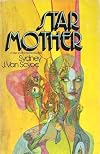
StarMother is a hidden feminist gem from 1976! After reading, I realized that it’s not just sci-fi. It’s actually a gothic tale in a science fiction setting!
A woman from a sort of planetary Peace Corps in the future is sent to another planet on a 2 year mission about which she is given very few details. What they do tell her is that it will involve caring for mutant infants, something she has absolutely no experience in. She finds this odd, but accepts the mission anyway, wanting to be show more of assistance to their planet. When she arrives, she has to grapple with differences among the planet’s unique and varied cultures, which are all very different from her own way of life.
There is so much to appreciate in StarMother! It has strong atmosphere which led to an immersive reading experience. It contains unexpected POVs, written in very distinct voices that nicely round out the story. I found it difficult to guess where the plot was headed next. And it had a clever twist I couldn’t predict!
One thing that is a positive aspect for me, but might be a drawback for some readers, is that descriptions of some of the mutants are kept vague. So if you like to really know exactly what you’re looking at, this might not be for you. Van Scyoc’s writing suggests feelings and images with descriptions, but they aren’t as much concrete descriptions as they are about the feelings they give you. The ending wasn’t quite as satisfying as I wanted it to be, but still solid overall.
You might like StarMother if you are looking for:
- stories involving anthropology
- interesting mutants
- body horror
- questions about what it means to be human
- books featuring outcasts or outsider characters show less
A woman from a sort of planetary Peace Corps in the future is sent to another planet on a 2 year mission about which she is given very few details. What they do tell her is that it will involve caring for mutant infants, something she has absolutely no experience in. She finds this odd, but accepts the mission anyway, wanting to be show more of assistance to their planet. When she arrives, she has to grapple with differences among the planet’s unique and varied cultures, which are all very different from her own way of life.
There is so much to appreciate in StarMother! It has strong atmosphere which led to an immersive reading experience. It contains unexpected POVs, written in very distinct voices that nicely round out the story. I found it difficult to guess where the plot was headed next. And it had a clever twist I couldn’t predict!
One thing that is a positive aspect for me, but might be a drawback for some readers, is that descriptions of some of the mutants are kept vague. So if you like to really know exactly what you’re looking at, this might not be for you. Van Scyoc’s writing suggests feelings and images with descriptions, but they aren’t as much concrete descriptions as they are about the feelings they give you. The ending wasn’t quite as satisfying as I wanted it to be, but still solid overall.
You might like StarMother if you are looking for:
- stories involving anthropology
- interesting mutants
- body horror
- questions about what it means to be human
- books featuring outcasts or outsider characters show less

Bluesong only: This is the second book of Van Scyoc’s Daughters of the Sunstone trilogy, which I have in the SFBC omnibus edition. I’ve been a fan of Van Scyoc’s fiction for a long time, and I’m not entirely sure why. Or rather, I hadn’t remembered why until I started reading this trilogy, beginning with Darkchild (see here), and now Bluesong. She was genuinely good. She built strange worlds and set stories in them that were predicated on that strangeness and yet had plots which show more explained the cause, and sometimes cure, of the strangeness. She was never especially popular, but I think I’d rate her one of the best female US sf writers of the 1980s. Sadly, her last novel appeared in 1991 (although she apparently had a couple of stories in F&SF about ten years ago). The Sunstone novels are set on the world of Brakrath which, although mostly low tech, was settled from another world centuries before and remains aware of them. The planet is a bit too cold to be comfortable for humans, so they hibernate during the winter. Even during the spring, the valleys would be too cold for agriculture… but for the barohnas, the female rulers of each valley, who have the power to focus and direct the sun’s rays… to defrost the land and provide sufficient warmth to grow things. In Bluesong, a young woman realises she is not one of the river people among whom she lives, runs away, and eventually ends up finding her father among the desert people… But she is actually a daughter of a barohna, and so will change into one herself. Van Scyoc draws her alien societies well, and this series is particularly good at dropping hints toward a story arc. I liked Bluesong more than Darkchild, but they’re both pretty good. Cherryh may have received more love during the 1980s, and, er, since, and was hugely more prolific, but Van Scyoc was just as good. show less

Incredibly thin characters, no sense of place or pace, confusing and ultimately pointless plot, and a deus ex machina conclusion. Three arcs are followed. Two involve characters quarantined on an alien planet, supposedly uninhabited but so untrue it's not clear why the backstory wants to claim people thought so. Of those two arcs, one follows two indistinguishable humans with some odd disease serious enough to quarantine but having little effect beyond spots before the eyes. The other arc is show more about a bird-like alien who quickly and quite unbelievably for a member of a space-faring race reverts to an unthinking predator. The third arc follows a native female humanoid who for some reason begins to connect with an ancient race of energy-controlling slave masters. There's also some shambling humanoid remnants who are gradually dispatched by the bird-alien or the female native, but no one cares about them, and flutes that when played resurrect those ancient energy beings. Nonsense all the way. Finally, there's a frequently jarring use of the oddest nouns as verbs, e.g., a plaza is described as "untouched by the breezes that had janitored the mesa top." show less
Lists
You May Also Like


Associated Authors
Statistics
- Works
- 25
- Also by
- 18
- Members
- 1,542
- Popularity
- #16,698
- Rating
- 3.5
- Reviews
- 19
- ISBNs
- 35
- Languages
- 2