
Edward D. Hoch (1930–2008)
Author of Masters of Horror and the Supernatural: The Great Tales
About the Author
Edward D. Hoch was the most ingenious of modern mystery writers. He was author of more than 900 short stories, winner of the Edgar Award, former President of the Mystery Writers of America, and contributor to every issue of Ellery Queens Mystery Magazine since 1973 until his death in 2008. As John show more Dickson Carr remarked, "Satan himself would be proud of his ingenuity." The introduction is by Janet Hutchings, editor of Ellery Queen's Mystery Magazine. show less
Series
Works by Edward D. Hoch
All but Impossible! An Anthology of Locked Room and Impossible Crime Stories by Members of the Mystery Writers of America (1981) — Editor; Contributor — 30 copies
Academy Mystery Novellas: Women Sleuths, Police Procedurals, Locked Room Puzzles, Great British Detectives (1991) — Editor; Contributor — 13 copies
Best Detective Stories of the Year : 1978 (32nd Annual Collection) (1978) — Editor; Contributor — 10 copies
Best Detective Stories of the Year : 1977 (31st Annual Collection) (1977) — Editor; Contributor — 8 copies
Best Detective Stories of the Year : 1979 (33rd Annual Collection) (1979) — Editor; Contributor — 8 copies
Best Detective Stories of the Year : 1976 (30th Annual Collection) (1976) — Editor & Contributor — 7 copies
The Long Way Down 7 copies
Best Detective Stories of the Year : 1981 (35th Annual Collection) (1981) — Editor & Contributor — 6 copies
The Oblong Room [short fiction] 5 copies
Best Detective Stories of the Year : 1980 (34th Annual Collection) (1980) — Editor & Contributor — 4 copies
Golpe cibernetico 4 copies
The Cases of Nancy Trentino 3 copies
The Monkey's Clue ; The Stolen Sapphire: Two Mysteries for You to Solve!: Match Wits With Detective Tommy Preston (1978) 3 copies
Christmas is for Cops [Short story] 3 copies
The Problem of the Secret Patient 3 copies
The Homesick Chicken [short story] 3 copies
Zoo [short story] 3 copies
A Shower of Daggers 3 copies
The Problem of the Black Cloister 3 copies
Second Chance 2 copies
The Boy Who Brought Love 2 copies
I'd Know You Anywhere 2 copies
The Most Dangerous Man 2 copies
The Haggard Society [short story] 2 copies
The Forbidden Word [short story] 2 copies
Night Of The Millennium 2 copies
The problem of the pink post office 2 copies
Housewife Hustlers 2 copies
The Pirate of Millionaires' Cove 2 copies
The Spy and the Suicide Club 2 copies
The Last Paradox [short story] 2 copies
Cloak And Dagger 2 copies
Who Rides with Santa Anna? 1 copy
The Maiden's Sacrifice 1 copy
Desdemona's Daughter 1 copy
Something Green 1 copy
Another War 1 copy
The Faceless Thing 1 copy
Waiting For Mrs. Ryder 1 copy
The Last Unicorns 1 copy
Hoch Edward D. 1 copy
Old Spies Club [short story] 1 copy
The Problem Of The Tin Goose 1 copy
Just One More 1 copy
The Seventieth Number 1 copy
Damsel with a Derringer 1 copy
God of the Playback 1 copy
The Carnival Caper 1 copy
The Great American Novel 1 copy
Golpe cibernetico 1 copy
Ghost Killer by Edward Hoch 1 copy
A Scandal in Montreal 1 copy
Smothered Mate 1 copy
Alfred Hitchcock's Krimi-Stunde. Band 9 — Author — 1 copy
A Flash of Red 1 copy
Old Spies Club 1 copy
2001 Boucheron Bound 1 copy
Winter Run [short story] 1 copy
The Overheard Conversation 1 copy
Bouchercon Bound 1 copy
End of the Line 1 copy
The Joker Is Mild 1 copy
Dracula 1944 1 copy
The Picnic People 1 copy
The Empty Zoo 1 copy
The Serpent in the Sky 1 copy
The Weekend Magus 1 copy
Associated Works
The Best of Mystery: 63 Short Stories Chosen by the Master of Suspense (1982) — Contributor — 426 copies
The New Adventures of Sherlock Holmes: Original Stories by Eminent Mystery Writers (1976) — Contributor — 391 copies, 4 reviews
Devils & Demons: A Treasury of Fiendish Tales Old & New (1991) — Contributor — 288 copies, 2 reviews
100 Dastardly Little Detective Stories (1993) — Contributor; Contributor; Contributor — 230 copies, 1 review
The Arbor House Treasury of Horror and the Supernatural (1981) — Contributor — 218 copies, 3 reviews
The Game Is Afoot: Parodies, Pastiches, and Ponderings of Sherlock Holmes (1994) — Contributor — 216 copies, 2 reviews
Masterpieces of Terror and the Unknown: A Treasury of Bizarre Tales Old and New (1993) — Contributor — 212 copies, 2 reviews
Murder on the Menu: Cordon Bleu Stories of Crime and Mystery, Volume 1 (1984) — Contributor; Contributor — 211 copies, 2 reviews
In the Shadow of the Master: Classic Tales by Edgar Allan Poe (2009) — Contributor — 204 copies, 3 reviews
Alfred Hitchcock Presents: Stories to Be Read with the Door Locked (1975) — Contributor — 187 copies, 4 reviews
The Blue Religion: New Stories about Cops, Criminals, and the Chase (2008) — Contributor — 172 copies, 7 reviews
The Mammoth Book of Perfect Crimes & Impossible Mysteries (2006) — Contributor — 160 copies, 4 reviews
Crime Through Time: Original Tales of Historical Mystery (1997) — Contributor — 137 copies, 2 reviews
The Mammoth Book of Locked-Room Mysteries and Impossible Crimes (2000) — Contributor — 135 copies, 1 review
Isaac Asimov's Magical Worlds of Fantasy, Volume 6: Mythical Beasties (1837) — Contributor — 134 copies, 2 reviews
Isaac Asimov's Magical Worlds of Fantasy, Volume 7: Magical Wishes (1891) — Contributor — 95 copies, 1 review
Alfred Hitchcock Presents : Stories My Mother Never Told Me (1963) — Contributor — 94 copies, 2 reviews
The Resurrected Holmes: New Cases from the Notes of John H. Watson, M.D. (1996) — Contributor — 91 copies, 1 review
Bug-Eyed Monsters: 13 Stories of Dripping, Creeping, Gurgling, Purling, Trilling, Oozing, Seeping, Gushing Deadly Monsters (1980) — Contributor — 78 copies, 2 reviews
Alfred Hitchcock's Mystery Magazine Presents Fifty Years of Crime and Suspense (2006) — Contributor — 78 copies, 1 review
Murder by the Book: Literary Mysteries from Alfred Hitchcock Mystery Magazine and Ellery Queen's Mystery Magazine (1995) — Contributor — 73 copies
Why I Left Harry's All-Night Hamburgers and Other Stories from Isaac Asimov's Science Fiction Magazine (1992) — Contributor — 68 copies
The World's Finest Mystery and Crime Stories: First Annual Collection (2000) — Contributor — 68 copies, 1 review
A Modern Treasury of Great Detective and Murder Mysteries (1994) — Contributor — 63 copies, 1 review
The World's Finest Mystery and Crime Stories: Second Annual Collection (2001) — Contributor — 56 copies, 1 review
Cloak and Dagger: A Treasury of 35 Great Espionage Stories (1988) — Contributor; Contributor — 56 copies
The Prosecution Rests: New Stories about Courtrooms, Criminals, and the Law (2009) — Contributor — 51 copies, 7 reviews
Malice Domestic 08: An Anthology of Original Traditional Mystery Stories (1999) — Contributor — 51 copies
Chapter and Hearse: Suspense Stories about the World of Books (1985) — Contributor; Contributor — 49 copies, 1 review
The Edgar Winners: 33rd Annual Anthology of the Mystery Writers of America (1980) — Contributor — 47 copies, 1 review
The World's Finest Mystery and Crime Stories: Third Annual Collection (2002) — Contributor — 46 copies
Isaac Asimov's Science Fiction Magazine: Vol. 1, No. 1 [Spring 1977] (1977) — Contributor, some editions — 38 copies, 1 review
The Mystery Hall of Fame: An Anthology of Classic Mystery and Suspense Stories (1984) — Contributor — 36 copies, 1 review
The Mammoth Book of Short Spy Novels: Twelve Espionage Masterpieces (1986) — Contributor — 36 copies
At the Scene of the Crime: Forensic Mysteries from Today's Best Writers (2008) — Contributor — 36 copies, 3 reviews
Once Upon a Crime: Historical Mysteries From Ellery Queen's Mystery Magazine (1994) — Contributor — 29 copies
The Deadly Bride and 21 of the Year's Finest Crime and Mystery Stories: Volume II (2006) — Foreword — 29 copies
Ellery Queen's murdercade: 23 stories from Ellery Queen's mystery magazine (Mystery annual ; 29) (1975) — Contributor — 25 copies
White House Pet Detectives: Tales of Crime and Mystery at the White House from a Pet's-Eye View (2002) — Contributor — 17 copies
The Eyes Have It: The First Private Eye Writers of America Anthology (1984) — Contributor — 17 copies
The Year's 25 Finest Crime and Mystery Stories: First Annual Edition (1992) — Contributor — 16 copies
Tricks and Treats: An Anthology of Mystery Stories by the Mystery Writers of America (1976) — Contributor — 16 copies
Ellery Queen's headliners; 20 stories from Ellery Queen's mystery magazine. (1972) — Contributor — 15 copies
The Crime of My Life: Favorite Stories by Presidents of the Mystery Writers of America (1984) — Contributor — 13 copies
The Year's 25 Finest Crime and Mystery Stories: Second Annual Edition (1993) — Contributor — 12 copies
The Wickedest Show on Earth: A Carnival of Circus Suspense (1985) — Contributor; Contributor — 11 copies
The Year's 25 Finest Crime and Mystery Stories: Seventh Annual Edition (1998) — Bibliography & Necrology — 9 copies
The Year's 25 Finest Crime and Mystery Stories: Fifth Annual Edition (1996) — Contributor — 7 copies
Killers of the Mind: A Collection of Stories by the Mystery Writers of America (1974) — Contributor — 5 copies
The Year's 25 Finest Crime and Mystery Stories: Sixth Annual Edition (1997) — Contributor — 5 copies, 1 review
Crimes and Misfortunes: The Anthony Boucher Memorial Anthology of Mysteries — Contributor — 5 copies
Ellery Queen's Mystery Magazine - 1988/03 — Contributor — 2 copies
Appendici in giallo 1 — Contributor; Contributor — 1 copy
La rivista di Alfred Hitchcock n.6 — Author — 1 copy
Tagged
Common Knowledge
- Legal name
- Hoch, Edward Dentinger
- Other names
- Dentinger, Stephen
Stevens, RL
McMahon, Pat
Circus, Anthony
Booth, Irwin
Mr. X - Birthdate
- 1930-02-22
- Date of death
- 2008-01-17
- Gender
- male
- Education
- University of Rochester
- Occupations
- copywriter
public relations
research assistant
author - Organizations
- United States Army
Ellery Queen's Mystery Magazine - Awards and honors
- MWA Grand Master(2001)
Shamus Award(2000)
Bouchercon Lifetime Achievement Award (2001) - Cause of death
- heart attack
- Nationality
- USA
- Birthplace
- Rochester, New York, USA
- Places of residence
- Rochester, New York, USA
- Place of death
- Rochester, New York, USA
- Burial location
- Holy Sepulchre Cemetery, Rochester, New York, USA
- Associated Place (for map)
- Rochester, New York, USA
Members
Reviews

A collection of classic horror and thriller tales by some very famous and some not so well known, including some overlooked stories by the famous. The Introduction is by Uncle Stevie, and briefly covers a lot of the same ground as did his non-fiction masterpiece on horror, [Danse Macabre]. The book is worth the price just for this missive on the inner workings of horror literature. Some of the names you'd expect: [[Edgar Allan Poe]], [[H. G. Wells]], [[H. P. Lovecraft]]. Others, not so: show more [[Winston Churchill]] with a thriller about a man overboard; [[Theodore Dreiser]] with a spiritualism tale.
Rather than capture all the stories, I'll hit what I thought were the high points:
The Squaw by [[Bram Stoker]], a tale of revenge from the most unlikely of characters, a cat. While this one has been largely lost to the world, no doubt owing partially to the less than politically correct title, it's chilling.
The Girl with the Hungry Eyes by Fritz Leiber, a vampire of a very different sort, and one that is imminently more frightening than most, especially the sparkly kind so popular these days.
Camps by Jack Dan, a man balances on the edge of death, dreaming of a life he didn't live in a concentration camp.
Sardonicus by Ray Russell, beware what you wish for, as the consequences may outstrip your expectations. A horribly disfigured man coerces a doctor to cure him, but the cure imprisons him beyond his original disfigurement.
The Oblong Room by Edward D. Koch, a police procedural that requires the gumshoe to expand his mind beyond the natural.
The Party by William F. Nolan, a fevered dream that cannot be escaped.
The Crate by Stephen King, this one bears a slight resemblance to [[Douglas Preston]]'s [The Relic]. Here, a man opens a long forgotten crate in a university research laboratory and unleashes a very hungry entity. But the twist here - after the beast eats a couple people, the man's friend realizes its utility in doing away with his shrew of a wife.
Highly Recommended!!!!!
4 1/2 bones!!!!! show less
Rather than capture all the stories, I'll hit what I thought were the high points:
The Squaw by [[Bram Stoker]], a tale of revenge from the most unlikely of characters, a cat. While this one has been largely lost to the world, no doubt owing partially to the less than politically correct title, it's chilling.
The Girl with the Hungry Eyes by Fritz Leiber, a vampire of a very different sort, and one that is imminently more frightening than most, especially the sparkly kind so popular these days.
Camps by Jack Dan, a man balances on the edge of death, dreaming of a life he didn't live in a concentration camp.
Sardonicus by Ray Russell, beware what you wish for, as the consequences may outstrip your expectations. A horribly disfigured man coerces a doctor to cure him, but the cure imprisons him beyond his original disfigurement.
The Oblong Room by Edward D. Koch, a police procedural that requires the gumshoe to expand his mind beyond the natural.
The Party by William F. Nolan, a fevered dream that cannot be escaped.
The Crate by Stephen King, this one bears a slight resemblance to [[Douglas Preston]]'s [The Relic]. Here, a man opens a long forgotten crate in a university research laboratory and unleashes a very hungry entity. But the twist here - after the beast eats a couple people, the man's friend realizes its utility in doing away with his shrew of a wife.
Highly Recommended!!!!!
4 1/2 bones!!!!! show less
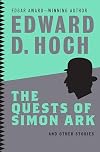
Edward D. Hoch wrote a small number of novels, but he was principally a writer of short stories. In 2001, he was named a Grand Master by the Mystery Writers of America, the first writer given that honor who was not primarily a novelist.
His most enduring relationship was with Ellery Queen's Mystery Magazine; between May 1973 and May 2007, Hoch had a story appear in every issue of the magazine, with the occasional issue featuring a second Hoch story published under a pseudonym.
Part of how he show more managed to be so prolific was that he created multiple series characters of different types, working in different settings. Whatever idea for a story he came up, there was probably an existing character into whose milieu the story could easily be fit.
This collection features stories about Simon Ark, a mysterious figure who investigates events with mystical, occult, or religious overtones. While Ark never comes out and directly says very much about his history, it is frequently implied that he is older than Christ and possibly immortal. It appears that he has been cursed by God to wander the earth in search of Satan.
That's as far as the occult elements go in these mysteries, though, since they all have mundane solutions with no supernatural explanations required. And that makes all of the "ooh, he's immortal, ooh, cursed by God" stuff seem a bit silly; if it's not going to have anything to do with the mysteries, why bother?
Simon Ark is a potentially interesting character, but based on these stories, which Hoch selected himself as the best of roughly 40 Ark stories, Hoch never came up with any mysteries that would justify his particular set of quirks and oddities. show less
His most enduring relationship was with Ellery Queen's Mystery Magazine; between May 1973 and May 2007, Hoch had a story appear in every issue of the magazine, with the occasional issue featuring a second Hoch story published under a pseudonym.
Part of how he show more managed to be so prolific was that he created multiple series characters of different types, working in different settings. Whatever idea for a story he came up, there was probably an existing character into whose milieu the story could easily be fit.
This collection features stories about Simon Ark, a mysterious figure who investigates events with mystical, occult, or religious overtones. While Ark never comes out and directly says very much about his history, it is frequently implied that he is older than Christ and possibly immortal. It appears that he has been cursed by God to wander the earth in search of Satan.
That's as far as the occult elements go in these mysteries, though, since they all have mundane solutions with no supernatural explanations required. And that makes all of the "ooh, he's immortal, ooh, cursed by God" stuff seem a bit silly; if it's not going to have anything to do with the mysteries, why bother?
Simon Ark is a potentially interesting character, but based on these stories, which Hoch selected himself as the best of roughly 40 Ark stories, Hoch never came up with any mysteries that would justify his particular set of quirks and oddities. show less
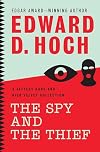
I stumbled on Hoch totally by fortuitous accident. Hoch, who died in 2008, was a prolific short story writer with several series to his credit. Perhaps the most famous involves Nick Velvet, a thief who specializes in stealing very odd, often worthless things. For example, why steal three letters (only a certain three) from a building sign and do it while being watched by the police; or, why steal all the water from a certain swimming pool on a certain day, or a rare tiger from a zoo. He show more accepts only a huge flat fee for his work. Velvet has to be a detective as well as a thief in order to suss out the reasons behind the peculiar requests. He does, and sometimes it requires turning tables on his employer.
This volume also contains stories about Rand, the spy master. Like Velvet, Rand needs to play detective often to figure out the motives behind people’s actions.
I’m hooked and intend to read all the 950 stories. They’re charming. show less
This volume also contains stories about Rand, the spy master. Like Velvet, Rand needs to play detective often to figure out the motives behind people’s actions.
I’m hooked and intend to read all the 950 stories. They’re charming. show less
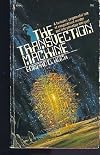
Oh no! Vander Defoe, the inventor of the new transvection machine that's going to save humanity, has been murdered! At least that's how it appears. He goes to the hospital to have his appendix removed and the mechanical surgeon causes blood to start spurting out at the first incision and the human nurse helping out can't save him. Since Vander is one of the president's cabinet members (of extraterrestrial defense?), it's important to get to the bottom of things. So the CIB is called in. The show more CIB stands for Computer Investigation Bureau, and their director is Carl Crader. His younger sidekick is Earl Jazine. They head from NYC to DC to meet with the president and be briefed by his assistant, Maarten Tromp. There are possible paths they could follow, but where to start? Crader decides to return to New York to look for a criminal who has escaped a prison on Venus named Euler Frost. He was in prison for murder and had been hooked up with a revolutionary group of people dedicated to eradicating the world of the computers and machines that have taken over society. He sends Earl to investigate Vander's wife, Gretel, and his ex-parter -- and one of her lovers -- Hubert Ganger. Turns out they had talked about killing Vander just that day, only they don't tell Earl that. They deny all knowledge. That path is taken away. Earl goes to interview the nurse, thinking she had to have been the murderer since everyone knows machines can't murder, can't make mistakes, can't screw up. She denies everything, says everything went by the book. He interviews her doctor supervisor who stands up for her and the hospital, again saying it couldn't have been the machine. What now?
But what is the transvection machine, you ask? It's a device that transports anything and anyone from one place to another, whether it's in a room, different cities, or possibly even different planets. Vander is the only one who knows how it works and he's proven it works by transvecting a monkey from Boston to another city and by transvecting a Chinese girl from the US to India. The government is seriously interested in his machine, because if it can be proven to transport people between planets safely, then they can populate Venus and beat the Russo-Chinese at it, the country that is dominating Venusian populating. But there's a dark secret behind the transvection machine.
Crader is concerned about Frost, because apparently he escaped from Venus last week and could have made it back to earth in time to kill Vander. Turns out Frost is back. The author gives us the story from everyone's vantage point throughout the novel, which is interesting, but at times a little irritating as well. And he does try to kill Vander, but his plot is foiled when one of his assistants appears and saves him from his unsuspecting death. A CIB researcher has found out that the revolutionary group Frost was a part of has actually grown during the time he was on Venus and is headquartered on a small Pacific island known for tourism. Crader decides to go there to look for Frost. On the way, he meets a minister and they strike up a friendship. The minister decides to stay on the island with him, so they can have a good time together. And that is his undoing. The minister is none other than the leader of HAND, this group, and he kidnaps Crader, but only to have him return to the president to relay a message to him, that Gloria Chang has gone over to their side. Crader does this and the message is meaningless to the president. But things are starting to make sense to Crader. And also to Earl. He sees the nurse creeping along the street by the new White House, seemingly hoping not to be found, and witnesses her meeting someone in a parking garage. The man she meets is the doctor. Earl confronts him and the doctor attacks him and escapes. Sometime later, the nurse re-enters the operating room to look at the machine, which couldn't have done it, and is murdered. By whom? The machine again? Earl is at the hospital looking for her and encounters the doctor, who he confronts again. The doctor pleads innocence. Just then, Earl looks up and sees Vander's ex-parter in hospital scrubs and takes off after him. Meanwhile, HAND is planning to destroy the computers at the Federal Medical Center, to spark a revolution against computers and technology everywhere. And Crader has had plenty of time to think about HAND's motivations and has doubts about computers himself now.
And that's all of the plot you'll get from me! If you want to know who murdered Vander, if HAND succeeds in blowing up the Federal Medical Center, if a revolution is started, what happens to Frost, what happens to Crader, etc., you'll have to get the book and read it yourself. It's a very short book. I read it in a day. It's an easy read too. The science is hogwash, but if you can get beyond that, it's an enjoyable story. And Vander's wife, soon to be ex, is a drug addled nympho, who's pretty funny. My only real complaint about the book is that the author is SO anti-computer, SO anti-machine, SO anti-technology, that he beats it into your damn head virtually every damn page! It gets old very fast. Talk about beating a dead horse. And this is sci fi!!! I understand, however, that the author is actually a mystery writer, so maybe he was anti-technology. This was published many years ago. Who knows? It's just damned annoying. Still, as a lightweight, escapist read, it's fun. Somewhat recommended. show less
But what is the transvection machine, you ask? It's a device that transports anything and anyone from one place to another, whether it's in a room, different cities, or possibly even different planets. Vander is the only one who knows how it works and he's proven it works by transvecting a monkey from Boston to another city and by transvecting a Chinese girl from the US to India. The government is seriously interested in his machine, because if it can be proven to transport people between planets safely, then they can populate Venus and beat the Russo-Chinese at it, the country that is dominating Venusian populating. But there's a dark secret behind the transvection machine.
Crader is concerned about Frost, because apparently he escaped from Venus last week and could have made it back to earth in time to kill Vander. Turns out Frost is back. The author gives us the story from everyone's vantage point throughout the novel, which is interesting, but at times a little irritating as well. And he does try to kill Vander, but his plot is foiled when one of his assistants appears and saves him from his unsuspecting death. A CIB researcher has found out that the revolutionary group Frost was a part of has actually grown during the time he was on Venus and is headquartered on a small Pacific island known for tourism. Crader decides to go there to look for Frost. On the way, he meets a minister and they strike up a friendship. The minister decides to stay on the island with him, so they can have a good time together. And that is his undoing. The minister is none other than the leader of HAND, this group, and he kidnaps Crader, but only to have him return to the president to relay a message to him, that Gloria Chang has gone over to their side. Crader does this and the message is meaningless to the president. But things are starting to make sense to Crader. And also to Earl. He sees the nurse creeping along the street by the new White House, seemingly hoping not to be found, and witnesses her meeting someone in a parking garage. The man she meets is the doctor. Earl confronts him and the doctor attacks him and escapes. Sometime later, the nurse re-enters the operating room to look at the machine, which couldn't have done it, and is murdered. By whom? The machine again? Earl is at the hospital looking for her and encounters the doctor, who he confronts again. The doctor pleads innocence. Just then, Earl looks up and sees Vander's ex-parter in hospital scrubs and takes off after him. Meanwhile, HAND is planning to destroy the computers at the Federal Medical Center, to spark a revolution against computers and technology everywhere. And Crader has had plenty of time to think about HAND's motivations and has doubts about computers himself now.
And that's all of the plot you'll get from me! If you want to know who murdered Vander, if HAND succeeds in blowing up the Federal Medical Center, if a revolution is started, what happens to Frost, what happens to Crader, etc., you'll have to get the book and read it yourself. It's a very short book. I read it in a day. It's an easy read too. The science is hogwash, but if you can get beyond that, it's an enjoyable story. And Vander's wife, soon to be ex, is a drug addled nympho, who's pretty funny. My only real complaint about the book is that the author is SO anti-computer, SO anti-machine, SO anti-technology, that he beats it into your damn head virtually every damn page! It gets old very fast. Talk about beating a dead horse. And this is sci fi!!! I understand, however, that the author is actually a mystery writer, so maybe he was anti-technology. This was published many years ago. Who knows? It's just damned annoying. Still, as a lightweight, escapist read, it's fun. Somewhat recommended. show less
Lists
Awards


You May Also Like


Associated Authors
Statistics
- Works
- 250
- Also by
- 259
- Members
- 1,586
- Popularity
- #16,263
- Rating
- 3.7
- Reviews
- 24
- ISBNs
- 137
- Languages
- 7
- Favorited
- 4