
Barry B. Longyear (1942–2025)
Author of Circus World
About the Author
Series
Works by Barry B. Longyear
The Last Enemy 5 copies
Slaughterhouse 3 copies
The Monopoly Man 2 copies
Adagio 2 copies
Turning the Grain 2 1 copy
Dușmanul 1 copy
Chimaera {novelette} 1 copy
The Book of Baraboo 1 copy
THE HANGINGSTONE RAT 1 copy
THE GOOD KILL 1 copy
Murder In Parliament Street 1 copy
L.a. In L.a. 1 copy
Writer's Paint Box: Screen-Handy English Rules and When to Break Them for Writers of Readable Writing (2015) 1 copy
The Purloined Labradoodle 1 copy
Turning The Grain 1 1 copy
Enemy Mine, the Author's Cut 1 copy
Savage planet (novelette) 1 copy
Homecoming [short story] 1 copy
Associated Works
The Mammoth Book of Perfect Crimes & Impossible Mysteries (2006) — Contributor — 160 copies, 4 reviews
Isaac Asimov's Wonderful Worlds of Science Fiction, Volume 7: Space Shuttles (1987) — Author — 88 copies, 1 review
Why I Left Harry's All-Night Hamburgers and Other Stories from Isaac Asimov's Science Fiction Magazine (1992) — Contributor — 68 copies
Spaceships and Spells: A Collection of New Fantasy and Science-fiction Stories (1987) — Contributor — 24 copies
Isaac Asimov's Science Fiction Magazine: Vol. 4, No. 3 [March 1980] (1980) — Contributor — 19 copies, 1 review
Isaac Asimov's Science Fiction Magazine: Vol. 3, No. 8 [August 1979] (1979) — Contributor — 14 copies
Isaac Asimov's Science Fiction Magazine: Vol. 3, No. 1 [January 1979] (1990) — Contributor — 13 copies
Isaac Asimov's Science Fiction Magazine: Vol. 4, No. 11 [November 1980] (1980) — Contributor — 12 copies
I Premi Hugo 1976-1983 — Contributor — 4 copies
Aboriginal Science Fiction No. 55 & 56 Spring 1998 — Contributor — 1 copy
Tagged
Common Knowledge
- Legal name
- Longyear, Barry Brookes
- Other names
- Longbeard, Frederick (pseudonym)
- Birthdate
- 1942-05-12
- Date of death
- 2025-05-06
- Gender
- male
- Education
- Staunton Military Academy, Staunton, Virginia
- Occupations
- printing shop owner
recovering addict
science fiction writer
mystery writer - Organizations
- Science Fiction and Fantasy Writers of America
Dragon Slayers [NA group], Farmington, Maine (founder) - Awards and honors
- John W. Campbell Award (1980)
- Nationality
- USA
- Birthplace
- Harrisburg, Pennsylvania, USA
- Places of residence
- Maine, USA
- Place of death
- Farmington, Maine, USA
- Associated Place (for map)
- Maine, USA
Members
Discussions
The Silver Smoothie in Good Show Sir! — bad science fiction and fantasy covers (October 2025)
Reviews

Warning: I am going to violate my own no snark rule and be super-blunt and tell you exactly what I think about this book.
It was hard to believe that Barry Longyear, the author of “Infinity Hold” and “Sea of Glass”, both of which I LOVE (love love), penned this banal, super-white-bread tale of dinosaurs arriving in their spaceships to reclaim the Earth they left so long ago. It read like the script of one of those cheesy ‘Amazing Stories’ or ‘Outer Limits’ television shows show more from the 80s. The illustrations were pretty awful, too. The dinosaurs looked like creepy anorexic chickens and the human protagonist was a strange boxy capsule with legs. Don’t get me started on the two-dimensional, clichéd, 80s characters. Of course the humans win, despite the Nitolan’s overwhelming superior technology (or telekinesis, I couldn’t really understand), because the dinosaurs don’t understand humor… Wait, What?
The generous white borders around the text, the illustrations, and blank pages still barely make this story long enough to be a book. Rightfully, it belongs in an anthology. A really dated anthology that no one will ever read again and ends up gathering dust on a shelf in Goodwill. Seriously Longyear, did you really write this? show less
It was hard to believe that Barry Longyear, the author of “Infinity Hold” and “Sea of Glass”, both of which I LOVE (love love), penned this banal, super-white-bread tale of dinosaurs arriving in their spaceships to reclaim the Earth they left so long ago. It read like the script of one of those cheesy ‘Amazing Stories’ or ‘Outer Limits’ television shows show more from the 80s. The illustrations were pretty awful, too. The dinosaurs looked like creepy anorexic chickens and the human protagonist was a strange boxy capsule with legs. Don’t get me started on the two-dimensional, clichéd, 80s characters. Of course the humans win, despite the Nitolan’s overwhelming superior technology (or telekinesis, I couldn’t really understand), because the dinosaurs don’t understand humor… Wait, What?
The generous white borders around the text, the illustrations, and blank pages still barely make this story long enough to be a book. Rightfully, it belongs in an anthology. A really dated anthology that no one will ever read again and ends up gathering dust on a shelf in Goodwill. Seriously Longyear, did you really write this? show less
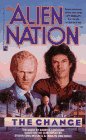
Alien Nation: The Change brings to mind a recent metafilter comment by one of my favorite Mefits, Greg Nog:
It annoys me to see so many people making the deeply stupid argument that the weight of canon restricts writers. A good, non-lazy writer should be perfectly able to write within the canon they're working with. When someone's writing a novel that's ostensibly about the real world, no one says, "Well, you have to understand that it probably won't be very good; I mean, all the history isshow more
so well-established, there's not really room to do anything new." Who in their right mind would point to, say, The Grapes of Wrath, and call it continuity pr0n just because it deals with events that the author himself didn't have control over? "Yeah, it was good and all, but I think Steinbeck was sort of restricted in that he couldn't turn Tom Joad into a samurai with a laser-sword who has a climactic showdown with FDR in the last scene. And also, it turns out that Joad and FDR were secretly brothers, and that both have telekinetic powers."It's too bad that Greg's advice wasn't around for Barry Longyear when he wrote The Change. This is truly a terrible licensed novel. It's beyond obvious that Longyear was excruciatingly unfamiliar with the universe in which he was writing. Not only is the dialogue off, but he fails to respect even the most basic canon details--like, in more than one instance, a character's full name. Names and biographies are changed freely, for no discernible reason.Perhaps these changes would have made sense if they served a particularly excellent plot, but the story here is all over the place--poorly developed, loose ends abounding. There's a subplot about race that's painfully heavy-handed; though the original series was often allegorical for race and discrimination issues, it never felt nearly this pedantic. And Longyear's overly simplistic message--that we're all the same no matter our color--is weakened by the fact that his female characters are so poorly written and shrill. Every female character, both established and new, seems to suffer from women in refrigerator syndrome. If Longyear himself can't treat established franchise characters with respect, who is he to preach to us about treating our fellow men likewise?This is a really terrible book. If you like Alien Nation, please skip this--you'll be better for it. show less
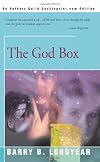
Some books are bad. Some books are great. And some books...are special.
The God Box is special.
It's a fantasy; the story of Korvas, who has been (among many other things) a crooked rug-seller in a great city. His first-person recounting of his adventures while on the run from the bloodthirsty Captain of the city guard and his men is extremely funny, exciting, and in the end, deeply touching. I never fail to have a lump in my throat and a warm feeling as I finish the last page - and I read show more the book at least a couple of times each year.
As a fantasy, The God Box is top-notch. It has a sheer emotional depth that's simply exceptional. The setting, too, is refreshing and vivid. And it's all packed into a book that's far smaller than 90% of the monster-sized fantasy tomes which are the staple of modern genre fiction.
The story flows well; it's told in first person by Korvas himself to a (literally) captive audience, and a very engaging tale it is.
But it's the idea of the god box itself which really stays with me - and with other people I know who've read the book. It is based, I believe, on a concept that originated in rehabilitation therapy for addicts; addiction recovery is a frequent theme in much of Longyear's later work, since he had to struggle with the issue himself. But The God Box was the first novel in which the subject came up, I believe, and it's handled with a very light touch.
I don't want to spoil the concept of the god box in this review. But as Longyear presents it, it's a fascinating idea: you ask the box for you what need, and give it what you don't want. Fear, for example.
And the funny thing is that it really works! No, I'm not saying that it's really magic (it is in the book, of course). I'm a rock-ribbed atheist, myself, so I'm not going to go all mystical on you. But when I am feeling particularly stressed, or afraid, or sad, I visualize a god box. I give it some of the emotions that causing me pain, and ask it for whatever I need to cope. And to my amazement, I feel an astonishing feeling of calm and peace come over me. I'm not the only one who has experienced this, by the way.
It's just a creative use of imagination and visualization, of course. Perhaps there's a touch of self-hypnosis involved. But who cares? The key thing is that it works.
The God Box was out of print for many years, and it never gained the popularity it deserved. But it's back in print now - unfortunately only in paperback. I'd gladly buy a hardcover edition.
It should also be noted that there's another book with the same name, by a writer named Alex Sanchez. I haven't read it, and have no idea what it's about.
I can't recommend Barry Longyear's The God Box highly enough. It's a real gem, and is a must on any fantasy reader's bookshelf - and should be on the reading list of anyone who likes lively stories, imaginative ideas, and interesting philosophy. show less
The God Box is special.
It's a fantasy; the story of Korvas, who has been (among many other things) a crooked rug-seller in a great city. His first-person recounting of his adventures while on the run from the bloodthirsty Captain of the city guard and his men is extremely funny, exciting, and in the end, deeply touching. I never fail to have a lump in my throat and a warm feeling as I finish the last page - and I read show more the book at least a couple of times each year.
As a fantasy, The God Box is top-notch. It has a sheer emotional depth that's simply exceptional. The setting, too, is refreshing and vivid. And it's all packed into a book that's far smaller than 90% of the monster-sized fantasy tomes which are the staple of modern genre fiction.
The story flows well; it's told in first person by Korvas himself to a (literally) captive audience, and a very engaging tale it is.
But it's the idea of the god box itself which really stays with me - and with other people I know who've read the book. It is based, I believe, on a concept that originated in rehabilitation therapy for addicts; addiction recovery is a frequent theme in much of Longyear's later work, since he had to struggle with the issue himself. But The God Box was the first novel in which the subject came up, I believe, and it's handled with a very light touch.
I don't want to spoil the concept of the god box in this review. But as Longyear presents it, it's a fascinating idea: you ask the box for you what need, and give it what you don't want. Fear, for example.
And the funny thing is that it really works! No, I'm not saying that it's really magic (it is in the book, of course). I'm a rock-ribbed atheist, myself, so I'm not going to go all mystical on you. But when I am feeling particularly stressed, or afraid, or sad, I visualize a god box. I give it some of the emotions that causing me pain, and ask it for whatever I need to cope. And to my amazement, I feel an astonishing feeling of calm and peace come over me. I'm not the only one who has experienced this, by the way.
It's just a creative use of imagination and visualization, of course. Perhaps there's a touch of self-hypnosis involved. But who cares? The key thing is that it works.
The God Box was out of print for many years, and it never gained the popularity it deserved. But it's back in print now - unfortunately only in paperback. I'd gladly buy a hardcover edition.
It should also be noted that there's another book with the same name, by a writer named Alex Sanchez. I haven't read it, and have no idea what it's about.
I can't recommend Barry Longyear's The God Box highly enough. It's a real gem, and is a must on any fantasy reader's bookshelf - and should be on the reading list of anyone who likes lively stories, imaginative ideas, and interesting philosophy. show less

I really liked this book. A band of convicts is landed on a prison planet. No guards, nothing but the gear on their backs and a drop-shipment of food and other such survival necessities. Only, the convicts currently residing on the planet know where the new prisoners are to be dropped, and are there waiting. Enter Nicos Bando, unrehabilitatable con, age 27. He's with the new bunch. They get organized just to get out of the drop zone alive. Then they stay fairly organized, and the leader show more makes Nicos the sole "policeman" of the group. The laws are simple, straight forward, and easy to understand. The punishment for violating those laws are equally simple, straight forward, and easy to understand: if found guilty, you pay resitution (maybe) or you die (usually).
I thought this was pretty awesome: even chaos needs a little organization, even anarchy has a couple of rules. Even prisoners and convicts understand that, when there is strength in numbers, ya gotta keep them numbers all going in the same direction. That takes organization, rules, and enforcement, or survival is no longer an option. show less
I thought this was pretty awesome: even chaos needs a little organization, even anarchy has a couple of rules. Even prisoners and convicts understand that, when there is strength in numbers, ya gotta keep them numbers all going in the same direction. That takes organization, rules, and enforcement, or survival is no longer an option. show less
Lists
Best Dystopias (1)
Nebula Award (1)
Awards


You May Also Like


Associated Authors
Statistics
- Works
- 66
- Also by
- 40
- Members
- 2,399
- Popularity
- #10,696
- Rating
- 3.8
- Reviews
- 32
- ISBNs
- 91
- Languages
- 3
- Favorited
- 2