
Elsa Watson
Author of Maid Marian
About the Author
Image credit: Literary Lions, King County Public Library Foundation
Works by Elsa Watson
A Christmas Tail 1 copy
Tagged
Common Knowledge
- Canonical name
- Watson, Elsa
- Birthdate
- 1972-06-24
- Gender
- female
- Education
- Carleton College
- Awards and honors
- Gateway Readers Award Nominee
- Short biography
- Elsa Watson is the author of Maid Marian, her debut novel (Crown, 2004), a Gateway Readers Award nominee. From 1996-1998 she served as a Peace Corps volunteer in Guinea-Bissau, West Africa. She lives and writes on Bainbridge Island, Washington. Visit her at http://www.elsawatson.net.
- Nationality
- USA
- Places of residence
- Bainbridge Island, Washington, USA
- Associated Place (for map)
- Washington, USA
Members
Reviews

Fieldnotes:
Warwick Castle/Sherwood Forest/Denby-on-Trent, 1190s
1 Virginal Widow (Teen Variety)
1 Scheming Mother-In-Law
1 Unscrupulous Queen
1 Stolen Inheritance
1 Norman/Saxon Class Divide
1 Very Merry Outlaw
Politics
Cudgel Lessons
1 Timely Escape
1 Fairy-Tale-Like "Love" Story (in that sort of abstract way)
Chekhov's "Juliet" Potion
1 Elaborate Ruse to Regain Rightful Inheritance
The Short Version
A historical novel looking at the Robin Hood legend from the point of view of the class divide between show more Normans and Saxons...sort of. It talks about it some, but any nuance of the matter is pretty well ruined by the fact that every Norman we actually speak to other than Marian is villainous to a greater or lesser extent.
Not to mention that I was hoping for a young lady who was driven to *do* something rather than passively be bartered about. But mostly what Marian seems to do is run away and/or be rescued. When she lacks the courage to run away from her second marriage and is paralyzed by fear and indecision, I may be able to relate, but it is frustrating. Thankfully she is saved by Robin Hood, but I found him to be simultaneously smug and naiv (rather than idealistic) and more irritating than attractive which makes Marian's mooning after him annoying as well. Their relationship seems out of a fairy tale - in that they are in love because they are both young and attractive and near one another rather than any actual connection.
On the whole, this spent rather too much time on the inescapable drudgery that is a woman's lot with most of the interesting action and political scheming in the novel taking place off-screen as Marian minds the camp or is hiding in a peasant cottage or she has such poor eyesight that it must be described to her. None of which makes for a particularly enjoyable main character. show less
Warwick Castle/Sherwood Forest/Denby-on-Trent, 1190s
1 Virginal Widow (Teen Variety)
1 Scheming Mother-In-Law
1 Unscrupulous Queen
1 Stolen Inheritance
1 Norman/Saxon Class Divide
1 Very Merry Outlaw
Politics
Cudgel Lessons
1 Timely Escape
1 Fairy-Tale-Like "Love" Story (in that sort of abstract way)
Chekhov's "Juliet" Potion
1 Elaborate Ruse to Regain Rightful Inheritance
The Short Version
A historical novel looking at the Robin Hood legend from the point of view of the class divide between show more Normans and Saxons...sort of. It talks about it some, but any nuance of the matter is pretty well ruined by the fact that every Norman we actually speak to other than Marian is villainous to a greater or lesser extent.
Not to mention that I was hoping for a young lady who was driven to *do* something rather than passively be bartered about. But mostly what Marian seems to do is run away and/or be rescued. When she lacks the courage to run away from her second marriage and is paralyzed by fear and indecision, I may be able to relate, but it is frustrating. Thankfully she is saved by Robin Hood, but I found him to be simultaneously smug and naiv (rather than idealistic) and more irritating than attractive which makes Marian's mooning after him annoying as well. Their relationship seems out of a fairy tale - in that they are in love because they are both young and attractive and near one another rather than any actual connection.
On the whole, this spent rather too much time on the inescapable drudgery that is a woman's lot with most of the interesting action and political scheming in the novel taking place off-screen as Marian minds the camp or is hiding in a peasant cottage or she has such poor eyesight that it must be described to her. None of which makes for a particularly enjoyable main character. show less
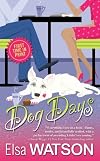
Every once in a while I need a good “fluff” book to cleanse the palate. I tend to be drawn to dark books, but after a while they all kind of run together. Dog Days was exactly what I needed to get me over a reading hump. There’s not a whole lot of depth to it, but there is a lot of heart and a whole lot of fun.
In Dog Days, things aren’t going well for Jessica Sheldon. A year ago, an incident with dogs at the Glimmerglass (the cafe’ she owns with a friend), left Jessica branded a show more dog hater and business has gone — well — to the dogs. Madrona, Washington is a dog-loving city and the residents weren’t too happy with the photo in the paper that showed Jessica screaming at a bunch of rowdy canines after they invaded her very busy cafe’.
The pampered pooches just so happened to belong to a very wealthy woman who always sponsored Woofinstock, Madrona’s annual dog festival, and since the incident, she has pulled her funding. To save face, and hopefully save her struggling cafe’, Jessica signs up to chair the next year’s Woofinstock event in hopes of repairing her reputation, rebuilding her clientele, and maybe even catching the eye of Max, the town’s super-hot veterinarian, while she’s at it.
Just when things seem to be falling apart for Jessica, she meets Zoe, a stray German shepherd who she decides to rescue as an act of good faith. It might even help knock off a few points from her dog-hating score as Woofinstock approaches. What she doesn’t expect is the rogue lightning storm that causes her and Zoe to switch bodies.
Sound kinda crazy? Maybe, but it’s a lot of fun. It reminded me a little of Freaky Friday, except it’s an interspecies switch instead of an inter-generational switch, and I think that’s what made it seem fresh. I seriously laughed out loud a few times, mainly when Zoe and Jessica first wake up and realize their bodies have been switched. Jessica (as a dog) watches in horror as Zoe (in her body) drinks from the toilet, and later greets a man by jumping on him and licking his face. If this were to be made into a movie, I can totally see Kristen Wiig playing Jessica. I think she would be hysterical when Zoe takes over her body.
Ms. Watson does a wonderful job driving the plot forward and switches between Jessica and Zoe’s first-person narrative effortlessly, giving each of them a distinct voice. This book is a lot of fun, and underneath the fluff there’s a great message about facing our fears and the bonds of friendship, both human to human and human to four-legged friend. There’s also some romance and as I said earlier, quite a few laughs. If you are looking for a light, fun beach read, I would definitely add this one to your list. show less
In Dog Days, things aren’t going well for Jessica Sheldon. A year ago, an incident with dogs at the Glimmerglass (the cafe’ she owns with a friend), left Jessica branded a show more dog hater and business has gone — well — to the dogs. Madrona, Washington is a dog-loving city and the residents weren’t too happy with the photo in the paper that showed Jessica screaming at a bunch of rowdy canines after they invaded her very busy cafe’.
The pampered pooches just so happened to belong to a very wealthy woman who always sponsored Woofinstock, Madrona’s annual dog festival, and since the incident, she has pulled her funding. To save face, and hopefully save her struggling cafe’, Jessica signs up to chair the next year’s Woofinstock event in hopes of repairing her reputation, rebuilding her clientele, and maybe even catching the eye of Max, the town’s super-hot veterinarian, while she’s at it.
Just when things seem to be falling apart for Jessica, she meets Zoe, a stray German shepherd who she decides to rescue as an act of good faith. It might even help knock off a few points from her dog-hating score as Woofinstock approaches. What she doesn’t expect is the rogue lightning storm that causes her and Zoe to switch bodies.
Sound kinda crazy? Maybe, but it’s a lot of fun. It reminded me a little of Freaky Friday, except it’s an interspecies switch instead of an inter-generational switch, and I think that’s what made it seem fresh. I seriously laughed out loud a few times, mainly when Zoe and Jessica first wake up and realize their bodies have been switched. Jessica (as a dog) watches in horror as Zoe (in her body) drinks from the toilet, and later greets a man by jumping on him and licking his face. If this were to be made into a movie, I can totally see Kristen Wiig playing Jessica. I think she would be hysterical when Zoe takes over her body.
Ms. Watson does a wonderful job driving the plot forward and switches between Jessica and Zoe’s first-person narrative effortlessly, giving each of them a distinct voice. This book is a lot of fun, and underneath the fluff there’s a great message about facing our fears and the bonds of friendship, both human to human and human to four-legged friend. There’s also some romance and as I said earlier, quite a few laughs. If you are looking for a light, fun beach read, I would definitely add this one to your list. show less
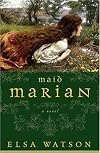
Picked up this book because of the beautiful cover and ROBIN HOOD!
I have to say, the book design is lovely. It's credited to Lauren Dong, and I think she deserves a credit here too. Not just the cover, but the lovely flowers inside, even the typesetting is nice.
However, the story... well, I really, really WANTED to like it. Very soon into the book, I realized that the characters' attitudes and behaviors were not consistent with 15th-century England. That's actually OK with me, I adjusted my show more attitude to regard this as a British-influenced fantasy book. However, it's really more of a romance than a fantasy. Unfortunately, it doesn't really work as a romance. The relationship between Robin and Marian is oddly lacking in heat. It's rather abstract and chaste; I just wasn't feeling their connection.
Other than the romance, the plot has to do with the disenfranchised noblewoman Marian enlisting Robin's help to get her lands back, as she's been cheated out of them by the conniving Lady Pernelle. This plot device creates an awkwardness that isn't ever resolved: Robin is for the poor folks, but he ends up marrying into the gentry and settling down happily in a great manor. No change is made in the status quo, except that Marian has her consciousness raised about how serfs live, and vows to "do her best" for them. Now, I don't demand revolution in every book. If you don't want to criticize the feudal system, by all means don't. But this book pays PC lip service to criticizing it, which is unsatisfying, to say the least.
Also, I didn't think the scenario where the young master of the manor agrees to be instructed in the art of fighting with a cudgel by his young servant girl was consistent with the internal 'culture' of the book, let alone a realistic depiction of the historical era.
I have to admit that I also found this Marian to be an annoying person.
Not only was she both naive and jealous, but she pulled the crap that any person deserves to be unceremoniously dumped for: "Oh, I am So Attracted to you because you are a Bad-ass, dangerous outlaw! But wait! Now that we've hooked up, you should change completely, and be safe and reliable and never take any risks! And if you don't do what I want, I will act like a psycho and run away! But that just means I must Love You!" Argh, Ugh.
For novels about Maid Marian and Robin Hood, I'd highly recommend Jennifer Roberson's 'Lady of the Forest,' or Robin McKinley's 'Outlaws of Sherwood' over this book. show less
I have to say, the book design is lovely. It's credited to Lauren Dong, and I think she deserves a credit here too. Not just the cover, but the lovely flowers inside, even the typesetting is nice.
However, the story... well, I really, really WANTED to like it. Very soon into the book, I realized that the characters' attitudes and behaviors were not consistent with 15th-century England. That's actually OK with me, I adjusted my show more attitude to regard this as a British-influenced fantasy book. However, it's really more of a romance than a fantasy. Unfortunately, it doesn't really work as a romance. The relationship between Robin and Marian is oddly lacking in heat. It's rather abstract and chaste; I just wasn't feeling their connection.
Other than the romance, the plot has to do with the disenfranchised noblewoman Marian enlisting Robin's help to get her lands back, as she's been cheated out of them by the conniving Lady Pernelle. This plot device creates an awkwardness that isn't ever resolved: Robin is for the poor folks, but he ends up marrying into the gentry and settling down happily in a great manor. No change is made in the status quo, except that Marian has her consciousness raised about how serfs live, and vows to "do her best" for them. Now, I don't demand revolution in every book. If you don't want to criticize the feudal system, by all means don't. But this book pays PC lip service to criticizing it, which is unsatisfying, to say the least.
Also, I didn't think the scenario where the young master of the manor agrees to be instructed in the art of fighting with a cudgel by his young servant girl was consistent with the internal 'culture' of the book, let alone a realistic depiction of the historical era.
I have to admit that I also found this Marian to be an annoying person.
Not only was she both naive and jealous, but she pulled the crap that any person deserves to be unceremoniously dumped for: "Oh, I am So Attracted to you because you are a Bad-ass, dangerous outlaw! But wait! Now that we've hooked up, you should change completely, and be safe and reliable and never take any risks! And if you don't do what I want, I will act like a psycho and run away! But that just means I must Love You!" Argh, Ugh.
For novels about Maid Marian and Robin Hood, I'd highly recommend Jennifer Roberson's 'Lady of the Forest,' or Robin McKinley's 'Outlaws of Sherwood' over this book. show less
Although I had read reviews suggesting Marian might be too much the helpless damsel, the book started off well. Within the confines allowed her by medieval society, Marian does an impressive job taking control of her fate. The writing was beautiful throughout and the elegant language felt like the right way for Maid Marian to tell her story. Things quickly fall apart, however, when Marian finds she lacks the courage to run away from her second marriage and is only saved by the timely show more intervention of Robin Hood.
From this point forward, Marian mostly stops being the character driving the plot. The decisions she does make are poorly thought out. Despite being the main character Maid Marian misses out on much of the action, only hearing about it from Robin Hood. This means that the reader also misses out on the action while Marian simpers at or worries about Robin constantly. For maybe the last fifth of the story, Marian begins making her own decisions again and we see a little of the court intrigue promised in the description. But of course, at the very end, Robin has to sweep in again to secure a happy ending.
Just to be clear, I’m not opposed to a strong male protagonist or women who sometimes need to be rescued. It’s even realistic for Marian to need to be rescued initially, before she’s learned to fight or survive as a commoner. What bothers me is that once she gains these skills, she’s still a complete idiot about Robin (making her un-relatable) while Robin is obnoxiously smug (making him un-relatable). So this left me annoyed at Marian, who constantly has to be rescued from her poor choices, and without a character I could empathize with.
This review first published on Doing Dewey. show less
From this point forward, Marian mostly stops being the character driving the plot. The decisions she does make are poorly thought out. Despite being the main character Maid Marian misses out on much of the action, only hearing about it from Robin Hood. This means that the reader also misses out on the action while Marian simpers at or worries about Robin constantly. For maybe the last fifth of the story, Marian begins making her own decisions again and we see a little of the court intrigue promised in the description. But of course, at the very end, Robin has to sweep in again to secure a happy ending.
Just to be clear, I’m not opposed to a strong male protagonist or women who sometimes need to be rescued. It’s even realistic for Marian to need to be rescued initially, before she’s learned to fight or survive as a commoner. What bothers me is that once she gains these skills, she’s still a complete idiot about Robin (making her un-relatable) while Robin is obnoxiously smug (making him un-relatable). So this left me annoyed at Marian, who constantly has to be rescued from her poor choices, and without a character I could empathize with.
This review first published on Doing Dewey. show less
Awards


You May Also Like


Statistics
- Works
- 7
- Members
- 340
- Popularity
- #70,095
- Rating
- 3.6
- Reviews
- 16
- ISBNs
- 14
- Languages
- 2
