
Ray Laurence
Author of Pompeii: The Living City
About the Author
Ray Laurence is a prolific author of books on Roman history, Pompeii and Roman Italy. He is Professor of Classical and Archaeological Studies at the University of Kent, UK.
Works by Ray Laurence
Domestic Space in the Roman World: Pompeii & Beyond (Journal of Roman Archaeology Supplementary Series #22) (1997) — Editor — 6 copies
Reiseführer in die Welt der Antike. Das alte Rom: Rom und Umgebung im Jahre 300 n. Chr (2010) 5 copies
A village in Normandy 5 copies
Associated Works
A Companion to Roman Italy (Blackwell Companions to the Ancient World) (2016) — Contributor — 12 copies
The Moving City: Processions, Passages and Promenades in Ancient Rome (2015) — Contributor — 10 copies
Globalisation and the Roman World: World History, Connectivity and Material Culture (2014) — Contributor — 7 copies
Travel, Communication and Geography in Late Antiquity: Sacred and Profane (2004) — Contributor — 4 copies
Los bajos fondos de Roma (Desperta Ferro Arqueología e Historia 2) — Contributor — 2 copies, 1 review
Tagged
Common Knowledge
- Gender
- male
- Education
- University of Wales (BA|Ancient History and Archaeology|1986)
University of Newcastle (PhD|Classics|1991) - Occupations
- Professor of Roman history and archaeology
- Organizations
- University of Kent
- Nationality
- UK
- Associated Place (for map)
- UK
Members
Reviews
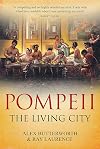
While not intended as a companion piece to Robert Harris's historical novel Pompeii, this book served that purpose very well. Indeed, Harris himself provides a complimentary quote on the front cover, stating that he wished this book had been available when he was researching his novel. That was enough to make me pick it up from the library.
This is a highly detailed look at Pompeiian society from about the AD 50s to AD 79, when the famous eruption of Vesuvius occurred. My knowledge of Ancient show more Rome in general comes from approximately two semesters' worth of Latin classes, so the extra details about the various emperors and their power struggles were most illuminating, even if they did become a bit overwhelming at times. The "fictional vignettes" interspersed throughout the narrative were hit and miss for me, but more hit than miss (or at least, not violently objectionable).
The most interesting chapters for me were the one about the eruption and, perhaps surprisingly, the one about Pompeii's sexual mores. At least, the sex chapter was the source of most of my notes, usually accompanied with "?!" or :O faces. Makes me think that perhaps HBO's series about Rome was not entirely off the mark in terms of adult content. (Granted, some of the imagery was fertility-related, not necessarily erotic, but it can still be kind of eyebrow-raising for modern audiences, if only because of its ubiquity.) And that eruption chapter -- wow. It was quite possibly even more chilling than Robert Harris's description, because the author here detailed the entire eruption, from the initial blast to the five or six pyroclastic flows that made sure that all life was extinguished. Those are terrifying because there is really no escape from them.
From a Latin scholar standpoint, I also liked reading the translations of various examples of graffiti (I laughed out loud at "I admire you, wall, for not having collapsed at having to carry the tedious scribblings of so many writers"), but it would have been nice to have the original Latin nearby for comparison.
I would recommend this book to someone who is interested in learning more about Pompeii and is perhaps not familiar with the goings-on in Rome at the time (those who know more about Ancient Rome than I do might find the discussions of Nero and Vespasian slightly repetitive). And, as stated earlier, if you've read Robert Harris's novel and are looking for a good non-fiction counterpart, this would do the job. show less
This is a highly detailed look at Pompeiian society from about the AD 50s to AD 79, when the famous eruption of Vesuvius occurred. My knowledge of Ancient show more Rome in general comes from approximately two semesters' worth of Latin classes, so the extra details about the various emperors and their power struggles were most illuminating, even if they did become a bit overwhelming at times. The "fictional vignettes" interspersed throughout the narrative were hit and miss for me, but more hit than miss (or at least, not violently objectionable).
The most interesting chapters for me were the one about the eruption and, perhaps surprisingly, the one about Pompeii's sexual mores. At least, the sex chapter was the source of most of my notes, usually accompanied with "?!" or :O faces. Makes me think that perhaps HBO's series about Rome was not entirely off the mark in terms of adult content. (Granted, some of the imagery was fertility-related, not necessarily erotic, but it can still be kind of eyebrow-raising for modern audiences, if only because of its ubiquity.) And that eruption chapter -- wow. It was quite possibly even more chilling than Robert Harris's description, because the author here detailed the entire eruption, from the initial blast to the five or six pyroclastic flows that made sure that all life was extinguished. Those are terrifying because there is really no escape from them.
From a Latin scholar standpoint, I also liked reading the translations of various examples of graffiti (I laughed out loud at "I admire you, wall, for not having collapsed at having to carry the tedious scribblings of so many writers"), but it would have been nice to have the original Latin nearby for comparison.
I would recommend this book to someone who is interested in learning more about Pompeii and is perhaps not familiar with the goings-on in Rome at the time (those who know more about Ancient Rome than I do might find the discussions of Nero and Vespasian slightly repetitive). And, as stated earlier, if you've read Robert Harris's novel and are looking for a good non-fiction counterpart, this would do the job. show less
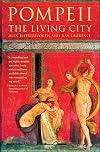
Why is this book a must-read? The detail is amazing! The author makes you feel as if you know the people of Pompeii, largely due to his use of the graffiti, documents found, and the archaeological record. It was fascinating to see the passage of time and events in the years leading to the city's destruction and the horrific deaths of its inhabitants. Did you know that Pompeii had suffered a terrible earthquake years before the big event? I didn't. The final chapter was a real page-turner but show more at the same time was hard to read. I didn't want anyone to die, especially not the children. Sometimes history just doesn't let you have the option of a happy ending. I think what I will take away from this book most are just how very human people always have been, for better and for worse, and just how fragile our lives really are. show less
Using the technique of having the names of actual inhabitants representing various functions and conditions in the destroyed city, Butterworth and Laurence have created a very useful book. The technique is engaging, and the revealed society is well explored. Pompeii itself is carefully positioned in the flow of Roman history in the previous decade. The book is a keeper, and deepens the reader's undrstanding of the complexity of the Roman ethos. You will have a good time, and even feel show more engaged in the tragedy. show less
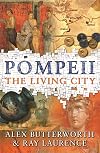
This is a vivid insight into the society and culture of Pompeii during the twenty-odd years leading up to the 79AD eruption. I thoroughly recommend it as preparatory reading for a visit to Pompeii, or as follow-up reading afterwards. One of the authors is a novelist, the other a historian: the result is a delightfully lively intertwining of history and fictional vignettes. which are based on the lives of people who are known to have lived in the city. And, for all those who learned Latin show more through the Cambridge Schools books - Caecilius makes an appearance. To sum up: this is a very easy-to-read, absorbing book and a great way to learn more about the background of the period. show less
Lists
Awards

You May Also Like


Associated Authors
Statistics
- Works
- 23
- Also by
- 17
- Members
- 632
- Popularity
- #39,872
- Rating
- 3.6
- Reviews
- 12
- ISBNs
- 69
- Languages
- 6