
James J. O'Donnell (1) (1950–)
Author of Augustine: A New Biography
For other authors named James J. O'Donnell, see the disambiguation page.
About the Author
James J. O'Donnell is a classicist who served for ten years as Provost of Georgetown University and is now University Librarian at Arizona State University. He is the author of several books, including Augustine, The Ruin of the Roman Empire, and Avatars of the Word. He is the former president of show more the American Philological Association, a Fellow the Medieval Academy of America, and the chair of the Board of Directors of the American Council of Learned Societies. show less
Image credit: James J. O'Donnell [credit: Arizona State University]
Works by James J. O'Donnell
Associated Works
The Confessions of St. Augustine (0397) — Translator, some editions; Commentary, some editions; Introduction, some editions — 21,176 copies, 136 reviews
What Is Your Dangerous Idea? Today's Leading Thinkers on the Unthinkable (2007) — Contributor — 669 copies, 8 reviews
The Limits of Ancient Christianity: Essays on Late Antique Thought and Culture in Honor of R. A. Markus (1999) — Contributor — 12 copies
Tagged
Common Knowledge
- Legal name
- O'Donnell, James Joseph
- Birthdate
- 1950-02-26
- Gender
- male
- Education
- Princeton University
Yale University - Occupations
- professor (Classics)
classicist
historian
librarian - Organizations
- Georgetown University
University of Pennsylvania
American Philological Association
Arizona State University
Cornell University
Medieval Academy of America (show all 8)
Catholic University of America
Bryn Mawr College - Nationality
- USA
- Places of residence
- New Mexico, USA
Arizona, USA - Associated Place (for map)
- USA
Members
Reviews
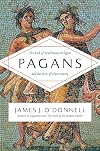
Give me that old time religion! The kind with bloody sacrifice, sacred groves, portents and oracles. By Jove! And Athena, and Serapis, and Ba'al, give me that old time religion.
In Pagans, O'Donnell tackles the question of what happened to the traditional religion of the Mediterranean. How, in the 4th century, did the rites of the old gods up and vanish? The mundane argument is pretty simple. The Emperor Diocletian (284-305) massively reformed the civil service, centralizing power and show more finances at the expense of local elites. Money, which used to support local civic rites across the Empire, was distributed from Constantinople to new Christian leaders via the mechanism of the military and the Church.
That, of course, is a paltry explanation. Belief that exists only in the presence of cash subsidies is a paltry belief indeed. But that may have been enough. O'Donnell argues that the old religions were transactional. A sacrifice to a god was the human side of a deal, the divine side of which was victory in battle, prosperity in trade, or healthy children. Gods which lost the support of human emperors were no longer worthy of emulation by the masses. 4th century Christians had a number of rhetorical and technological advantages, as their doctrine combined the sophisticated philosophy of the neoplatonists, a strong tradition of public oratory and writing, and the political power of the assembled congregation (Oh, and the True Gospel of Christ's Love). Against this, the old religion had the obscurity of signs and portents, the spectacle of rite and sacrifice, and Bronze Age traditions that seemed sclerotic and obsolete.
O'Donnell writes clearly for the new reader, while placing this work in an ongoing scholarly dialog about the Classics that I don't know enough about to criticize. His most original argument is that pagans as such did not exist. Augustus would never have used the word to describe his beliefs. Rather, paganism was constructed as an opponent by the early Church, a specific kind of rhetorical move to distinguish 'soldiers of Christ' from the ignorant superstitions of the countryside, which is the root word of 'pagan'. Similarly, one should not speak of belief in Jupiter, but rather an assemblage of practices and images relating specific human beings to a common vision of a 'heavenly father'. There's a frustrating skipping around in the arguments and primary sources. These are very much O'Donnell's interpretations, and I'm not convinced they are the interpretations. Still, this is an interesting book for a modern atheist who loves Rome, but knows relatively little about the end of the Empire. show less
In Pagans, O'Donnell tackles the question of what happened to the traditional religion of the Mediterranean. How, in the 4th century, did the rites of the old gods up and vanish? The mundane argument is pretty simple. The Emperor Diocletian (284-305) massively reformed the civil service, centralizing power and show more finances at the expense of local elites. Money, which used to support local civic rites across the Empire, was distributed from Constantinople to new Christian leaders via the mechanism of the military and the Church.
That, of course, is a paltry explanation. Belief that exists only in the presence of cash subsidies is a paltry belief indeed. But that may have been enough. O'Donnell argues that the old religions were transactional. A sacrifice to a god was the human side of a deal, the divine side of which was victory in battle, prosperity in trade, or healthy children. Gods which lost the support of human emperors were no longer worthy of emulation by the masses. 4th century Christians had a number of rhetorical and technological advantages, as their doctrine combined the sophisticated philosophy of the neoplatonists, a strong tradition of public oratory and writing, and the political power of the assembled congregation (Oh, and the True Gospel of Christ's Love). Against this, the old religion had the obscurity of signs and portents, the spectacle of rite and sacrifice, and Bronze Age traditions that seemed sclerotic and obsolete.
O'Donnell writes clearly for the new reader, while placing this work in an ongoing scholarly dialog about the Classics that I don't know enough about to criticize. His most original argument is that pagans as such did not exist. Augustus would never have used the word to describe his beliefs. Rather, paganism was constructed as an opponent by the early Church, a specific kind of rhetorical move to distinguish 'soldiers of Christ' from the ignorant superstitions of the countryside, which is the root word of 'pagan'. Similarly, one should not speak of belief in Jupiter, but rather an assemblage of practices and images relating specific human beings to a common vision of a 'heavenly father'. There's a frustrating skipping around in the arguments and primary sources. These are very much O'Donnell's interpretations, and I'm not convinced they are the interpretations. Still, this is an interesting book for a modern atheist who loves Rome, but knows relatively little about the end of the Empire. show less

We all know that the Roman Empire “fell” some time around 476 A.D., the date of the deposition of Romulus Augustulus, traditionally seen as the "last" Roman emperor. But maybe not, at least according to James J. O’Donnell, a distinguished classicist and provost of Georgetown University. In O’Donnell’s view, set forth in The Ruin of the Roman Empire (2008), the “fall” or end of the Roman Empire is exceedingly difficult to pinpoint. One reason is that the Empire persisted in the show more east (headquartered in Constantinople) until at least 1453 when it fell to the Ottoman turks. [That’s when Edward Gibbon identified the “fall” in his magisterial History of the Decline and Fall of the Roman Empire.] And even then, the Ottomans continued to refer to their empire as “Rum” [Rome] until it was formally disbanded in 1924 with the establishment of the modern Turkish state.
O’Donnell’s book focuses on the part of the empire governed from the city of Rome, particularly in the 4th, 5th, and 6th centuries. And even there, the “fall” was not at all obvious. The Empire in the third century had been especially chaotic, with emperors typically lasting only a year or two before being assassinated and replaced by some ambitious general or warlord. The chaos ended in the late 3d century with the ascendency of Diocletian, who moved his base of operations eastward to what is now the Croatian city of Split. His successor, Constantine, moved the capital even farther east to Byzantium, which he modestly renamed Constantinople.
As the capital migrated eastward, the empire’s control over the western provinces (Gaul, Spain, and Italy) lessened, but that did not mean they became more barbaric. O’Donnell argues that the western provinces interacted a great deal with their “barbarian” neighbors to the north and east. Indeed, most of the consuls of Rome during the 4th through 6th centuries were born outside the titular boundaries of the “Empire.”
The Rhine and Danube rivers marked the official boundaries of the empire. But O’Donnell points out that rivers make very ineffective boundaries between civilizations (mountains and deserts are much more effective) because they attract people. Hence, citizens of the empire and their ostensibly barbaric neighbors had plenty of intercourse (double entendre intended) across those waterways. Tribes close to the empire adopted many of the customs, dress, institutions, and habits of the people within the empire.
O’Donnell portrays the movement of people and tribes around and across the empire’s boundaries as a bit chaotic, but more peaceful than generally described in most western literature. He appraises Attila the Hun as the most overrated villain in western history. In his view, the Huns were not so much repelled in battle as simply assimilated by a mutually recognized superior culture.
Rome may have been sacked by the Vandals in 455, but it quickly reorganized. Odoacer, son of Edoco (a Hun) became leader of the western empire and assumed the title of “king” rather than emperor, but provided wise leadership and stability from 476 to 493. His successor, Theoderic (sometime called “the Great”), ruled from 493 to 526 upheld a Roman legal administration and scholarly culture and promoted a major building program across Italy. In 505 he expanded into the Balkans, and by 511 he had brought the Visigothic Kingdom of Spain under his direct control and established hegemony over the Burgundian and Vandal kingdoms.
So in O’Donnell’s view, Rome had not fallen in the mid 5th century, but was well governed until at least 526, admittedly by Visigoths and descendants of Huns. The bete noire in his telling is Justinian, who ruled in Constantinople from 527 to 565. The split of the empire into two halves, the Latin speaking west and the Greek speaking east, was not something he could abide. He was driven to unite the entire empire by a need to unify Christian beliefs. The western rulers tended to be tolerant of various forms of Christianity, whereas he was a devoted follower and believer in the teachings of the Council of Chalcedon.
O’Donnell does a nice job of explaining the various forms of early Christianity. As he says:
“Jesus and his first followers…offered a variety of assertions about Jesus’s relationship with the supreme divine being….There is simply too much scripture for it all to make sense.”
Arian theology, a belief held by the majority of the people in the West, but not by the bishops of Rome, insisted on distinguishing Jesus from God. The Nicenes, on the other hand, said that Jesus and God were of “identical substance,” homo-ousios in Greek. The Council of Chalcedon attempted to solve the issue with a doctrine O’Donnell characterizes as “both-and,” asserting both the godhead and manhood of Jesus at the same time. O’Donnell opines:
“…the Chalcedonians put forth a logical construct, yet still quite difficult to grasp and comprehend, and they made this incomprehensibility into a virtue, at least far as they could. If scriptures were contradictory and confusing, they represented not conflict, but rather a lofty, divine logic that mortals could not grasp, and became evidence of the truth of a logically paradoxical doctrine.”
So Justinian set out to unify the empire, both politically and religiously. His armies set out from Constantinople to conquer Italy, north Africa, and Spain. They also picked fights with the Persian Empire to their east. Although they were often successful in battle, they pretty much ruined the economies of the western provinces. Moreover, not only were they ultimately unsuccessful in subduing the western provinces, they may have weakened their own empire as a whole as well as the Persian Empire so much that neither they nor the Persians were able to withstand the onslaught of Islam, wich began shortly thereafter.
O’Donnell’s book provides a welcome insight into an historical period not well known or understood today.
(JAB) show less
O’Donnell’s book focuses on the part of the empire governed from the city of Rome, particularly in the 4th, 5th, and 6th centuries. And even there, the “fall” was not at all obvious. The Empire in the third century had been especially chaotic, with emperors typically lasting only a year or two before being assassinated and replaced by some ambitious general or warlord. The chaos ended in the late 3d century with the ascendency of Diocletian, who moved his base of operations eastward to what is now the Croatian city of Split. His successor, Constantine, moved the capital even farther east to Byzantium, which he modestly renamed Constantinople.
As the capital migrated eastward, the empire’s control over the western provinces (Gaul, Spain, and Italy) lessened, but that did not mean they became more barbaric. O’Donnell argues that the western provinces interacted a great deal with their “barbarian” neighbors to the north and east. Indeed, most of the consuls of Rome during the 4th through 6th centuries were born outside the titular boundaries of the “Empire.”
The Rhine and Danube rivers marked the official boundaries of the empire. But O’Donnell points out that rivers make very ineffective boundaries between civilizations (mountains and deserts are much more effective) because they attract people. Hence, citizens of the empire and their ostensibly barbaric neighbors had plenty of intercourse (double entendre intended) across those waterways. Tribes close to the empire adopted many of the customs, dress, institutions, and habits of the people within the empire.
O’Donnell portrays the movement of people and tribes around and across the empire’s boundaries as a bit chaotic, but more peaceful than generally described in most western literature. He appraises Attila the Hun as the most overrated villain in western history. In his view, the Huns were not so much repelled in battle as simply assimilated by a mutually recognized superior culture.
Rome may have been sacked by the Vandals in 455, but it quickly reorganized. Odoacer, son of Edoco (a Hun) became leader of the western empire and assumed the title of “king” rather than emperor, but provided wise leadership and stability from 476 to 493. His successor, Theoderic (sometime called “the Great”), ruled from 493 to 526 upheld a Roman legal administration and scholarly culture and promoted a major building program across Italy. In 505 he expanded into the Balkans, and by 511 he had brought the Visigothic Kingdom of Spain under his direct control and established hegemony over the Burgundian and Vandal kingdoms.
So in O’Donnell’s view, Rome had not fallen in the mid 5th century, but was well governed until at least 526, admittedly by Visigoths and descendants of Huns. The bete noire in his telling is Justinian, who ruled in Constantinople from 527 to 565. The split of the empire into two halves, the Latin speaking west and the Greek speaking east, was not something he could abide. He was driven to unite the entire empire by a need to unify Christian beliefs. The western rulers tended to be tolerant of various forms of Christianity, whereas he was a devoted follower and believer in the teachings of the Council of Chalcedon.
O’Donnell does a nice job of explaining the various forms of early Christianity. As he says:
“Jesus and his first followers…offered a variety of assertions about Jesus’s relationship with the supreme divine being….There is simply too much scripture for it all to make sense.”
Arian theology, a belief held by the majority of the people in the West, but not by the bishops of Rome, insisted on distinguishing Jesus from God. The Nicenes, on the other hand, said that Jesus and God were of “identical substance,” homo-ousios in Greek. The Council of Chalcedon attempted to solve the issue with a doctrine O’Donnell characterizes as “both-and,” asserting both the godhead and manhood of Jesus at the same time. O’Donnell opines:
“…the Chalcedonians put forth a logical construct, yet still quite difficult to grasp and comprehend, and they made this incomprehensibility into a virtue, at least far as they could. If scriptures were contradictory and confusing, they represented not conflict, but rather a lofty, divine logic that mortals could not grasp, and became evidence of the truth of a logically paradoxical doctrine.”
So Justinian set out to unify the empire, both politically and religiously. His armies set out from Constantinople to conquer Italy, north Africa, and Spain. They also picked fights with the Persian Empire to their east. Although they were often successful in battle, they pretty much ruined the economies of the western provinces. Moreover, not only were they ultimately unsuccessful in subduing the western provinces, they may have weakened their own empire as a whole as well as the Persian Empire so much that neither they nor the Persians were able to withstand the onslaught of Islam, wich began shortly thereafter.
O’Donnell’s book provides a welcome insight into an historical period not well known or understood today.
(JAB) show less

I picked this up because I was impressed with the author's Ruin of the Roman Empire and was hoping that this book could enlighten me in similar ways about Roman North Africa. While it did help with that, there was much more about Augustine and his place in modern Christianity and modern Western thought than there was about the contemporary (to Augustine) situation in North Africa. The author got me interested enough to read the book all the way through, though I ended up with some quibbles. show more Before I get to those, I'll try to tell you whether you'd be interested in this book.
Do You Want to Read It?
This is a revisionist biography of Augustine. The author wants you to see Augustine from a 4th century view, not from the views of him that have been handed down over the course of the last 1600 years. He also assumes that you already know quite a bit about Augustine and have read at least The Confessions. So, if you know Augustine well, like him, and don't want your views revised, you can skip this, unless you want to argue with it. If you know Augustine well, but are unsure what you think about him, you'll find food for thought in this book. If you know some things about Augustine, but are not vitally interested in him, like me, you may find yourself drawn into the book, but wondering why much of this matters in this day and age, a question the author himself asks at the end of the book. If you're not interested in Augustine, or are only just starting to find out about him, this is not the place to start. Finally folks interested in writing alternate histories should see my section on North African history below.
My Quibbles
- There is a lot of redundancy in this book. I found the same thing in Ruin of the Roman Empire and assumed O'Donnell had introduced it so that people could read separate chapters without needing to read the whole book. However, he clearly intends that people read all of Augustine. I have decided the repetition is due to the author not writing in a linear way. He probably writes up chapters out of order and puts whatever he thinks of in that chapter. Then he doesn't go back and weed out the redundancies and decide where the information should best be placed. Nor, evidently, does he have an editor to do it for him.
- His bibliography consists only of the major books by and on Augustine. Other books are listed in the end notes. Since my main interest was really a side issue in the book, I had to follow the notes very closely to pick out books that might be more germane to my area of interest.
- At one point (pp. 207-208), he contends that one of Augustine's major contributions to modern Western thought is the idea of a supervening narrative, a story about why we're right and everyone else is wrong. He says, that while many would no longer agree with Augustine's narrative, "the most rigorous historians of human history, the most objective and dispassionate scientists, the most versatile wizards of the truth of what has actually happened in history" continue to have some kind of supervening narrative.
I would argue that at least scientists do not have "a" supervening narrative. They have methodologies for accumulating facts and placing those facts in a narrative that explains the facts. These narratives are supervening only by being the best explanations of as many facts as possible. When another narrative is proposed that explains the facts better, the old narrative is replaced. So all narratives are temporary until replaced by others that explain the facts better. This is not at all how Augustine viewed his narrative. It was supervening for all time. There is a big difference between a narrative that cannot be changed and one that is acknowledged to be only temporary.
So What about North African History?
I suspect that this book did as good a job as it could in contextualizing Augustine within the 4th century Roman North African setting. Unfortunately, the largest body of documents we have about North Africa at that time are Augustine's own writings. So what he's not interested in simply isn't well documented. The author really tried to fill in the gaps, but I really wished there was more information to be had.
However, if you are interested in alternate histories of North Africa or alternate Christianities, this book provides a lot of excellent ideas. O'Donnell constantly speculates on what would have happened if Augustine had made a different decision at various points in his life. His importance is such that it often results in a fairly big change in history. show less
Do You Want to Read It?
This is a revisionist biography of Augustine. The author wants you to see Augustine from a 4th century view, not from the views of him that have been handed down over the course of the last 1600 years. He also assumes that you already know quite a bit about Augustine and have read at least The Confessions. So, if you know Augustine well, like him, and don't want your views revised, you can skip this, unless you want to argue with it. If you know Augustine well, but are unsure what you think about him, you'll find food for thought in this book. If you know some things about Augustine, but are not vitally interested in him, like me, you may find yourself drawn into the book, but wondering why much of this matters in this day and age, a question the author himself asks at the end of the book. If you're not interested in Augustine, or are only just starting to find out about him, this is not the place to start. Finally folks interested in writing alternate histories should see my section on North African history below.
My Quibbles
- There is a lot of redundancy in this book. I found the same thing in Ruin of the Roman Empire and assumed O'Donnell had introduced it so that people could read separate chapters without needing to read the whole book. However, he clearly intends that people read all of Augustine. I have decided the repetition is due to the author not writing in a linear way. He probably writes up chapters out of order and puts whatever he thinks of in that chapter. Then he doesn't go back and weed out the redundancies and decide where the information should best be placed. Nor, evidently, does he have an editor to do it for him.
- His bibliography consists only of the major books by and on Augustine. Other books are listed in the end notes. Since my main interest was really a side issue in the book, I had to follow the notes very closely to pick out books that might be more germane to my area of interest.
- At one point (pp. 207-208), he contends that one of Augustine's major contributions to modern Western thought is the idea of a supervening narrative, a story about why we're right and everyone else is wrong. He says, that while many would no longer agree with Augustine's narrative, "the most rigorous historians of human history, the most objective and dispassionate scientists, the most versatile wizards of the truth of what has actually happened in history" continue to have some kind of supervening narrative.
I would argue that at least scientists do not have "a" supervening narrative. They have methodologies for accumulating facts and placing those facts in a narrative that explains the facts. These narratives are supervening only by being the best explanations of as many facts as possible. When another narrative is proposed that explains the facts better, the old narrative is replaced. So all narratives are temporary until replaced by others that explain the facts better. This is not at all how Augustine viewed his narrative. It was supervening for all time. There is a big difference between a narrative that cannot be changed and one that is acknowledged to be only temporary.
So What about North African History?
I suspect that this book did as good a job as it could in contextualizing Augustine within the 4th century Roman North African setting. Unfortunately, the largest body of documents we have about North Africa at that time are Augustine's own writings. So what he's not interested in simply isn't well documented. The author really tried to fill in the gaps, but I really wished there was more information to be had.
However, if you are interested in alternate histories of North Africa or alternate Christianities, this book provides a lot of excellent ideas. O'Donnell constantly speculates on what would have happened if Augustine had made a different decision at various points in his life. His importance is such that it often results in a fairly big change in history. show less
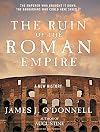
O'Donnell takes a hard look at the usual narrative which ascribes the fall of Rome to barbarian invasions and cultural and military decline. He argues strongly that Rome survived and successfully incorporated a number of "barbarian" invasions through a process of acculturation among border peoples who successively infiltrated themselves into the Empire and became Roman. O'Donnell proposes that a series of poor choices by Eastern emperors actually set in motion the disintegration of the Roman show more world beginning in the sixth century, quite a bit later than the conventional date of 476 AD. I found his thesis and his evidence fascinating. show less
Lists
Awards

You May Also Like


Associated Authors
Statistics
- Works
- 9
- Also by
- 9
- Members
- 1,495
- Popularity
- #17,183
- Rating
- 3.9
- Reviews
- 20
- ISBNs
- 43
- Languages
- 3
