
Donald Serrell Thomas
Author of The Victorian Underworld
About the Author
Works by Donald Serrell Thomas
The Execution of Sherlock Holmes: New Adventures of the Great Detective (2007) 119 copies, 3 reviews
An underworld at war : spivs, deserters, racketeers & civilians in the Second World War (2003) 76 copies
Sherlock Holmes and the Ghosts of Bly: And Other New Adventures of the Great Detective (2010) 64 copies, 4 reviews
Death on a Pale Horse: Sherlock Holmes on Her Majesty's Secret Service (Pegasus Crime (Hardcover)) (2013) 48 copies
The Lost Casebooks of Sherlock Holmes: Three Volumes of Detection and Suspense (2012) 47 copies, 1 review
Associated Works
Tagged
Common Knowledge
- Legal name
- Thomas, Donald Serrell
- Other names
- Selwyn, Francis
- Birthdate
- 1926
- Gender
- male
- Education
- Queen's College, Taunton
University of Oxford (Balliol College) - Occupations
- Professor Emeritus of English Literature (Cardiff University)
fiction writer
non-fiction writer - Awards and honors
- Eric Gregory Award (1962)
- Nationality
- UK
- Birthplace
- Somerset, England, UK
- Associated Place (for map)
- England, UK
Members
Reviews

A perfectly good biography and summary of Browning's life, his loves, as well as helpful explanatory commentary on the poetry.
Donald Thomas argues that the popular labels of Browning's poetry being obscure and "optimistic" don't add up. He was optimistic about life itself even though he suffered his own trials and he maintained his belief in God and the certainty of salvation. Yet his poetry delved, at its best, into the motivations for human depravity among historical fraudsters, madmen and show more criminals as subjects. This was not a morbid trait with Browning but rather it is his objective mind casting itself on these events and behaviours with an eye to the present and future. At the same time as these poems were in gestation, the Nineteenth Century was waking up to the new psychological thought and study that would open up the human mind as a source for motivation and behaviour.
Fortunately, Browning was fully able to distinguish between his own private observations of behaviour and criminality, and his public and familial personality. His dissenting origins and later secular beliefs helped him thrive in a wide social circle outside of his occupational environment. He was a favoured guest and raconteur at the best London tables, a popular public figure and wonderful loving husband to Elizabeth. show less
Donald Thomas argues that the popular labels of Browning's poetry being obscure and "optimistic" don't add up. He was optimistic about life itself even though he suffered his own trials and he maintained his belief in God and the certainty of salvation. Yet his poetry delved, at its best, into the motivations for human depravity among historical fraudsters, madmen and show more criminals as subjects. This was not a morbid trait with Browning but rather it is his objective mind casting itself on these events and behaviours with an eye to the present and future. At the same time as these poems were in gestation, the Nineteenth Century was waking up to the new psychological thought and study that would open up the human mind as a source for motivation and behaviour.
Fortunately, Browning was fully able to distinguish between his own private observations of behaviour and criminality, and his public and familial personality. His dissenting origins and later secular beliefs helped him thrive in a wide social circle outside of his occupational environment. He was a favoured guest and raconteur at the best London tables, a popular public figure and wonderful loving husband to Elizabeth. show less
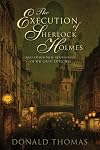
(Reprinted from the Chicago Center for Literature and Photography [cclapcenter.com]. I am the original author of this essay, as well as the owner of CCLaP; it is not being reprinted here illegally.)
As someone who for a long time now has been dedicated to the newest of the new in the contemporary arts, I of course have a low tolerance for so-called "comfort food" projects; that is, the act of revisiting a set of fictional characters or a certain fictional milieu over and over again, not show more because the milieu is necessarily good but merely for the warm, cozy sense of the familiar such an activity provides. After all, it's this exact compulsion that inspires the lowest and crappiest forms of the arts altogether: the endless soap operas, the endless cop and lawyer and doctor television shows, the endless mystery novels all featuring a quirky detective protagonist. But that said, I confess that I too fall prey to this pleasant sense of the familiar sometimes, that happy sense of the known and understood that comes to eventually supersede whether or not any particular project is any good, the artistic equivalent of sleeping every night in a favorite t-shirt despite it being old and ratty and a little smelly.
One such comfort-food subject for me, for example, is that of Sherlock Holmes, that delightfully sociopathic private detective of Victorian-Age London, the invention of doctor-turned-author Arthur Conan Doyle in the late 1800s, a character who ended up being featured in a total of four of Doyle's novels and 56 of his stories. After all, even since a child I have always deeply connected with Holmes, and have always empathized with the tortured situation he found himself in; a brilliant rationalist with a barely disguised contempt for humanity, he was much too smart to be a cop and much too arrogant to be a politician, instead adopting the freelancer's life and collecting massive amounts of knowledge just to satisfy his own intellectual curiosity, forced into heavy opium use during down-times of his life just to get his brain to slow down a little. Add to this, then, that Doyle's Holmes stories were one of the first projects of my childhood to introduce me to Victorian-Era England, a time in both history and the arts I have come to have a deep love for as a middle-aged adult; perhaps, then, you can see why the mere idea of Sherlock Holmes produces a certain sense of happiness and contentment in me, the mere thought of sitting down and reading yet another one of his adventures.
And of course, I'm far from alone in this yearning over this exquisitely complex character; in fact, you could argue that the 125-year-old Holmes is more popular than ever with mainstream society these days, with for example not just one but two competing new movie deals recently being announced by competing Hollywood studios, one of them being directed by no less than gonzo-action veteran Guy Ritchie. And a big part of this, frankly, can be attributed to the fact that the copyright on Sherlock Holmes expired awhile ago; it means that for several decades now, pretty much anyone who wants to can legally sit down, write and publish their own story featuring the detective, which of course has led to hundreds and hundreds of new projects coming out over those decades. (This is in fact one of the biggest arguments over why copyrights need to be held down to a decent but not infinite duration, just long enough to benefit that artist and their immediate family; when you allow corporations to own the creative rights of certain characters and stories into perpetuity, society never gets a chance to expand and build on these characters and stories. And that's an integral part of the arts, is the chance to grow and add to the things that have come before, something that is getting profoundly tampered with these days through the exact Disney-led effort to get copyrights lengthened into perpetuity.)
And thus do we come to The Execution of Sherlock Holmes, by a veteran genre author named Donald Thomas who has actually cranked out a number of other books in the past of Holmesian adventures; this latest is a collection of five long stories, ones that in true Doyle style slyly reference many of the others Thomas has written already. In fact, this the sort of the main point I wanted to bring up about these stories and this book; that it was so successful in my eyes precisely because it is so Doylesian in its spot-on mimicry, very much as if Thomas wanted these to be mistaken literally for old Doyle stories that just happened to have never gotten published, ones that had maybe gotten discovered recently in some trunk in some British attic and were just now getting released to the public for the first time. And this of course is why I've been talking about the concept of certain artistic projects being enjoyed for the same reason as comfort food, because that is exactly what this book is; it's a book for people who are already slobbering fans of Sherlock Holmes, people who can get a smile on their face just thinking of smoking jackets and bubbling glass vials, people who don't want their beloved detective screwed around with by snotty postmodern revisionists, but rather an exact and faithful reproduction delivered with each and every new product.
Is it wrong to occasionally delve into the world of comfort arts, to have a certain part of such a thing in our lives? Not really, in my opinion, but with the operative word being "occasional;" let's not forget that such projects are mostly filler when it comes to an intelligent person's life, the equivalent of a potato you eat during dinner for no other reason than to help fill your belly. Thomas' book is extremely well-done for what it is, with him even using the five stories as an excuse to take on five different archetypical "types" of Holmesian tales (a daring escape; a job for the royal family; a case in the rural boonies; a story about war; and a showdown with a master nemesis); but let's face facts, that it is no better and no worse than the couple thousand other well-done Holmesian tales that have now been published over the last century, something merely to have some short-time fun reading while at an airport or the beach and then to forget again. The book itself comes recommended to all my fellow "Baker Street Irregulars;" I just urge all of you as well to keep track of how much of this kind of stuff you take in altogether in your life, and to make sure it's balanced by unique and challenging projects too.
Out of 10: 8.5 show less
As someone who for a long time now has been dedicated to the newest of the new in the contemporary arts, I of course have a low tolerance for so-called "comfort food" projects; that is, the act of revisiting a set of fictional characters or a certain fictional milieu over and over again, not show more because the milieu is necessarily good but merely for the warm, cozy sense of the familiar such an activity provides. After all, it's this exact compulsion that inspires the lowest and crappiest forms of the arts altogether: the endless soap operas, the endless cop and lawyer and doctor television shows, the endless mystery novels all featuring a quirky detective protagonist. But that said, I confess that I too fall prey to this pleasant sense of the familiar sometimes, that happy sense of the known and understood that comes to eventually supersede whether or not any particular project is any good, the artistic equivalent of sleeping every night in a favorite t-shirt despite it being old and ratty and a little smelly.
One such comfort-food subject for me, for example, is that of Sherlock Holmes, that delightfully sociopathic private detective of Victorian-Age London, the invention of doctor-turned-author Arthur Conan Doyle in the late 1800s, a character who ended up being featured in a total of four of Doyle's novels and 56 of his stories. After all, even since a child I have always deeply connected with Holmes, and have always empathized with the tortured situation he found himself in; a brilliant rationalist with a barely disguised contempt for humanity, he was much too smart to be a cop and much too arrogant to be a politician, instead adopting the freelancer's life and collecting massive amounts of knowledge just to satisfy his own intellectual curiosity, forced into heavy opium use during down-times of his life just to get his brain to slow down a little. Add to this, then, that Doyle's Holmes stories were one of the first projects of my childhood to introduce me to Victorian-Era England, a time in both history and the arts I have come to have a deep love for as a middle-aged adult; perhaps, then, you can see why the mere idea of Sherlock Holmes produces a certain sense of happiness and contentment in me, the mere thought of sitting down and reading yet another one of his adventures.
And of course, I'm far from alone in this yearning over this exquisitely complex character; in fact, you could argue that the 125-year-old Holmes is more popular than ever with mainstream society these days, with for example not just one but two competing new movie deals recently being announced by competing Hollywood studios, one of them being directed by no less than gonzo-action veteran Guy Ritchie. And a big part of this, frankly, can be attributed to the fact that the copyright on Sherlock Holmes expired awhile ago; it means that for several decades now, pretty much anyone who wants to can legally sit down, write and publish their own story featuring the detective, which of course has led to hundreds and hundreds of new projects coming out over those decades. (This is in fact one of the biggest arguments over why copyrights need to be held down to a decent but not infinite duration, just long enough to benefit that artist and their immediate family; when you allow corporations to own the creative rights of certain characters and stories into perpetuity, society never gets a chance to expand and build on these characters and stories. And that's an integral part of the arts, is the chance to grow and add to the things that have come before, something that is getting profoundly tampered with these days through the exact Disney-led effort to get copyrights lengthened into perpetuity.)
And thus do we come to The Execution of Sherlock Holmes, by a veteran genre author named Donald Thomas who has actually cranked out a number of other books in the past of Holmesian adventures; this latest is a collection of five long stories, ones that in true Doyle style slyly reference many of the others Thomas has written already. In fact, this the sort of the main point I wanted to bring up about these stories and this book; that it was so successful in my eyes precisely because it is so Doylesian in its spot-on mimicry, very much as if Thomas wanted these to be mistaken literally for old Doyle stories that just happened to have never gotten published, ones that had maybe gotten discovered recently in some trunk in some British attic and were just now getting released to the public for the first time. And this of course is why I've been talking about the concept of certain artistic projects being enjoyed for the same reason as comfort food, because that is exactly what this book is; it's a book for people who are already slobbering fans of Sherlock Holmes, people who can get a smile on their face just thinking of smoking jackets and bubbling glass vials, people who don't want their beloved detective screwed around with by snotty postmodern revisionists, but rather an exact and faithful reproduction delivered with each and every new product.
Is it wrong to occasionally delve into the world of comfort arts, to have a certain part of such a thing in our lives? Not really, in my opinion, but with the operative word being "occasional;" let's not forget that such projects are mostly filler when it comes to an intelligent person's life, the equivalent of a potato you eat during dinner for no other reason than to help fill your belly. Thomas' book is extremely well-done for what it is, with him even using the five stories as an excuse to take on five different archetypical "types" of Holmesian tales (a daring escape; a job for the royal family; a case in the rural boonies; a story about war; and a showdown with a master nemesis); but let's face facts, that it is no better and no worse than the couple thousand other well-done Holmesian tales that have now been published over the last century, something merely to have some short-time fun reading while at an airport or the beach and then to forget again. The book itself comes recommended to all my fellow "Baker Street Irregulars;" I just urge all of you as well to keep track of how much of this kind of stuff you take in altogether in your life, and to make sure it's balanced by unique and challenging projects too.
Out of 10: 8.5 show less
Sherlock Holmes and the King's Evil: And Other New Tales Featuring the World's Greatest Detective by Donald Thomas
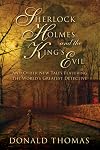
The Case of the Tell Tale Hands.
A rather dull and pedestrian story to begin an anthology with, Watson uncharacteristically documenting the intricacies of finger printing rather than injecting any excitement or urgency into the proceedings. At the half way stage I was almost hoping for the introduction of a Pygmy or two. Holmes seems perpetually on the verge of calling all and sundry, including Watson, blithering morons. The only lighter moment in the whole affair is the alacrity that Watson show more displays in choosing Ilfracoombe over Tenby as a holiday destination.
The Case of the King's Evil.
This one was much more to my liking. The plot, though not too murky in it's complexity, is still interesting enough to hold the interest, mainly due to how Holmes handles affairs, maintaining a teasing attitude with Watson throughout, which all stems from how the case initially requested aid from the good Doctor and not the better than good detective. The case takes the pair to Norfolk to discover what happened to two brothers, lighthouse keepers both, who have gone missing after a witnessed fight. There are good descriptions throughout of the estuary, the mudflats and the treacherous tides and quicksand under foot. There is a particularly suspenseful sequence out on the mud flats, the tide rushing in, as Holmes pushes bullishly toward a solution with Watson in reluctant tow, the latter seemingly with more mind to the danger the environment poses than the other. I must admit to a fairly rabid fetish in myself for lighthouses, so combining my Holmesian obsession with such is a double whammy. Good stuff.
The Case of the Portuguese sonnets.
Back to more dull ramblings among the murky doings of forgers and extortionists. Too much time is spent with the mechanics and history of forgery, which reads sometimes like a light skimming session on Wikepedia. Hired by Robert Browning's son Holmes travels to Venice, which as a location is largely ignored in favour of dusty rooms filled with poetry, documents and manuscripts from a whole host of figures from Byron to Whitman, as he immerses himself in the dubious art of the forgerer. Yes I chuckled several times at some of Holmes' stock put-downs as Watson and Lestrade so obligingly set themselves up but beyond that my main state of mind, despite being doubly armed with a hot Nespresso and a box of Jaffa Cakes, was boredom. Holmes needs an adversary to outwit or a problem to solve, lives to save or judgement to fall.
The Case of Peter the Painter
This one is jam packed full of the things that make a good Sherlock Holmes story one of the all time high marks for cosy reads. It's got a little of everything. Holmes has a visitor and he can't resist showing off his 'method' for Watson by applying it to the woman who calls. The woman in question tells a story of a sick daughter, yellow canaries and foreigners up to no-good. Holmes is on top note. Watson not so much. Unfortunately, at this point it becomes apparent that Donald Thomas' schtick has turned up wearing Doc Martens; Thomas loves to tie in the story with some historical incidence - in this case the clashes between police and Russian Anarchists notoriously remembered as 'the Houndsditch Murders' in which three policemen were gunned down dead and several more wounded and the Siege of Sydney Street in which Winston Churchill was at hand leading armed police and a detachment of Scots Guard against a heavily armed group of robber/anarchists. Watson gets heavily side-lined as the two Holmes brothers get pally with Winston but at least it gives him time to get some quality reading done in the form of Scott's Heart of Mid-Lothian. Although this is one of the better stories by Thomas I still think it had potential to be better without being diluted by the author's little history essays. 'The Siege of Sidney Street' also appeared in Barrie Roberts' 'Sherlock Holmes and the Railway Maniac', the first of nine Holmes novels which I heartily recommend.
The Case of the Zimmermann Telegram.
The title is all you really need to know. If you have an interest in the Zimmermann Telegram then google some bibliography and save yourself having to read some historical commentary masquerading as a Sherlock Holmes story. Taking place during the 'His Last Bow' era, the story features Sherlock as our secret master decoder and Watson as a secret agent. Sound good? It isn't. No narrative whatsoever, just a very potted spotty history of the exploits of Room 40's codebreakers during the Great War but with Holmes as the prime mover. It occurred to me that the whole story might be another coded message which I eventually managed to decode. It reads thus: FEEL FREE TO SKIM THIS RUBBISH. Unfortunately the message revealed itself too late.
I do like a good anthology. But I do much prefer a mixed author anthology. In a mixed author anthology Donald Thomas might have been represented by the very agreeable 'The Case of the King's Evil', whereas here, in a single author anthology, his faults are highlighted by their repetition and by the inclusion of stories that are of variable quality. Many of these single author anthologies by authors attempting the Holmes pastiche have their highlights but are also of variable quality. It really underlines just what Doyle achieved to maintain such a high level of consistency throughout all 56 of his Sherlock Holmes short stories. show less
A rather dull and pedestrian story to begin an anthology with, Watson uncharacteristically documenting the intricacies of finger printing rather than injecting any excitement or urgency into the proceedings. At the half way stage I was almost hoping for the introduction of a Pygmy or two. Holmes seems perpetually on the verge of calling all and sundry, including Watson, blithering morons. The only lighter moment in the whole affair is the alacrity that Watson show more displays in choosing Ilfracoombe over Tenby as a holiday destination.
The Case of the King's Evil.
This one was much more to my liking. The plot, though not too murky in it's complexity, is still interesting enough to hold the interest, mainly due to how Holmes handles affairs, maintaining a teasing attitude with Watson throughout, which all stems from how the case initially requested aid from the good Doctor and not the better than good detective. The case takes the pair to Norfolk to discover what happened to two brothers, lighthouse keepers both, who have gone missing after a witnessed fight. There are good descriptions throughout of the estuary, the mudflats and the treacherous tides and quicksand under foot. There is a particularly suspenseful sequence out on the mud flats, the tide rushing in, as Holmes pushes bullishly toward a solution with Watson in reluctant tow, the latter seemingly with more mind to the danger the environment poses than the other. I must admit to a fairly rabid fetish in myself for lighthouses, so combining my Holmesian obsession with such is a double whammy. Good stuff.
The Case of the Portuguese sonnets.
Back to more dull ramblings among the murky doings of forgers and extortionists. Too much time is spent with the mechanics and history of forgery, which reads sometimes like a light skimming session on Wikepedia. Hired by Robert Browning's son Holmes travels to Venice, which as a location is largely ignored in favour of dusty rooms filled with poetry, documents and manuscripts from a whole host of figures from Byron to Whitman, as he immerses himself in the dubious art of the forgerer. Yes I chuckled several times at some of Holmes' stock put-downs as Watson and Lestrade so obligingly set themselves up but beyond that my main state of mind, despite being doubly armed with a hot Nespresso and a box of Jaffa Cakes, was boredom. Holmes needs an adversary to outwit or a problem to solve, lives to save or judgement to fall.
The Case of Peter the Painter
This one is jam packed full of the things that make a good Sherlock Holmes story one of the all time high marks for cosy reads. It's got a little of everything. Holmes has a visitor and he can't resist showing off his 'method' for Watson by applying it to the woman who calls. The woman in question tells a story of a sick daughter, yellow canaries and foreigners up to no-good. Holmes is on top note. Watson not so much. Unfortunately, at this point it becomes apparent that Donald Thomas' schtick has turned up wearing Doc Martens; Thomas loves to tie in the story with some historical incidence - in this case the clashes between police and Russian Anarchists notoriously remembered as 'the Houndsditch Murders' in which three policemen were gunned down dead and several more wounded and the Siege of Sydney Street in which Winston Churchill was at hand leading armed police and a detachment of Scots Guard against a heavily armed group of robber/anarchists. Watson gets heavily side-lined as the two Holmes brothers get pally with Winston but at least it gives him time to get some quality reading done in the form of Scott's Heart of Mid-Lothian. Although this is one of the better stories by Thomas I still think it had potential to be better without being diluted by the author's little history essays. 'The Siege of Sidney Street' also appeared in Barrie Roberts' 'Sherlock Holmes and the Railway Maniac', the first of nine Holmes novels which I heartily recommend.
The Case of the Zimmermann Telegram.
The title is all you really need to know. If you have an interest in the Zimmermann Telegram then google some bibliography and save yourself having to read some historical commentary masquerading as a Sherlock Holmes story. Taking place during the 'His Last Bow' era, the story features Sherlock as our secret master decoder and Watson as a secret agent. Sound good? It isn't. No narrative whatsoever, just a very potted spotty history of the exploits of Room 40's codebreakers during the Great War but with Holmes as the prime mover. It occurred to me that the whole story might be another coded message which I eventually managed to decode. It reads thus: FEEL FREE TO SKIM THIS RUBBISH. Unfortunately the message revealed itself too late.
I do like a good anthology. But I do much prefer a mixed author anthology. In a mixed author anthology Donald Thomas might have been represented by the very agreeable 'The Case of the King's Evil', whereas here, in a single author anthology, his faults are highlighted by their repetition and by the inclusion of stories that are of variable quality. Many of these single author anthologies by authors attempting the Holmes pastiche have their highlights but are also of variable quality. It really underlines just what Doyle achieved to maintain such a high level of consistency throughout all 56 of his Sherlock Holmes short stories. show less
Sherlock Holmes and the King's Evil: And Other New Tales Featuring the World's Greatest Detective by Donald Thomas
edit, days later: I realized yesterday what really bugged me, above everything else that's wrong with this book: Thomas uses even FEWER women characters in this volume than Doyle did. THAT takes some doing. :(
------------------------
my orig review:
Gah, that was the most boring Holmes fic I've ever read. It isn't the subject matter. I've read plenty of war stories, and I've read some novels featuring complex cryptography. I slogged through Neal Stephenson's Cryptonomicon, for god's sake, and show more I didn't even hate it.
This was just DULL. Also, more telling than showing. Also, there are almost no women in the entire book. How can you write five novellas with only a handful of women, total, including Mrs. Hudson and a mostly useless client in distress? Next to this, Arthur Conan Doyle's usual mundane (and sometimes purple) prose is vivid and electrifying.
Also, twenty minutes after finishing it, I can't remember anything but the ending of the last novella.
(Why, why did I bother? Oh, right, some of the historical detail was nifty. *goes in search of some decent nonfiction history* ) show less
------------------------
my orig review:
Gah, that was the most boring Holmes fic I've ever read. It isn't the subject matter. I've read plenty of war stories, and I've read some novels featuring complex cryptography. I slogged through Neal Stephenson's Cryptonomicon, for god's sake, and show more I didn't even hate it.
This was just DULL. Also, more telling than showing. Also, there are almost no women in the entire book. How can you write five novellas with only a handful of women, total, including Mrs. Hudson and a mostly useless client in distress? Next to this, Arthur Conan Doyle's usual mundane (and sometimes purple) prose is vivid and electrifying.
Also, twenty minutes after finishing it, I can't remember anything but the ending of the last novella.
(Why, why did I bother? Oh, right, some of the historical detail was nifty. *goes in search of some decent nonfiction history* ) show less
Lists
Awards

You May Also Like


Associated Authors
Statistics
- Works
- 59
- Also by
- 1
- Members
- 1,769
- Popularity
- #14,555
- Rating
- 3.4
- Reviews
- 18
- ISBNs
- 212
- Languages
- 9