
Richard Pratt
Author of 1 & 2 Chronicles: A Mentor Commentary
About the Author
Works by Richard Pratt
A Guide To Early American Homes: North & South, Combined Edition (2 Volumes in 1) (1956) — Author — 28 copies
Ladies' home journal book of landscaping and outdoor living; the homescaper's guide to good looks and good living on his grounds (1963) 4 copies
He Gave Us Stories 1 copy
將人的心意奪回 1 copy
"New Bern" 1 copy
Prayer: When We Talk to God 1 copy
Zarobljavamo svaku misao 1 copy
Tagged
Common Knowledge
- Birthdate
- 1953-10-17
- Gender
- male
Members
Reviews
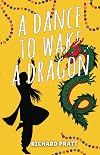
Set in the fantastical land of Tianya, A Dance to Wake a Dragon is an ambitious novel that maybe tries to bite off more than it can chew. The premise is intriguing and drew me in right from the start. Young Shengli embarks on a dangerous quest to reach the sacred place of Zamai to perform a magical dance which was taught to her by her now deceased mother. In a world that's increasingly off balance and where the old ways have been forgotten, Shengli will be able to count only on her skills, show more her cunning, and her faithful friends if she is to be successful in her mission to wake a dragon.
Though the book starts off fairly strong, I was soon slightly confused as to who the target audience is: Shengli is thirteen, although both she and her twin friends would seem somewhat younger based on their dialogue and thoughts. However, the writing style would suggest a much, much older audience, with complex, often run-on, sentences making this extremely hard to read even for me as an adult. I'll admit I actually found this quite tiring at times, and considered DNFing for this reason alone. There also seem to be far too many themes tackled here, though I applaud the author for attempting to weave reflections on industrialisation, urbanisation, climate change and the exploitation of natural resources in such an original way in a YA fantasy novel.
My general feeling upon finishing this book was that it tried to do a lot, but in doing so ended up losing much of the emotional punch it could have packed - especially with a couple of hard-hitting scenes that snuck up unexpectedly but had little space for development. There was one in particular that left me somewhat perplexed, as I'm not quite sure what purpose it served at that point in the book, appearing to be there mostly as shock-value - and again, not something I would expect to be included in such a manner for a younger audience.
Alongside the sometimes confusing writing style, I struggled with the pacing in this book: there were long stretches in which nothing much seemed to be happening, characters talking over the same points repeatedly as if to ensure the message had actually been delivered to the reader, only to then have everything happen at once, with no space for any of the emotions to settle. I don't say this often, but I feel this book could have benefited from being a bit longer and take its time to expand more on certain scenes instead of rushing on to the next thing.
Despite this, I did like to spend time in Tianya and I enjoyed getting to know Shengli and the twins. Again, I would have liked to see them being developed a bit more fully, as well as delving deeper into the rich lore of this world, which was sketched more than painted. Although this book didn't fully work for me, I truly enjoyed the bits that did and the general idea behind this.
I received an e-arc of this book from the publisher. This did not affect my opinion of the book in any way. show less
Though the book starts off fairly strong, I was soon slightly confused as to who the target audience is: Shengli is thirteen, although both she and her twin friends would seem somewhat younger based on their dialogue and thoughts. However, the writing style would suggest a much, much older audience, with complex, often run-on, sentences making this extremely hard to read even for me as an adult. I'll admit I actually found this quite tiring at times, and considered DNFing for this reason alone. There also seem to be far too many themes tackled here, though I applaud the author for attempting to weave reflections on industrialisation, urbanisation, climate change and the exploitation of natural resources in such an original way in a YA fantasy novel.
My general feeling upon finishing this book was that it tried to do a lot, but in doing so ended up losing much of the emotional punch it could have packed - especially with a couple of hard-hitting scenes that snuck up unexpectedly but had little space for development. There was one in particular that left me somewhat perplexed, as I'm not quite sure what purpose it served at that point in the book, appearing to be there mostly as shock-value - and again, not something I would expect to be included in such a manner for a younger audience.
Alongside the sometimes confusing writing style, I struggled with the pacing in this book: there were long stretches in which nothing much seemed to be happening, characters talking over the same points repeatedly as if to ensure the message had actually been delivered to the reader, only to then have everything happen at once, with no space for any of the emotions to settle. I don't say this often, but I feel this book could have benefited from being a bit longer and take its time to expand more on certain scenes instead of rushing on to the next thing.
Despite this, I did like to spend time in Tianya and I enjoyed getting to know Shengli and the twins. Again, I would have liked to see them being developed a bit more fully, as well as delving deeper into the rich lore of this world, which was sketched more than painted. Although this book didn't fully work for me, I truly enjoyed the bits that did and the general idea behind this.
I received an e-arc of this book from the publisher. This did not affect my opinion of the book in any way. show less
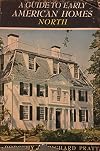
Good for 1956. No maps, light on visuals and some addresses are outdated. Geared towards touring with a map in hand. Gives a basic polished view of elemental history and style. Early means pre-Rev War to 1860s. North means from the ocean to the Mississippi, Canada to Ohio Valley/Mason Dixon. Lighter content as you move west. No indigenous houses presented. It won't stretch your understanding. But is an ok resource for houses that validate other works generalizations which only have a couple show more of examples. show less

A collection of essay on specific historic houses thoughout the United States.

You May Also Like


Statistics
- Works
- 30
- Members
- 638
- Popularity
- #39,509
- Rating
- 3.6
- Reviews
- 4
- ISBNs
- 13
- Languages
- 1