
John Kessel
Author of Rewired: The Post-Cyberpunk Anthology
About the Author
Disambiguation Notice:
This John Kessel (ends in 1 L, no initial) writes and edits science fiction. He lives and teaches in North Carolina.
This is NOT the historian John L. Kessell (ends in LL, one initial), who writes about the presence of Spain in the American southwest.
Image credit: Wikipedia user Jjkessel
Series
Works by John Kessel
The Baum Plan for Financial Independence: and Other Stories (2008) — Author — 221 copies, 16 reviews
The Closet 3 copies
Clean 3 copies
The Franchise 3 copies
Buddha Nostril Bird {short story} 3 copies
Friend 3 copies
Iteration 2 copies
Faustfeathers: A Comedy 2 copies
The Family Vacation 2 copies
Credibility 1 copy
The Silver Man 1 copy
Crosswhen no. 1 1 copy
Crosswhen No. 8 1 copy
The Ghost 1 copy
Man 1 copy
Other Stories 1 copy
Animals 1 copy
Judgment Call {short story} 1 copy
The Lecturer 1 copy
The President's Channel 1 copy
The Einstein Express 1 copy
Consolation (short story) 1 copy
Associated Works
The Year's Best Science Fiction: Twenty-First Annual Collection (2004) — Contributor — 572 copies, 6 reviews
The Year's Best Science Fiction: Twentieth Annual Collection (2003) — Contributor — 526 copies, 1 review
The Year's Best Science Fiction: Eighteenth Annual Collection (2001) — Contributor — 504 copies, 2 reviews
The Year's Best Science Fiction: Fifteenth Annual Collection (1998) — Contributor — 468 copies, 2 reviews
The Year's Best Science Fiction: Thirteenth Annual Collection (1996) — Contributor — 455 copies, 4 reviews
The Year's Best Science Fiction: Fourteenth Annual Collection (1997) — Contributor — 447 copies, 2 reviews
The Best of the Best: 20 Years of the Year's Best Science Fiction (2005) — Contributor — 434 copies, 20 reviews
The Year's Best Science Fiction: Eighth Annual Collection (1991) — Contributor — 415 copies, 6 reviews
The Norton Book of Science Fiction: North American Science Fiction, 1960-1990 (1993) — Contributor — 345 copies, 6 reviews
The Year's Best Science Fiction: Twenty-Seventh Annual Collection (2010) — Contributor — 320 copies, 6 reviews
The Locus Awards: Thirty Years of the Best in Science Fiction and Fantasy (2004) — Contributor — 290 copies, 11 reviews
The Year's Best Fantasy and Horror: Eighteenth Annual Collection (2005) — Contributor — 232 copies, 5 reviews
The Year's Best Science Fiction: Fourth Annual Collection (1987) — Contributor — 219 copies, 1 review
The Year's Best Science Fiction: Thirty-Third Annual Collection (2016) — Contributor — 190 copies, 2 reviews
The Very Best of the Best: 35 Years of The Year's Best Science Fiction (2019) — Contributor — 181 copies, 1 review
The Best Science Fiction and Fantasy of the Year Volume Five (2011) — Contributor — 161 copies, 4 reviews
The Very Best of Fantasy & Science Fiction: Sixtieth Anniversary Anthology (2009) — Contributor — 151 copies, 6 reviews
The Best Science Fiction and Fantasy of the Year Volume Three (2009) — Contributor — 150 copies, 2 reviews
The Year's Best Science Fiction: First Annual Collection (1984) — Contributor — 148 copies, 1 review
The Best Science Fiction and Fantasy of the Year, Volume Four (2010) — Contributor — 139 copies, 2 reviews
Nebula Awards 30: SFWA's Choices For The Best Science Fiction And Fantasy Of The Year (Nebula Awards Showcase) (1996) — Contributor — 87 copies, 2 reviews
The Best Fantasy Stories from the Magazine of Fantasy & Science Fiction (1985) — Contributor — 78 copies, 2 reviews
Nebula Awards 27: SFWA's Choices for the Best Science Fiction and Fantasy of the Year (1993) — Contributor — 61 copies, 1 review
Nebula Awards 29: SFWA's Choices For The Best Science Fiction And Fantasy Of The Year (Nebula Awards Showcase) (1995) — Contributor — 57 copies
Field of Fantasies: Baseball Stories of the Strange and Supernatural (2014) — Contributor — 46 copies
Light Years and Dark: Science Fiction and Fantasy of and for Our Time (1984) — Contributor — 37 copies
The Magazine of Fantasy and Science Fiction October/November 1994, Vol. 87, No. 4 & 5 (1994) — Book reviewer — 34 copies, 1 review
The Magazine of Fantasy and Science Fiction October 1990, Vol. 79, No. 4 (1990) — Contributor — 20 copies, 1 review
The Magazine of Fantasy and Science Fiction June/July 2009, Vol. 116, Nos. 6 & 7 (2013) — Contributor — 19 copies, 1 review
The Magazine of Fantasy and Science Fiction January 1991, Vol. 80, No. 1 (1991) — Contributor — 18 copies
Isaac Asimov's Science Fiction Magazine: Vol. 10, No. 3 [March 1986] (1986) — Contributor — 16 copies
The Magazine of Fantasy and Science Fiction September 1982, Vol. 63, No. 3 (1982) — Contributor — 14 copies
The Magazine of Fantasy and Science Fiction December 1980, Vol. 59, No. 6 (1980) — Author — 14 copies
The Magazine of Fantasy and Science Fiction November/December 2010, Vol. 119, No. 5 & 6 (2010) — Author — 13 copies, 1 review
Isaac Asimov's Science Fiction Magazine: Vol. 7, No. 10 [October 1983] (1983) — Contributor — 13 copies
The Magazine of Fantasy and Science Fiction 68. Mythen der nahen Zukunft. (1984) — Contributor — 7 copies
Millemondi Inverno 1996 — Contributor — 2 copies
Tagged
Common Knowledge
- Legal name
- Kessel, John Joseph Vincent
- Birthdate
- 1950-09-24
- Gender
- male
- Education
- University of Kansas (PhD | English | 1981)
- Occupations
- science fiction writer
fantasy writer - Organizations
- Science Fiction and Fantasy Writers of America
- Relationships
- Gunn, James (teacher)
Fowler, Therese Anne (wife) - Nationality
- USA
- Birthplace
- Buffalo, New York, USA
- Places of residence
- Raleigh, North Carolina, USA
Buffalo, New York, USA - Disambiguation notice
- This John Kessel (ends in 1 L, no initial) writes and edits science fiction. He lives and teaches in North Carolina.
This is NOT the historian John L. Kessell (ends in LL, one initial), who writes about the presence of Spain in the American southwest. - Associated Place (for map)
- USA
Members
Discussions
Pride and Prometheus in I Love Jane Austen (June 2009)
Reviews
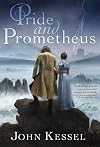
When this ARC showed up, I had two immediate thoughts: “How has nobody done this before? That’s brilliant!” and “This can’t possibly work as well in practice as I want it to.” And y’know, guys? Kessel pulls this off with aplomb though the story weakens towards the ending due to his unwillingness to change the plot of Frankenstein.
The thing that impressed me the most about this is how true the points of view feel to the source material. Mary Bennett’s parts sound like Austen, show more and Frankenstein’s and the Creature’s like the relevant parts of Frankenstein, though I think a bit of modern language and terminology snuck in. (And yes, there is a bit of a love triangle. No, it didn’t go how I was hoping.)
Kessel also stays very true to the characters, though he’s had to do a fair bit of character development on Mary. She’s older, wiser, interested in science which is how she hits it off with Frankenstein, but still recognizably the awkward girl of Pride and Prejudice. I liked seeing the Frankenstein characters from her point of view as well, and for that matter, the ones from P&P. Frankenstein and the Creature are equally true to their source and sympathetic. To a point. I mean, Frankenstein is still kind of a prick.
As for the story itself… it went places I wasn’t entirely expecting, from either the Regency romance direction or the “create a Bride to escape the Creature” one. It kept things interesting, as did the alternating POVs which played off each other well, and helped to make the book more than the pastiche mashups can end up as. It’s certainly a modern-feeling novel.
My only real complaint, beyond Kessel’s desire for this to be an interlude in the Frankenstein story, is that there were moments when I felt either the characters’ timelines didn’t line up with each other or that the timelines didn’t sync with known history well enough. A small thing, though. I definitely liked this enough to be recommending it on release day and if the summary raised your eyebrows like it did mine, you’re probably the target audience.
Warnings: One use of the g-slur. Class consciousness.
7.5/10 show less
The thing that impressed me the most about this is how true the points of view feel to the source material. Mary Bennett’s parts sound like Austen, show more and Frankenstein’s and the Creature’s like the relevant parts of Frankenstein, though I think a bit of modern language and terminology snuck in. (And yes, there is a bit of a love triangle. No, it didn’t go how I was hoping.)
Kessel also stays very true to the characters, though he’s had to do a fair bit of character development on Mary. She’s older, wiser, interested in science which is how she hits it off with Frankenstein, but still recognizably the awkward girl of Pride and Prejudice. I liked seeing the Frankenstein characters from her point of view as well, and for that matter, the ones from P&P. Frankenstein and the Creature are equally true to their source and sympathetic. To a point. I mean, Frankenstein is still kind of a prick.
As for the story itself… it went places I wasn’t entirely expecting, from either the Regency romance direction or the “create a Bride to escape the Creature” one. It kept things interesting, as did the alternating POVs which played off each other well, and helped to make the book more than the pastiche mashups can end up as. It’s certainly a modern-feeling novel.
My only real complaint, beyond Kessel’s desire for this to be an interlude in the Frankenstein story, is that there were moments when I felt either the characters’ timelines didn’t line up with each other or that the timelines didn’t sync with known history well enough. A small thing, though. I definitely liked this enough to be recommending it on release day and if the summary raised your eyebrows like it did mine, you’re probably the target audience.
Warnings: One use of the g-slur. Class consciousness.
7.5/10 show less
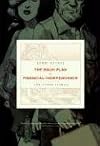
John Kessel does not write a lot of fiction, by the standards of his fellow SF writers, but he maintains a high level of quality, as in this collection of recent stories. He is a literature professor, and it shows in his interest in history, literary and political, in particular of the 19th century. He often examines the conflict between the individual and the social, a focus which still allows for great variety. Many of the stories start from historical characters, or existing literary show more works. We see how the economy really works, what a failed, violent man may do with a Power, a crucial moment in the life of director Orson Welles, and other possibilities, both straight science fiction and magical realism or fantasy. "The Red Phone" is hilarious and erotic. "Pride and Prometheus" brings together exactly the two, famous 19th century stories you think it does, respecting both - it's a treat. At the heart of the collection are four stories set in a future, utopian, feminist society. One of these, "Stories for Men", won the Tiptree award. The Society of Cousins, located in a domed lunar crater, has a gender and sexual-preference mix that seems to be about what we have today, but has social, economic and political structures which lead to generally harmonious relations between men and women - while women make most major decisions. I have the impression that this utopia might actually work. An impressive achievement, although flawed in that all the stories turn on the intrusion of male agression, or on its possibility. Must it always be about the men? However, Kessel leaves room for more stories about the Society, and I certainly hope he writes them. show less
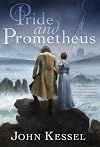
John Kessel’s Pride and Prometheus is fan fiction in the best sense of the term. In days of long ago yore, students learning to compose in Latin might be assigned to write an Ovidian ode or an oration in the manner of Cicero. Kessel, who teaches creative writing at N.C. State, has upped the stakes by having characters from Jane Austen interact with characters from Mary Shelley. Note: This is not a pastiche like Pride and Prejudice with Zombies. Kessel treats both stories seriously and show more gives the world views of both writers the respect they deserve. I was especially impressed with how well he preserves the style of both. Mary Bennet, now a spinster at 31, struggles to preserve her rational morality when confronted with the chaotic passion of Victor and his creature. Pride and Prejudice and Frankenstein were published only four years apart, but Kessel makes it clear that they come from diverging worlds with quickly changing language. show less

I got turned on to this collection by a truly glowing review by Matthew Claxton in his Unsettling Futures newsletter, and I can confirm this book delivers. Sycamore Hill is an invite-only science fiction writer's workshop, the post-graduate version of Clarion and its ilk. Given that Bruce Sterling is my favorite living science-fiction author and I recognized a handful of names on the cover as heavy writers with big ideas and serious chops, I figured I'd give it a look.
I was really too young show more to experience 90s science-fiction when it happened, but this was actually a golden moment for the genre. Serious futurism was out from under the mushroom cloud binary of the Cold War, and the writers were GenX and Boomers at the peak of their abilities. It was slightly more possible to make a living writing fiction, before a certain Everything Store that owns this website and the maw of Digital Content consumed everything. Science-fiction was still a ghetto, before every Iowa Writer's Workshop literary fic head decided that straight realism wasn't enough and they could write about clones and diseases and digitally altered selves, but it was a ghetto with ambition!
What elevates this collection is that it brings the reader into the magic circle of artistic creation, with short notes of the authors reacting to each other's stories in the Milford Method style (and as S.L. Huang among others have pushed back, Milford is not the only method), and you can see where pros think a story is weak, and how it was improved.
Sterling's "Bicycle Repairman" leads the collection, and is a favorite. I also enjoyed Jonathan Lethem's "The Hardened Criminals" as a prison drama of absent fathers, Maureen F. McHugh’s "Homesick" in it's study of a dedicated dancer, and Alexander Jablokov "The Fury at Colonus", a retelling of the myth of Orestes from the point of view of the Fury as a cop facing down retirement in a setting half mythic Greece and half suburbia.
As Claxton points out, they don't make them like this any more. Even as we've been liberated from the burdens of physical text, we're bound by ever shorter attention spans. Intersections is a fine vintage, and well worth reading! show less
I was really too young show more to experience 90s science-fiction when it happened, but this was actually a golden moment for the genre. Serious futurism was out from under the mushroom cloud binary of the Cold War, and the writers were GenX and Boomers at the peak of their abilities. It was slightly more possible to make a living writing fiction, before a certain Everything Store that owns this website and the maw of Digital Content consumed everything. Science-fiction was still a ghetto, before every Iowa Writer's Workshop literary fic head decided that straight realism wasn't enough and they could write about clones and diseases and digitally altered selves, but it was a ghetto with ambition!
What elevates this collection is that it brings the reader into the magic circle of artistic creation, with short notes of the authors reacting to each other's stories in the Milford Method style (and as S.L. Huang among others have pushed back, Milford is not the only method), and you can see where pros think a story is weak, and how it was improved.
Sterling's "Bicycle Repairman" leads the collection, and is a favorite. I also enjoyed Jonathan Lethem's "The Hardened Criminals" as a prison drama of absent fathers, Maureen F. McHugh’s "Homesick" in it's study of a dedicated dancer, and Alexander Jablokov "The Fury at Colonus", a retelling of the myth of Orestes from the point of view of the Fury as a cop facing down retirement in a setting half mythic Greece and half suburbia.
As Claxton points out, they don't make them like this any more. Even as we've been liberated from the burdens of physical text, we're bound by ever shorter attention spans. Intersections is a fine vintage, and well worth reading! show less
Lists
Awards


You May Also Like


Associated Authors
Statistics
- Works
- 78
- Also by
- 105
- Members
- 2,341
- Popularity
- #10,956
- Rating
- 3.7
- Reviews
- 78
- ISBNs
- 59
- Languages
- 7
- Favorited
- 1


