
Paul A. Offit
Author of Pandora's Lab: Seven Stories of Science Gone Wrong
About the Author
Paul A. Offit, MD, is the director of the Vaccine Education Center at the Children's Hospital of Philadelphia, as well as the Maurice R. Hilleman Professor of Vaccinology and Professor of Pediatrics at the University of Pennsylvania School of Medicine. A national expert on vaccines and coinventor show more of the rotavirus vaccine, Dr. Offit is a recipient of many awards, including a Research Career Development Award from the National Institutes of Health. Dr. Offit was elected to the Institute of Medicine of the National Academies and is a member of the FDA's Vaccine Advisory Committee. show less
Works by Paul A. Offit
Do You Believe in Magic?: The Sense and Nonsense of Alternative Medicine (2013) 301 copies, 18 reviews
Autism's False Prophets: Bad Science, Risky Medicine, and the Search for a Cure (2008) 224 copies, 10 reviews
The Cutter Incident: How America's First Polio Vaccine Led to the Growing Vaccine Crisis (2005) 103 copies
You Bet Your Life: From Blood Transfusions to Mass Vaccination, the Long and Risky History of Medical Innovation (2021) 62 copies, 2 reviews
Bad Advice: Or Why Celebrities, Politicians, and Activists Aren't Your Best Source of Health Information (2018) 60 copies, 4 reviews
Tell Me When It's Over: An Insider's Guide to Deciphering Covid Myths and Navigating Our Post-Pandemic World (2024) 25 copies
Tagged
Common Knowledge
- Canonical name
- Offit, Paul A.
- Birthdate
- 1951-03-27
- Gender
- male
- Education
- Tufts University (BA)
University of Maryland, Baltimore (MD) - Occupations
- Maurice R. Hilleman Professor of Vaccinology, Professor of Pediatrics at the University of Pennsylvania
Chief of the Division of Infectious Diseases, and the Director of the Vaccine Education Center at The Children's Hospital of Philadelphia
pediatrician - Awards and honors
- J. Edmund Bradley Prize for Excellence in Pediatrics from the University of Maryland Medical School
Young Investigator Award in Vaccine Development from the Infectious Diseases Society of America
Research Career Development Award from the National Institutes of Health - Short biography
- co-inventor of a rotavirus vaccine
- Nationality
- USA
- Places of residence
- Baltimore, Maryland, USA
- Associated Place (for map)
- Maryland, USA
Members
Reviews
Do You Believe in Magic?: Vitamins, Supplements, and All Things Natural: A Look Behind the Curtain by Paul A. Offit
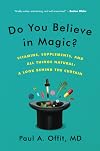
The book is mostly chapters on various kinds of quackery in medicine, as you might expect. However, there are a couple of three interesting wrinkles that make the book particularly worth your time.
Offit gets just a little autobiographical at the start. Turns out he was born with club feet, the corrective surgery was botched, and he's never really been able to walk without pain. He's also had a benign nevus on his nose misdiagnosed as metastatic malignant melanoma, leading to a year of high show more anxiety waiting for the primary tumor to be found before finally getting a correct pathological diagnosis of the original tumor. He's woken up from what was supposed to be minor knee surgery for a torn meniscus to find they had to do microfracture treatment with a recovery time of a year. He understands that scientific medicine sometimes fails and sometimes has no good treatment to offer, and why this might get people looking at alternative medicine.
So he then compares traditional medicine with the improvements in scientific medicine over the last two hundred years. As the choir here knows, there's just no comparison.
A brief history of how the FDA got started.
Then Offit gets a little testy, more than I've usually seen in his books. What sets him off is the atrocious Mehmet Oz. There's a chapter on Pauling that rightly admires his contributions to chemistry, not-so-rightly admires his "contributions" to "peace" (yes, I'm a RWK) then recounts the very sad tale of his going completely off the rails over Vitamin C. Followed by something that has actually changed my habits: A number of studies have shown that megavitamin supplements are associated with an increase in cancer and heart disease. Well, so much for my one-a-day; I didn't really think I needed it but considered it harmless insurance. No, not harmless.
A long, angry chapter on how the supplement industry successfully lobbied to be exempt from any kind of regulatory oversight. And a statement I found slightly implausible, namely, that it was once perfectly legal, pre-FDA, to sell "medicine" that the manufacturer had tested and knew was poisonous. If someone actually dies, isn't the manufacturer susceptible to charges of manslaughter under traditional English law?
A long discussion of all the studies disproving any effectiveness for saw palmetto, St. Johnswort, chondroitin, and some others.
A blast at celebrity medicine: Suzanne Sommers, Jenny McCarthy. Blumenthal trying to sue the relevant scientific medicine societies for illegal monopoly for declaring chronic Lyme Disease a nonexistent condition. (Shows how pervasive and insidious this stuff is: I thought the existence of chronic Lyme disease was settled science. Apparently quite the opposite; it is its nonexistence that is settled science.)
Offit is pretty evenhanded in slamming politicians; it's very close to 50/50 Republican/Demicrat pushing alternative medicine in this book.
The sad story of Steve Jobs, whose pancreatic cancer was an unusual form that was highly treatable with scientific medicine, is covered. This leads off a whole section on the sad history of quack cancer cures. Followed by a section on how charismatic a lot of quacks are.
Offit closes in a way I didn't quite see coming. He talks about how powerful the placebo effect is, and ruminates on whether there are any effective and ethical ways to use it scientifically. His conclusion: Confident bedside manner. He then discusses when alternative medicine crosses the line to quackery: When it is promoted at the expense of known effective treatments. When it is promoted in spite of known risks. When it costs a lot. When it promotes magical thinking.
Offit then tells the story of Albert Schweitzer and the witch doctor. The witch doctor would burn herbs and blow smoke at some patients; chant spells at others; and whisper to the patient and point at Schweiyzer with the rest. The first group had minor ailments that would go away on their own, and all the herbal smoke was placebo. The second group had psychological problems for which "African psychotherapy" as good as anything. The third group had massive hernias or ectopic pregnancies or dislocated joints or tumors, and the witch doctor was telling these patients to go to Schweitzer's clinic.
Schweitzer was good with that.
Highly recommended. show less
Offit gets just a little autobiographical at the start. Turns out he was born with club feet, the corrective surgery was botched, and he's never really been able to walk without pain. He's also had a benign nevus on his nose misdiagnosed as metastatic malignant melanoma, leading to a year of high show more anxiety waiting for the primary tumor to be found before finally getting a correct pathological diagnosis of the original tumor. He's woken up from what was supposed to be minor knee surgery for a torn meniscus to find they had to do microfracture treatment with a recovery time of a year. He understands that scientific medicine sometimes fails and sometimes has no good treatment to offer, and why this might get people looking at alternative medicine.
So he then compares traditional medicine with the improvements in scientific medicine over the last two hundred years. As the choir here knows, there's just no comparison.
A brief history of how the FDA got started.
Then Offit gets a little testy, more than I've usually seen in his books. What sets him off is the atrocious Mehmet Oz. There's a chapter on Pauling that rightly admires his contributions to chemistry, not-so-rightly admires his "contributions" to "peace" (yes, I'm a RWK) then recounts the very sad tale of his going completely off the rails over Vitamin C. Followed by something that has actually changed my habits: A number of studies have shown that megavitamin supplements are associated with an increase in cancer and heart disease. Well, so much for my one-a-day; I didn't really think I needed it but considered it harmless insurance. No, not harmless.
A long, angry chapter on how the supplement industry successfully lobbied to be exempt from any kind of regulatory oversight. And a statement I found slightly implausible, namely, that it was once perfectly legal, pre-FDA, to sell "medicine" that the manufacturer had tested and knew was poisonous. If someone actually dies, isn't the manufacturer susceptible to charges of manslaughter under traditional English law?
A long discussion of all the studies disproving any effectiveness for saw palmetto, St. Johnswort, chondroitin, and some others.
A blast at celebrity medicine: Suzanne Sommers, Jenny McCarthy. Blumenthal trying to sue the relevant scientific medicine societies for illegal monopoly for declaring chronic Lyme Disease a nonexistent condition. (Shows how pervasive and insidious this stuff is: I thought the existence of chronic Lyme disease was settled science. Apparently quite the opposite; it is its nonexistence that is settled science.)
Offit is pretty evenhanded in slamming politicians; it's very close to 50/50 Republican/Demicrat pushing alternative medicine in this book.
The sad story of Steve Jobs, whose pancreatic cancer was an unusual form that was highly treatable with scientific medicine, is covered. This leads off a whole section on the sad history of quack cancer cures. Followed by a section on how charismatic a lot of quacks are.
Offit closes in a way I didn't quite see coming. He talks about how powerful the placebo effect is, and ruminates on whether there are any effective and ethical ways to use it scientifically. His conclusion: Confident bedside manner. He then discusses when alternative medicine crosses the line to quackery: When it is promoted at the expense of known effective treatments. When it is promoted in spite of known risks. When it costs a lot. When it promotes magical thinking.
Offit then tells the story of Albert Schweitzer and the witch doctor. The witch doctor would burn herbs and blow smoke at some patients; chant spells at others; and whisper to the patient and point at Schweiyzer with the rest. The first group had minor ailments that would go away on their own, and all the herbal smoke was placebo. The second group had psychological problems for which "African psychotherapy" as good as anything. The third group had massive hernias or ectopic pregnancies or dislocated joints or tumors, and the witch doctor was telling these patients to go to Schweitzer's clinic.
Schweitzer was good with that.
Highly recommended. show less
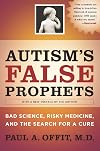
‘Autism‘s False Prophets’ makes for a compelling read. Of course, the main topic here is to debunk the junk idea that the MMR vaccine cause autism. The flabbergasting saga which saw a self-interested physician in cahoots with injury lawyers and having gone as far as to falsify data, collected and handled in an unethical way in the first place, after relying on a study which was everything but conclusive to end up with a study itself inconclusive is, in itself, quite disturbing. That show more the results of such fraud contributed to a tsunami of scaremongering within the mass media (never shy when it comes to spread sensationalism over facts) and, as a result, the public at large, is also telling of what a sad era we are living in -an era shaped by science, yet when people have no understanding of what the scientific method is to start with.
Had it been just that, the retelling of a medical and scientific fraud still believed by the gullible and the price of which we are still paying to this day (measles, mumps and rubella made a come-back, while autism hasn’t been ‘cured’ -should we be surprised?), such book would have been necessary enough. But, fascinatingly, and with high relevance, it goes way beyond that.
First, it's about scientific research itself. Science indeed cannot be objective when the research is financed by vested lobbies, a state of affair which is common in the USA, where lawyers can fund their own research to serve their own legal cases (and where Andrew Wakefield, incidentally, is now ‘in exile’ and free to carry on sprouting his nonsense...) but wasn’t the case in Europe back then. As the author states:
‘The case against MMR was the first in England’s history in which the Legal Services Commission financed scientific research. And it will probably be the last. The commission concluded: “In retrospect, it was not effective or appropriate for us to fund research. The courts are not the place to prove medical truths”. The commission reasoned that science directed by a team of personal injury lawyers wasn’t likely to be the best kind of science.’
Well, duh! It seems common sense, and in the case of the MMR vaccine saga we saw the terrible consequences of such colluding (the author, in fact, also recounts what had happened with the tobacco industry to nail the point). Still, we ought to bear that in mind when faced with a dangerous trend these days, that the author doesn’t mention but which nevertheless is taking hold, whereas corporates and entrepreneurs are hijacking whole scientific fields (e.g. genetics) while public funding are drained.
Then, it’s also about the scientific method, and, beyond, about critical thinking. Dealing with a vaccine, the author outlines what the precautionary principle really entails -a nice reminder at a time of mass hysteria on all side around COVID-19 (both pro and anti vax alike ought to read this, although this book, obviously, doesn’t address the COVID pandemic since it was published in 2008…). Nothing is simple, but he reminds of the key difference between biological studies and epidemiological studies as well, in explanations which are straightforward but crucial. He also points at the absurdity prevalent among the anti MMR vaccines, purporting to be enlightened but being, in the end, nothing but useful idiots preyed upon by quacks:
‘Although some parents have been skeptical of the scientists and public health officials who failed to find that vaccines caused autism, questioning their motives and occasionally threatening them, they haven’t been similarly skeptical of the vast array of autism therapies, all of which are claimed to work and all of which are based on theories that are ill-founded, poorly conceived, contradictory, or disproved.’
Now, it’s easy to point at such absurd cherry-picking and failure in critical thinking (and feeling sad for the vulnerable yet gullible parents being targeted) yet the impact matters and it matters a great deal.
Finally indeed, and above all, what this book brilliantly exposes is what such bogus research and the alternative treatments coming in their trails really embody: a twisted and prejudicial perception of what is autism, and, by extension, of autistic people. We may live a time when autism as a spectrum is gaining better recognition and understanding, and when neurodiversity is gaining ground. However, there are still people out there, especially ‘doctors’ and businesses, entertaining the false view than autism is nothing but a burden, an horrible illness, a tragedy to be cured at all cost and autistic children nothing but damaged goods. It might be a prejudicial view and a whole self-serving industry and market, but it has consequences. Chelation, cranial manipulation, secretin, Lupron… The author does more than debunking the supposed causation between the MMR vaccine and a learning disability, and he does more than outlining how science works and is about. He, also, details the harrowing treatments such children are being put through by the ‘false prophets’, who are the only ones, in the end, profiting from such scaremongering.
Here’s a must read for anyone interested not only in autism, but, also, in science and the importance of critical thinking at a time of triumphing quackeries. When greed, sloppiness and fraud ally themselves with ignorance and harmful prejudice, the impact can be catastrophic indeed. Clear, accessible, well-argued and dispassionate, here’s debunking at its best. Highly recommended! show less
Had it been just that, the retelling of a medical and scientific fraud still believed by the gullible and the price of which we are still paying to this day (measles, mumps and rubella made a come-back, while autism hasn’t been ‘cured’ -should we be surprised?), such book would have been necessary enough. But, fascinatingly, and with high relevance, it goes way beyond that.
First, it's about scientific research itself. Science indeed cannot be objective when the research is financed by vested lobbies, a state of affair which is common in the USA, where lawyers can fund their own research to serve their own legal cases (and where Andrew Wakefield, incidentally, is now ‘in exile’ and free to carry on sprouting his nonsense...) but wasn’t the case in Europe back then. As the author states:
‘The case against MMR was the first in England’s history in which the Legal Services Commission financed scientific research. And it will probably be the last. The commission concluded: “In retrospect, it was not effective or appropriate for us to fund research. The courts are not the place to prove medical truths”. The commission reasoned that science directed by a team of personal injury lawyers wasn’t likely to be the best kind of science.’
Well, duh! It seems common sense, and in the case of the MMR vaccine saga we saw the terrible consequences of such colluding (the author, in fact, also recounts what had happened with the tobacco industry to nail the point). Still, we ought to bear that in mind when faced with a dangerous trend these days, that the author doesn’t mention but which nevertheless is taking hold, whereas corporates and entrepreneurs are hijacking whole scientific fields (e.g. genetics) while public funding are drained.
Then, it’s also about the scientific method, and, beyond, about critical thinking. Dealing with a vaccine, the author outlines what the precautionary principle really entails -a nice reminder at a time of mass hysteria on all side around COVID-19 (both pro and anti vax alike ought to read this, although this book, obviously, doesn’t address the COVID pandemic since it was published in 2008…). Nothing is simple, but he reminds of the key difference between biological studies and epidemiological studies as well, in explanations which are straightforward but crucial. He also points at the absurdity prevalent among the anti MMR vaccines, purporting to be enlightened but being, in the end, nothing but useful idiots preyed upon by quacks:
‘Although some parents have been skeptical of the scientists and public health officials who failed to find that vaccines caused autism, questioning their motives and occasionally threatening them, they haven’t been similarly skeptical of the vast array of autism therapies, all of which are claimed to work and all of which are based on theories that are ill-founded, poorly conceived, contradictory, or disproved.’
Now, it’s easy to point at such absurd cherry-picking and failure in critical thinking (and feeling sad for the vulnerable yet gullible parents being targeted) yet the impact matters and it matters a great deal.
Finally indeed, and above all, what this book brilliantly exposes is what such bogus research and the alternative treatments coming in their trails really embody: a twisted and prejudicial perception of what is autism, and, by extension, of autistic people. We may live a time when autism as a spectrum is gaining better recognition and understanding, and when neurodiversity is gaining ground. However, there are still people out there, especially ‘doctors’ and businesses, entertaining the false view than autism is nothing but a burden, an horrible illness, a tragedy to be cured at all cost and autistic children nothing but damaged goods. It might be a prejudicial view and a whole self-serving industry and market, but it has consequences. Chelation, cranial manipulation, secretin, Lupron… The author does more than debunking the supposed causation between the MMR vaccine and a learning disability, and he does more than outlining how science works and is about. He, also, details the harrowing treatments such children are being put through by the ‘false prophets’, who are the only ones, in the end, profiting from such scaremongering.
Here’s a must read for anyone interested not only in autism, but, also, in science and the importance of critical thinking at a time of triumphing quackeries. When greed, sloppiness and fraud ally themselves with ignorance and harmful prejudice, the impact can be catastrophic indeed. Clear, accessible, well-argued and dispassionate, here’s debunking at its best. Highly recommended! show less
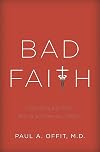
The cases discussed in this book are unbelievable. People are capable of believing the most unbelievable things. If Jesus were alive today I think he would have a few words for Christian Scientists, Jehovah's Witnesses and other faith healing cults about common sense. If medicine has a treatment for something, use it, when there is no treatment then prayer may be your only option, but making prayer the only option, period, is presumption.
Ultimately, Offit's main concern is for children. show more Parents in these cults are essentially martyring their own children for their religious beliefs, and such should not be allowed. Amazingly, many states have religious exemptions to protect parents who adhere to these religious beliefs from prosecution for medical neglect of their children. This is wrong and we need to change it. show less
Ultimately, Offit's main concern is for children. show more Parents in these cults are essentially martyring their own children for their religious beliefs, and such should not be allowed. Amazingly, many states have religious exemptions to protect parents who adhere to these religious beliefs from prosecution for medical neglect of their children. This is wrong and we need to change it. show less
You Bet Your Life: From Blood Transfusions to Mass Vaccination, the Long and Risky History of Medical Innovation by Paul A. Offit (Author)
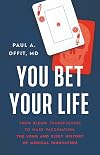
Startling Look At (Mostly Relatively Recent) Medical History. I consider myself a fairly well-read guy who is fairly knowledgeable about a *very* wide range of topics. Here, Offit shares stories of medical breakthroughs - including several which are now literally every day occurrences - and how the initial days of these breakthroughs weren't always so routine. Indeed, many of the stories Offit shares about these breakthroughs - some of which were still being litigated within the last decade show more - are quite horrific, both from the practitioners really not understanding what they were doing and in some cases when they *did* know what they were doing - and did it anyway. Including one tale in particular about the (now) famous Jonas Salk himself that was quite disturbing to read. In the end, the book does exactly what it sets out to do - shows that there is always inherent risk in any medical procedure, particularly novel ones, and that often times it is those whose lives will be cut short with or without the procedure that take the risks that ultimately reduce those risks for later people and indeed enhance the lives of people they will never know many years down the line. And yes, all of this is wrapped around the current debate over the COVID-19 vaccines - though while these are discussed, they are not actually a core component of the text itself. The discussion here is current circa early November 2020 and is slightly outdated even as I read the text in early February 2021 - and certainly will have advanced even further by the time of the book's actual publication in mid September 2021. Ultimately a truly fascinating read that is equally disturbing and enlightening, this book is very much recommended. show less
Lists
Awards


You May Also Like


Associated Authors
Statistics
- Works
- 15
- Members
- 1,948
- Popularity
- #13,209
- Rating
- 4.1
- Reviews
- 83
- ISBNs
- 85
- Languages
- 2
- Favorited
- 4