
Jacques Prévert (1900–1977)
Author of Paroles
About the Author
Jacques Prévert, born February 4, 1900, was a French poet and screenwriter. His poems became and remain very popular in the French-speaking world, particularly in schools. Some of the movies he wrote are extremely well regarded, with Les Enfants du Paradis considered one of the greatest films of show more all time. He grew up in Paris and quit school at a young age. He was called to military service in 1918. His poems are often about life in Paris and life after the Second World War. He died in Omonville-la-Petite, on 11 April 1977. (Bowker Author Biography) show less
Image credit: Jacques Prévert on November 22, 1973, in France
Series
Works by Jacques Prévert
Preversities: A Jacques Prevert Sampler (Black Widow Press Translations) (English and French Edition) (2010) — Author — 17 copies
Chanson des escargots qui vont à l'enterrement, suivi de "Les Prodiges de la liberté" (1988) 10 copies
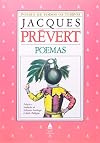
Poemas 9 copies
Poesie d'amore e di contestazione — Author — 9 copies
Poesie inedite e segrete 8 copies
Behagliga och obehagliga dikter 6 copies
Espectáculo 5 copies
Chanson pour chanter à tue-tête et a cloche-pied : [poesie] ; suivi de Le dromadaire mécontent (2001) 5 copies
Poemes et Chansons. 5 copies
Joán Miró 4 copies
Za tebe ljubavi moja 3 copies
Canto di primavera 3 copies
Prévert (Unicorn French series) 2 copies
Poesie d'amore e di contestazione 2 copies
La lluvia y el sol 2 copies
Deux films français: Les visiteurs du soir/Le feu follet — Author — 2 copies
La fleur de l'âge ; Drôle de drame: Scénarios (Scénarios Gallimard) (French Edition) (1988) 2 copies
'Paroles' : selections 2 copies
Chanson pour les enfants l'hiver: Les prodiges de la liberté (INACTIF- FOLIO BENJAMIN (1)) (2000) 2 copies
C'est a Saint Paul de Vence 2 copies
OEuvres complètes I, II Prevert Coffret - [ Bibliotheque de la Pleiade ] (French Edition) (2017) 2 copies
Spectacle 2 copies
Odabrana dela 1 copy
Neke stvari i ostalo 1 copy
Storie e altre storie 1 copy
Το ψάρεμα της φάλαινας 1 copy
Infancia 1 copy
Farbiges PARIS 1 copy
Hebdromadaires 1 copy
OPERA DE LA LUNE 1 copy
Spettacolo 1 copy
Palabas 1 copy
JACQUES PREVERT POESIE 1 copy
Immenso e rosso 1 copy
Guignol 1 copy
Le monde de Jacques Prévert 1 copy
ŞİİRLER 1 copy
Selections from Paroles 1 copy
La Pluie et le Beau Temps 1 copy
Les visiteurs du soir 1 copy
Sözler 1 copy
Şiirler 1 copy
De kromstaf omhoog, gevolgd door Poging tot beschrijving van een diner-masqué te Parijs, Frankrijk (1983) 1 copy
Histoires 1 copy
Paroles - Extraits 1 copy
17 chansons 1 copy
Poeti nel mondo — Author — 1 copy
Retour de l'enfant podagre (Libellorum Intestinorum Corpus no 1., Collegium Pataphysicum) (1958) 1 copy
Poèmes et textes 1 copy
Poesie e Canzoni — Author — 1 copy
POESIE NEWTON COMPTON EDITORI 1975 — Author — 1 copy
Paroles — Author — 1 copy
Das sanfte gefährliche Antlitz der Liebe. Gedichte und andere Texte. Mit Collagen des Autors. (1991) 1 copy
L'opera de la lume 1 copy
Portraits de Picasso 1 copy
Bim, den lilla åsnan 1 copy
Jako zázrakem 1 copy
Perversions 1 copy
Aşk Şiirleri 1 copy
Enchante Paris 1 copy
Luiken open 1 copy
Gardens: A Poem, The — Author — 1 copy
Ord 1 copy
Spectacle. n°515. Prévert. 1 copy
Jsem jaký jsem 1 copy
Paroles 1 copy
Jacques Prevert 1 copy
Les Feuilles Mortes 1 copy
La Lluvia Y El Sol 1 copy
Paroles. Palabras 1 copy
Hârikalar Tablosu 1 copy
Poesie con testo a fronte. Introduzione, note e traduzione di Gian Domenico Giagni (1970) — Author — 1 copy
Ay Operası 1 copy
Le cirque d'Izis 1 copy
Fiche de lecture Paroles de Prévert (Analyse littéraire de référence et résumé complet) (2017) 1 copy
LA PLUIE ET LE BEAU TEMPS 1 copy
La Pluie et le beau temps... 1 copy
Marlène JOBERT dit PREVERT 1 copy
Associated Works
Against Forgetting: Twentieth-Century Poetry of Witness (1993) — Contributor — 376 copies, 2 reviews
La cantatrice chauve - Larimaquoi? Larimarien! — Author, some editions — 1 copy
Klassische Kunst in Thailand — Author — 1 copy
LONGHOUSE, Autumn 1986 — Contributor — 1 copy
Tagged
Common Knowledge
- Canonical name
- Prévert, Jacques
- Legal name
- Prévert, Jacques André Marie
- Birthdate
- 1900-02-04
- Date of death
- 1977-04-11
- Gender
- male
- Education
- Autodidacte
Certificat d'études primaires (1915) - Occupations
- poet
short story writer
filmmaker
screenwriter - Organizations
- Rue du Château group
Groupe Octobre
French Army (WWI) - Cause of death
- lung cancer
- Nationality
- France
- Birthplace
- Neuilly-sur-Seine, Hauts-de-Seine, Île-de-France, France
- Places of residence
- Paris, France
St. Paul de Vence, France - Place of death
- Omonville-la-Petite, Manche, Normandie, France
- Burial location
- Cimetière communal, Omonville-la-Petite, Manche, Normandie, France
- Map Location
- France
- Associated Place (for map)
- France
Members
Reviews

O gato e o pássaro
Uma aldeia escuta desolada
O canto de um pássaro ferido
É o único pássaro da aldeia
E foi o único gato da aldeia
Que o devorou pela metade
O pássaro deixou de cantar
O gato deixou de ronronar
E de esfregar o focinho
E a aldeia preparou para o coitadinho
Um extraordinário funeral
O gato que também foi convidado
Seguiu atrás do pequeno caixão de palha
Onde o pássaro morto jazia
Carregado por uma menininha
Que não parava de chorar
Se eu soubesse que isso ia te fazer sofrer show more tanto
Disse-lhe o gato
Eu o teria comido inteirinho
E depois eu lhe diria
Que o vi partir voando
Voando até o fim do mundo
Lá longe onde é tão longe
Que de lá nunca se volta
Você sofreria bem menos
Ficaria tristinha e só lamentaria um pouco
Nunca devemos deixar as coisas pela metade. show less
Uma aldeia escuta desolada
O canto de um pássaro ferido
É o único pássaro da aldeia
E foi o único gato da aldeia
Que o devorou pela metade
O pássaro deixou de cantar
O gato deixou de ronronar
E de esfregar o focinho
E a aldeia preparou para o coitadinho
Um extraordinário funeral
O gato que também foi convidado
Seguiu atrás do pequeno caixão de palha
Onde o pássaro morto jazia
Carregado por uma menininha
Que não parava de chorar
Se eu soubesse que isso ia te fazer sofrer show more tanto
Disse-lhe o gato
Eu o teria comido inteirinho
E depois eu lhe diria
Que o vi partir voando
Voando até o fim do mundo
Lá longe onde é tão longe
Que de lá nunca se volta
Você sofreria bem menos
Ficaria tristinha e só lamentaria um pouco
Nunca devemos deixar as coisas pela metade. show less

These poems are a bitter lover’s quarrel with the world. In one, “Pater Noster,” the poet prays to “Our father in heaven” and tells him to stay there, leaving the earth to humans. In addition to listing the mysteries of New York and Paris (“at least as good as that of the Trinity”) and idyllic places in the countryside around Paris, he also mentions “the world’s outrageous misfortunes.”
As another poem says, it is “a world without knowledge of how to live but full of the show more joy of living.”
The quarrel continues in the following poem in the collection, “Rue de Seine,” between a woman who wants to know it all (all what? Her partners’ misdeeds or the atrocities of the occupation) and Pierre, who “has a smile that perhaps he wishes were tender.”
More than one poem rails at the folly of fathers and mothers sending their sons to war, while the pre-war memory of one glimpse of a pretty girl named Barbara haunts him as he returns to where he saw her, the now-ruined Brest.
The final two poems are homages to Picasso; the second evokes the painter’s Guernica.
This book selects roughly half the poems in the original French collection with the same title. I haven’t compared these translations to the French originals. My impression, though, is that Lawrence Ferlinghetti has managed both to be faithful to Prévert and speak in a voice recognizably his. The result are poems that make Prévert seem a kindred spirit to the Beats.
At times, I was reminded of songs of Dylan, particularly in “I’ve Seen Some of Them,” with its concluding lines presaging the sights Dylan records in his song, “Hard Rain.” But that’s a subject for further study. Ferlinghetti published this collection in 1964, Dylan wrote “Hard Rain” in 1962. Had he heard Ferlinghetti read this? Had this circulated before publication? Or was this an idea that was simply blowing in the wind? show less
As another poem says, it is “a world without knowledge of how to live but full of the show more joy of living.”
The quarrel continues in the following poem in the collection, “Rue de Seine,” between a woman who wants to know it all (all what? Her partners’ misdeeds or the atrocities of the occupation) and Pierre, who “has a smile that perhaps he wishes were tender.”
More than one poem rails at the folly of fathers and mothers sending their sons to war, while the pre-war memory of one glimpse of a pretty girl named Barbara haunts him as he returns to where he saw her, the now-ruined Brest.
The final two poems are homages to Picasso; the second evokes the painter’s Guernica.
This book selects roughly half the poems in the original French collection with the same title. I haven’t compared these translations to the French originals. My impression, though, is that Lawrence Ferlinghetti has managed both to be faithful to Prévert and speak in a voice recognizably his. The result are poems that make Prévert seem a kindred spirit to the Beats.
At times, I was reminded of songs of Dylan, particularly in “I’ve Seen Some of Them,” with its concluding lines presaging the sights Dylan records in his song, “Hard Rain.” But that’s a subject for further study. Ferlinghetti published this collection in 1964, Dylan wrote “Hard Rain” in 1962. Had he heard Ferlinghetti read this? Had this circulated before publication? Or was this an idea that was simply blowing in the wind? show less

Paroles is Prévert's best-known collection, containing pieces dating from the early thirties to the end of the war. There are a couple of longer prose pieces, the satire "Tentative de déscription d'un diner de têtes à Paris-France" and the quasi-autobiographical "Souvenirs de Famille ou L'Ange Garde-Chiourme", but otherwise the collection is mostly poems and songs, including a short-story-length "feuilleton" in free verse, "La crosse en l'air".
Lots of political engagement, as you'd show more expect in the thirties: Prévert knew a thing or two about being hungry and unemployed himself, and he takes up the cause of victims of the economic crisis in many of the pieces here, and there is also plenty of ammunition to spare for Mussolini, Hitler, Franco and the Roman Catholic Church. ("La crosse en l'air", which opens with a bishop drunk in the gutter, covers just about all these satirical bases in one place.) Anti-war poems feature heavily as well, also as you'd expect. Lots of lists, too, Prévert's favourite structural device, lots of wordplay, and quite a few absurd leaps of logic. Altogether good fun, even if he goes a bit too far here and there. show less
Lots of political engagement, as you'd show more expect in the thirties: Prévert knew a thing or two about being hungry and unemployed himself, and he takes up the cause of victims of the economic crisis in many of the pieces here, and there is also plenty of ammunition to spare for Mussolini, Hitler, Franco and the Roman Catholic Church. ("La crosse en l'air", which opens with a bishop drunk in the gutter, covers just about all these satirical bases in one place.) Anti-war poems feature heavily as well, also as you'd expect. Lots of lists, too, Prévert's favourite structural device, lots of wordplay, and quite a few absurd leaps of logic. Altogether good fun, even if he goes a bit too far here and there. show less
O amor robô
Um homem escreve à máquina uma carta de amor e a máquina responde ao homem e à mão como se fosse a destinatária
Tão aperfeiçoadas as máquinas
a máquina de lavar cheques e cartas de amor
E o homem confortavelmente instalado na sua máquina de morar lê com a máquina de ler a resposta da máquina de escrever
E na sua máquina de sonhar com a sua máquina de calcular compra uma máquina de fazer amor
E na sua máquina de realizar os sonhos faz amor com a máquina de escrever show more com a máquina de fazer amor
E a máquina o engana com um mecânico
um mecânico que morre de rir. show less
Um homem escreve à máquina uma carta de amor e a máquina responde ao homem e à mão como se fosse a destinatária
Tão aperfeiçoadas as máquinas
a máquina de lavar cheques e cartas de amor
E o homem confortavelmente instalado na sua máquina de morar lê com a máquina de ler a resposta da máquina de escrever
E na sua máquina de sonhar com a sua máquina de calcular compra uma máquina de fazer amor
E na sua máquina de realizar os sonhos faz amor com a máquina de escrever show more com a máquina de fazer amor
E a máquina o engana com um mecânico
um mecânico que morre de rir. show less
Lists
Awards


You May Also Like


Associated Authors
Statistics
- Works
- 258
- Also by
- 14
- Members
- 3,530
- Popularity
- #7,195
- Rating
- 4.0
- Reviews
- 49
- ISBNs
- 306
- Languages
- 18
- Favorited
- 14


