
Owen Sheers
Author of Resistance
About the Author
Image credit: My image.
Works by Owen Sheers
Associated Works
Answering Back: Living Poets Reply to the Poetry of the Past (2007) — Contributor — 119 copies, 1 review
Tagged
Common Knowledge
- Birthdate
- 1974-09-20
- Gender
- male
- Education
- King Henry VIII comprehensive, Abergavenny
University of Oxford (New College)
University of East Anglia - Occupations
- Writer in Residence at The Wordsworth Trust (2004)
writer
Dorothy and Lewis B. Cullman Fellow at the New York Public Library (2007)
poet
playwright
television presenter - Awards and honors
- Eric Gregory Award
Vogue Young Writer’s Award (1999)
Hospital Club Creative Award (2008)
Wilfred Owen Poetry Award (2018) - Short biography
- Owen Sheers was born in Fiji in 1974 and brought up in Abergavenny, South Wales. He was educated at King Henry VIII comprehensive, Abergavenny and New College, Oxford. Owen has also written for Radio, TV and newspapers.
Owen’s first novel, Resistance (Faber, 2008) won a 2008 Hospital Club Creative Award and was short-listed for the Writers Guild Best Book Award. He currently divides his time between New York and Wales. - Nationality
- UK
- Birthplace
- Suva, Fiji
- Places of residence
- Fiji
Abergavenny, Wales
New York, New York, USA
Members
Reviews
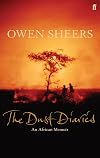
Wonderful, poetic, and sensitive biography of Owen’s great uncle Arthur Shearly Cripps, the radical missionary, who was hated by the Rhodesians for his ‘kaffir’ loving attitude towards land and development.
I was going to give 4 and a half stars, but then… I do not know how to improve this book – it is beauty in words. It made me cry. It is superb in describing the sounds and the fall of light of present day Zimbabwe. It is full of crisp, flawed, emotionally charged characters show more whose conflicted inner life is reflected so well in brief, imagined snap shots. show less
I was going to give 4 and a half stars, but then… I do not know how to improve this book – it is beauty in words. It made me cry. It is superb in describing the sounds and the fall of light of present day Zimbabwe. It is full of crisp, flawed, emotionally charged characters show more whose conflicted inner life is reflected so well in brief, imagined snap shots. show less
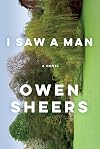
Popular author Michael Turner loses his wife Caroline, a foreign correspondent, in a drone attack. Daniel, the drone’s pilot, does some moral soul searching in response to his role in an innocent woman’s death. Meanwhile, Michael moves back to London in an effort to navigate his grief. His neighbors, Josh and Samantha and their two young daughters, befriend him. Then, Josh and Samantha experience their own immeasurable tragedy, elements of which are hidden to the novel’s characters. show more The novel has ample guilt and grief to go around.
I vacillate on this book’s rating. I am always unsettled when interspersed stories and timeframes shift back and forth without warning, as Sheers does in the first half. The second half stays more linear. However, here I found myself equally unsettled due to Josh and Michael’s deceit, redolent of Raskolnikov’s (Crime and Punishment) heartless attitude towards murder.
The writing is good, but for me the story telling has some flaws. As mentioned, the first half lacks cohesiveness and the second half is unpleasant. (Note: an author shouldn’t be blamed for evoking a strong reaction in his readers!) Daniel and Michael's interaction never came to a satisfactory conclusion. In fact nothing was really resolved in the end – no healing, no renaissance, no redemption, just broken lives. Nevertheless, I feel comfortable recommending it because of the quality of the writing and I am curious how others react to the story show less
I vacillate on this book’s rating. I am always unsettled when interspersed stories and timeframes shift back and forth without warning, as Sheers does in the first half. The second half stays more linear. However, here I found myself equally unsettled due to Josh and Michael’s deceit, redolent of Raskolnikov’s (Crime and Punishment) heartless attitude towards murder.
The writing is good, but for me the story telling has some flaws. As mentioned, the first half lacks cohesiveness and the second half is unpleasant. (Note: an author shouldn’t be blamed for evoking a strong reaction in his readers!) Daniel and Michael's interaction never came to a satisfactory conclusion. In fact nothing was really resolved in the end – no healing, no renaissance, no redemption, just broken lives. Nevertheless, I feel comfortable recommending it because of the quality of the writing and I am curious how others react to the story show less
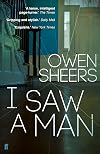
This is a compelling read, and one which is hard to discuss without revealing too much of the plot. Michael, an author, is newly arrived in London, having left his home in Wales following the death of his Journalist wife in Pakistan. Next door live Josh and Samantha with their two daughters, and this unlikely fivesome become close friends. The story begins as Michael discovers his neighbours have gone out leaving their door unlocked. The events of that afternoon reverberate through the book show more and beyond.
First Michael, then other characters are introduced and described. We're having back stories and introductions until at least half way through the book. This is done in a way which invites curiosity, and drew me into the story.
This is book about grief, about guilty secrets, about relationships. It's also a poetic book. There's this: 'tiny women lost in monstrous SUVs, their painted nails clutching the steering wheels like the feet of caged birds', and subtle observations describing rooms, scenes on Hampstead Heath.
This is a clever, reflective novel. To call it a thriller is a mis-description. The action is all in the minds of the protagonists and is pyschologically astute. I'm glad to have read it. show less
First Michael, then other characters are introduced and described. We're having back stories and introductions until at least half way through the book. This is done in a way which invites curiosity, and drew me into the story.
This is book about grief, about guilty secrets, about relationships. It's also a poetic book. There's this: 'tiny women lost in monstrous SUVs, their painted nails clutching the steering wheels like the feet of caged birds', and subtle observations describing rooms, scenes on Hampstead Heath.
This is a clever, reflective novel. To call it a thriller is a mis-description. The action is all in the minds of the protagonists and is pyschologically astute. I'm glad to have read it. show less
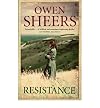
Maps and journeys dominate this novel. Historic maps of the medieval world. A route across southern England. The cul-de-sac that is an isolated valley in the Welsh Marches. The pathways of human memories. The unmapped future when one steps off the end of the known world. The past as it might have been if history had taken a different direction.
All fictions could be said to be alternative histories, in that they describe people who may not have existed and events that may never have happened show more in our own physical world. Resistance however sits firmly in the alternate history genre given that it envisages what might have happened if Nazi Germany had finally triumphed; it’s a popular theme, explored for example in Philip K Dick’s The Man in the High Castle. In Sheers’ novel Hitler’s armies have seen success both on the Eastern Front and in Western Europe, and have begun their successful invasion of Britain in autumn 1944. The novel’s action focuses on the Olchon valley, an isolated location north of Abergavenny, and it is here that a group of German soldiers are sent on a clandestine mission by Himmler and where they mysteriously encounter an all-female community.
Foregrounded are the German officer, Albrecht Wolfram, and Sarah Lewis, the farmer abandoned by her husband Tom; the latter, we surmise, has joined a covert Auxiliary Unit manned by insurgents — as the Germans call them — to maintain resistance against the occupiers. Sarah and the other women (Maggie, Mary, Menna and Bethan) are completely in the dark as to why their men have left, but with winter approaching they have no choice but to get on as best they can with the demands of hill farming. It comes as a complete shock when Captain Wolfram and his men appear. What do they want, and why are they here?
Sheers explores in great subtlety the relationships between the soldiery and the women. In particular Albrecht, a former scholar, and Sarah, who left school early, find they have more in common than they expected — missing loves, similar sensibilities, a respect for literature, and a recognition of their shared humanity. Against their relationships there is, mixed in with some reluctant toleration and socialising, a background of suspicion, distrust and fear in the wider community; and of attempts to restore some normality being punctuated by savage acts of reprisal.
Invisibly binding foreground and background like threads in a tapestry are more abstract themes. Albrecht’s surname reflects the tribute paid to the medieval poet Wolfram von Eschenbach: Wolfram is best known as the author of Parzival, the story of Sir Perceval’s quest for the holy grail. In the late 13th-century Hereford Mappa Mundi, which looms large but mostly hidden in these pages, the quest theme is also strongly represented: illustrated prominently are Jerusalem as the centre of Christian pilgrimage and Crete’s labyrinth as symbolic of the classical quest. The search for a special relic to take back to Himmler’s parody of Camelot, the Wewelsburg Castle, is in fact just one of many Arthurian themes in this novel; another is Sarah’s childhood remembrance of Welsh artist and poet David Jones who had enthralled her with tales of Arthur and of the spirit of a king within the mountains. (This latter may be the medieval hero Owain Lawgoch rather than King Arthur, however, as Owen Sheers the poet will have known.)
Borders and margins are everywhere: in the Welsh Marches; Offa’s Dyke itself — built to separate the Mercian Angles from their Cambrian neighbours — running on the ridge above the valley named from a river with a Welsh name; in the sheep farmers, conscious of their Brythonic heritage but geographically resident in England’s Herefordshire. More intangible are the understandable barriers between Albrecht’s men and the valley women, and those between the locals at the Llanthony Show and poor shunned Maggie.
I very much admired the author’s recreation of life in the Welsh hills, the minutiae of exacting tasks combined with isolation and with the usual anxieties accompanying subsistence farming. This slow pace of life is beautifully echoed in the pace of the narrative as we move through the rural year, from autumn to summer. Violence is never dwelt on, and rarely visceral; while there is always a constant sense of menace and of the world turning inexorably, the shocks are few but telling.
The final violent deed, done by somebody we might least expect, is to me narratively speaking exactly right; it symbolically crosses the border between wartime uncertainty and a hopeful future, with the object itself a gateway to be utterly destroyed so as to allow stasis to be overcome. The genius loci is thus summoned from his cave, the final crossing of the ridge over which Offa’s Dyke runs an escape from the perils of No Man’s Land. The hand of the poet, I feel, is evident everywhere in this wonderful novel; it’s a healthy way to respond to the horrors of war and conflict and to exalt the human spirit.
http://wp.me/s2oNj1-resist show less
All fictions could be said to be alternative histories, in that they describe people who may not have existed and events that may never have happened show more in our own physical world. Resistance however sits firmly in the alternate history genre given that it envisages what might have happened if Nazi Germany had finally triumphed; it’s a popular theme, explored for example in Philip K Dick’s The Man in the High Castle. In Sheers’ novel Hitler’s armies have seen success both on the Eastern Front and in Western Europe, and have begun their successful invasion of Britain in autumn 1944. The novel’s action focuses on the Olchon valley, an isolated location north of Abergavenny, and it is here that a group of German soldiers are sent on a clandestine mission by Himmler and where they mysteriously encounter an all-female community.
Foregrounded are the German officer, Albrecht Wolfram, and Sarah Lewis, the farmer abandoned by her husband Tom; the latter, we surmise, has joined a covert Auxiliary Unit manned by insurgents — as the Germans call them — to maintain resistance against the occupiers. Sarah and the other women (Maggie, Mary, Menna and Bethan) are completely in the dark as to why their men have left, but with winter approaching they have no choice but to get on as best they can with the demands of hill farming. It comes as a complete shock when Captain Wolfram and his men appear. What do they want, and why are they here?
Sheers explores in great subtlety the relationships between the soldiery and the women. In particular Albrecht, a former scholar, and Sarah, who left school early, find they have more in common than they expected — missing loves, similar sensibilities, a respect for literature, and a recognition of their shared humanity. Against their relationships there is, mixed in with some reluctant toleration and socialising, a background of suspicion, distrust and fear in the wider community; and of attempts to restore some normality being punctuated by savage acts of reprisal.
Invisibly binding foreground and background like threads in a tapestry are more abstract themes. Albrecht’s surname reflects the tribute paid to the medieval poet Wolfram von Eschenbach: Wolfram is best known as the author of Parzival, the story of Sir Perceval’s quest for the holy grail. In the late 13th-century Hereford Mappa Mundi, which looms large but mostly hidden in these pages, the quest theme is also strongly represented: illustrated prominently are Jerusalem as the centre of Christian pilgrimage and Crete’s labyrinth as symbolic of the classical quest. The search for a special relic to take back to Himmler’s parody of Camelot, the Wewelsburg Castle, is in fact just one of many Arthurian themes in this novel; another is Sarah’s childhood remembrance of Welsh artist and poet David Jones who had enthralled her with tales of Arthur and of the spirit of a king within the mountains. (This latter may be the medieval hero Owain Lawgoch rather than King Arthur, however, as Owen Sheers the poet will have known.)
Borders and margins are everywhere: in the Welsh Marches; Offa’s Dyke itself — built to separate the Mercian Angles from their Cambrian neighbours — running on the ridge above the valley named from a river with a Welsh name; in the sheep farmers, conscious of their Brythonic heritage but geographically resident in England’s Herefordshire. More intangible are the understandable barriers between Albrecht’s men and the valley women, and those between the locals at the Llanthony Show and poor shunned Maggie.
I very much admired the author’s recreation of life in the Welsh hills, the minutiae of exacting tasks combined with isolation and with the usual anxieties accompanying subsistence farming. This slow pace of life is beautifully echoed in the pace of the narrative as we move through the rural year, from autumn to summer. Violence is never dwelt on, and rarely visceral; while there is always a constant sense of menace and of the world turning inexorably, the shocks are few but telling.
The final violent deed, done by somebody we might least expect, is to me narratively speaking exactly right; it symbolically crosses the border between wartime uncertainty and a hopeful future, with the object itself a gateway to be utterly destroyed so as to allow stasis to be overcome. The genius loci is thus summoned from his cave, the final crossing of the ridge over which Offa’s Dyke runs an escape from the perils of No Man’s Land. The hand of the poet, I feel, is evident everywhere in this wonderful novel; it’s a healthy way to respond to the horrors of war and conflict and to exalt the human spirit.
http://wp.me/s2oNj1-resist show less
Lists
Awards


You May Also Like


Associated Authors
Statistics
- Works
- 20
- Also by
- 6
- Members
- 1,183
- Popularity
- #21,723
- Rating
- 3.7
- Reviews
- 56
- ISBNs
- 106
- Languages
- 9
- Favorited
- 5


