

Juan Villoro
Author of The Wild Book
About the Author
Image credit: Alberto Ibáñez "El Negro"
Works by Juan Villoro
El Profesor Ziper Y LA Fabulosa Guitarra Electrica (Infantil) (Spanish Edition) (1999) 32 copies, 1 review
8.8: El miedo en el espejo. Una cronica del terremoto en Chile (Los Gavieros) (Spanish Edition) (2010) 15 copies
No soy un robot: La lectura y la sociedad digital (Editorial Anagrama: Barcelona) (Spanish Edition) (2024) 12 copies
El taxi de los peluches / The Taxi of the Stuffed Animals (El barco de vapor: serie blanca / The Steamboat: White Series) (Spanish Edition) (2011) 11 copies
Estadio dos Desejos, O 5 copies
The Game at the End of the World: Villainous Referees, Communist Bakers, the Secret Women's World Cup, and a Goalkeeper's Last Stand (2026) 3 copies
Retour á Amsterdam 1 copy
Las golosinas secretas 1 copy
Valentia de la piedad 2002 1 copy
El testigo 2004 1 copy
El libro salvaje 2008 1 copy
La Palabra en Juego 1 copy
Fotollavero mexicano — Author — 1 copy
O livro selvagem — Author — 1 copy
La máquina desnuda 1 copy
EL SUEÑO DE LA RAZON 1 copy
Una ilusión cercana 1 copy
Associated Works
Words Without Borders: The World Through the Eyes of Writers: An Anthology (2007) — Contributor — 159 copies, 6 reviews
And We Came Outside and Saw the Stars Again: Writers from Around the World on the COVID-19 Pandemic (2020) — Contributor — 16 copies
Tagged
Common Knowledge
- Canonical name
- Villoro, Juan
- Birthdate
- 1956-09-24
- Gender
- male
- Education
- Universidad Autónoma Metropolitana (Licenciatura | Sociología)
- Occupations
- Professor of Literature (Universidad Nacional Autónoma de México)
- Organizations
- Universidad Nacional Autónoma de México
Yale University
Universidad Pompeu I Fabra - Relationships
- Villoro, Luis (Vater)
- Short biography
- [from The Wild Book]
Juan Villoro is Mexico's most prolific, prize-winning author, playwright, journalist, and screenwriter. His books have been translated into multiple languages. Several of his books have appeared in English, including his celebrated 2016 essay collection on soccer brought out by Restless Books, God Is Round. Villoro lives in Mexico City and is a visiting lecturer at Yale and Princeton Universities. - Nationality
- Mexico (birth)
- Birthplace
- Mexiko City, Mexiko
- Places of residence
- Mexico City, Mexico
East Berlin, GDR
Barcelona, Spain
Members
Reviews
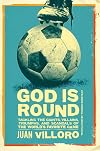
In this wide-ranging book Mexican journalist Juan Villoro explores football/soccer through various lenses. He's most familiar with Mexican football and its limitations. "My experiences with football from Mexico have made me into a collector of unvictorious situations, which, nonetheless, contain a good deal of grandeur." But he knows the worldwide game too.
He knows fans matter to the game and loyalty is often passed from father to son. "For some the adored name of a team is the only thing show more they inherit." But not all fans are equal. "In his or her lesser moments, the football fan is an obliging imbecile, mouth full of pie, head full of useless information." He calls football "the most widely dispersed identity system on earth."
There is also the economic concern around the game. Villoro contends it is "the most effective means ever invented for selling merchandise." He addresses the graft involved in the game, which no serious book on football can avoid.
Although he can and does excel in writing about all aspects of the game, Villoro is at his best when writing about the players. He has a theory that all elite players have some psychic injury that spurs them to greatness. "Star players tend to be egoists who just happen to have fallen into a team game."
There's an eloquent section on Diego Maradona, "the gladiator with the butcher's body." Villoro doesn't seem to like Cristiano Ronaldo, the "consummate egoist," but marvels over Leo Messi. show less
He knows fans matter to the game and loyalty is often passed from father to son. "For some the adored name of a team is the only thing show more they inherit." But not all fans are equal. "In his or her lesser moments, the football fan is an obliging imbecile, mouth full of pie, head full of useless information." He calls football "the most widely dispersed identity system on earth."
There is also the economic concern around the game. Villoro contends it is "the most effective means ever invented for selling merchandise." He addresses the graft involved in the game, which no serious book on football can avoid.
Although he can and does excel in writing about all aspects of the game, Villoro is at his best when writing about the players. He has a theory that all elite players have some psychic injury that spurs them to greatness. "Star players tend to be egoists who just happen to have fallen into a team game."
There's an eloquent section on Diego Maradona, "the gladiator with the butcher's body." Villoro doesn't seem to like Cristiano Ronaldo, the "consummate egoist," but marvels over Leo Messi. show less
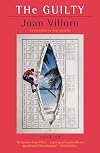
Book review- The Guilty by Juan Villoro
An entertaining collection of short stories by the Mexican writer, Juan Villoro.
Inventive, edgy, funny and fast moving tales emersed in the Mexico of today.
A mariachi superstar unhappy with his notoriety enters therapy with a fan to whom he admits, “my fame is too strong a drug…I need what I hate”. His dilemma takes on a sexual quest in which tomatoes and a prosthesis play critical roles.
In another tale a washed up soccer player signs on to a team show more located in a god-forbidden locale, The team is owned by the cartel and is more interested in laundering dollars than scoring goals.
Two brothers concoct a screenplay for a movie about immigrants crossing the border.
And in the title story a successful American magazine writer burns bridges with his Mexican fixer/writer whom he fails to give credit when the story is published. On a second assignment, Katzenberg returns, and everything goes wrong. “We live in a world of ghosts: copies of copies, everything is pirated.”
Villoro’s voice and writing is unique. I thoroughly enjoyed this collection which can be easily digested in a day or two, but its impact will last for a considerably longer duration.
The translation by Kimi Traube contributes greatly to the book’s success. show less
An entertaining collection of short stories by the Mexican writer, Juan Villoro.
Inventive, edgy, funny and fast moving tales emersed in the Mexico of today.
A mariachi superstar unhappy with his notoriety enters therapy with a fan to whom he admits, “my fame is too strong a drug…I need what I hate”. His dilemma takes on a sexual quest in which tomatoes and a prosthesis play critical roles.
In another tale a washed up soccer player signs on to a team show more located in a god-forbidden locale, The team is owned by the cartel and is more interested in laundering dollars than scoring goals.
Two brothers concoct a screenplay for a movie about immigrants crossing the border.
And in the title story a successful American magazine writer burns bridges with his Mexican fixer/writer whom he fails to give credit when the story is published. On a second assignment, Katzenberg returns, and everything goes wrong. “We live in a world of ghosts: copies of copies, everything is pirated.”
Villoro’s voice and writing is unique. I thoroughly enjoyed this collection which can be easily digested in a day or two, but its impact will last for a considerably longer duration.
The translation by Kimi Traube contributes greatly to the book’s success. show less

Villoro úgy kezeli a focit, mintha irodalmi szöveg lenne: a jelek és történések mögötti rejtett jelentést keresi, megkísérli azt, ami emócióként csapódik le bennünk (egy csel, egy kihagyott tizenegyes, vagy egy durva becsúszó szerelés), átemelni az intellektualitás síkjára: filozófiát csinál abból, ami voltaképpen esztétika. Ez persze éppolyan problémák kiindulópontja, mint amelyek az irodalomtudományt terhelik. A futball ugyanis, ahogy a művészet, show more szigorúan véve alkotó és befogadó legszentebb magánügye, és hát hogy jön ahhoz bárki, hogy ezt a magánügyet, ezt a titkos viszonyt általánosításokká és formulákká degradálja. Ő legfeljebb saját szubjektív értelmezését kínálhatja fel nekünk, de hát szubjektív értelmezése mindenkinek van – miért kéne érdekeljen minket a másé? Nyilván azért, mert Villoro jó író, és egy jó író még jobb író, ha nagy dolgokról írhat – a foci pedig számára pont az a „nagy dolog”, ami köré érdemes legendát szőni. Persze bujkál bennem a kisördög: miért pont a foci? Vajon egy jól eltalált gyeplabda-ütés miért nem inspirál arra senkit, hogy komplett teremtésmítoszt eszkábáljon hozzá? Pedig vitathatatlanul az is olyan jelekből építkezik, amik kibontásra váró jelentéseket rejtenek… Na mindegy. A lényeg, hogy jól esett olvasni – meg is lepődtem, mert ugyan egyre kevesebb affinitást érzek magamban arra, hogy meccset nézzek, fociról, úgy fest, továbbra is szívesen olvasok. Intelligens, helyenként áradó szöveg, eredeti megközelítések. Mondjuk azok, akik ki nem állják a Barcát, olvasás közben időnként csukják be a szemüket. show less
With a title like “God Is Round,” I was drawn to this contagious level of devotion, for a subject as uniting as soccer. I will refer to the sport as both soccer and football, the other football having no place here. This book name comes from a true love for the game, and its author, Juan Villoro, is an encyclopedia of the sport – and also of literature. He opens with a bit on an Uruguayan writer who worked first in his country’s national football stadium, and he throws in references show more to global literature and other popular culture – some of which I don’t get. Nor do I know all of the players – but even a non-follower must recognize more of these legends than they might think. And, he does not give explanations of the rules, only anecdotes of memorable plays or behaviors – so you have to be ‘in the know’ to get some things. I am not a “fan,” but I appreciate the simplicity of the game, its intuitiveness and universality. Villoro’s writing makes me want to both read about and watch (maybe even play) more football.
The style here is a stream of consciousness, the unpredictable directions feeling like a match itself – and I’m not just writing that, I really did get that sense, coming from the author’s dual passions for the sport and the written word. The sub-chapters are like plays or episodes; when telling of the action, you feel like you’re in the middle of it, on the grass. Football is present in every part of life – Juan Villoro writes this into being. He explains his country’s, Mexico’s, reasons for why they celebrate the way they do, and why or how fans everywhere are capable of exploding in shouts. He riffs on the importance of television, radio, and stadiums – any means of connecting the fans to the game – but especially the outsized hold of t.v. – what it shows and doesn’t show. He also has a few things to say about how advertisement and sponsorship are ruining the game. One downside is that he only covers men’s soccer, no women’s – which right now, at least in the U.S., is hopefully going to get its long-overdue fair share.
I learned of the origins of and changes to jersey numbers, and following a chapter on some of the great number 10s, the most lengthy continuous topic is a biography of Diego Armando Maradona, highlighting the contrasts between his life in the game and his excesses off the pitch. Then, there’s a short chapter on Ronaldo, who of course you’ve heard of, but if you’re like me, you might get confused with all these “R” names (does this make a heathen of me?). This being the player’s first name, the following chapter is a “diatribe” against the “other” Ronaldo (last name), first name Cristiano. You’ve heard of him too, no doubt; his physique is quite different from the former’s. Both are out of touch, based both on ego and skill, the first so much so that no one else can use his name (despite all this confusion) and another player, Ronaldinho, is named thusly. After them is a chapter on the unlikely Messi, the youthful, short-in-stature “genius” – a prodigy for sure. Pelé doesn’t have his own full chapter, but his kingliness is made clear. I like how he and his countrymen are described as playing at a samba-like pace. Villoro knows every nickname, and has alternative titles for every person, place, thing or idea. You too will feel like you have a “football between the ears” when reading this book – it’s a blast, as exciting as the game itself.
Note: a copy of this title was generously provided by Restless Books in exchange for an honest review. For more reviews, follow my blog at http://matt-stats.blogspot.com/ show less
The style here is a stream of consciousness, the unpredictable directions feeling like a match itself – and I’m not just writing that, I really did get that sense, coming from the author’s dual passions for the sport and the written word. The sub-chapters are like plays or episodes; when telling of the action, you feel like you’re in the middle of it, on the grass. Football is present in every part of life – Juan Villoro writes this into being. He explains his country’s, Mexico’s, reasons for why they celebrate the way they do, and why or how fans everywhere are capable of exploding in shouts. He riffs on the importance of television, radio, and stadiums – any means of connecting the fans to the game – but especially the outsized hold of t.v. – what it shows and doesn’t show. He also has a few things to say about how advertisement and sponsorship are ruining the game. One downside is that he only covers men’s soccer, no women’s – which right now, at least in the U.S., is hopefully going to get its long-overdue fair share.
I learned of the origins of and changes to jersey numbers, and following a chapter on some of the great number 10s, the most lengthy continuous topic is a biography of Diego Armando Maradona, highlighting the contrasts between his life in the game and his excesses off the pitch. Then, there’s a short chapter on Ronaldo, who of course you’ve heard of, but if you’re like me, you might get confused with all these “R” names (does this make a heathen of me?). This being the player’s first name, the following chapter is a “diatribe” against the “other” Ronaldo (last name), first name Cristiano. You’ve heard of him too, no doubt; his physique is quite different from the former’s. Both are out of touch, based both on ego and skill, the first so much so that no one else can use his name (despite all this confusion) and another player, Ronaldinho, is named thusly. After them is a chapter on the unlikely Messi, the youthful, short-in-stature “genius” – a prodigy for sure. Pelé doesn’t have his own full chapter, but his kingliness is made clear. I like how he and his countrymen are described as playing at a samba-like pace. Villoro knows every nickname, and has alternative titles for every person, place, thing or idea. You too will feel like you have a “football between the ears” when reading this book – it’s a blast, as exciting as the game itself.
Note: a copy of this title was generously provided by Restless Books in exchange for an honest review. For more reviews, follow my blog at http://matt-stats.blogspot.com/ show less
Lists
Awards


You May Also Like


Associated Authors
Statistics
- Works
- 100
- Also by
- 7
- Members
- 1,290
- Popularity
- #19,887
- Rating
- 3.7
- Reviews
- 36
- ISBNs
- 272
- Languages
- 9