

Jocelyn Brooke (1908–1966)
Author of Orchid Trilogy (King Penguin)
About the Author
Image credit: Photo of Brooke in Field, from JB home page. Cropping of other image so preview shows face
Works by Jocelyn Brooke
December spring : poems 3 copies
Associated Works
Tagged
Common Knowledge
- Legal name
- Brooke, Bernard Jocelyn
- Birthdate
- 1908-11-30
- Date of death
- 1966-10-29
- Gender
- male
- Education
- Bedales School
Worcester College, Oxford - Occupations
- author
- Organizations
- Royal Army Medical Corps (WWII)
- Nationality
- UK
- Birthplace
- 9 Radnor Cliff, Sandgate, Folkestone, Kent, England
- Place of death
- Forge Cottage, Bishopsbourne, Kent, England
- Associated Place (for map)
- Kent, England
Members
Reviews

This wasn’t quite fantasy-horror, but more of a cross between Shyamalan’s The Sixth Sense and Kafka’s The Trial.
Reynard Langrish, former soldier declared physically unfit during WWII, lives with his mother just outside a village outside the town where he works at a bank. Above all, he feels increasingly untethered to reality: his senses are dulled, and the world feels washed-out. One night, a particularly dark and stormy one, an army captain called Archer calls at his house, claiming show more to have taken a wrong turn and asking for directions. The two strike up an awkward, almost compulsory friendship. As Langrish’ encounters become increasingly dreamlike, he soon finds himself training to join a British Army battalion that is being raised in secret.
This was a weird read: not quite horror, not quite Weird Fiction, not quite suspense. Horror tropes that are seemingly used straight (cf. the dark and stormy night when Langrish and Archer meet) are treated as irrelevancies; the nightmarish quality present in the Weird is primarily due to a regimented and unquestioned army bureaucracy; and the dreamlike reality flows along a little too predictably for the suspense to be gripping. This short novel is situated in the periphery of several different genres but isn’t really at home with any of them.
At 140 pages, this is a quick but unsettling read, as much for its contents as for its genre indecisiveness. show less
Reynard Langrish, former soldier declared physically unfit during WWII, lives with his mother just outside a village outside the town where he works at a bank. Above all, he feels increasingly untethered to reality: his senses are dulled, and the world feels washed-out. One night, a particularly dark and stormy one, an army captain called Archer calls at his house, claiming show more to have taken a wrong turn and asking for directions. The two strike up an awkward, almost compulsory friendship. As Langrish’ encounters become increasingly dreamlike, he soon finds himself training to join a British Army battalion that is being raised in secret.
This was a weird read: not quite horror, not quite Weird Fiction, not quite suspense. Horror tropes that are seemingly used straight (cf. the dark and stormy night when Langrish and Archer meet) are treated as irrelevancies; the nightmarish quality present in the Weird is primarily due to a regimented and unquestioned army bureaucracy; and the dreamlike reality flows along a little too predictably for the suspense to be gripping. This short novel is situated in the periphery of several different genres but isn’t really at home with any of them.
At 140 pages, this is a quick but unsettling read, as much for its contents as for its genre indecisiveness. show less
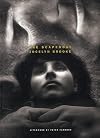
This is very much a story of two lost persons, a boy and a man. We meet parent less young Duncan Cameron on a train heading toward his Uncle Gerald's farm called "Priorsholt". It soon becomes apparent that Gerald March is just as isolated as his nephew and as such has some interest in having a companion in spite of his reluctance and disinterest in taking on the responsibilities that he inherited with his Sister's estate.
Having just lost his mother, Duncan feels both excitement and fear as show more the narrative begins. He encounters a young soldier on the train whose presence tends to reinforce these feelings as Duncan meditates on his new life. "Glancing once again at the figure in the corner seat, it seemed to him that the soldier was a living symbol of that new existence, so exciting yet so frightening, towards which, every moment, the train was bringing him closer." (pp 7-8)
The actions of both Duncan and his Uncle raise more questions as the narrative evolves and the suspense slowly builds to a tragic denouement. Certainly both Uncle and nephew are sublimating emotions that they would prefer not to face openly much less share with each other. Duncan, as an adolescent on the cusp of manhood, is understandably confused about the changes he is feeling; changes that are both magnified by his seeming innocence and compounded by the strangeness of his new home. His uncle Gerald has practiced the sublimation of his feelings for the better part of a lifetime with the result that his actions take on a more sinister edge. Adding to the suspense is the return of the soldier, who he had met on the train, into Duncan's life in the second part of the novel.The effect of the actions and internal feelings of Duncan and his Uncle heightens the interest of the reader making this fascinating story a thoughtful and enjoyable read. Jocelyn Brooke, in this his first novel originally published in 1948, successfully creates a psychological suspense story. show less
Having just lost his mother, Duncan feels both excitement and fear as show more the narrative begins. He encounters a young soldier on the train whose presence tends to reinforce these feelings as Duncan meditates on his new life. "Glancing once again at the figure in the corner seat, it seemed to him that the soldier was a living symbol of that new existence, so exciting yet so frightening, towards which, every moment, the train was bringing him closer." (pp 7-8)
The actions of both Duncan and his Uncle raise more questions as the narrative evolves and the suspense slowly builds to a tragic denouement. Certainly both Uncle and nephew are sublimating emotions that they would prefer not to face openly much less share with each other. Duncan, as an adolescent on the cusp of manhood, is understandably confused about the changes he is feeling; changes that are both magnified by his seeming innocence and compounded by the strangeness of his new home. His uncle Gerald has practiced the sublimation of his feelings for the better part of a lifetime with the result that his actions take on a more sinister edge. Adding to the suspense is the return of the soldier, who he had met on the train, into Duncan's life in the second part of the novel.The effect of the actions and internal feelings of Duncan and his Uncle heightens the interest of the reader making this fascinating story a thoughtful and enjoyable read. Jocelyn Brooke, in this his first novel originally published in 1948, successfully creates a psychological suspense story. show less

Taking its title from a line in Beowulf, British author Jocelyn Brooke's The Image of a Drawn Sword is a disturbing, suspenseful and much neglected novel of fantastic horror. Though utterly its own thing, it belongs in the unsettling company of Franz Kafka's The Castle, Doris Lessing's Briefing for a Descent into Hell and Flann O'Brien's The Third Policeman. It also has ties to the tale of Reynard the Fox and - with its detailed evocations of the Kentish wilds and hints of an occult, show more parallel reality - to the work of Arthur Machen. The sorrowful mystery of psychic disintegration, of swarming menace is masterfully developed. See also the author's The Dog at Clambercrown for more of the same, slams on Proust and tea with the mafia. Brooke has also authored a biography of Ronald Firbank and issued an anthology of Denton Welch's writings. show less

Limited edition of 50 copies, of which I have copy no. 29
[ First published : Kemp Hall Press, Oxford, 1928 ]
[ First published : Kemp Hall Press, Oxford, 1928 ]
You May Also Like


Associated Authors
Statistics
- Works
- 23
- Also by
- 6
- Members
- 317
- Popularity
- #74,564
- Rating
- 3.7
- Reviews
- 5
- ISBNs
- 25
- Languages
- 1
- Favorited
- 1
