

Frederic Prokosch (1906–1989)
Author of The Asiatics
About the Author
Image credit: Courtesy of the NYPL Digital Gallery (image use requires permission from the New York Public Library)
Works by Frederic Prokosch
Ode 1 copy
Sedm uprchlíků 1 copy
Tordentid 1 copy
The dolls 1 copy
The Wolves 1 copy
The carnival, poems 1 copy
The Somnambulists 1 copy
Song Christmas 1941 1 copy
Three Deaths 1 copy
The Black Hart 1 copy
The Sonnets of Louise Labe 1 copy
Associated Works
The Butterfly Books: An Enquiry into the Nature of Certain Twentieth Century Pamphlets (1987) — Epilogue — 4 copies, 1 review
32 Współczesne Opowiadania Amerykańskie - Tom I — Contributor — 1 copy
Tagged
Common Knowledge
- Canonical name
- Prokosch, Frederic
- Birthdate
- 1906-05-17
- Date of death
- 1989-06-08
- Gender
- male
- Education
- Haverford College
Yale University
University of Cambridge (King's College) - Occupations
- novelist
poet
cultural attache - Awards and honors
- Commander dans l'Order des Arts et Lettres (1984)
Volterra Prize (1986) - Nationality
- USA
- Birthplace
- Madison, Wisconsin, USA
- Places of residence
- Portugal
Sweden - Place of death
- Plan-de-Grasse, France
- Associated Place (for map)
- Madison, Wisconsin, USA
Members
Reviews

Asia serves as the backdrop for the young protagonist's search for the meaning of life: a random series of encounters. He is a young American who makes his way from Beirut to the southern border of China. Along the way, he observes, experiences, encounters, and initiates a wide range of behavior, without any moral discrimination. Acts of generosity and perversity are accepted equally. The book contains many expressions of the meaningless of life and the fear of death. Love, in the form of show more uncommitted romantic encounters, appears to be the only solace.
Much of the book centers on the word "happiness." The lack of it in the civilized west, the equal lack of it in Asia, but with the advantage of aware resignation. At one point, a Persian prince tells the protagonist: "You are an Asian at heart. An Asian is never happy." Yet in the last sentences of the book, as he nears Hong Kong, he says, "Yes, there was no denying it, I was very happy." show less
Much of the book centers on the word "happiness." The lack of it in the civilized west, the equal lack of it in Asia, but with the advantage of aware resignation. At one point, a Persian prince tells the protagonist: "You are an Asian at heart. An Asian is never happy." Yet in the last sentences of the book, as he nears Hong Kong, he says, "Yes, there was no denying it, I was very happy." show less
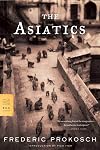
review : The Asiatics by Frederic Prokosh
It is the exceptional feat, that people remember about this book. Frederic Prokosh wrote a detailed travel account of an overland journey from Beirut all the way to the Chinese border, via Syria, Iran, Irak, India, Vietnam, Cambodge…without ever having set a foot in Asia.
Despite this “stunt” which was, (and still is), used as the main marketing proposition to lure readers to the book, Prokosh’s fictional account has enough intrinsic qualities, show more subjects and character developments to defend its place on the crowded shelves of the canon of travel books.
Mann, Gide and Camus agreed on this work : It was according to them nothing less than an authentic masterpiece.
Prokosch, an English Ph.D. alumni from Yale, was 29 in 1935, when he conjured up “The Asiatics from the books he read, the maps he consulted and his rich imagination. He may not have travelled to Asia by then, but he and his family had nonetheless a cosmopolitan lifestyle in the years before the war.
The Asiatics is travel writing brought back to its very essence. As the narrator travels from city to city, he relates a string of events, accidents and encounters, with people rich and poor, living in luxury or in the most dreadful conditions, at a pace that barely allows reflection or even to catch ones breath .
It is quite the opposite of the “cultivated” books written by scholar-travelers like Robert Byron or Norman Douglas, who would pepper their accounts with a more "educated" résumé of what they saw...a bit of history, of art of geographical details.
The narrator travels the way of the hobo, like a bum, a hippy "avant la lettre", taking advantage of the "goodness", the curiosity and even the pity of the people he meets. When that does not suffice, he earns his money smuggling drugs over the Bosphorus or earning a dime doing the odd job for the more affluent.
There is a strong element of picaresque throughout the novel. The narrator does time in prison, in horrible conditions, escapes in a way to make Edmond Dantès blush. He crosses forests and deserts.
He survives a plane crash. And each time the narrator collapses (caused by sickness, alcohol, accident or drugs , a good foreign soul picks him up and sets him up on the next caravan, train or camel.
He is rarely alone. Chance encounters at every corner of the unpaved streets of the shantytowns he crosses, bring him travel companions, more often dangerous than not.
Notwithstanding the many quixotic elements, the book has a ring of authenticity. Sometimes easily evocated by the summing up of exotic tree names that border the untrodden path or a listing of obscure city names, sometimes created by details that sound absolutely true.
There is a scene for instance when the narrator crosses a desert by plane and where the passengers who suffer from the freezing cold and headaches caused by thin air, watch through the portholes in the fuselage, hawks plunging down... at eyelevel ! We are in 1935 after all, intercontinental flight is still a real adventure.
Here is a description of a dump of Indian Sadhu’s the writer observes from a safe distance near the Ganges :
“At the public urinals in Benares, for instance, which were simply ridges on the river’s bank backed by a stained wooden wall, the exhibitionists were to be seen. […] They were the ugly ones whom no one loved, sad –eyed, timid – lipped men, with faces saddeningly inhuman, weazened and furtive. There were many of them, making this place their resort, habitually excited by the smell and the wandering glances, noticing each newcomer with a quickening of the breath but nevertheless repelled by one another. There was nothing else for them ; that, of course was the reason for it all. Inspiring pity and disgust, but terror ,too ; shabby, indefinable creatures, peering and shifting slowly from side to side like pariah dogs, never uttering a word, perhaps a monosyllabic whisper. Lost altogether, quite incurable. There was no mistaking them.”
Prokosh has painted the scene right in front of our eyes.
But the scenes that add most to the realism of the writer’s fiction are those where sexual encounters or indiscretions are implied. Whoever has travelled the rough way through developing countries will recognize the hints. The leery hotels, the hookers in the doorways, the child - prostitutes, the child – pimps, the fantasies of the filthy rich, the loss of self –respect of the abject poor, it is more real than one would like to belief.
When I go back through the different chapters of the book, I realize that it is crammed with situations which can, with just a nudge from our playful imagination, turn into any erotic fantasy.
Treated discreetly, but clearly implied, it is each time the specific exotic situation that creates the seduction, either homosexual or heterosexual, between equal partners or within a dominating - submissive relation, in open air or in “huis clos”, interracial or within a same tone of skin, paid or not.
While Prokosh is careful in his rendering of the scenes, the latent exotic eroticism, just oozes through the lines… Child – servants that linger a bit too long in the bath rooms, candour in their eyes, massage parlors with a staff of young boys. Young girls that cling to our traveler in the hope of a way out. Male and Female companions, attracting attention through small signs, lurid winks, furtive eye contacts… it is all there.
Near the end, the narrator even has sex with a young Tamil girl he meets near a river in the Asian jungle. The pedophilic aspect makes one cringe today, but Mann would have recognized his Venetian fantasies and Gide remember his Congo days.
A captivating book, that reads like a train. show less
It is the exceptional feat, that people remember about this book. Frederic Prokosh wrote a detailed travel account of an overland journey from Beirut all the way to the Chinese border, via Syria, Iran, Irak, India, Vietnam, Cambodge…without ever having set a foot in Asia.
Despite this “stunt” which was, (and still is), used as the main marketing proposition to lure readers to the book, Prokosh’s fictional account has enough intrinsic qualities, show more subjects and character developments to defend its place on the crowded shelves of the canon of travel books.
Mann, Gide and Camus agreed on this work : It was according to them nothing less than an authentic masterpiece.
Prokosch, an English Ph.D. alumni from Yale, was 29 in 1935, when he conjured up “The Asiatics from the books he read, the maps he consulted and his rich imagination. He may not have travelled to Asia by then, but he and his family had nonetheless a cosmopolitan lifestyle in the years before the war.
The Asiatics is travel writing brought back to its very essence. As the narrator travels from city to city, he relates a string of events, accidents and encounters, with people rich and poor, living in luxury or in the most dreadful conditions, at a pace that barely allows reflection or even to catch ones breath .
It is quite the opposite of the “cultivated” books written by scholar-travelers like Robert Byron or Norman Douglas, who would pepper their accounts with a more "educated" résumé of what they saw...a bit of history, of art of geographical details.
The narrator travels the way of the hobo, like a bum, a hippy "avant la lettre", taking advantage of the "goodness", the curiosity and even the pity of the people he meets. When that does not suffice, he earns his money smuggling drugs over the Bosphorus or earning a dime doing the odd job for the more affluent.
There is a strong element of picaresque throughout the novel. The narrator does time in prison, in horrible conditions, escapes in a way to make Edmond Dantès blush. He crosses forests and deserts.
He survives a plane crash. And each time the narrator collapses (caused by sickness, alcohol, accident or drugs , a good foreign soul picks him up and sets him up on the next caravan, train or camel.
He is rarely alone. Chance encounters at every corner of the unpaved streets of the shantytowns he crosses, bring him travel companions, more often dangerous than not.
Notwithstanding the many quixotic elements, the book has a ring of authenticity. Sometimes easily evocated by the summing up of exotic tree names that border the untrodden path or a listing of obscure city names, sometimes created by details that sound absolutely true.
There is a scene for instance when the narrator crosses a desert by plane and where the passengers who suffer from the freezing cold and headaches caused by thin air, watch through the portholes in the fuselage, hawks plunging down... at eyelevel ! We are in 1935 after all, intercontinental flight is still a real adventure.
Here is a description of a dump of Indian Sadhu’s the writer observes from a safe distance near the Ganges :
“At the public urinals in Benares, for instance, which were simply ridges on the river’s bank backed by a stained wooden wall, the exhibitionists were to be seen. […] They were the ugly ones whom no one loved, sad –eyed, timid – lipped men, with faces saddeningly inhuman, weazened and furtive. There were many of them, making this place their resort, habitually excited by the smell and the wandering glances, noticing each newcomer with a quickening of the breath but nevertheless repelled by one another. There was nothing else for them ; that, of course was the reason for it all. Inspiring pity and disgust, but terror ,too ; shabby, indefinable creatures, peering and shifting slowly from side to side like pariah dogs, never uttering a word, perhaps a monosyllabic whisper. Lost altogether, quite incurable. There was no mistaking them.”
Prokosh has painted the scene right in front of our eyes.
But the scenes that add most to the realism of the writer’s fiction are those where sexual encounters or indiscretions are implied. Whoever has travelled the rough way through developing countries will recognize the hints. The leery hotels, the hookers in the doorways, the child - prostitutes, the child – pimps, the fantasies of the filthy rich, the loss of self –respect of the abject poor, it is more real than one would like to belief.
When I go back through the different chapters of the book, I realize that it is crammed with situations which can, with just a nudge from our playful imagination, turn into any erotic fantasy.
Treated discreetly, but clearly implied, it is each time the specific exotic situation that creates the seduction, either homosexual or heterosexual, between equal partners or within a dominating - submissive relation, in open air or in “huis clos”, interracial or within a same tone of skin, paid or not.
While Prokosh is careful in his rendering of the scenes, the latent exotic eroticism, just oozes through the lines… Child – servants that linger a bit too long in the bath rooms, candour in their eyes, massage parlors with a staff of young boys. Young girls that cling to our traveler in the hope of a way out. Male and Female companions, attracting attention through small signs, lurid winks, furtive eye contacts… it is all there.
Near the end, the narrator even has sex with a young Tamil girl he meets near a river in the Asian jungle. The pedophilic aspect makes one cringe today, but Mann would have recognized his Venetian fantasies and Gide remember his Congo days.
A captivating book, that reads like a train. show less
Though the book was considered a masterpiece by Gide, Mann, and Camus when it was published in 1935, The Asiatics doesn't look so daring eighty years later with its covert (?) gay subtext and overt misanthropy. Although I would say the writing is pretty good; it's in its ridiculous coincidences and indefensible judgments of Asians and an Asia that Prokosch never visited where it fails to deliver. I suppose in its day it resonated with a world weary intelligentsia (primarily European, of show more course) who felt that humankind was circling the drain, and events in Europe were reinforcing that belief. Ultimately, its skimming of the surface of Eastern religious thought (Prokosch seems to have just the haziest understanding of Hinduism and Buddhism) hints at, but does not suggest a convincing antidote to the nihilism that instead prevails. show less

Awards

You May Also Like


Associated Authors
Statistics
- Works
- 37
- Also by
- 6
- Members
- 742
- Popularity
- #34,227
- Rating
- 3.6
- Reviews
- 9
- ISBNs
- 59
- Languages
- 5
- Favorited
- 2
