

Carl Van Vechten (1880–1964)
Author of The Tiger in the House: A Cultural History of the Cat
About the Author
Works by Carl Van Vechten
Remember Me to Harlem: The Letters of Langston Hughes and Carl Van Vechten, 1925-1964 (2001) 129 copies, 1 review
Generations in Black and White: Photographs from the James Weldon Johnson Memorial Collection (1993) 37 copies
Keep A-Inchin' Along: Selected Writings of Carl Van Vechten about Black Art and Letters (1979) 6 copies
Feathers 4 copies
Dance index : a new magazine devoted to dancing. Volume I, Nos. 9, 10, 11 (The Carl Van Vechten Issue) — Contributor — 1 copy
With Formality and Elegance: a selection of inscriptions to Bruce Kellner from Carl Van Vechten 1 copy
A good little devil 1 copy
Alfred A. Knopf at 60 1 copy
Associated Works
Zora Neale Hurston: The Complete Stories (1995) — Author photo, some editions — 570 copies, 2 reviews
I Love Myself When I Am Laughing And Then Again When I Am Looking Mean & Impressive (1979) — Author photographs — 473 copies, 1 review
Mule Bone: A Comedy of Negro Life in Three Acts (1991) — Author photo, some editions — 204 copies, 1 review
The Confidence-Man: His Masquerade [Norton Critical Edition, 2nd ed.] (2006) — Contributor — 195 copies, 2 reviews
Lost Transmissions: The Secret History of Science Fiction and Fantasy (2019) — Photo — 153 copies, 5 reviews
The Translations: Frederico García Lorca, Nicolás Guillén, and Jacques Roumain (Collected Works of Langston Hughes, Vol 16) (2003) — Cover photo, some editions — 7 copies
The Reviewer, Volume III, Numbers 1-12 (April 1922-July 1923) — Contributor — 1 copy
The Ethnic Image in Modern American Literature, 1900-1950, Volumes 1-2 (1984) — Contributor — 1 copy
The Reviewer, Volume IV, Numbers 1-5 (October 1923-October 1924) — Contributor — 1 copy
The Reviewer, Volume II, Numbers 1-6 (October 1921-March 1922) — Contributor — 1 copy
Tagged
Common Knowledge
- Canonical name
- Van Vechten, Carl
- Birthdate
- 1880-06-17
- Date of death
- 1964-12-21
- Gender
- male
- Education
- Washington High School
University of Chicago (BA|1903) - Occupations
- novelist
music critic
drama critic
photographer - Organizations
- New York Times
- Awards and honors
- American Academy of Arts and Letters (Literature, 1961)
National Institute of Arts and Letters (1961) - Relationships
- Stein, Gertrude (friend)
Hughes, Langston (friend)
Marinoff, Fania (wife) - Short biography
- Novelist, music and drama critic, photographer, and enthusiast of African-American culture. From an early age, Carl Van Vechten developed an interest in music and theater. His early career included two stints as a music, drama, and modern dance critic for the New York Times. In 1914, Van Vechten married Russian-born American silent-film actress Fania Marinoff. Shortly afterwards, he left his full-time newspaper job, but continued to write, and published several collections of his essays relating to music, ballet, and cats. His first novel, "Peter Whiffle: His Life and Works," was published in 1922. Van Vechten wrote six more novels before changing careers again in 1932 to pursue photography. Most of his photos reflected his love for the theater, ballet and opera, and writing. He was also interested in African-American writers and artists and was a patron of the Harlem Renaissance. He helped to promote such writers as Langston Hughes, Richard Wright, and Wallace Thurman. He was a life-long friend of Gertrude Stein. Upon her death, he was appointed as her literary executor and helped to bring her unpublished writings into print. In 1961, in honor of a lifetime devoted to the development of literature and fine arts, he was named to the National Institute of Arts and Letters. Van Vechten remained active, writing and photographing, up until his death in 1964.
- Nationality
- USA
- Birthplace
- Cedar Rapids, Iowa, USA
- Places of residence
- Cedar Rapids, Iowa, USA
New York, New York, USA
Chicago, Illinois, USA - Place of death
- New York, New York, USA
- Burial location
- Ashes scattered in Shakespeare Gardens, Central Park, Manhattan, New York.
- Associated Place (for map)
- USA
Members
Discussions
Carl Van Vechten in The Chapel of the Abyss (May 2020)
Reviews

A story of mutual need: a wealthy but lonely woman on the brink of middle age and a young man desperate to escape the stifling limitations of his midwest hometown. This could have been a rather formulaic story but van Vechten adds many idiosyncratic touches: lists of artists and performers, detailed descriptions of women’s clothing and every dish on the Maple River dinner table, a framing chorus from the other side of the tracks. And of course the “Happy Ending” does not take us in. show more The young man, presumably an autobiographical creation, is entirely self-seeking. The thinly-disguised portrait of Cedar Rapids society is brutally unsympathetic, although there is unexpected appreciation of local natural beauty. Difficult to classify but a rewarding read. show less
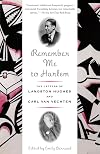
An engaging collection of letters, between Langston Hughes, poet and author, and Carl Van Vechten, who was a writer, publisher, photographer, and devotee to Negro, as his term of the time was, arts and letters. Van Vechten was about 20 years older than Hughes and their correspondence extends from the 20s through to Van Vechten's death in 1964. Of the two, Hughes is the more interesting, having had a life of writing, travel and engagement with "his people," that is the colored people of the show more world. Both men were involved with the Harlem Renaissance and knew most of those connected with that period.
Hughes has a remarkable presence on the page--he is frank, funny, warm and expressive. It seems unsurprising how many pictures show him with a great smile. In spite of a largely unsupportive family and the persistence of prejudice and Jim Crow, Hughes was so talented, so smart, and so clear about his aims that his success (not financially--he seems to have been hard up most of his life) and his reach culturally have been and remain great.
Since the collection of letters continues through Van Vechten's life and close to the end of Hughes' (he died in 1967, I believe), it was interesting to watch them age: especially in light of the darker times arriving toward the end of their lives. (It is an odd thing to say, and I cannot really explain it, that the 60's, Civil Rights, Black Power should constitute something darker than Jim Crow, the heyday of lynchings, and segregation, but in much of the art put forth there was a lightness, a hope, a faith in the future. And works of this era do not seem to me to deserve the dismissal (although they did receive it sometimes) of purveying stereotypes. Hughes well knew the injury and injustice of racism, but attitudes about the appropriate artistic and cultural expression did change. It's a progression I wish I understood better.)
Toward the end of the book, the exchanges became less interesting to me. For one thing, both men were busy with deadlines, details of publishing and presenting theater works. Van Vechten was consumed with the archiving of his collections of art, writings, etc. that were being assembled for the James Weldon Johnson Archive at Yale. Van Vechten's tone became ever more hectoring to Hughes, and at one point he chides Hughes for signing his letters "Sincerely", which Van Vechten seemed to perceive as cold. It didn't strike me that way, but did make me wonder about currents of disappointment, insecurity, jealousy that may have affected Van Vechten.
The editor of the volume, Emily Bernard, says in her introduction: " This book is a story about two people, one famous, one formerly famous but now mostly unknown, who lived during an extraordinary period in American history. Between the two of them, they knew everyone, and nearly all of those people come to life in the pages that follow. Langston Hughes and Carl Van Vechten helped make the movement we know as the Harlem Renaissance, and for that reason their story is meaningful. But the most important story in this book is about a friendship--one complicated by race, power, and money. Like most friendships, it endured its share of ups and downs. But unlike most friendships, this one thrived because of difference, not in spite of it." That is a more than adequate summary and reason to read the book.
One last thing, the notes and appendices are well thought out and thorough. The notes are placed after each letter and so are accessible. The appendices include Van Vechten's introduction to The Weary Blues, entitled "Introducting Langston Hughes to The Reader," and Hughes' address memorializing Van Vechten's life. Both are touching. show less
Hughes has a remarkable presence on the page--he is frank, funny, warm and expressive. It seems unsurprising how many pictures show him with a great smile. In spite of a largely unsupportive family and the persistence of prejudice and Jim Crow, Hughes was so talented, so smart, and so clear about his aims that his success (not financially--he seems to have been hard up most of his life) and his reach culturally have been and remain great.
Since the collection of letters continues through Van Vechten's life and close to the end of Hughes' (he died in 1967, I believe), it was interesting to watch them age: especially in light of the darker times arriving toward the end of their lives. (It is an odd thing to say, and I cannot really explain it, that the 60's, Civil Rights, Black Power should constitute something darker than Jim Crow, the heyday of lynchings, and segregation, but in much of the art put forth there was a lightness, a hope, a faith in the future. And works of this era do not seem to me to deserve the dismissal (although they did receive it sometimes) of purveying stereotypes. Hughes well knew the injury and injustice of racism, but attitudes about the appropriate artistic and cultural expression did change. It's a progression I wish I understood better.)
Toward the end of the book, the exchanges became less interesting to me. For one thing, both men were busy with deadlines, details of publishing and presenting theater works. Van Vechten was consumed with the archiving of his collections of art, writings, etc. that were being assembled for the James Weldon Johnson Archive at Yale. Van Vechten's tone became ever more hectoring to Hughes, and at one point he chides Hughes for signing his letters "Sincerely", which Van Vechten seemed to perceive as cold. It didn't strike me that way, but did make me wonder about currents of disappointment, insecurity, jealousy that may have affected Van Vechten.
The editor of the volume, Emily Bernard, says in her introduction: " This book is a story about two people, one famous, one formerly famous but now mostly unknown, who lived during an extraordinary period in American history. Between the two of them, they knew everyone, and nearly all of those people come to life in the pages that follow. Langston Hughes and Carl Van Vechten helped make the movement we know as the Harlem Renaissance, and for that reason their story is meaningful. But the most important story in this book is about a friendship--one complicated by race, power, and money. Like most friendships, it endured its share of ups and downs. But unlike most friendships, this one thrived because of difference, not in spite of it." That is a more than adequate summary and reason to read the book.
One last thing, the notes and appendices are well thought out and thorough. The notes are placed after each letter and so are accessible. The appendices include Van Vechten's introduction to The Weary Blues, entitled "Introducting Langston Hughes to The Reader," and Hughes' address memorializing Van Vechten's life. Both are touching. show less

Van Vechten’s seventh and last novel. The fourth I have read, and the one I found most successful. Title perhaps inspired by the famous passage from Waugh’s Vile Bodies often taken as a summing-up of the era of the Bright Young Things. Characters, some surely recognisable to Van Vechten's circle (I have seen comments identifying two main characters with Scott and Zelda Fitzgerald) are all running away from something, and he depicts them with great poignancy. A gem.

Several years ago I read a book of essays about reading, called Ex Libris, by Anne Fadiman. She mentioned this book because of its incredible vocabulary. I was intrigued from that point forward and when I happened upon it at Powell's, I had to have it.
Wow, what a lot of fun to read. It's like hearing a very opinionated great-uncle who is incredibly well-educated and well-read, and who loves cats entirely too much. Van Vechten goes through various topics in culture and literature and show more documents attitudes to the cat, along with a lot of judgement of his own as to how those attitudes were more or less right or wrong. He is not just an ailurophile but a Europhile as well, concentrating on French and English litterati and their attitudes about cats. Anne F. was definitely right about the vocabulary. His erudition was staggering. It didn't exactly send me running to the dictionary, as you could figure out 99% of the words from context, but it was a real joy to read something that was obviously written without any regard for readers less educated than himself. So often I think books are deliberately dumbed down. When language is complex, it is often inscrutable as well, and I get the idea the author's trying to hide the fact that he (or she) has nothing to say. Not Van Vechten! He has a lot to say. He has very firm opinions. And they are always on the side of all things feline. Cats can truly do no wrong. show less
Wow, what a lot of fun to read. It's like hearing a very opinionated great-uncle who is incredibly well-educated and well-read, and who loves cats entirely too much. Van Vechten goes through various topics in culture and literature and show more documents attitudes to the cat, along with a lot of judgement of his own as to how those attitudes were more or less right or wrong. He is not just an ailurophile but a Europhile as well, concentrating on French and English litterati and their attitudes about cats. Anne F. was definitely right about the vocabulary. His erudition was staggering. It didn't exactly send me running to the dictionary, as you could figure out 99% of the words from context, but it was a real joy to read something that was obviously written without any regard for readers less educated than himself. So often I think books are deliberately dumbed down. When language is complex, it is often inscrutable as well, and I get the idea the author's trying to hide the fact that he (or she) has nothing to say. Not Van Vechten! He has a lot to say. He has very firm opinions. And they are always on the side of all things feline. Cats can truly do no wrong. show less
Lists
Awards

You May Also Like


Associated Authors
Statistics
- Works
- 43
- Also by
- 23
- Members
- 970
- Popularity
- #26,549
- Rating
- 3.9
- Reviews
- 9
- ISBNs
- 99
- Languages
- 4
- Favorited
- 1


